[ By 2Firsts, Taco Tuinstra, Warsaw] The 12th edition of the Global Forum on Nicotine (GFN), which concluded June 21 in Warsaw, took place against the backdrop of tightening restrictions on next-generation products worldwide, with the World Health Organization (WHO) continuing to discredit tobacco harm reduction (THR) and even comparatively progressive countries such as the United Kingdom cracking down.
But rather than simply lamenting the industry’s predicament, the GFN organizers decided to focus on a topic within its audience’s control—effective communication. In a series of presentations, workshops and panel discussions, participants debated, among other topics, ways to effectively spread the THR message—a fundamental issue, according to GNF co-founder Paddy Costall, because “a lot of sources of information are funded by actors who don't want people to know the truth”.
This year’s conference featured 77 hosts, panelists and speakers from 32 countries, along with numerous participants who contributed to ancillary parts of the program, such as the film festival and the photo exhibition. The event attracted 343 in-person attendees, including 27 consumers, from 61 countries. More than 500 people registered to view proceedings online, with the largest contingents of visitors coming from the United Kingdom (74), the United States (55) and Poland (49).
As GFN’s official media partner for the third consecutive year, 2Firsts sat down with Costall on the second day of the conference to discuss the forum’s evolving role and its contributions to THR.
GFN’s Origin and Evolution
2Firsts: Please share the story behind GFN. Who were its creators, what was their original vision, and what have been the major milestones since the conference’s debut?
Paddy Costall: GFN was first held in Warsaw, in 2014. The co-founders, Professor Gerry Stimson and I, along with a small group interested in the emerging field of safer nicotine and tobacco harm reduction, saw the need to create a space where all the stakeholders could come together to discuss issues related to the science, regulation and use of new safer products and how these might have an impact on smoking behaviors, as well as individual and public health. Warsaw was chosen, as a number of our team were already based there and also the location is a hub that makes travel simpler for those attending.
Our policy has always been to have an “open door,” recognizing the role of all stakeholders—including consumers, policymakers, academics and scientists, media and the manufacturers and distributors of safer nicotine products—in advancing what we believe is potentially a major gain for public health globally. Unfortunately, global health politics, and suspicion and hostility toward tobacco harm reduction, has impacted on the ability of some to attend.
The conference has grown from an initial 220 participants to a peak of almost 600 from 80-plus countries. The COVID pandemic obviously impacted our ability to host in-person events in 2020 and 2021, but we were able to hold one event online and another in the U.K. as a hybrid during this time. This experience really spurred us on to use technologies and develop platforms that have extended the scope and reach of the conference. This year sees the 12th edition, with upwards of 500 participants – in person and online - including 77 speakers, under the stewardship of our conference program director, Jessica Harding.
Outside of the conference we have developed GFN.TV, which broadcasts news and interviews with key thought leaders in tobacco harm reduction every week. It covers a wide range of topics from around the world and, most importantly, is free to view. The GFN has always been centered around the consumer experience and this constituency is robustly represented in the programs for events, as well as in broadcasts on GFN.TV. Making sure that consumer voices are heard in this field is something we’re very proud of.
2025 Conference Theme
2Firsts: What inspired the theme of this year’s conference?
Costall: We decided on the theme almost straight after last year’s event; the title—"Challenging Perceptions - Effective Communication for Tobacco Harm Reduction”—came a bit later. [We chose this theme] because evidence shows safer nicotine products are now really beginning to challenge the dominance of the combustible cigarette. This has huge potential benefits for global public health, in terms of driving people off smoking. But headway toward this goal is being slowed by a paradox. Each year, the scientific basis for tobacco harm reduction continues to grow. Yet each year, popular opinion about it seems to get worse. GFN25 focused on looking at some of the reasons for the misunderstandings, misconceptions and mischaracterizations that are hindering progress. Reducing smoking-related harms is urgent—and so, as a community, making the case for harm reduction effectively is imperative.
Changing the Global Narrative
2Firsts: How does GFN aim to shift the narrative around THR globally?
Costall: Most important here is the engagement of key stakeholders in amplifying the scientific evidence and efficacy of tobacco harm reduction, as a major contributor to improving global health. Smoking, and the noncommunicable diseases it causes, is the leading cause of death globally. Safer nicotine products offer a route out of smoking to people who cannot otherwise quit. We would argue that there is an obligation to provide clear and accurate information about harm reduction to enable those who make policy and regulations, as well as the wider public, to make informed decisions and drive and guide health improvements. The process of engagement has to endure beyond a single annual event, which is where GFN.TV plays a crucial role, bringing news of developments throughout the year.
Common Misconceptions
2Firsts: What are the most persistent myths about THR?
Costall: The short answer? When people claim that “it’s all just a plot by industry to undermine tobacco control.” But this is oversimplistic. Harm reduction is a concept that calls for compromise and working with individuals and communities in ways that are acceptable to them, with the aim of enabling them to change behaviors and improve health. To use an example from drugs harm reduction, providing clean needles, or substitute medications is often portrayed as condoning or even facilitating drug use, ignoring the impact such measures can have in preventing the spread of disease and stabilizing the lives of those in need.
For many in public health and tobacco control—and indeed the public at large—there is no room for engagement with the tobacco industry in any shape or form. Historical malfeasance and misrepresentation, combined with the untold damage caused by smoking, renders any dialogue impossible. A harm reduction approach requires that all actors— “good” and “bad”—be included in discussions. In order to drive positive change, thinking the unthinkable, or thinking outside the box, is essential.
Our view is that the moral high ground in the debate is less important than securing gains in public health, which will impact on the lives of millions globally. Industry is here and isn’t going anywhere soon. Its aim is to make profits, which it can do by selling proven deadly products, which it has done for decades. But now there is a case to be made that investing in new safer products could produce a positive outcome for both manufacturers and consumers. There are parallels with the transitions taking place in major fossil fuels producers and in vehicle production. Can we afford to ignore this? We believe we cannot.
Media and Academic Responsibility
2Firsts: Why do you think misconceptions about reduced-risk products continue to persist despite scientific evidence to the contrary? And what role does the media play in shaping public perceptions about THR?
Costall: This is the key question for the conference. Misunderstandings of and misconceptions about safer nicotine products and tobacco harm reduction come from many sources. It’s right that the approach should be scrutinized and the safety of products kept under constant review. But some influential individuals and organizations are actively campaigning against tobacco harm reduction, choosing to disseminate misinformation while ignoring legitimate science and evidence that shows the benefits it can bring for people who would otherwise continue smoking. This, we believe, is wrong, and damaging to public health.
The media has a key role in shaping the debate around tobacco harm reduction. As with all matters relating to health, we believe it is essential that evidence should be the first priority, but often a narrative or agenda seems more interesting. Sensational reporting on vape-related lung injuries in the U.S. in 2019 resulted in mass panic and a rush to legislate, despite the evidence that the people affected had been vaping illegal THC (cannabis) products which contained Vitamin E acetate. It never was a nicotine vape issue—but the media coverage continued rolling for months, and there were far too few corrections of this significant inaccuracy. The media have power and responsibility to investigate and inform on issues, rather than sensationalize and potentially cause immense harm.
It’s not all the media’s fault, of course—there are many other factors at play. We will also be discussing how the scientific and academic communities must demand more responsible practices in the presentation of research when it’s “sold” to the media by universities and institutions desperate to attract headlines. Our keynote from Arielle Selya considered this in depth.
Dialogue and Constructive Engagement
2Firsts: How can advocates for THR engage with critics in a constructive and evidence-based way?
Costall: As we stated previously, our policy at GFN is to have an open door, to include all stakeholders and views in the debates, conducting proceedings in an open, transparent and respectful way, recognizing the emotive nature of issues related to smoking and seeking to try to reach realistic and workable solutions that will promote better individual and public health.
It often feels like an impossible task, with barriers imposed on communication through instruments such as article 5.3 of the Framework Convention on Tobacco Control—employed in an extreme way—which prevent any form of engagement between two “opposing sides.” That’s no way to come to a consensus, or to move forward. We continue to be guided by the increasing evidence-base for tobacco harm reduction and to respect others who may have a different view. Shouting loudest and denigrating opposition can only serve to deepen hostility and make dialogue impossible.
Advocates for THR must remain guided by the evidence and be willing to listen to opposing views. The invitation to those who oppose THR to come to GFN remains open. Media portrayals of tobacco harm reduction can have a role to play in facilitating engagement and the focus of all of this has to be the health and well-being of individuals and their communities globally.
Highlights and Reflections
2Firsts: What, in your view, were some of the highlights of this year's conference?
Costall: One of our advantages is that we engage with people working in related fields, such as mental health and drugs, for the simple reason that the vast majority of people using those social services are also smokers. For example, Mark Tyndall [a professor at the University of British Columbia] spoke about his experience with harm reduction in areas such as HIV and drug use. You know, he gave people a condom; he gave people a clean needle. These interventions cost pennies, but they save millions of lives and millions of dollars.
And I'm delighted that we were able to get new people like Jacob Grier, a journalist who has written extensively about tobacco policy, and consumer advocates such as Maria Papaioannoy [founder of Canada’s Rights 4 Vapers]. So, the variety of people in terms of different professions, occupations and disciplines... all of that makes this edition of the event a very special one.
Looking Ahead: GFN’s Continued Impact
2Firsts: What outcomes or changes do you hope to see as a result of this conference?
Costall: We hope to increase awareness of tobacco harm reduction and its potential impact for global health and well-being but recognize that the process is one of small steps. The critical mass of advocates for tobacco harm reduction is growing, with consumers joined by a growing number of professionals, from a range of disciplines—medical professionals, scientists and researchers, policymakers, media among them. GFN provides a space to discuss and evaluate the latest science and policy related to nicotine and an opportunity for those new—and perhaps skeptical—to come, question and hopefully learn.
Our continued work throughout the year, via GFN.TV, also seeks to keep tobacco harm reduction visible, informing and seeking debate. It’s a long-haul, but we remain committed to making in-roads, however small, to advance knowledge and acceptance of a fundamentally sound and key public health intervention.
Looking Forward: Confronting Prohibitionism
2Firsts: Has this year’s event sparked ideas for next year?
Costall: We are leaning toward theming the next conference around prohibition, which seems to be becoming the norm rather than the exception. The U.K. is a good barometer of this. When e-cigarettes first hit the market, the U.K. government took a harm reduction approach. However, over the years, it’s gradually moved more toward the prohibitionist model. The ban on disposables is only the latest example.
If people see prohibition coming down the line, they're not going to invest in this sector. Tobacco companies have invested billions in reduced risk products. If they find their efforts obstructed by bans and restrictions, they can easily go back to what they’ve done successfully for many years—rolling vegetable matter into paper and selling it to people—and make lots of money. It’s a lot easier for the companies but would represent a considerable setback for public health. So, avoiding prohibition is in the interest of all stakeholders.
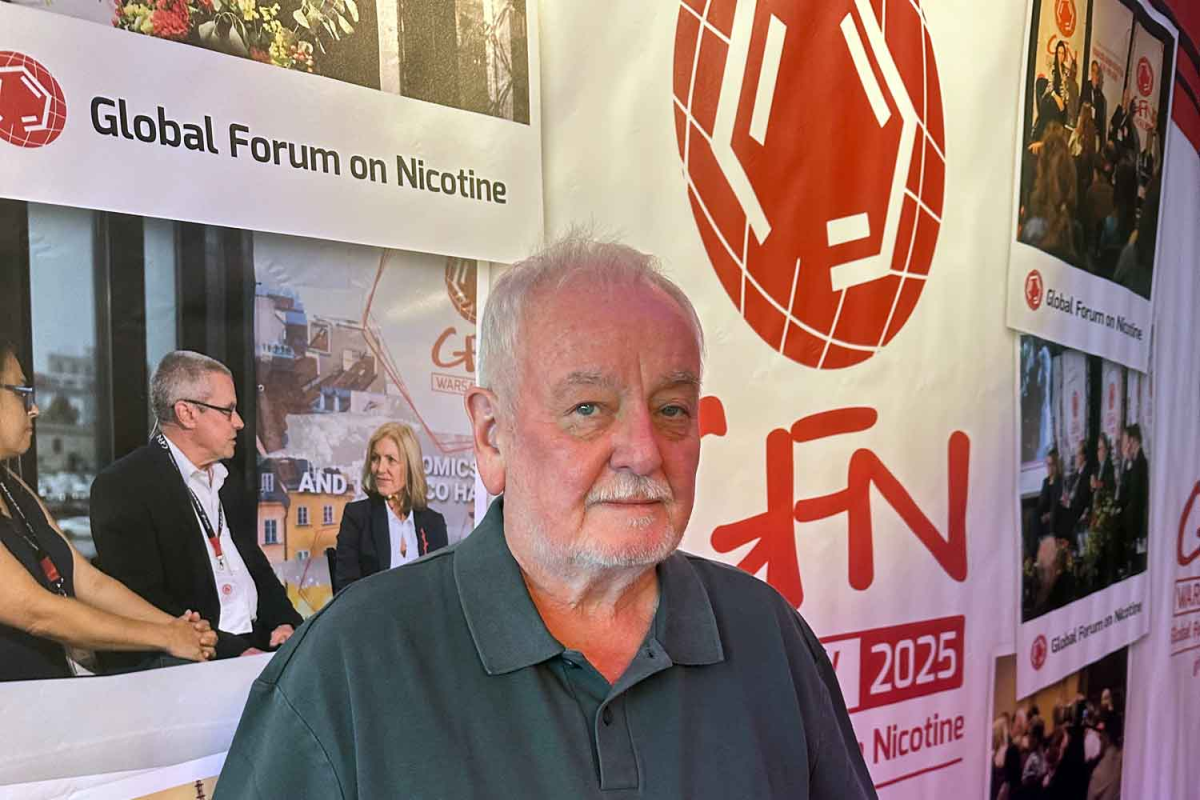
Cover image: GFN co-founder Paddy Costall | Photo by Taco Tuinstra
2Firsts has been a media partner of the Global Forum on Nicotine (GFN) for three consecutive years.
You're welcome to submit articles, request interviews, or share your comments with 2Firsts. Please contact us at: info@2firsts.com, or reach out to 2Firsts CEO Alan Zhao on LinkedIn.