2FIRSTS Analysis: E-cigarette Export Data to UAE in April 2024

Jun.03.2024
2FIRSTS Analysis: E-cigarette Export Data to UAE in April 2024
China's e-cigarette exports to UAE in April 2024 reached $15.46 million, with a 44.16% month-on-month increase.

According to updated trade data from the General Administration of Customs, 2FIRSTS has compiled the e-cigarette export data from China to the United Arab Emirates for the month of April 2024. The specifics are as follows:
2FIRSTS Analysis: E-cigarette Export Data to UAE in April 2024


Image source: 2FIRSTS


The export volume was approximately 15.46 million US dollars, showing a month-on-month increase of 44.16% and a year-on-year decrease of 6.05%.


Image source: 2FIRSTS


The export volume reached approximately 381 tons, representing a month-on-month increase of 45.01% and a year-on-year increase of 14.01%.


Image source: 2FIRSTS


The export unit price was $40.56 per kilogram, a decrease of 0.6% compared to the previous period and a 17.6% decrease year-on-year; the average price for "e-cigarettes and similar personal electronic vaporizing devices" was $6.38 per unit.


Image source: 2FIRSTS


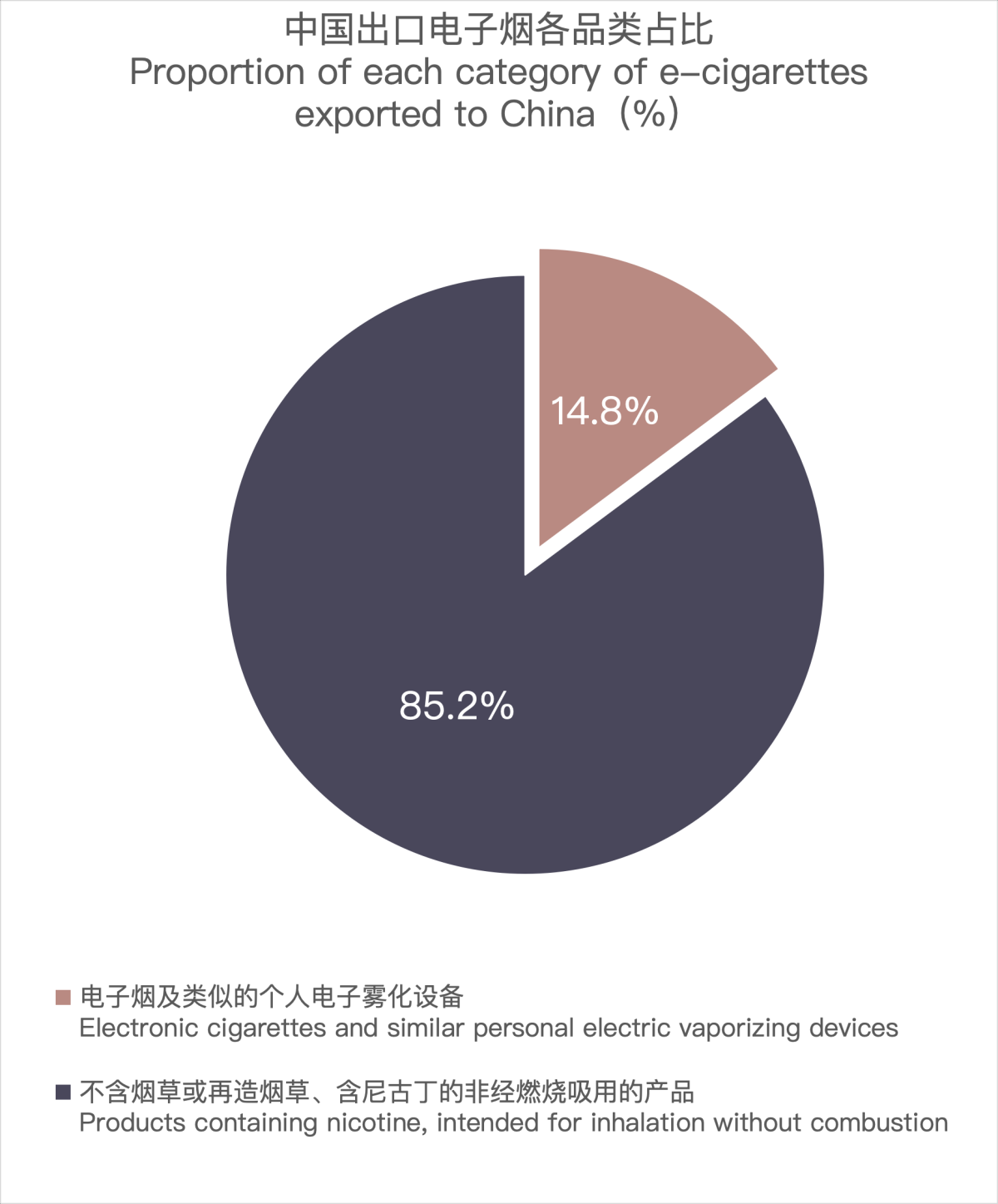
Among them, "e-cigarettes and similar personal electronic vaporization devices" account for 14.8% of the export product category, while "non-tobacco or non-reconstituted tobacco products containing nicotine for non-combustible use" account for 85.2%.


Image Source: 2FIRSTS


We welcome news tips, article submissions, interview requests, or comments on this piece.

Please contact us at info@2firsts.com, or reach out to Alan Zhao, CEO of 2Firsts, on LinkedIn


Notice

1.  This article is intended solely for professional research purposes related to industry, technology, and policy. Any references to brands or products are made purely for objective description and do not constitute any form of endorsement, recommendation, or promotion by 2Firsts.

2.  The use of nicotine-containing products — including, but not limited to, cigarettes, e-cigarettes, nicotine pouchand heated tobacco products — carries significant health risks. Users are responsible for complying with all applicable laws and regulations in their respective jurisdictions.

3.  This article is not intended to serve as the basis for any investment decisions or financial advice. 2Firsts assumes no direct or indirect liability for any inaccuracies or errors in the content.

4.  Access to this article is strictly prohibited for individuals below the legal age in their jurisdiction.


Copyright


This article is either an original work created by 2Firsts or a reproduction from third-party sources with proper attribution. All copyrights and usage rights belong to 2Firsts or the original content provider. Unauthorized reproduction, distribution, or any other form of unauthorized use by any individual or organization is strictly prohibited. Violators will be held legally accountable.

For copyright-related inquiries, please contact: info@2firsts.com


AI Assistance Disclaimer


This article may have been enhanced using AI tools to improve translation and editorial efficiency. However, due to technical limitations, inaccuracies may occur. Readers are encouraged to refer to the cited sources for the most accurate information.

We welcome any corrections or feedback. Please contact us at: info@2firsts.com

As Regulators Focus on Nicotine Pouch Child Safety, Safeguard Pursues an External Packaging Route
As regulators pay closer attention to child safety in nicotine pouches, manufacturers face a practical challenge: how to strengthen child-resistant packaging without unnecessarily reworking products, production lines and regulatory submissions already in place. In a written interview with 2Firsts, Chemular detailed Safeguard’s external packaging approach, its customer-specific testing requirements and possible PMTA pathways. The model remains early-stage, but it offers a new way to think about an increasingly important regulatory and manufacturing issue.
Industry Insight
Sep.19
PMI Expands Its Second Global and First Asian Business Services Hub in the Philippines, Serving 160 Markets and Scaling Up AI Capabilities
Philip Morris International's PMI Business Solutions Philippines has expanded its global business services hub in Makati and plans to add more than 80 positions. Established in 2021 primarily to provide finance and IT support to about 20 markets, the center now employs 519 professionals delivering roughly 600 services across 160 markets. Its functions now span finance, human resources, IT, commercial operations, data analytics, supply chain and project management. PMI says the hub's next phase will focus on AI-enabled and higher-value work. The company did not disclose the size or investment cost of the expansion.
Sep.24
Germany's Four-Year Tobacco Tax Plan Heads to Parliament as BAT, JTI and PMI Push for Changes
Germany's parliament is scheduled to hold a first reading of amendments to the Tobacco Tax Act on September 24. The government plans annual tax increases from 2027 through 2030 covering cigarettes, heated tobacco, vaping liquids and other categories. It expects the reform to generate €756 million in additional revenue in 2027, rising to €3.589 billion in additional annual revenue by 2030. Ahead of the parliamentary debate, the German Association of the Tobacco Industry and Novel Products, or BVTE, launched the "Tabaksteuer mit Augenmaß" campaign backed by BAT, JTI, Philip Morris, Reemtsma and wholesale and retail groups.
Sep.23
Special Report|CrossBar's High-Puff Vapes Draw Attention on Pennsylvania's 163-Product Directory as Link Between Earlier 1.3mL PMTA Filings and New 13mL Products Remains Unclear
Pennsylvania began enforcing its electronic nicotine delivery system directory restrictions on October 19, 2026. Among 163 product listings recorded before enforcement, four CrossBar 20K disposables stood out with 13mL capacity, advertised puff counts of up to 20,000 and a flattened design distinct from conventional pod systems and compact disposables. Historical records identify earlier 1.3mL CrossBar products associated with Romo LLC, while newer 13mL products appeared in several state directories beginning in 2025 under entities including Blue Nine LLC. PMTA compliance expert Mr. K identified amendments and application ownership transfers as possible regulatory mechanisms, although neither has been confirmed in this case. Separately, Reynolds' $7.5 million acquisition of 16 PACHA products and related assets illustrates the commercial value of products linked to historic PMTA submissions.
Special Report
Oct.22
Italy Proposes Earlier Vape and HTP Tax Hikes, New Rules for E-Liquid Pricing, Exclusive Deals and Distribution
Italy's proposed 2027–2029 budget would bring forward scheduled tax increases for e-cigarette liquids and heated tobacco products from January 1, 2028, to July 1, 2027. The consumption tax coefficient for nicotine-containing e-liquids would rise from 20% to 22%, that for nicotine-free liquids and applicable flavorings from 15% to 17%, and the heated-tobacco coefficient from 41% to 42%. The bill would also introduce official retail price schedules for e-liquids, restrict exclusive agreements between retailers and suppliers, and limit single-brand-dominated displays, sales incentives and bundled offers. Importing, authorized warehousing and retailer sourcing arrangements would also change. The proposals remain subject to parliamentary approval and subsequent implementing regulations.
Regulations
Nov.04
FDA Revises Import Alert 98-07 Rules, Bringing May Enforcement Priorities Into Unauthorized ENDS Detentions
The U.S. Food and Drug Administration has revised the rules under Import Alert 98-07 to incorporate its May 2026 enforcement-priority policy for certain electronic nicotine delivery systems marketed without premarket authorization. The alert continues to allow detention without physical examination, or DWPE, for ENDS lacking required marketing authorization, while directing field divisions to apply the May risk-based framework. When necessary, detention or refusal decisions must also undergo review by the FDA's Center for Tobacco Products. Products including PACHA and Vuse Pro have already emerged as industry examples of the May policy, although enforcement discretion does not constitute FDA marketing authorization.
News
Sep.28 by 2Firsts Perspectives