Interview Highlights
• The Rise of Vapor-Free Nicotine Products: With increasing regulatory scrutiny on disposable vapes, the industry is shifting toward odorless, vapor-free nicotine delivery systems. Laijawala sees this as a defining trend and highlights Nico Orgo’s investment in next-generation nicotine formulations.
• Regulatory Crackdowns on Disposable Vapes: As global governments impose stricter controls, Laijawala believes this could drive demand for liquid nicotine products and alternative delivery formats.
• Natural vs. Synthetic Nicotine: Nico Orgo favors natural nicotine, citing its superior chemical stability and sensory profile over synthetic alternatives.
• Nicotine Salt Innovations: The company is developing a unique nicotine salt with a novel carrier, designed to enhance compatibility across different NGP products.
• Future of Nicotine Pouches: As demand grows, optimizing pouch whiteness, release timelines, and user experience is key. Nico Orgo is investing in R&D and exploring MCC replacement solutions to improve nicotine absorption.
• India’s Role in the Global Nicotine Supply Chain: As the world’s largest nicotine producer (85% market share), Laijawala highlights India’s supply chain reliability, sustainability, and cost efficiency, while noting that some smaller manufacturers operate intermittently, whereas Nico Orgo runs a 24/7 production model to ensure continuous supply.
Nicotine’s Central Role in the Evolving NGP Industry
As a core raw material in next-generation products (NGPs), nicotine plays a critical role in shaping global innovation and regulatory discussions. With the rise of nicotine pouches, advanced e-cigarette formulations, and pharmaceutical nicotine applications, demand for high-purity nicotine continues to grow. Against this backdrop, Nico Orgo, a leading Indian nicotine manufacturer, stands as a major player in the global supply chain.
“Nicotine is at the heart of all NGP innovation. As manufacturers, it is our responsibility to ensure nicotine’s quality and stability evolve alongside new product categories.”
Navigating Regulatory Challenges: The Industry’s Shifting Landscape and Nico Orgo’s Strategy
Founded in 1979—long before the first NGPs entered the market—Nico Orgo established itself as a key supplier to major industry players, initially providing nicotine to Mitsubishi for the Japanese market. Following shifts in regulatory landscapes, the company transitioned to supplying pharmaceutical-grade nicotine globally and, in the last 15 years, has expanded its footprint in the NGP sector.
Today, Nico Orgo supplies high-purity nicotine for a wide range of applications, including vapes, nicotine pouches, disposable devices, and other novel products, alongside pharmaceutical formulations such as nicotine gums, lozenges, and patches. Operating across the United States, Europe, India, and the Far East, the company stands among the largest nicotine producers globally, with a record-breaking 23.5 metric tons of EP-grade nicotine production in January 2024.
"Our goal is to engineer the next generation of nicotine—odorless, colorless, and optimized for new delivery systems. The industry is shifting towards fume-free, discreet nicotine solutions, and we are positioning ourselves at the forefront of this transformation," says Laijawala. "We’ve also learned that in the NGP space, taste and smell matter significantly more than just analytical purity. Our focus has been to develop nicotine that enhances the sensory experience across different product verticals."
The company’s strategy in the NGP sector focuses on innovation and consistency in supply. It is investing in next-generation nicotine formulations that eliminate vapor and fumes, making products more discreet, safe, and usable in all environments. Additionally, Nico Orgo is pioneering custom nicotine salts, designed with unique carriers that optimize performance in different NGP categories.
Advancing Nicotine Innovation: The Challenge of Sensory Precision
Nico Orgo’s research and development efforts are centered on improving nicotine purity, stability, and usability. The company has achieved specifications that surpass USP/EP standards, focusing on eliminating impurities that cause oxidation, discoloration, and unwanted odors.
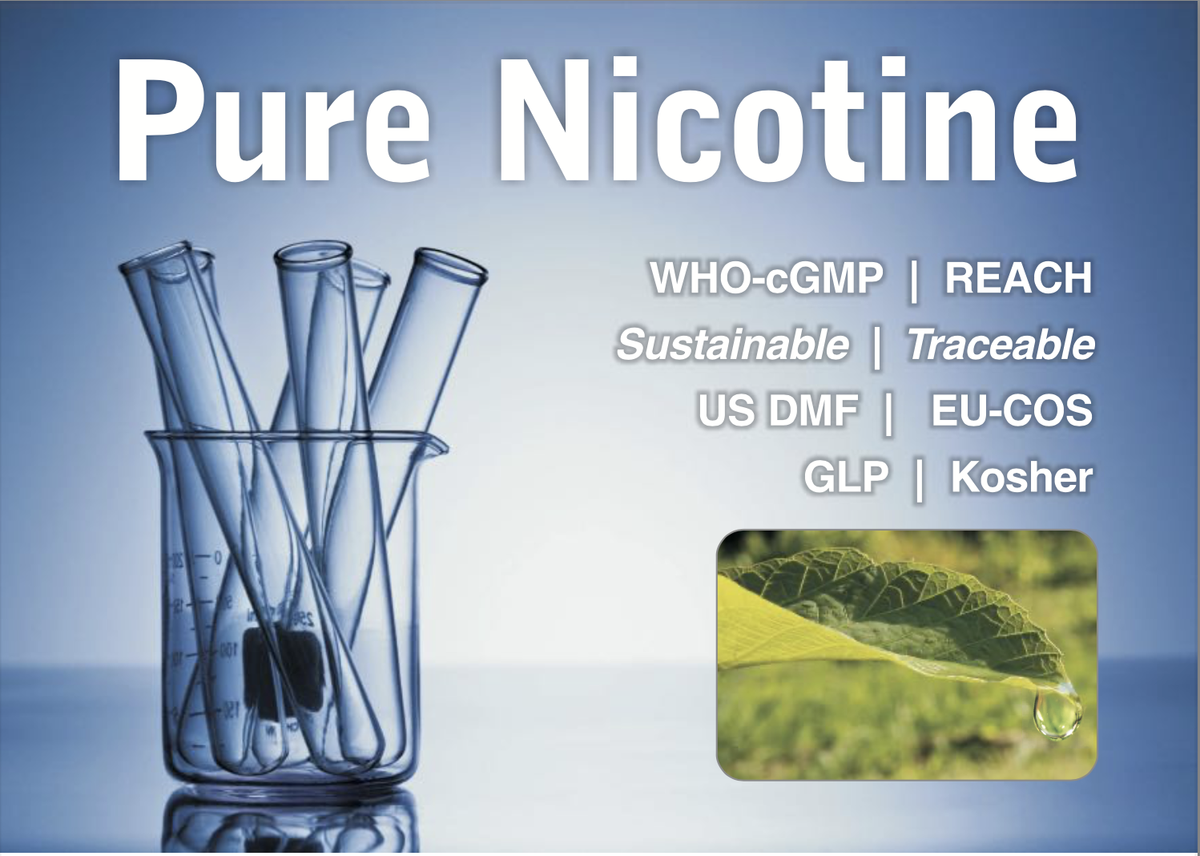
"Achieving purity beyond standard USP/EP requirements is no easy feat. We have identified and eliminated compounds that cause oxidation and bad odors—this has been one of our strongest achievements," explains Laijawala. "A large part of our R&D is dedicated to ensuring that our nicotine remains clear, stable, and resistant to oxidation, which is crucial for product consistency."
The firm is also working on advanced nicotine pouch formulations, enhancing whiteness and refining nicotine-release timelinesto create superior user experiences. "In the NGP space, sensory experience is just as important as analytical purity. Different product verticals demand unique nicotine formulations, and we have been able to tailor our nicotine accordingly," he adds.

Additionally, the company is exploring 6-Methyl Nicotine technology, but Laijawala notes that its safety remains debated, which could impact adoption.
Industry Trends and the Future of Nicotine: Natural Nicotine’s Superiority Over Synthetic Alternatives
The nicotine industry stands at a crossroads, influenced by shifting regulations and emerging technologies. Key global trends include:
• Regulatory changes: Governments worldwide are reconsidering disposable vape bans, which could drive demand for alternative nicotine delivery systems.
• Synthetic nicotine debate: Despite growing interest, synthetic nicotine has struggled to match the sensory and chemical qualities of naturally extracted nicotine.
• Market diversification: The demand for alternative nicotine delivery methods, including pouches and novel formulations, continues to rise.
"The industry is in flux, with potential bans on disposable vapes in key markets. This could pave the way for a resurgence of liquid nicotine products and alternative delivery formats outside of China," notes Laijawala. "Additionally, we see significant R&D efforts in designing nicotine for pouches—whether in terms of color stability or optimizing the delivery timeframe for a better user experience."
India’s Critical Role in Global Nicotine Supply: Market Strength vs. Regulatory Hurdles
As the world’s leading supplier of nicotine, accounting for roughly 85% of global production, India plays an indispensable role in the industry. Indian manufacturers benefit from well-established supply chains, stable production costs, and a regulatory framework that, while restrictive on domestic NGP sales, enables a strong export market.
Unlike other regions where nicotine sourcing is fragmented, India offers a consistent and scalable supply. Additionally, Indian nicotine production utilizes tobacco fines, which would otherwise go unused, contributing to a more sustainable supply chain. As a byproduct, the residual materials serve as cost-effective fertilizers, benefiting local agriculture.
"India’s nicotine industry is uniquely positioned. We operate within a well-structured supply chain, and our ability to efficiently process tobacco fines ensures that nothing goes to waste. This sustainability factor is one of our biggest strengths," Laijawala highlights. "Our road infrastructure, well-established purchase channels, and stable currency make India one of the most reliable sources for nicotine production globally."
The Future of Nicotine: Insights from Kartik Laijawala on Industry Shifts
The future of nicotine will be shaped by innovation, regulatory adaptation, and market diversification. With governments tightening regulations on disposable vapes, alternative delivery methods such as enhanced nicotine pouches and pharmaceutical applications could gain traction.
While synthetic nicotine continues to evolve, it has yet to surpass the organoleptic and chemical advantages of naturally extracted nicotine.
“We have received synthetic nicotine samples from several manufacturers, but their chemical composition and sensory characteristics still lag behind naturally derived nicotine.”
As the NGP industry expands, demand for high-purity nicotine will remain strong, positioning Nico Orgo and India as central players in the industry’s future. With a rapidly shifting global landscape, Nico Orgo’s strategic vision and technological advancements will continue to drive innovation in nicotine production.
2Firsts welcomes article submissions, interview opportunities, or commentary. Please contact us at info@2firsts.com or connect with 2Firsts CEO Alan Zhao on LinkedIn here.