Brazilian Authorities Crack Down on Illegal E-Cigarette Sales Operation

Nov.12.2024
Brazilian Authorities Crack Down on Illegal E-Cigarette Sales Operation
Brazilian police crack down on illegal e-cigarette sales in joint operation in Cuiabá and Várzea Grande, seizing products and making arrests.

According to a report by Circuitomt on November 11th, Brazilian police conducted a joint operation on Monday (the 11th) in Cuiabá and Várzea Grande through the Consumer Protection Special Department (Decon) and the consumer protection agency of Mato Grosso (Procon) aimed at cracking down on the illegal sale of e-cigarette devices.

 

Brazilian Authorities Crack Down on Illegal E-Cigarette Sales Operation
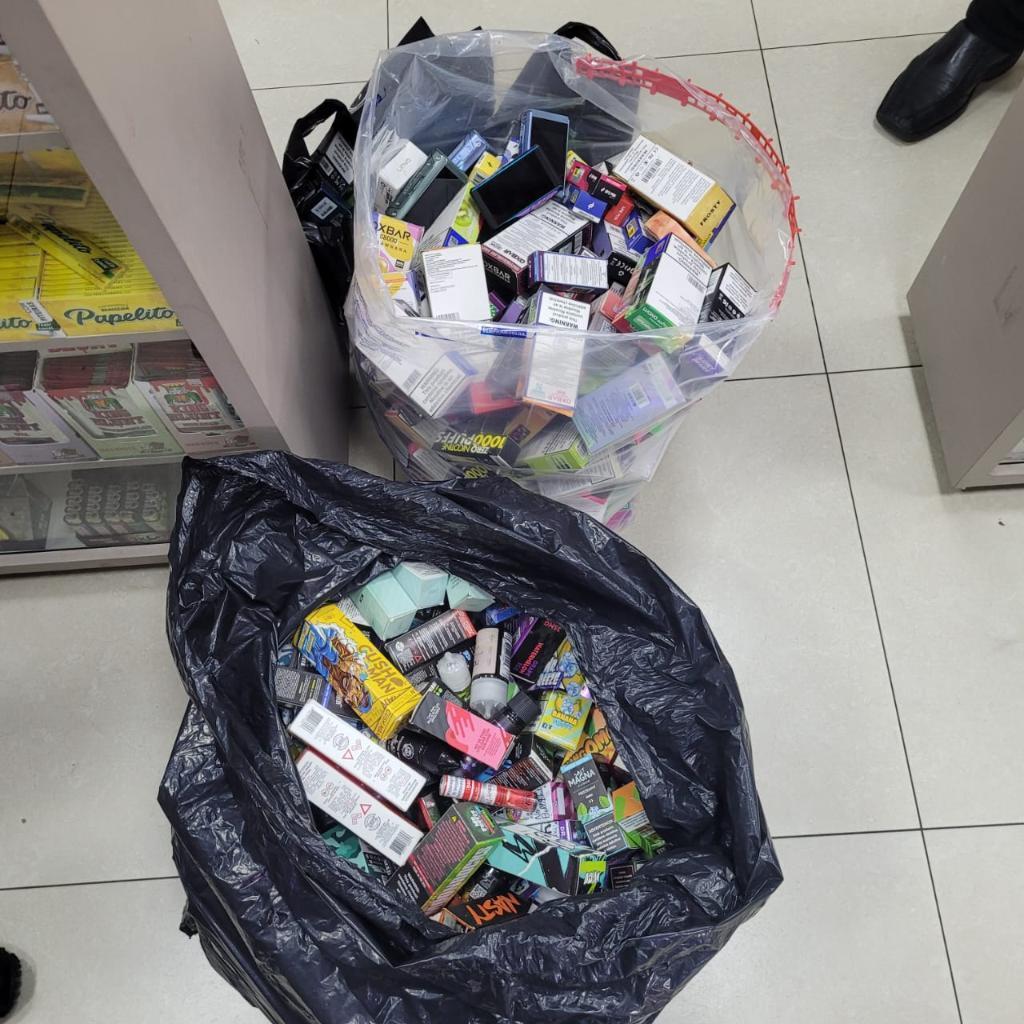
Brazilian police seized hundreds of illegal e-cigarette devices. | Image source: Circuitomt


Brazilian Authorities Crack Down on Illegal E-Cigarette Sales Operation
Brazilian police have seized related e-liquid and accessories. |Image Source: Circuitomt


Brazilian Authorities Crack Down on Illegal E-Cigarette Sales Operation
Brazilian police are conducting a law enforcement operation at a store. (Source: Circuitomt)


Police have discovered that five stores in Kuyaba and one store in Valzea Grande are selling e-cigarettes, pods, and other devices, as well as related e-liquids and accessories. Authorities confiscated hundreds of e-cigarettes, e-liquids, and related accessories, and arrested four individuals engaged in illegal sales activities on the spot. The seized products include e-cigarettes from the brand "VAPORESSO".


The head of Decon, Rogério Ferreira, stated that the police have initiated a criminal investigation against the owners and managers of the shops under inspection. He pointed out that those responsible for illegal commercial activities could face up to 5 years in prison and fines, while state consumer protection agencies have also imposed administrative penalties on these businesses.


We welcome news tips, article submissions, interview requests, or comments on this piece.

Please contact us at info@2firsts.com, or reach out to Alan Zhao, CEO of 2Firsts, on LinkedIn


Notice

1.  This article is intended solely for professional research purposes related to industry, technology, and policy. Any references to brands or products are made purely for objective description and do not constitute any form of endorsement, recommendation, or promotion by 2Firsts.

2.  The use of nicotine-containing products — including, but not limited to, cigarettes, e-cigarettes, nicotine pouchand heated tobacco products — carries significant health risks. Users are responsible for complying with all applicable laws and regulations in their respective jurisdictions.

3.  This article is not intended to serve as the basis for any investment decisions or financial advice. 2Firsts assumes no direct or indirect liability for any inaccuracies or errors in the content.

4.  Access to this article is strictly prohibited for individuals below the legal age in their jurisdiction.


Copyright


This article is either an original work created by 2Firsts or a reproduction from third-party sources with proper attribution. All copyrights and usage rights belong to 2Firsts or the original content provider. Unauthorized reproduction, distribution, or any other form of unauthorized use by any individual or organization is strictly prohibited. Violators will be held legally accountable.

For copyright-related inquiries, please contact: info@2firsts.com


AI Assistance Disclaimer


This article may have been enhanced using AI tools to improve translation and editorial efficiency. However, due to technical limitations, inaccuracies may occur. Readers are encouraged to refer to the cited sources for the most accurate information.

We welcome any corrections or feedback. Please contact us at: info@2firsts.com

The new regulations on nicotine in Argentina are creating caution, expectations, and doubts about the market, according to a local reference in harm reduction for smoking.
The new Argentine framework for tobacco and nicotine marks a shift from prohibition towards registration, traceability, and health surveillance. Juan Facundo Teme told 2Firsts that adult consumers and some of the commercial sector are cautiously optimistic, although concerns remain about flavors, registration costs, and market access.
May.11
Japan Tobacco Q1 2026 Financial Results: Revenue at $5.914 Billion,RRP Revenue Up 63.8% YoY
Japanese Tobacco (JT) reports Q1 2026 revenue of 924 billion yen, a 15.2% increase; operating profit rises 24.7%.
May.08 by 2FIRSTS.ai
Australia’s NSW Finds Lower Vaping Rates Among Teenagers Aged 14 to 17
A new report from Cancer Council’s Generation Vape research project shows that fewer teenagers in New South Wales are trying vaping after the state government introduced tougher vaping goods laws. Among surveyed NSW teenagers aged 14 to 17, the proportion who had tried vaping fell from 29.6% in April 2024 to 20.1% in October 2025.
Mar.17 by 2FIRSTS.ai
Russian Vape Industry Proposes State Monopoly on E-Liquid Production as Alternative to Ban
Russian business groups are trying to persuade the authorities to abandon plans to ban the sale of e-cigarettes and related liquids at both the federal and regional levels.
Apr.03 by 2FIRSTS.ai
Imperial Tobacco Canada Responds to Anti-Smoking Groups on Youth Vaping
Imperial Tobacco Canada responded to the April 17 press conference by anti-smoking groups by calling for a more focused, fact-based discussion on youth vaping that targets the illicit market. The company said youth should not be using nicotine products and that it supports strong measures to prevent youth access, but argued that the discussion failed to clearly distinguish between the regulated market and the illicit market that is driving youth access.
Apr.22 by 2FIRSTS.ai
Russian Vape GOST Revision Would Limit Capacity, Packaging Design and Warning Labels
Russia is preparing changes to its e-cigarette state standard GOST R 58109–2018. Under a draft order submitted to Rosstandart, the shelf life of vape devices and liquids would be limited to no more than two years, and capacity would be strictly capped at 2 mL for replaceable capsules, 10 mL for disposable systems and 30 mL for refill containers.
Apr.27 by 2FIRSTS.ai