Brazil's ANVISA to Reevaluate Ban on E-Cigarettes in 2022

Dec.01.2023
Brazil's ANVISA to Reevaluate Ban on E-Cigarettes in 2022
Brazilian health authorities are set to reconsider the ban on e-cigarettes, despite their widespread illegal presence in the market.

According to a recent report by Veja, the Brazilian National Health Surveillance Agency (ANVISA) is set to hold a public meeting on December 1, 2022 to discuss the ban on e-cigarettes that has been in effect since 2009. Despite the ban, e-cigarettes continue to be widely available in the market in Brazil. A survey conducted by Ipec in 2022 revealed that approximately 2.2 million adults in Brazil regularly consume e-cigarettes, making this market entirely illegal.


Brazilian Senator Soraya Thronicke introduced a bill in October aimed at regulating the production, import, export, sale, supervision, and advertising of e-cigarettes in Brazil. During the defense debate, she emphasized that the sale of e-cigarettes (vapes) in Brazil is currently unregulated, putting consumers at risk as they are unaware of the products or substances they are inhaling. "What risks are these people facing? Why are we indifferent to this serious issue, while consumption has already reached nearly six million adults?" she questioned.


Senator Tronik also cited the losses resulting from tax evasion. "From an economic perspective, the import and sale of e-cigarettes operate on the fringes of the tax system, leading to significant tax losses," she emphasized. According to a study by the Minas Gerais State Industry Federation (FIEMG), the potential market for e-cigarettes could reach 7.5 billion Brazilian reals annually. Considering only imports, the average annual federal tax revenue could reach 2.2 billion Brazilian reals.


Dr. Joelmir Silva, a full-time professor at the Olynda Medical School, emphasized the importance of regulations, stating, "Without regulations, it is impossible to know what is being sold. The lack of control over products, especially those containing counterfeit substances, can pose a greater risk to health. The lack of regulations regarding product composition and ingredient limits is another issue of concern.


We welcome news tips, article submissions, interview requests, or comments on this piece.

Please contact us at info@2firsts.com, or reach out to Alan Zhao, CEO of 2Firsts, on LinkedIn


Notice

1.  This article is intended solely for professional research purposes related to industry, technology, and policy. Any references to brands or products are made purely for objective description and do not constitute any form of endorsement, recommendation, or promotion by 2Firsts.

2.  The use of nicotine-containing products — including, but not limited to, cigarettes, e-cigarettes, nicotine pouchand heated tobacco products — carries significant health risks. Users are responsible for complying with all applicable laws and regulations in their respective jurisdictions.

3.  This article is not intended to serve as the basis for any investment decisions or financial advice. 2Firsts assumes no direct or indirect liability for any inaccuracies or errors in the content.

4.  Access to this article is strictly prohibited for individuals below the legal age in their jurisdiction.


Copyright


This article is either an original work created by 2Firsts or a reproduction from third-party sources with proper attribution. All copyrights and usage rights belong to 2Firsts or the original content provider. Unauthorized reproduction, distribution, or any other form of unauthorized use by any individual or organization is strictly prohibited. Violators will be held legally accountable.

For copyright-related inquiries, please contact: info@2firsts.com


AI Assistance Disclaimer


This article may have been enhanced using AI tools to improve translation and editorial efficiency. However, due to technical limitations, inaccuracies may occur. Readers are encouraged to refer to the cited sources for the most accurate information.

We welcome any corrections or feedback. Please contact us at: info@2firsts.com

FDA Unifies Tobacco Registration and Product Listing Form Across Product Categories
The U.S. FDA has consolidated two tobacco establishment registration and product listing forms into a redesigned Form FDA 3741 covering all regulated product categories, including e-cigarettes, heated tobacco products and nicotine pouches. The current requirements remain limited to domestic establishments. Separately, the FDA has proposed extending registration and product listing requirements to foreign manufacturers, signaling greater regulatory attention to manufacturing entities and product-level information across the tobacco and nicotine supply chain.
FDA
Sep.30
Kumulus Vape2026 H1 Revenue Falls 8.3% but Profit Rises 24% as B2B Weakens and Consumer Channels Grow
French vaping company Kumulus Vape reported first-half 2026 revenue of €25.5 million, down 8.3% year over year, as its core B2B distribution business fell 11% to €21.6 million. B2C and store-network revenue rose 5.6% and 17.8%, respectively. Commercial margin increased to 26.3% from 21.7%, while net profit rose 24.1% to €0.8 million. The company attributed the profitability improvement to catalog optimization, logistics restructuring and the ramp-up of Labster, its in-house production unit for proprietary brands.
Market
Sep.17 by 2Firsts Perspectives
Special Report|CrossBar's High-Puff Vapes Draw Attention on Pennsylvania's 163-Product Directory as Link Between Earlier 1.3mL PMTA Filings and New 13mL Products Remains Unclear
Pennsylvania began enforcing its electronic nicotine delivery system directory restrictions on October 19, 2026. Among 163 product listings recorded before enforcement, four CrossBar 20K disposables stood out with 13mL capacity, advertised puff counts of up to 20,000 and a flattened design distinct from conventional pod systems and compact disposables. Historical records identify earlier 1.3mL CrossBar products associated with Romo LLC, while newer 13mL products appeared in several state directories beginning in 2025 under entities including Blue Nine LLC. PMTA compliance expert Mr. K identified amendments and application ownership transfers as possible regulatory mechanisms, although neither has been confirmed in this case. Separately, Reynolds' $7.5 million acquisition of 16 PACHA products and related assets illustrates the commercial value of products linked to historic PMTA submissions.
Special Report
Oct.22
PMI's IQOS Extends ZAMNA Electronic-Music Partnership to Spain as Vogue España Publishes Branded Content
Philip Morris International's IQOS has extended its partnership with electronic-music event brand ZAMNA to Spain, setting up a House of IQOS at ZAMNA Madrid. Vogue España and Time Out Madrid subsequently published branded content clearly labeled as collaborations with IQOS. PMI has also expanded its company-owned IQOS boutique network in Spain to seven cities this year. The company says IQOS's adjusted heated-tobacco market share in Europe reached 12.6% in the first quarter of 2026, with Spain among its stronger-performing European markets.
Sep.20
GAO Audit Finds Nearly 132,000 FDA Tobacco Applications Waiting an Average 1,266 Days as Nicotine Pouch Pilot Practices Move Into Vape PMTA Reviews
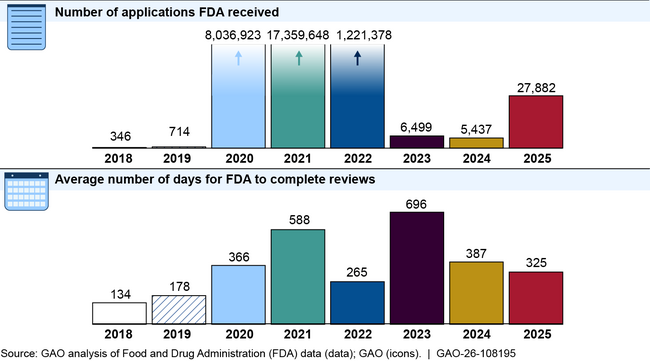
A U.S. Government Accountability Office audit found that 131,915 tobacco product applications submitted to the FDA since 2018 remained without a final review as of December 31, 2025, with pending applications waiting an average of 1,266 days. GAO also found FDA lacks the data needed to systematically determine whether scientific reviews meet applicable timelines. HHS agreed to upgrade the agency's tracking systems. At the same time, FDA has begun applying lessons from its nicotine pouch PMTA pilot to e-cigarette reviews, while changes to enforcement policy and electronic submissions are making the specific stage of a PMTA increasingly relevant to market access.
FDA
Oct.03
India Duty-Free Nicotine Pouch Sales Face Regulatory Test as ZYN, FOX Classification Remains Open
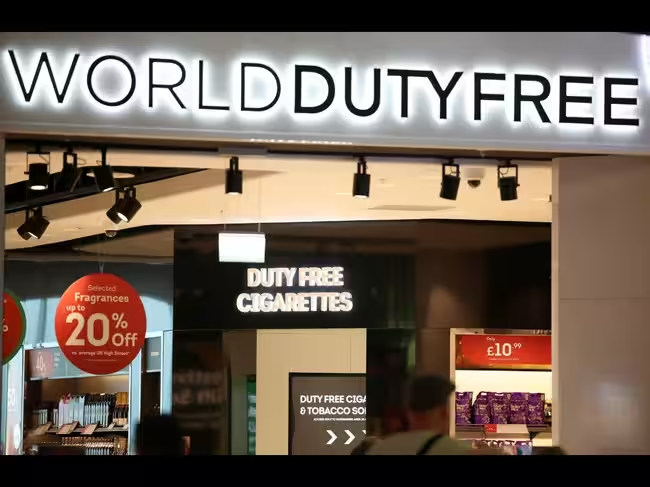
The Bombay High Court has ruled that airport duty-free shops are not exempt from India's domestic regulatory laws merely because they operate beyond the customs barrier, leaving in place a sales halt covering ZYN and FOX nicotine pouches at Mumbai's international airport. The court, however, did not determine that the products necessarily qualify as "drugs" under India's Drugs and Cosmetics Act. The retailers have four weeks to submit product information to the appropriate authorities, including CDSCO, which must complete its review within 30 days of receiving the submissions.
Sep.24