Key Points
- China Tobacco Hubei Industrial Corporation Limited (CTHB) and Hubei Xinye Tobacco Sheet Development Co., Ltd. filed a patent application for a nicotine tooth patch.
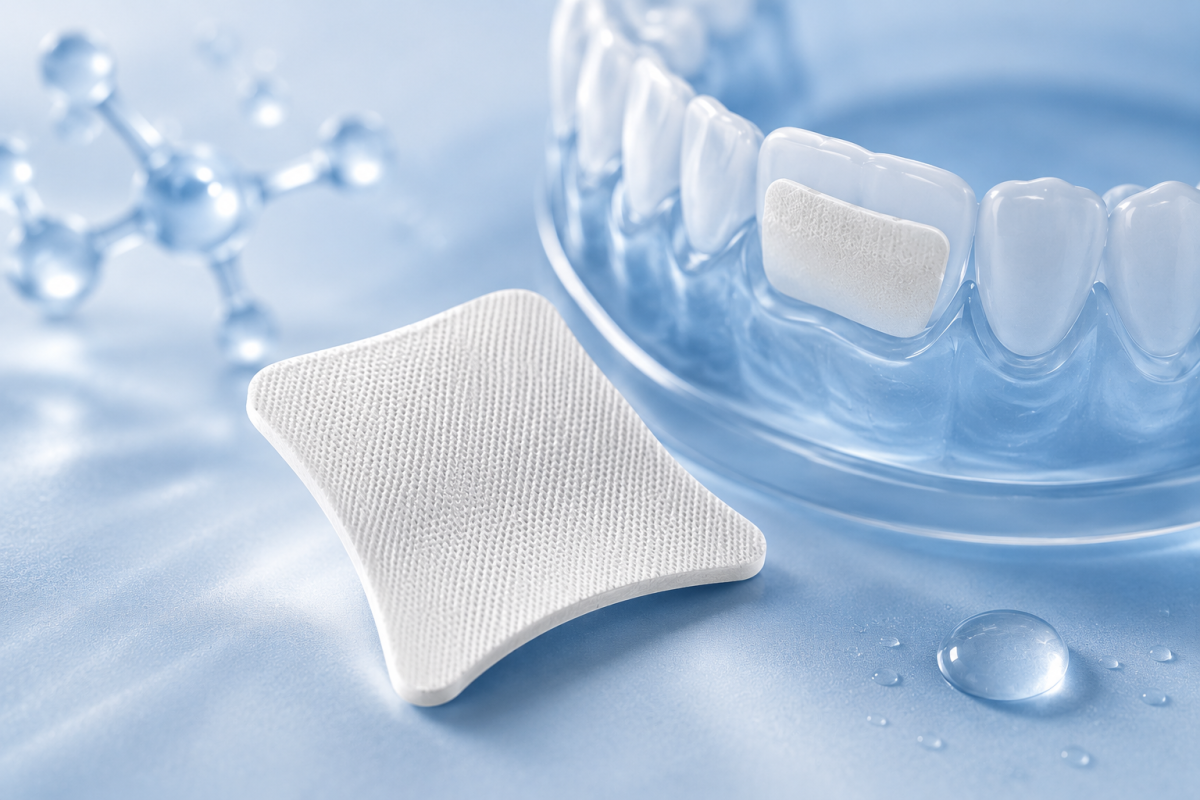
- The patch is designed with a three-dimensional shape that matches teeth and can adhere to the tooth surface, especially the lingual side.
- The product consists of a release film layer, a gel layer and a protective layer, with the gel layer containing a nicotine source.
- Each patch measures 6 to 8 mm by 6 to 8 mm, has a thickness of 100 to 200 micrometers, and contains 3 to 6 mg of nicotine.
- The design shows that innovation in oral nicotine products is extending from dosage forms and flavors to fixed-position delivery inside the mouth.
2Firsts
Jun 10,2026
According to public records from China’s National Intellectual Property Administration, a patent application filed by China Tobacco Hubei Industrial Corporation Limited (CTHB) and Hubei Xinye Tobacco Sheet Development Co., Ltd. was published on May 19, 2026, under the title “A Nicotine Tooth Patch and Its Preparation Method.” The filing proposes a nicotine tooth patch designed to match the shape of teeth and adhere directly to the tooth surface, aiming to reduce displacement, foreign-body sensation and accidental swallowing risks during the use of existing oral nicotine products.
The public filing does not show that the product has entered commercial sales or disclose any regulatory approval progress. The technology remains at the patent disclosure stage, with its productization path still subject to further development.
CTHB Publishes Patent for Nicotine Tooth Patch
According to the patent document, the application number is 202610337757.2, and the publication number is CN 122056405 A. The applicants are China Tobacco Hubei Industrial Corporation Limited (CTHB) and Hubei Xinye Tobacco Sheet Development Co., Ltd. The patent is titled “A Nicotine Tooth Patch and Its Preparation Method.”
The patent falls under the technical field of oral nicotine products. Its core proposal is to attach a nicotine-containing gel patch directly to the tooth surface. The filing states that the nicotine tooth patch has a three-dimensional shape matching the shape of teeth and includes a release film layer, a gel layer and a protective layer stacked in the thickness direction. The gel layer contains the nicotine source.
Based on the product design, the focus of the patent is not only to change the nicotine carrier, but also to control the delivery position of nicotine inside the oral cavity.
Technical Mechanism: Fixed Delivery on the Lingual Side of Teeth
In the background section, the patent notes that nicotine oral dissolving films can be applied under the tongue, on the gums or on other oral sites, where nicotine is absorbed through the oral mucosa. However, during use, such films may stick to the palate or slip from the buccal mucosa to the underside of the tongue or throat. This may create a foreign-body sensation, interfere with speech and lead to changes in absorption efficiency, local irritation, increased salivation and more frequent swallowing.
The patent seeks to address these issues through tooth-surface adhesion. The filing states that the nicotine tooth patch can be fixed directly to the tooth surface, especially the lingual side, thereby reducing displacement, folding or detachment of oral nicotine products and lowering the risk of accidental swallowing.
From a technical perspective, the key concept is position control. Traditional nicotine pouches, oral dissolving films or lozenges typically rely on the user placing the product in a specific area of the mouth, where it may move during use. A tooth patch, by contrast, is designed to stay in a more stable position, potentially improving delivery consistency.
Product Form: Three-Layer Structure and Gel Delivery
According to the claims, the nicotine tooth patch consists of a release film layer, a gel layer and a protective layer. The gel layer is the core functional layer and contains the nicotine source. Its water content may be set within different ranges from 5% to 12%.
The gel layer is produced by drying a nicotine-containing film-forming solution. The solution includes a nicotine source, film-forming agent, additives and purified water. The nicotine source accounts for 1% to 5% by mass, the film-forming agent for 15% to 45%, additives for 1.5% to 28.0%, and purified water for 30% to 70%.
The patent states that the nicotine source may include nicotine freebase and/or nicotine salts. The nicotine salts may include nicotine malate, nicotine citrate, nicotine tartrate, nicotine salicylate, nicotine benzoate, nicotine sulfate and nicotine cyclodextrin inclusion complexes.
In terms of size and dosage, each nicotine tooth patch measures 6 to 8 mm by 6 to 8 mm, with a thickness of 100 to 200 micrometers. The nicotine content per patch may be 3 to 4 mg, 4 to 5 mg or 5 to 6 mg.
This dosage design indicates that the product is not an ordinary oral-care tooth patch, but an oral nicotine product with a defined nicotine delivery function.
Preparation Process: Film Formation, Coating, Drying and Punching
The process flow shown in the patent’s drawings includes three main steps.
First, the nicotine source, film-forming agent, additives and purified water are stirred and mixed to obtain a nicotine-containing film-forming solution. Second, the solution is defoamed, coated onto the release film layer and dried to form the gel layer. Third, a protective layer is applied to one side of the gel layer, and the final nicotine tooth patch is obtained through mold processing.
From a manufacturing perspective, the process resembles that used for film or gel patch products. Key control points may include the viscosity of the film-forming solution, coating thickness, drying temperature, water content of the gel layer, patch size and fit to the tooth surface.
If commercialized, the product may need to address several issues, including fit across different tooth shapes, adhesion stability in the oral environment, consistency of nicotine release and the safety of long-term use.
Relationship With Nicotine Pouches and Oral Dissolving Films
The nicotine tooth patch, nicotine pouch and nicotine oral dissolving film all fall within the broader category of non-inhaled nicotine delivery. However, they differ significantly in how they are used.
Nicotine pouches are typically placed between the upper lip and gum, where nicotine is absorbed through the oral mucosa. Oral dissolving films are usually applied under the tongue, on the gum or on other oral surfaces, gradually dissolving during use. The nicotine tooth patch described in this patent emphasizes attachment to the tooth surface, especially the lingual side, to reduce displacement, detachment and accidental swallowing risks.
Based on the patent design, the product appears to represent a reconfiguration of oral nicotine delivery positioning rather than a direct substitute for nicotine pouches. It shows that oral nicotine products may be extending from being placed in the mouth to being fixed at a specific oral position.
Release Profile: Formulation and Structure May Affect Nicotine Release
The patent discloses dissolution tests using simulated artificial saliva. The tests compared the nicotine tooth patches prepared in Examples 1 to 3 with several comparative products, including an oral dissolving film, a tooth patch without film-forming agent and a nicotine pouch.
The filing states that the nicotine tooth patches prepared in Examples 1 to 3 showed relatively stable release curves without obvious abrupt changes, indicating relatively uniform nicotine release. In Example 1, the release rate exceeded 40% at 5 minutes and 80% at 30 minutes. In Example 2, it exceeded 45% at 10 minutes and 90% at 60 minutes. In Example 3, it exceeded 50% at 20 minutes and 95% at 90 minutes.
The claims also state that the cumulative dissolution rate of nicotine in the oral cavity reaches 50% or more from 0 to 5 minutes and 95% or more from 0 to 10 minutes.
The examples in the patent suggest that formulation, water content and structural design may affect the nicotine release profile. The release performance would still need to be validated through product development and real-world use conditions.
Sensory Test: Patent Claims Higher Comfort Than Comparative Products
The patent also discloses a sensory evaluation conducted by a five-person expert panel. The tested products included the nicotine tooth patches prepared in Examples 1 to 3, as well as comparative products including an oral dissolving film, a tooth patch without film-forming agent and a nicotine pouch.
Evaluation indicators included comfort, irritation, detachment or residue, foreign-body sensation, flavor and nicotine release effect. The filing states that the example products scored higher in comfort, flavor retention and nicotine release performance. It also states that when attached to the teeth, the products did not interfere with eating, drinking or social interaction and did not shift, fold or detach.
Given the limited sample size, the sensory results would require validation through larger-scale user testing.
Industry Significance: Oral Products Move Toward Fixed-Position Delivery
The significance of this patent lies in extending the innovation focus of oral nicotine products beyond dosage form, flavor and release speed to fixed-position delivery inside the mouth.
In recent years, nicotine pouches, lozenges and oral films have shared a common direction: reducing inhalation behavior while improving discretion and convenience. CTHB’s tooth patch patent places greater emphasis on positional stability during use. Rather than moving freely in the mouth, the product is designed to attach to the tooth surface.
If the design moves into product development, lingual-side attachment may improve discretion and reduce the foreign-body sensation often associated with conventional oral products during speech or social interaction. A stable delivery position may also help improve the consistency of nicotine release.
These effects would still need to be validated through product development, scaled manufacturing and user testing.
Regulatory Considerations: Tooth Patch Form Raises Classification Questions
The patent may raise new regulatory classification questions.
First, the product has a clear nicotine delivery function, but its appearance and usage resemble tooth patches, oral films or oral-care products. This could place it at the intersection of tobacco products, oral nicotine products, nicotine replacement therapies and oral consumer goods.
Second, the patent lists various sweeteners, flavors and cooling agents, including mint, fruit, coffee, chocolate and tropical fruit flavors. In nicotine product regulation, flavor systems often trigger concerns about youth appeal.
Third, the product emphasizes use without affecting eating, drinking or social interaction. While this may be positioned as a convenience advantage, it may also raise regulatory concerns about discreet use, frequency of use and dose control.
If the nicotine tooth patch enters commercialization, flavor design, dosage labeling, use scenarios, user restrictions and oral safety assessment may become key areas of regulatory attention.
Conclusion
Overall, the nicotine tooth patch patent shows that Chinese tobacco companies are exploring more discreet, fixed-position and oral-patch-like forms of non-inhaled nicotine delivery. Compared with nicotine pouches and oral dissolving films, the key focus of this design is to fix the nicotine delivery position on the tooth surface, in order to reduce displacement, foreign-body sensation and accidental swallowing risks.
The technology remains at the patent disclosure stage. Whether it can be commercialized, and whether it would be regulated as an oral tobacco product, a nicotine replacement therapy or another type of nicotine product, will depend on further technical validation, product filings and regulatory determination.
Cover image generated by AI.
Disclaimer
This article is provided solely for professional research, industry discussion, and informational purposes. Any references to brands, companies, products, technologies, or policies are made for factual reporting and analytical purposes only, and do not constitute endorsement, recommendation, promotion, or advertising by 2Firsts.
Nicotine-containing products, including but not limited to cigarettes, e-cigarettes, heated tobacco products, and nicotine pouches, carry significant health risks. Readers are responsible for complying with all applicable laws and regulations in their respective jurisdictions, including age restrictions and access limitations.
The information contained in this article should not be regarded as investment, legal, medical, regulatory, or commercial advice. While 2Firsts strives to ensure the accuracy and reliability of its content, it does not assume liability for any direct or indirect loss arising from errors, omissions, inaccuracies, or reliance on the information contained herein.
This article is not intended for individuals below the legal age for accessing tobacco or nicotine-related information in their jurisdiction.
Copyright Notice
This article is either original content produced by 2Firsts or content reproduced, translated, summarized, or adapted from third-party sources with attribution where applicable. The intellectual property rights of the original content remain with 2Firsts or the respective original rights holders.
No individual or organization may copy, reproduce, distribute, republish, modify, translate, or otherwise use this content without prior authorization. Any unauthorized use may result in legal action.
For copyright-related inquiries, corrections, or removal requests, please contact: info@2firsts.com.
AI-Assisted Translation and Editing Notice
Portions of this article may have been translated, edited, or reviewed with the assistance of artificial intelligence tools to improve efficiency and readability. Due to the limitations of AI-assisted translation and editing, discrepancies, omissions, or inaccuracies may exist when compared with the original source.
Where applicable, readers are advised to refer to the original source for the most complete and accurate information. If you identify any errors or believe that any content infringes upon your rights, please contact us at info@2firsts.com, and we will review and address the matter promptly.