Fogcore Technology has finally been granted a production license.
The leading electronic cigarette company based in Shenzhen has announced that it has been granted a production enterprise license by the National Tobacco Monopoly Bureau. Woxin Technology is the owner of China's largest electronic cigarette brand, Yooz, with market analysts predicting a market share of over 60%.
Yueke has been approved to manufacture 15.05 million cigarette sticks, 328.7 million pods, and 6.1 million disposable electronic cigarettes. Production licenses are approved on an annual basis, with Fogcore Technology's production license valid from July 18, 2022 to July 31, 2023.
According to incomplete statistics, 128 companies and 9 brands have acquired production licenses. Among them, Wuxin Technology has obtained the highest approved quota.
Making money license" or "business license".
What is the value of Fogcore Technology's production license?
The most profitable component of an electronic cigarette is the pod. Heavy smokers may need to replace their pods every two days, creating a high frequency of demand. The cost of producing a pod is around 10 yuan, but it retails for approximately 30 yuan, leaving a profit margin of 60% for distributors and retailers. The electronic cigarette company earns about 8 yuan per pod.
A single electronic cigarette gun is priced at around 200 yuan. The assembly plant sells it to the brand for approximately 70 yuan. The electronic cigarette company sells it to the distributor at a shipping price of around 110 yuan, with a gross profit margin of approximately 36%.
A one-time use electronic cigarette costs approximately 50 yuan ($7.70), but only costs 10 yuan ($1.54) to produce. After subtracting the profit of the distributor, each one-time use electronic cigarette can earn a profit of around 15 yuan ($2.31).
Fogtech, a leading enterprise in the industry, has a higher profit margin. In particular, the YUEKE Phantom (Silver) series of vaping devices are priced at 268 yuan per unit, with individual pods priced at 35 yuan each and each disposable electronic cigarette selling for 39 yuan.
Tech company Fogcore has built a large network of offline distributors. According to their latest annual report, Fogcore has over 200 offline distributors selling electronic cigarettes to more than 24,000 cooperating YUEKE brand stores.
Based on the production capacity approved by Fogcore Technology, its maximum revenue can also be estimated. Market speculation suggests that the company sold a total of 19.5 million electronic cigarette rods and 506 million pods last year. According to financial reports, Fogcore Technology's revenue for 2021 was 8.52 billion yuan, with a net profit of 2.03 billion yuan.
Based on this calculation, if we do not take into account the one-time electronic cigarette production capacity, 21CBR journalists estimate that Wuxi Weiye Information Technology Co., Ltd. can obtain about 5.2 billion yuan in revenue after obtaining the aforementioned production license.
Production capacity ceiling
The approved production capacity of Fogcore Technology has decreased in comparison to last year. According to the explanation given by the tobacco bureau, the approved production scale has been calculated based on the company's production capacity, average sales over three years, and capacity utilization.
Industry experts speculate that production quotas may be determined based on four factors: pod sales volume over the past three years, annual sales revenue, asset-liability ratio, and registered capital amount of the company.
According to the average shipments over the past three years, the production capacity of electronic cigarettes and pods from Wuxin Technology has an average of 11.33 million and 264 million respectively. This is significantly higher than the approved scale. It should be noted that the production capacity of Wuxin Technology is rapidly increasing.
The Tobacco Bureau has stated that when determining production scale, they have taken into consideration the orderly growth factor of electronic cigarette manufacturing companies. The Bureau asserts that it is unusual for the approved production scale to be less than the total amount of orders for the year.
Enterprises that have sold out their quota products can apply for the allocation of other quotas. The more products an enterprise sells, the more quotas they will receive in the next phase. This creates a more intense competition," analyzed Wang Hui (alias), an electronic industry practitioner, in an interview with 21st Century Business Review.
More e-cigarette companies are hoping to receive flexible quotas for exports. China is the world's largest "factory" for the e-cigarette industry. In 2021, the total export value of China's e-cigarette industry products reached $21.394 billion. The United States is the largest export market for China's e-cigarette industry. Last year, Americans bought e-cigarette related products worth 45.9 billion yuan.
The problem remains to be solved.
Getting a license is just the first step for e-cigarette companies to operate legally. Woxin Technology, the parent company of Yooz, faces numerous challenges ahead. From a sales perspective, the "Regulations on Electronic Cigarette Administration" clearly prohibit the sale of flavored e-cigarettes other than tobacco flavor and e-cigarettes that allow users to add their own aerosols. Previously, the majority of Yooz products were fruit-flavored, so it remains a major challenge whether retaining consumers with a single tobacco flavor is possible.
In response to this, Fogcore Technology has revealed in a statement that they are actively developing new products that comply with national standards, and some of these products have already undergone technical evaluation. They are working to adjust their business in accordance with regulatory requirements.
In February of this year, Fogcore Technology initiated the first electronic cigarette clinical trial project in China. The study focuses on the respiratory and cardiovascular functions of participants, aiming to discover if there are any acute effects of electronic cigarettes.
In terms of protecting minors, the company had already implemented the Sunflower system in 2019 to prevent minors from accessing and purchasing electronic cigarettes.
Another sword hanging over the head of Fogcore Technology is the tax rate. Unlike the comprehensive tax burden of over 55% imposed on cigarettes, electronic cigarettes in China are currently subject to a value-added tax of only 13% as ordinary consumer products. As a "new tobacco product," the tax rate on electronic cigarettes is subject to significant change. If the tax rate increases, the profits of electronic cigarette companies will be greatly reduced.
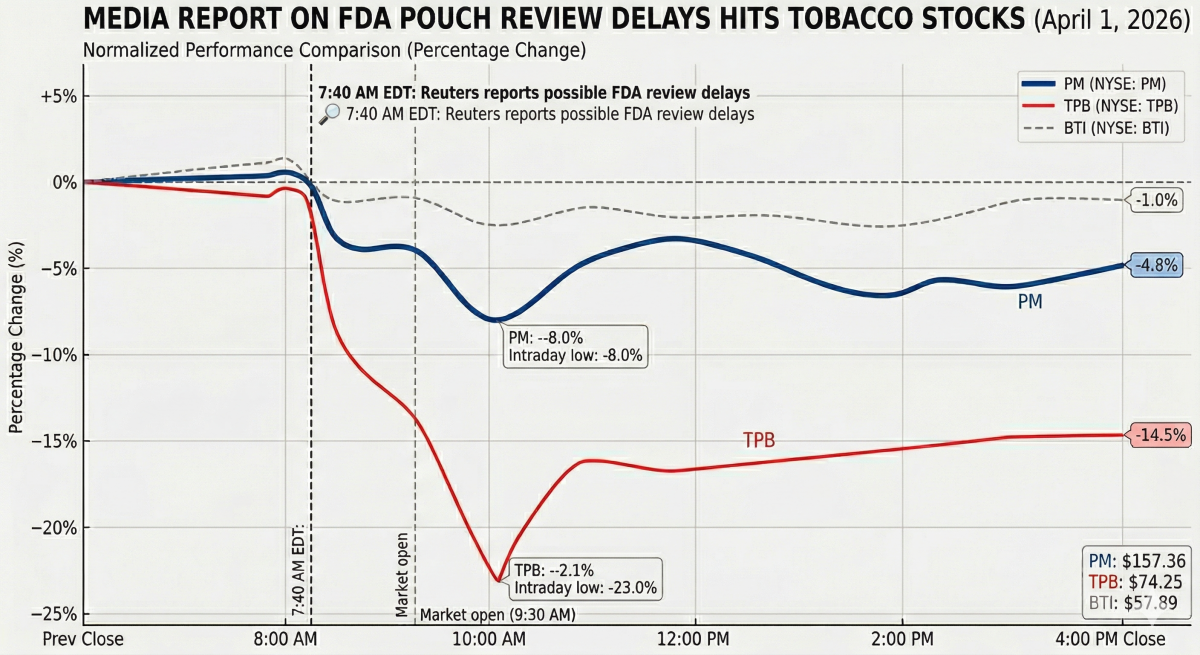
On July 22, Fog Core Technology received its production license, which was expected to have a positive impact on the company. However, in the three trading days following this news, the company's stock price dropped by 15%.
After being listed for a year and a half, WuXi AppTec's stock price continued to plummet, with its total market value dropping from a peak of $54.2 billion to $2.7 billion, a decrease of $51.5 billion or approximately 347.7 billion yuan. At the latest closing price of $1.74, the company's stock price has dropped 92% compared to its IPO price.
This article contains excerpts or reprints of content from third-party sources, whose copyrights belong to the original media and author. If there is any infringement, please contact us for removal. Any organization or individual who wishes to reprint must contact the author and should not reprint without permission.
This document has been generated through artificial intelligence translation and is provided solely for the purposes of industry discourse and learning. Please note that the intellectual property rights of the content belong to the original media source or author. Owing to certain limitations in the translation process, there may be discrepancies between the translated text and the original content. We recommend referring to the original source for complete accuracy. In case of any inaccuracies, we invite you to reach out to us with corrections. If you believe any content has infringed upon your rights, please contact us immediately for its removal.