Key Points
● FDA action: The FDA issued warning letters to eight retailers selling unauthorized nicotine pouches and dissolvable tobacco products.
● Child appeal: The cited products resembled candy, breath strips and cough drops, raising concerns over youth appeal and accidental ingestion.
● Regulatory signal: FDA enforcement is focusing not only on authorization status, but also on packaging, labeling, marketing and retail controls.
● Global context: WHO recently warned that nicotine pouch packaging and marketing may increase child appeal and accidental ingestion risks.
2Firsts
May 21, 2026
The U.S. Food and Drug Administration said on May 20 that it had issued warning letters to eight retailers for selling unauthorized tobacco products, including nicotine pouches and dissolvable tobacco products, that the agency said resembled candy, breath strips and cough drops.
The FDA said the products lacked authorization and were being sold in violation of the Federal Food, Drug, and Cosmetic Act. The agency said products that look like everyday items may be accidentally ingested by young children and may appeal to children seeking to conceal the products from parents, teachers or other adults.
“No tobacco product should look like candy — it’s a blatant ploy to target children and mask the true nature of these products,” said Bret Koplow, acting director of the FDA’s Center for Tobacco Products. “FDA and its partners are committed to implementing an aggressive enforcement strategy to stop illegal products like these from ending up on shelves or in the hands of kids.”
Eight Retailers Cited
The eight retailers or websites named in the warning letters were gethyppe.com, npouches.com, pouchew.com, pouchline.com, vapetrinity.com, Smoker Business, vapenovaco.com and snusguys.com.

The products cited in the letters included nicotine lozenges, nicotine strips, nicotine films and nicotine pouches. Product names referenced flavours or formats including toffee, mint, blue raspberry, candy, watermelon, cola marmalade and strawberry.
The FDA said the retailers were directed to address the violations identified in the letters, as well as any other violations that were the same as or similar to those described. The agency said failure to promptly correct the violations could result in further action, including injunctions, seizures and civil money penalties.
The warning letters were addressed to retailers, not manufacturers. Some products cited in the letters carried recognizable brand or product names, but the FDA action in this announcement was directed at the sellers of those products.
Candy-Like Packaging Under Scrutiny
Packaging concerns that have appeared in parts of the unauthorized e-cigarette market are now surfacing in some nicotine pouches and dissolvable tobacco products, according to the FDA’s warning letters.
For oral nicotine products, the compliance risk is not limited to nicotine content or authorization status. Products that are small, portable and designed for discreet use may attract closer scrutiny when their packaging, labelling, flavour positioning or marketing makes them resemble ordinary consumer goods or products associated with children.
WHO Flags Child-Appeal Risks in Nicotine Pouch Packaging
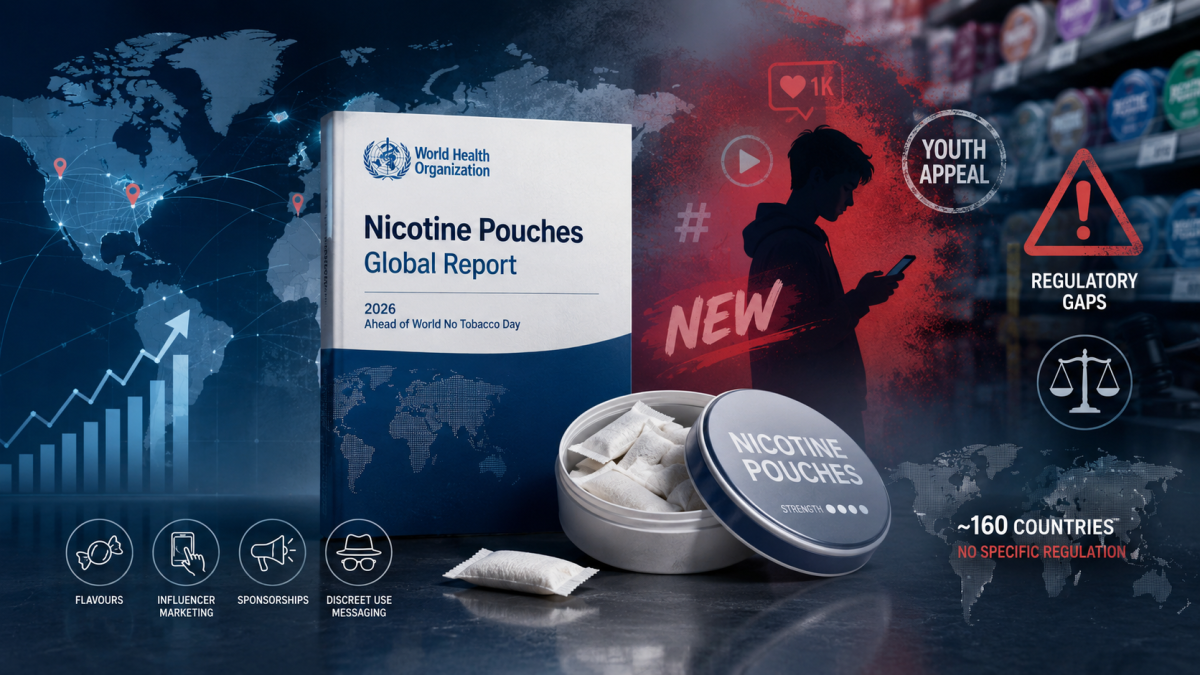
The FDA action came days after the World Health Organization released its first global report dedicated to nicotine pouches.
In that report, WHO warned that the fast-growing category is being marketed through flavours, packaging, social media promotion, influencer marketing, sponsorships and discreet-use messaging. The report also highlighted examples of nicotine pouch packaging resembling popular candy products, raising concerns about child appeal and accidental ingestion.
The FDA warning letters show how some of those concerns are appearing in U.S. enforcement against specific unauthorized products.
Legal Market Access and Enforcement Move in Parallel
The FDA said the latest actions followed the release of guidance on the agency’s enforcement priorities for electronic nicotine delivery systems, or ENDS, and nicotine pouch products that do not have premarket authorization.
The guidance clarifies enforcement priorities for unauthorized ENDS and nicotine pouch products, while the premarket tobacco product application pathway remains the route for products seeking legal marketing authorization in the United States.
For nicotine pouch brands, distributors and retailers, compliance now extends beyond authorization status to packaging, labeling, advertising and retail controls.
2Firsts will continue tracking FDA enforcement and authorization updates for oral nicotine products.
(Cover image generated by AI.)
Disclaimer
This article is provided solely for professional research, industry discussion, and informational purposes. Any references to brands, companies, products, technologies, or policies are made for factual reporting and analytical purposes only, and do not constitute endorsement, recommendation, promotion, or advertising by 2Firsts.
Nicotine-containing products, including but not limited to cigarettes, e-cigarettes, heated tobacco products, and nicotine pouches, carry significant health risks. Readers are responsible for complying with all applicable laws and regulations in their respective jurisdictions, including age restrictions and access limitations.
The information contained in this article should not be regarded as investment, legal, medical, regulatory, or commercial advice. While 2Firsts strives to ensure the accuracy and reliability of its content, it does not assume liability for any direct or indirect loss arising from errors, omissions, inaccuracies, or reliance on the information contained herein.
This article is not intended for individuals below the legal age for accessing tobacco or nicotine-related information in their jurisdiction.
Copyright Notice
This article is either original content produced by 2Firsts or content reproduced, translated, summarized, or adapted from third-party sources with attribution where applicable. The intellectual property rights of the original content remain with 2Firsts or the respective original rights holders.
No individual or organization may copy, reproduce, distribute, republish, modify, translate, or otherwise use this content without prior authorization. Any unauthorized use may result in legal action.
For copyright-related inquiries, corrections, or removal requests, please contact: info@2firsts.com.
AI-Assisted Translation and Editing Notice
Portions of this article may have been translated, edited, or reviewed with the assistance of artificial intelligence tools to improve efficiency and readability. Due to the limitations of AI-assisted translation and editing, discrepancies, omissions, or inaccuracies may exist when compared with the original source.
Where applicable, readers are advised to refer to the original source for the most complete and accurate information. If you identify any errors or believe that any content infringes upon your rights, please contact us at info@2firsts.com, and we will review and address the matter promptly.