Key Points
- STAT and The Examination reported concerns raised by former FDA toxicologist Christy Leppanen.
- Leppanen said the FDA did not fully understand ZYN pouch materials before authorizing the products.
- The concern centers on whether pouch materials could shed microplastic-like particles during use.
- The FDA said its review did not identify new or additional concerns about the products’ ingredients or materials.
- ZYN received FDA marketing authorization in January 2025 and modified risk orders in June 2026.
2Firsts
July 16, 2026
According to an investigation published by STAT and The Examination on July 14, 2026, former U.S. Food and Drug Administration toxicologist Christy Leppanen has questioned whether the FDA fully understood the material used in ZYN nicotine pouches before authorizing the products for sale. The concern centers on whether the pouch material could shed tiny particles during use.
Former FDA Toxicologist Questions Material Review
Leppanen worked at the FDA’s Center for Tobacco Products and led a project examining potential microplastics exposure. According to the report, she was told by a colleague involved in an environmental assessment of ZYN that the nicotine pouches dissolved in the mouth, but she later said her own understanding was reinforced that they did not.
The Examination reported that Leppanen bought a can of menthol-flavored ZYN at the Mall of America and conducted informal tests at home, including placing the pouches in her mouth, soaking them in saliva, heating them, crushing them and sucking them. She said the pouches did not dissolve.
In interviews, emails and recordings reviewed by The Examination, Leppanen alleged that the FDA lacked key facts about the material used in ZYN pouches, chose not to seek additional information from Philip Morris International, and nevertheless concluded that the material was unlikely to harm consumers.
Microplastic Risk Becomes the Core Issue
Leppanen and several scientists told The Examination that the pouches could shed tiny particles during use and that those particles could potentially be absorbed by users. Leppanen said that, given the growing body of information about microplastics exposure and how particles may enter the bloodstream from the gut, regulators needed to know what the materials were.
The Examination said there is little publicly available information about what nicotine pouches themselves are made of. It cited testing by Denmark’s Environmental Protection Agency of 11 nicotine pouch brands, including ZYN, which concluded that the pouch material was a semi-synthetic cellulose closely resembling cellulose acetate, the material used in cigarette filters.
The report noted that researchers have studied microplastics produced by cigarette filters, but that no published research has assessed microplastics from nicotine pouches or whether the pouch material itself could harm people. Richard Thompson, a marine biologist at the University of Plymouth, told The Examination that if pouches are made from cellulose acetate, they could potentially shed microplastics in the mouth.
FDA Says Its Review Found No New Material Concerns
An FDA spokesperson told The Examination that the agency authorized ZYN pouches after its review “did not identify new or additional concerns about the ingredients/materials of these products specifically.” The Examination said it asked the FDA three times what ZYN pouches are made of, but the agency did not respond.
Philip Morris International also did not tell The Examination what the pouches are made of. The report said PMI’s website describes the pouch material as cellulose, or plant fiber, without providing further detail.
Former FDA policy director and lawyer Eric Lindblom told The Examination that the law requires every component of the product to be evaluated. He said it would be “careless at best and negligent at worst” if the FDA did not examine whether the pouch material itself could be harmful.
ZYN Has Received Marketing and Modified Risk Authorizations
The FDA said in January 2025 that it authorized the marketing of 20 ZYN nicotine pouch products through the premarket tobacco product application, or PMTA, pathway. The agency described nicotine pouches as small synthetic fiber pouches containing nicotine that are placed between a person’s gum and lip.
On June 30, 2026, the FDA issued modified risk granted orders to Swedish Match USA for 20 ZYN nicotine pouch products. The agency said those products, already authorized for sale in the United States since January 2025, may now be marketed with a claim that using ZYN instead of cigarettes lowers the risk of mouth cancer, heart disease, lung cancer, stroke, emphysema and chronic bronchitis.
The FDA said the modified risk order applies to specific products, not to the entire nicotine pouch category. The products include ZYN Chill, Cinnamon, Citrus, Coffee, Cool Mint, Menthol, Peppermint, Smooth, Spearmint and Wintergreen, each in 3-milligram and 6-milligram nicotine strengths.
Rapid Market Growth Adds to Scrutiny
STAT and The Examination reported that the tobacco industry is promoting nicotine pouches and e-cigarettes because they deliver nicotine without inhaled cigarette smoke. The report cited TobaccoIntelligence estimates that the U.S. nicotine pouch market will grow 37% this year to $6.8 billion.
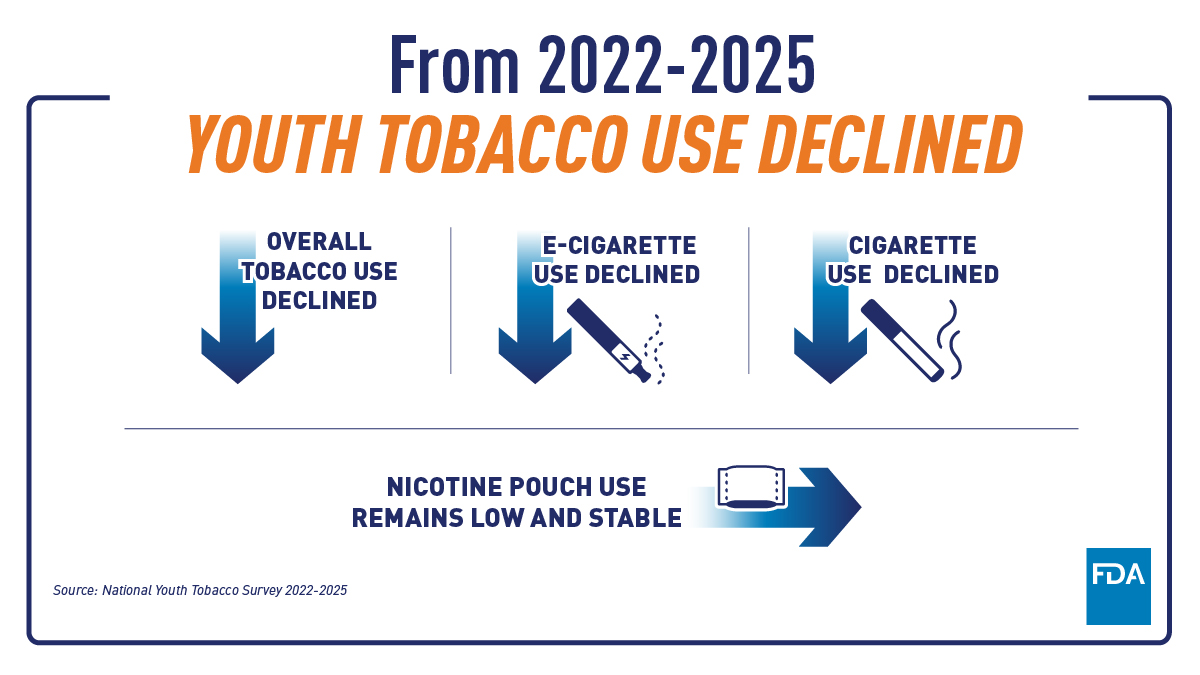
UCSF reported that the FDA’s June 30 decision allowing ZYN to use a specific lower-risk marketing claim has alarmed some public health experts, who say the decision could give the largest nicotine pouch maker a powerful marketing tool. UCSF also cited a national study finding that nicotine pouch use among U.S. youth and young adults nearly quadrupled between 2022 and 2025.
For the nicotine pouch industry, FDA authorization of ZYN has been a major milestone. For regulators and public health researchers, the new allegations show that the debate over nicotine pouch review may extend beyond nicotine delivery, flavors, youth use and relative risk to include pouch materials, possible microplastic exposure and environmental impact.
Follow 2Firsts for the latest updates on global tobacco harm reduction, nicotine products and regulatory developments.
Cover Image source: STAT
Disclaimer
This article is provided solely for professional research, industry discussion, and informational purposes. Any references to brands, companies, products, technologies, or policies are made for factual reporting and analytical purposes only, and do not constitute endorsement, recommendation, promotion, or advertising by 2Firsts.
Nicotine-containing products, including but not limited to cigarettes, e-cigarettes, heated tobacco products, and nicotine pouches, carry significant health risks. Readers are responsible for complying with all applicable laws and regulations in their respective jurisdictions, including age restrictions and access limitations.
The information contained in this article should not be regarded as investment, legal, medical, regulatory, or commercial advice. While 2Firsts strives to ensure the accuracy and reliability of its content, it does not assume liability for any direct or indirect loss arising from errors, omissions, inaccuracies, or reliance on the information contained herein.
This article is not intended for individuals below the legal age for accessing tobacco or nicotine-related information in their jurisdiction.
Copyright Notice
This article is either original content produced by 2Firsts or content reproduced, translated, summarized, or adapted from third-party sources with attribution where applicable. The intellectual property rights of the original content remain with 2Firsts or the respective original rights holders.
No individual or organization may copy, reproduce, distribute, republish, modify, translate, or otherwise use this content without prior authorization. Any unauthorized use may result in legal action.
For copyright-related inquiries, corrections, or removal requests, please contact: info@2firsts.com.
AI-Assisted Translation and Editing Notice
Portions of this article may have been translated, edited, or reviewed with the assistance of artificial intelligence tools to improve efficiency and readability. Due to the limitations of AI-assisted translation and editing, discrepancies, omissions, or inaccuracies may exist when compared with the original source.
Where applicable, readers are advised to refer to the original source for the most complete and accurate information. If you identify any errors or believe that any content infringes upon your rights, please contact us at info@2firsts.com, and we will review and address the matter promptly.