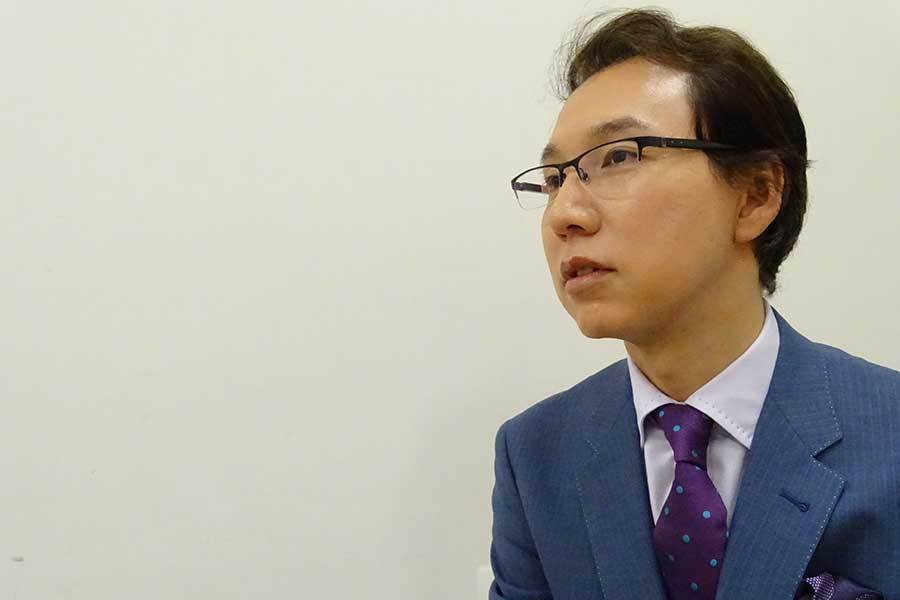
According to a report from "JAF Mate Online" on April 17th, it may not necessarily be a good thing for non-smokers if everyone were to quit smoking. Since 2000, the number of smokers in Japan has been decreasing, but due to the increase in tobacco prices, tobacco tax revenue has remained above 2 trillion yen for over 20 years. So, where exactly is this large sum of tax money being used? And what would happen if tobacco tax revenue were to disappear? Economic commentator and economist Mr. Takafumi Kadokura has commented on this issue.
Mr. Tokumura Guishi mentioned, "The purpose of tobacco taxes is not clearly disclosed to the public. Taxes are generally divided into specific purpose taxes and general taxes. Taxes designated for specific purposes are called specific purpose taxes, but tobacco taxes are not specific purpose taxes, so we are not sure where this tax revenue is being used. If we were to guess, local governments are likely using this tax revenue for disaster relief, road and sewer construction, education facility construction, and the operation of elderly welfare institutions, among other things. I believe it is definitely being used to improve the lives of residents."
Over the past 20 years, there has been minimal change in tax revenue of 2 trillion yen, while the number of smokers has actually decreased significantly. Many are questioning whether this phenomenon is due to the increase in tobacco prices.
In the interview, Mitsufumi Monokura said, "For the past 20 years, tobacco tax revenue has remained around 2 trillion yen. Despite a significant decrease in the number of smokers, this has been offset by the increase in tobacco prices. A pack of cigarettes now costs 580 yen, with only 222 yen being the cost of the tobacco itself, the remaining roughly 60% is taxes. Regardless of fluctuations in the number of smokers, tobacco tax revenue has consistently remained at 2 trillion yen. After increasing taxes, some people may quit smoking, but others will continue to smoke regardless of the price. Personally, I believe that the Ministry of Finance has done a good job in maintaining tax revenue at 2 trillion yen through their pricing strategy."
Smokers are hoping to increase the number of smoking places through tobacco taxes, but opponents of smoking argue that due to the health hazards of passive smoking, medical expenses will increase. Even with tax revenue, the overall burden on the nation will also increase, so it's best not to smoke. Due to objective data showing that heated tobacco products reduce health risks to those around them, Takefumi Monzen believes that making heated tobacco products an option is a balanced approach for both smokers and non-smokers.
At the end of the interview, Takanori Kadokura explained, "Despite the rising prices of tobacco and the policies implemented since 2020 to reduce smoking, it should not be overlooked that reducing the number of smokers to zero would also mean a loss of 2 trillion yen in tax revenue. In that case, other sources would need to make up for this gap. For example, the 2 trillion yen in tobacco tax is equivalent to 1% of the consumption tax. If this revenue disappears, it may be necessary to increase the consumption tax by 1%, eventually impacting non-smokers negatively in terms of tax burden. Therefore, smokers and non-smokers need to come up with some compromise solutions, such as smokers considering using reduced-harm heated cigarettes to lessen health risks, while the government can still maintain a stable tax revenue. Opponents of smoking also need to consider that secondhand smoke can lead to higher medical expenses, even if there is tax revenue to offset it. Therefore, quitting smoking is the better choice. However, opting for heated cigarettes can mitigate the health impact on those around you. Personally, I believe choosing heated cigarettes can be a compromise solution for both smokers and non-smokers."
We welcome news tips, article submissions, interview requests, or comments on this piece.
Please contact us at info@2firsts.com, or reach out to Alan Zhao, CEO of 2Firsts, on LinkedIn
Notice
1. This article is intended solely for professional research purposes related to industry, technology, and policy. Any references to brands or products are made purely for objective description and do not constitute any form of endorsement, recommendation, or promotion by 2Firsts.
2. The use of nicotine-containing products — including, but not limited to, cigarettes, e-cigarettes, nicotine pouchand heated tobacco products — carries significant health risks. Users are responsible for complying with all applicable laws and regulations in their respective jurisdictions.
3. This article is not intended to serve as the basis for any investment decisions or financial advice. 2Firsts assumes no direct or indirect liability for any inaccuracies or errors in the content.
4. Access to this article is strictly prohibited for individuals below the legal age in their jurisdiction.
Copyright
This article is either an original work created by 2Firsts or a reproduction from third-party sources with proper attribution. All copyrights and usage rights belong to 2Firsts or the original content provider. Unauthorized reproduction, distribution, or any other form of unauthorized use by any individual or organization is strictly prohibited. Violators will be held legally accountable.
For copyright-related inquiries, please contact: info@2firsts.com
AI Assistance Disclaimer
This article may have been enhanced using AI tools to improve translation and editorial efficiency. However, due to technical limitations, inaccuracies may occur. Readers are encouraged to refer to the cited sources for the most accurate information.
We welcome any corrections or feedback. Please contact us at: info@2firsts.com