Malaysian e-cigarette industry requests suspension of new regulations

Sep.24.2024
Malaysian e-cigarette industry requests suspension of new regulations
Malaysia's e-cigarette industry calls for a halt to new regulations under the Public Health Control Act 2024. (19 words)

According to Malaymail's report on September 23, local e-cigarette industry practitioners in Malaysia are calling on the government to temporarily suspend and reevaluate a series of new regulations under the Public Health (Control of Tobacco Products) Amendment Act 2024, stating that these regulations could potentially cripple the industry.


This legislation was announced on February 2nd of this year, with plans for it to take effect next month (October).


Datuk Adzwan Manas, chairman of the Malaysia Retail E-Cigarette Association (MRECA), stated that the Ministry of Health implemented new regulations at the last minute, following only one briefing session, leaving industry professionals with insufficient time to prepare for the transition.


Azwan mentioned that the new regulations include banning the display of e-cigarette products at store counters, reducing the maximum capacity of disposable e-cigarette liquid to 3 milliliters, and decreasing bottled e-cigarette liquid to 15 milliliters. However, the current market generally offers e-cigarette liquid capacities between 30 milliliters to 60 milliliters. He believes that the reduction should be gradual every two years rather than a significant decrease to 15 milliliters for disposables.


The Ministry of Health did not give all suppliers, manufacturers, and entrepreneurs enough time to complete their products. What are the manufacturers who are still producing products that may take another one or two months to complete, or those who have already ordered raw materials, supposed to do?


In addition, Azwan pointed out that the Ministry of Health has also requested for the gradual phase-out of existing stock within six months, but the industry needs at least a year to complete this process. The registration fee for each e-cigarette product is 5000 ringgit (approximately 1200 US dollars), which is significantly high as they have already paid a lot for Sirim certification and other regulatory requirements.


At a press conference following the submission of a memorandum to the Prime Minister's office, Azwan stated that a recent survey showed that most e-cigarette companies are willing to pay a registration fee of 500 to 900 Malaysian ringgit (120 to 215 USD) per product.


The memorandum was signed by five associations, namely MRECA, the Malaysian E-Cigarette and Tobacco Alternatives Association (MEVTA), the Malaysian E-Cigarette Industry Advocacy Group, the Malaysian E-Cigarette Traders Association and the Malaysian E-Cigarette Chamber of Commerce, collectively representing over 2000 e-cigarette traders.


Azwan stated that, given that the e-cigarette industry is also an important source of revenue for the country, these groups are still pushing for negotiations with the Ministry of Finance led by the Prime Minister. The e-cigarette industry also supports displaying products behind the counter, rather than the government's proposed total display ban, which would affect their business.


We have always supported regulation of the e-cigarette industry, but we hope it can be implemented gradually. Do not push us to the brink of collapse with stringent regulations at the last minute.


We welcome news tips, article submissions, interview requests, or comments on this piece.

Please contact us at info@2firsts.com, or reach out to Alan Zhao, CEO of 2Firsts, on LinkedIn


Notice

1.  This article is intended solely for professional research purposes related to industry, technology, and policy. Any references to brands or products are made purely for objective description and do not constitute any form of endorsement, recommendation, or promotion by 2Firsts.

2.  The use of nicotine-containing products — including, but not limited to, cigarettes, e-cigarettes, nicotine pouchand heated tobacco products — carries significant health risks. Users are responsible for complying with all applicable laws and regulations in their respective jurisdictions.

3.  This article is not intended to serve as the basis for any investment decisions or financial advice. 2Firsts assumes no direct or indirect liability for any inaccuracies or errors in the content.

4.  Access to this article is strictly prohibited for individuals below the legal age in their jurisdiction.


Copyright


This article is either an original work created by 2Firsts or a reproduction from third-party sources with proper attribution. All copyrights and usage rights belong to 2Firsts or the original content provider. Unauthorized reproduction, distribution, or any other form of unauthorized use by any individual or organization is strictly prohibited. Violators will be held legally accountable.

For copyright-related inquiries, please contact: info@2firsts.com


AI Assistance Disclaimer


This article may have been enhanced using AI tools to improve translation and editorial efficiency. However, due to technical limitations, inaccuracies may occur. Readers are encouraged to refer to the cited sources for the most accurate information.

We welcome any corrections or feedback. Please contact us at: info@2firsts.com

Product | PMJ Adds Bold Ruby to IQOS ILUMA i Lineup in Japan, Convenience-Store Rollout Starts Sept. 29
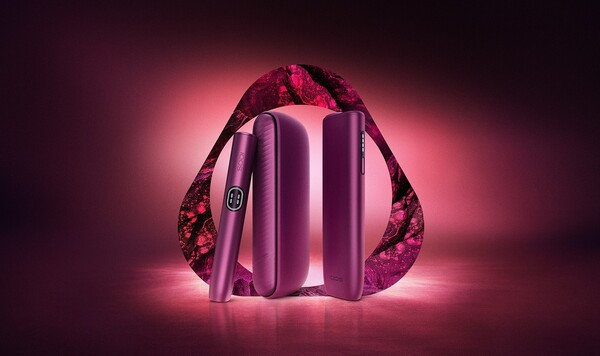
Philip Morris Japan (PMJ) launched Bold Ruby as a new regular color for the IQOS ILUMA i and IQOS ILUMA i ONE in Japan on September 16, 2026, priced at JPY 6,980 and JPY 3,980, respectively. Initial sales began through IQOS online and physical channels, with convenience stores and selected tobacco retailers set to follow from September 29. Bold Ruby is a regular rather than limited-edition colorway and is available for the ILUMA i and ILUMA i ONE, but not the ILUMA i PRIME. The release does not involve changes to the devices' core hardware or functions.
Sep.22
2Firsts On-Site | CTIHK Showcases Nicotine Pouches, Heated Tobacco and Chinese Cigars at InterTabac 2026
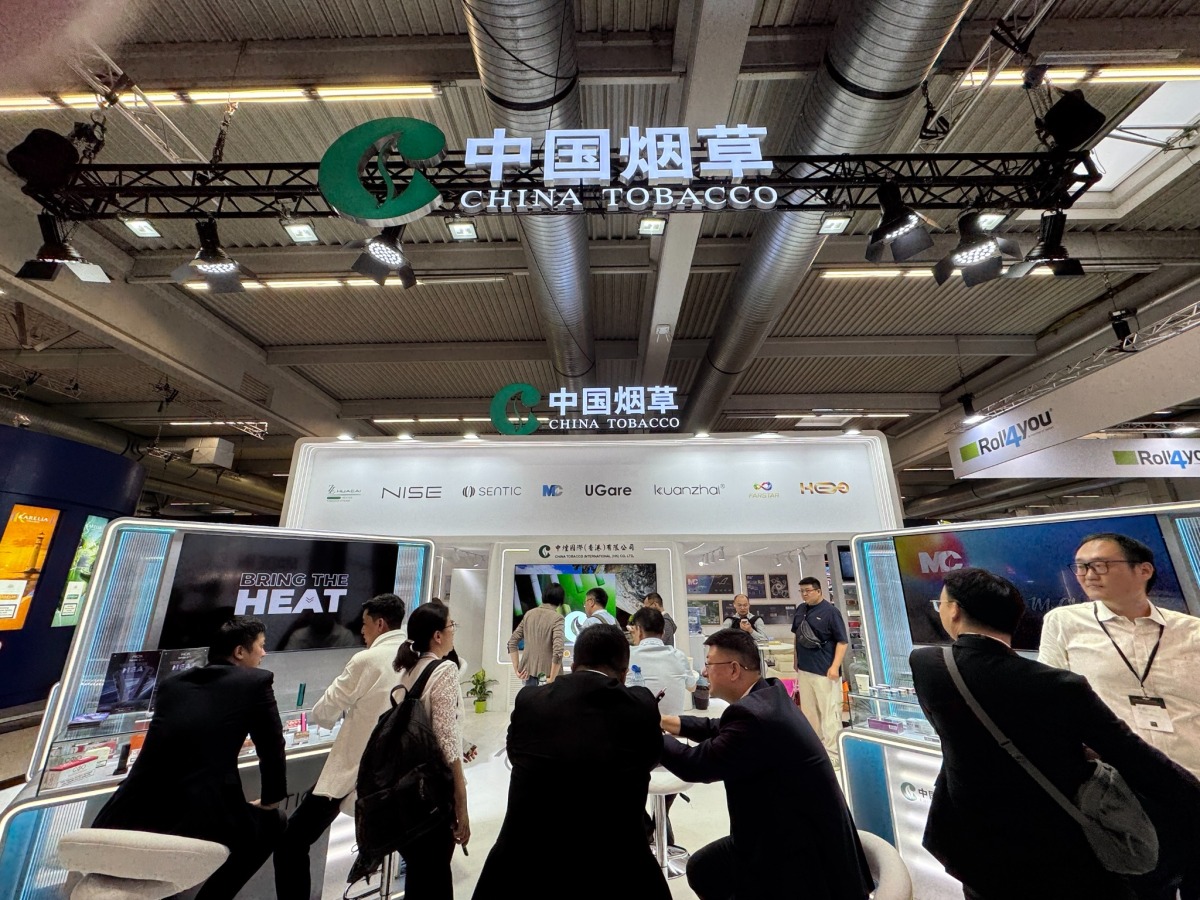
At InterTabac 2026 in Dortmund, China Tobacco International (HK) Company Limited (CTIHK) is exhibiting across two separate booths in Hall 5 and Hall 4. Products observed by 2Firsts include heated tobacco products, nicotine pouches, Chinese cigars and tobacco leaf. Nicotine pouch products on display include TOOP, Shuangxi and Ashima.
Market
Sep.16
Product | JT Launches Three Autumn-Limited Ploom Tobacco Sticks in Japan Across EVO, MEVIUS and CAMEL Brands
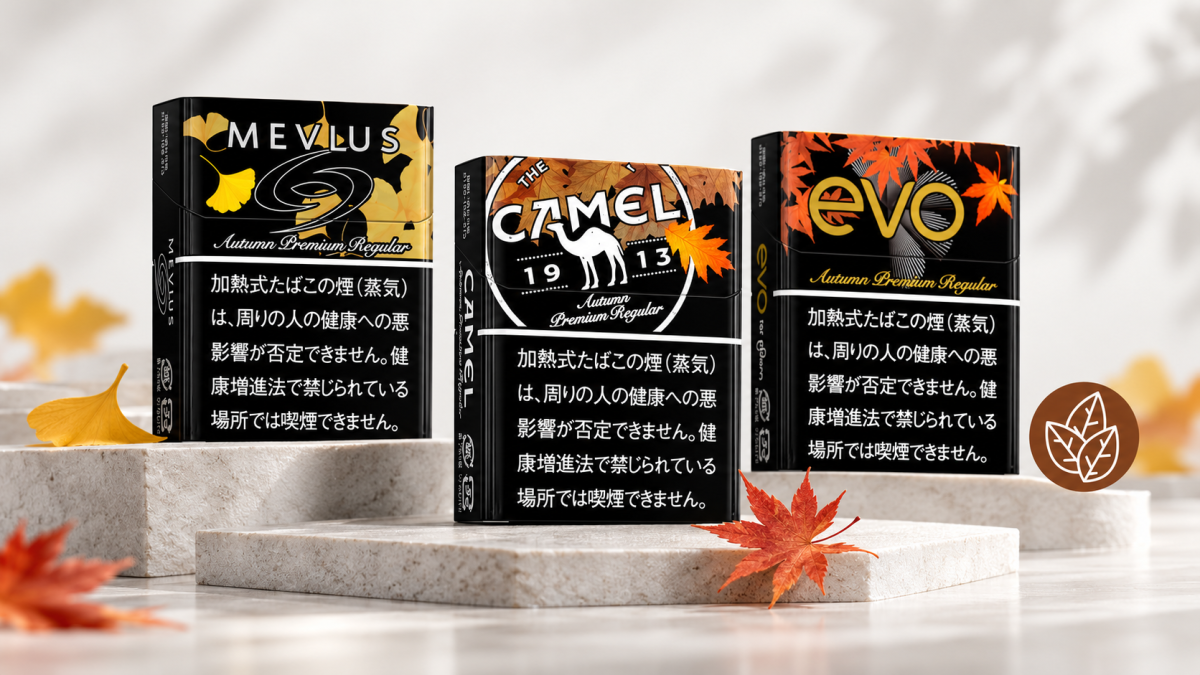
Japan Tobacco Inc. (JT) launched three limited-edition autumn tobacco sticks for its Ploom heated tobacco devices in Japan on October 16, 2026, under the EVO, MEVIUS and CAMEL brands. All three are regular tobacco variants with seasonal packaging. Each pack contains 20 sticks, priced at ¥620, ¥590 and ¥570, respectively, including tax. The products are compatible with all Ploom devices and are sold in limited quantities exclusively through the CLUB JT online store while supplies last.
product
Oct.20
Special Report|CrossBar's High-Puff Vapes Draw Attention on Pennsylvania's 163-Product Directory as Link Between Earlier 1.3mL PMTA Filings and New 13mL Products Remains Unclear
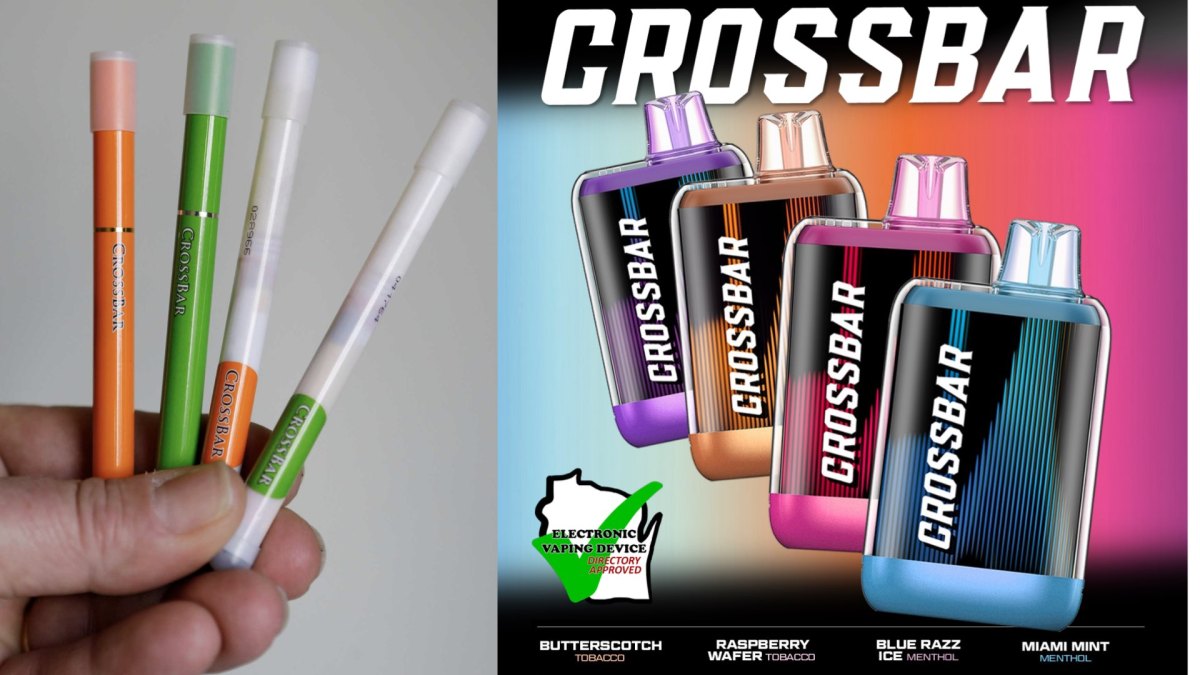
Pennsylvania began enforcing its electronic nicotine delivery system directory restrictions on October 19, 2026. Among 163 product listings recorded before enforcement, four CrossBar 20K disposables stood out with 13mL capacity, advertised puff counts of up to 20,000 and a flattened design distinct from conventional pod systems and compact disposables. Historical records identify earlier 1.3mL CrossBar products associated with Romo LLC, while newer 13mL products appeared in several state directories beginning in 2025 under entities including Blue Nine LLC. PMTA compliance expert Mr. K identified amendments and application ownership transfers as possible regulatory mechanisms, although neither has been confirmed in this case. Separately, Reynolds' $7.5 million acquisition of 16 PACHA products and related assets illustrates the commercial value of products linked to historic PMTA submissions.
Special Report
Oct.22
Huabao International Buys Indonesian HNB Manufacturer for RMB 90 Million, Adding OEM/ODM Capacity
Huabao International Holdings Limited will acquire 100% of PT Broad Far Indonesia through two wholly owned subsidiaries for approximately RMB 90 million. The Indonesian company manufactures and sells heat-not-burn tobacco sticks and provides OEM/ODM services. The sellers are part of a related-party group controlled by Huabao International Chair and controlling shareholder Zhu Linyao. PT Broad Far Indonesia generated $4.37 million in revenue and $177,000 in profit after tax in the first half of 2026, while net assets stood at about $326,000 at June-end. An independent valuer assessed the company’s equity at approximately RMB 93.06 million. Following completion, the HNB manufacturing operation will be consolidated into Huabao International.
News
Sep.29 by 2Firsts Perspectives
Pennsylvania Vape Directory Enforcement Starts Oct. 19, Barring Retail Sales of Unlisted Products
Pennsylvania's Act 57 vape directory regime will reach the end of its 120-day inventory transition period on Oct. 19. Nicotine-containing e-cigarettes intended for retail sale in the state that are not listed on the Attorney General's ENDS directory will then be barred from retail sale and treated as contraband subject to seizure, forfeiture and destruction. Manufacturers face annual product certification, brand- and style-based fees and a minimum $50,000 surety bond, while retailers and wholesalers must source through licensed channels and monitor the directory.
Regulations
Oct.08