Regulation of Tobacco Consumption Equipment and Components in Abkhazia

Regulations by 2FIRSTS.ai
Dec.08.2023
Regulation of Tobacco Consumption Equipment and Components in Abkhazia
The Abkhazian Parliament has passed a bill regulating the circulation of nicotine consumption devices and components to protect citizens' health.

According to a report from the Russian Abkhazian media outlet Apsnypress on December 7th, the Parliament of the Russian Republic of Abkhazia has passed a bill titled "Regulation of the Circulation of Nicotine Consumption Devices, their Components, and Parts.


The bill was introduced by representative Inar Gitsba. He stressed that the main objective of this legislation is to protect the citizens of the Republic of Abkhazia, particularly the lives and health of minors, from the excessive use of nicotine products.


In recent years, there has been a significant increase in the circulation of nicotine products in Abkhazia, particularly the usage of inhalation devices such as e-cigarettes. These devices extensively utilize nicotine solutions, e-liquids infused with flavorings and colorants, as well as additives that enhance nicotine dependence.


According to the data provided by Jisba, there is a continuous rise in the market promotion of new nicotine products, which are being praised as "safer," "delicious," and "smokeless." Manufacturers package these products as "safe" and "tasty," employing various marketing strategies to attract new users, especially minors, in order to create early dependency on nicotine.


Gisba stated:


A recent study has found that the use of e-cigarettes can have detrimental effects on the protective barrier of the lungs, leading to lung fibrosis and causing chronic bronchitis. Furthermore, it increases the risk of myocardial infarctions, strokes, and the development of cancerous diseases. As a result, more than 30 countries have already implemented bans on the sale of e-cigarettes.


According to statistics from Abkhazia, over 71,000 e-cigarette devices and e-liquids have been imported into Abkhazia from January 1, 2020, to May 2, 2023.


We welcome news tips, article submissions, interview requests, or comments on this piece.

Please contact us at info@2firsts.com, or reach out to Alan Zhao, CEO of 2Firsts, on LinkedIn


Notice

1.  This article is intended solely for professional research purposes related to industry, technology, and policy. Any references to brands or products are made purely for objective description and do not constitute any form of endorsement, recommendation, or promotion by 2Firsts.

2.  The use of nicotine-containing products — including, but not limited to, cigarettes, e-cigarettes, nicotine pouchand heated tobacco products — carries significant health risks. Users are responsible for complying with all applicable laws and regulations in their respective jurisdictions.

3.  This article is not intended to serve as the basis for any investment decisions or financial advice. 2Firsts assumes no direct or indirect liability for any inaccuracies or errors in the content.

4.  Access to this article is strictly prohibited for individuals below the legal age in their jurisdiction.


Copyright


This article is either an original work created by 2Firsts or a reproduction from third-party sources with proper attribution. All copyrights and usage rights belong to 2Firsts or the original content provider. Unauthorized reproduction, distribution, or any other form of unauthorized use by any individual or organization is strictly prohibited. Violators will be held legally accountable.

For copyright-related inquiries, please contact: info@2firsts.com


AI Assistance Disclaimer


This article may have been enhanced using AI tools to improve translation and editorial efficiency. However, due to technical limitations, inaccuracies may occur. Readers are encouraged to refer to the cited sources for the most accurate information.

We welcome any corrections or feedback. Please contact us at: info@2firsts.com

EU Vape, Heated Tobacco and Nicotine Pouch Tax Reform Reaches Ministerial Talks: Sweden Opposes Proposed 2032 Minimum of 50% of Retail Price or €50/kg for Nicotine Pouches
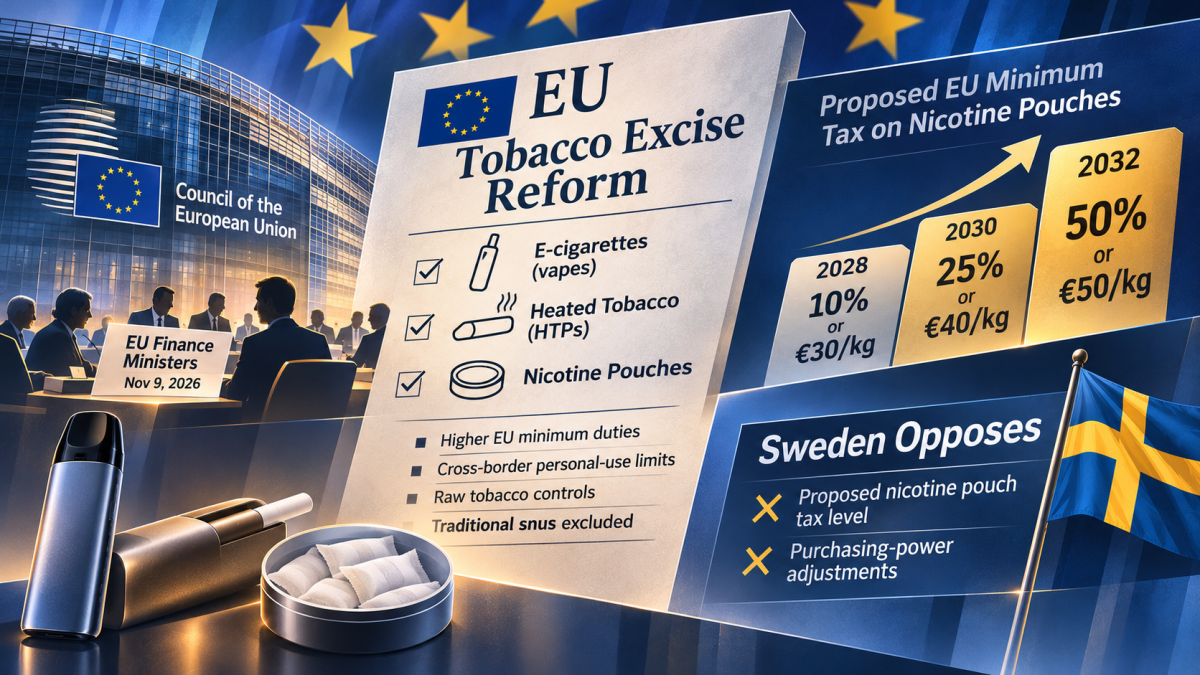
EU finance ministers are scheduled to discuss tobacco excise reform on November 9, 2026, seeking agreement on higher minimum duties for conventional tobacco and a common EU minimum tax framework covering e-cigarettes, heated tobacco and nicotine pouches. A November 5 Council document identifies nicotine pouch taxation as the main outstanding issue. The Irish Council presidency proposes phased increases, reaching 50% of retail selling price or €50 per kilogram in 2032. Sweden has formally said it cannot support the current compromise, objecting to both the proposed nicotine pouch tax burden and the adjustment of minimum rates based on national purchasing power. The package also addresses cross-border personal-use reference quantities, raw tobacco controls and the continued exclusion of traditional tobacco snus.
Regulations
Nov.10
GAO Audit Finds Nearly 132,000 FDA Tobacco Applications Waiting an Average 1,266 Days as Nicotine Pouch Pilot Practices Move Into Vape PMTA Reviews
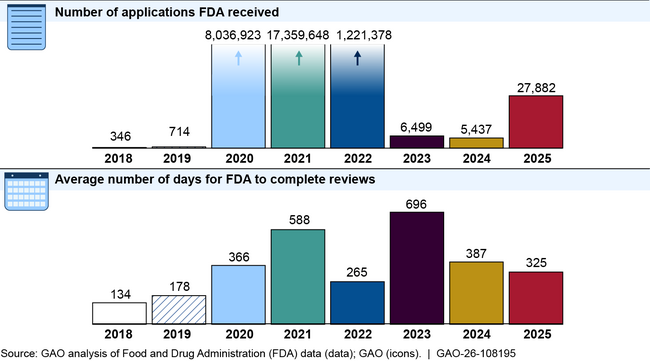
A U.S. Government Accountability Office audit found that 131,915 tobacco product applications submitted to the FDA since 2018 remained without a final review as of December 31, 2025, with pending applications waiting an average of 1,266 days. GAO also found FDA lacks the data needed to systematically determine whether scientific reviews meet applicable timelines. HHS agreed to upgrade the agency's tracking systems. At the same time, FDA has begun applying lessons from its nicotine pouch PMTA pilot to e-cigarette reviews, while changes to enforcement policy and electronic submissions are making the specific stage of a PMTA increasingly relevant to market access.
FDA
Oct.03
Special report|Indonesia's Vape Industry Has 200 Manufacturers and $1.7 Billion in Investment. Could a Regulatory Divide Derail Its Rise as the World's No. 2 Manufacturing Hub After Shenzhen?
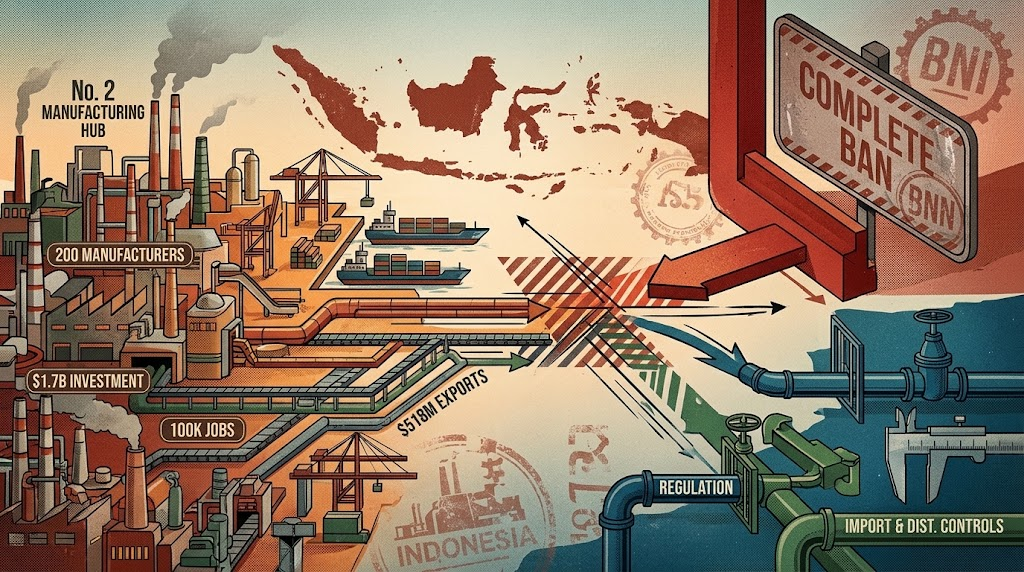
Indonesia's Ministry of Industry said at a November 3, 2026, policy forum that the country has about 200 electronic cigarette companies, Rp31 trillion (approximately $1.71 billion) in cumulative industry investment and around 100,000 jobs across the supply chain. The National Narcotics Agency is seeking a comprehensive ban on vape use and circulation, while the industry ministry favors tighter import, product-standard and distribution controls. Indonesia exported approximately $518 million in vaping products in 2025, and Chinese manufacturers including Smoore, GEEKVAPE and Jinjia Group have established local operations. An international logistics specialist interviewed by 2Firsts said more Chinese vape companies began production in Indonesia from the second half of 2025, accompanied by increased shipments of manufacturing equipment and investment in logistics facilities. The regulatory debate comes as Indonesia expands its role in international vaping manufacturing.
Special Report
Nov.05
PMI Expands Its Second Global and First Asian Business Services Hub in the Philippines, Serving 160 Markets and Scaling Up AI Capabilities
Philip Morris International's PMI Business Solutions Philippines has expanded its global business services hub in Makati and plans to add more than 80 positions. Established in 2021 primarily to provide finance and IT support to about 20 markets, the center now employs 519 professionals delivering roughly 600 services across 160 markets. Its functions now span finance, human resources, IT, commercial operations, data analytics, supply chain and project management. PMI says the hub's next phase will focus on AI-enabled and higher-value work. The company did not disclose the size or investment cost of the expansion.
Sep.24
RLX Technology Dropped From FTSE All-World as International Business Reaches 68.5% of Q2 Revenue
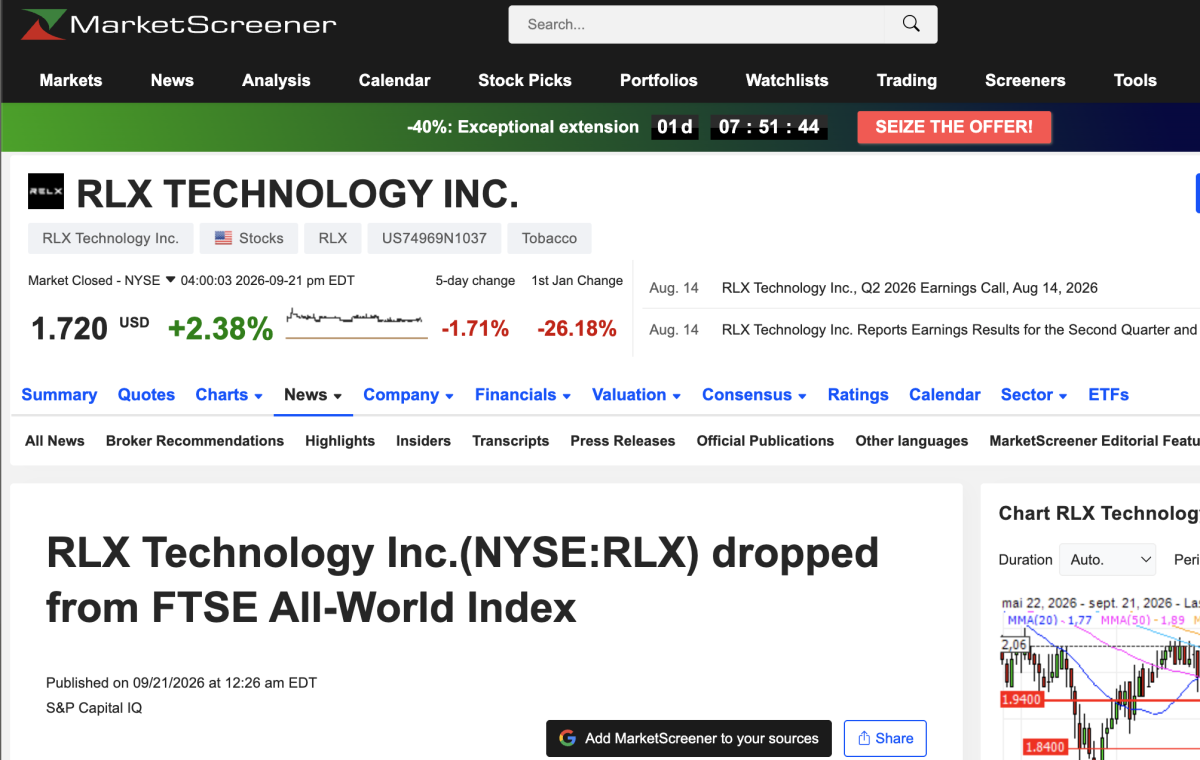
RLX Technology (NYSE: RLX) has been removed from the FTSE All-World Index, effective September 21. FTSE Russell records show RLX was already part of its global equity index universe by 2022, when its American depositary receipts were classified as China Large Cap securities. Trading volume rose to about 44.77 million shares on September 18, roughly 23 times the previous session's volume. RLX reported RMB1.0105 billion in second-quarter revenue, up 14.8% year over year, with international operations contributing 68.5%. The company also acquired a 51% stake in one of Western Europe's largest distributors of next-generation smoke-free and FMCG products in July.
Sep.22
South Korea Extends Vape Rules to Unmanned Stores After Bringing Synthetic Nicotine Under Tobacco Law
South Korea's Ministry of Gender Equality and Family said on September 14 that it plans to designate unmanned e-cigarette stores as businesses where minors are prohibited from entering or working. Operators would be required to verify customers' ages and display notices restricting access by minors. The proposal is open for public comment through October 6. The move follows an April expansion of South Korea's statutory tobacco definition that brought products made with natural or synthetic nicotine under the Tobacco Business Act. Nicotine-free liquids and products using nicotine analogues such as 6-methylnicotine, however, remain an emerging regulatory issue.
Sep.21