Key Points
- A second Russian presidential decree dated November 6 added three JT entities to the four placed under temporary administration on November 5, bringing the total to seven.
- JT confirmed on November 9 that all of its Russian local entities were now under temporary administration, while its Russian business continued to operate.
- The additional entities are JTI Russia, JTI Innovative Products and Pereslavl-Tabak. They are associated with importing, management, holdings and former Ploom device supply activities. JT described one of the three as dormant.
- As of September 30, JT reported approximately ¥1.5 trillion in Russian business-related assets, including ¥360 billion in cash and deposits, and approximately ¥200 billion in liabilities.
- Under its revised FY2026 forecast, Russia represents about 10% of consolidated reported revenue and 25% of adjusted operating profit. The financial impact of temporary administration remains uncertain.
2Firsts
November 9, 2026
Japan Tobacco Inc. (JT) confirmed on November 9 that all seven of its Russian entities had been placed under temporary administration after President Vladimir Putin signed a second decree on November 6 adding three companies to the four designated a day earlier. JT also disclosed approximately ¥1.5 trillion in Russian business-related assets as of September 30, including ¥360 billion in cash and deposits. The group said operations in Russia were continuing, although the financial impact of the measures remained under review.
The newly designated companies are associated with importing, management, holdings and the former supply of Ploom heated-tobacco devices, extending temporary administration beyond cigarette manufacturing and tobacco processing.
Second Decree Adds Three Entities, Bringing All Seven Russian Companies Under Administration
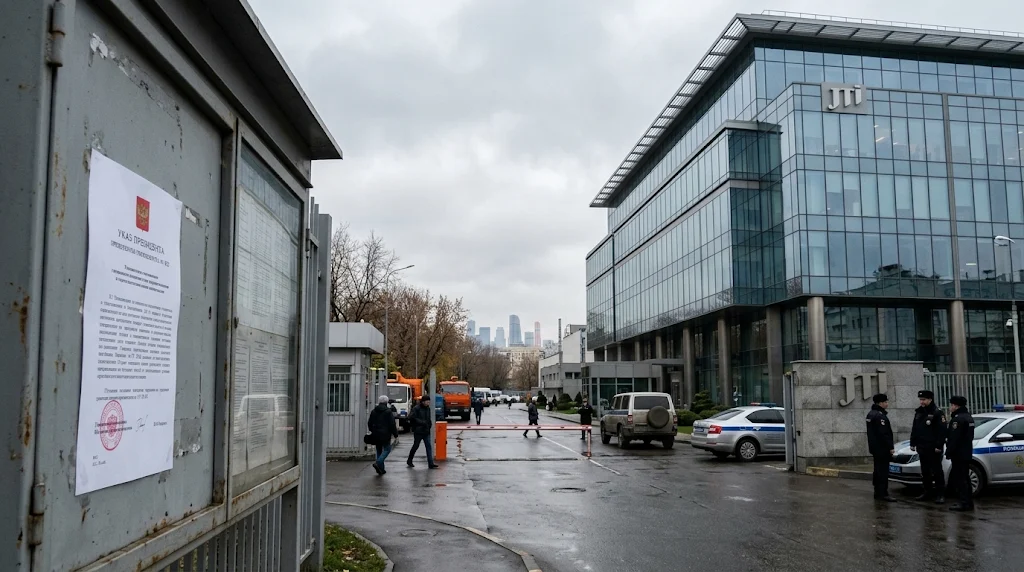
Russian Presidential Decree No. 832, signed on November 6, placed equity interests in three additional Japan Tobacco International (JTI) entities under the temporary administration of Russian joint-stock company Industrial Assets (Promyshlennye Aktivy).
The companies identified in the decree are:
JTI Russia (ООО «Дж.Т.И. Россия»): An entity associated with importing, management and shareholding activities within JTI's Russian business.
JTI Innovative Products (ООО «Дж.Т.И. Инновационные продукты»): A company that previously supplied Ploom heated-tobacco devices in Russia, according to Kommersant.
Pereslavl-Tabak (АО «Переславль-Табак»): A holding-related entity within JTI's Russian corporate structure.
The decree covers all shares in Pereslavl-Tabak and all ownership interests in JTI Russia and JTI Innovative Products held by Luxembourg-based JTI Investments Sarl.
In its November 9 statement, JT identified the second group as JTI Russia, JTI Innovative Products and "one dormant entity," without naming the third company. Decree No. 832 identifies Pereslavl-Tabak as the third newly designated entity.
Russian news agency Interfax reported on November 7 that the additional companies were involved in importing, operating management and holding activities within JTI's Russian business.
The first decree, signed on November 5, placed equity interests in Petro, JTI Donskoy Tabak, JTI Yelets and Cres Neva under temporary administration. Those companies were associated primarily with cigarette manufacturing and tobacco processing.
Kommersant reported that JTI Innovative Products, which was not covered by the first decree, previously handled supplies of Ploom heated-tobacco devices in Russia. JT has not disclosed the company's current operating scale or confirmed whether Ploom device supplies have been affected.
The two decrees extended temporary administration from manufacturing and processing businesses to additional importing, management and holding entities.
JT confirmed on November 9 that all of its local entities in Russia were now subject to temporary administration.
JT Discloses ¥1.5 Trillion in Related Assets; Russia Accounts for 25% of Adjusted Operating Profit
In its November 9 statement, JT disclosed the assets, liabilities and cash balances associated with its Russian operations.
As of September 30, 2026, Russian business-related assets recorded in JT's consolidated financial statements amounted to approximately ¥1.5 trillion, including goodwill.
Cash and deposits accounted for approximately ¥360 billion of those assets, while related liabilities stood at approximately ¥200 billion.
All amounts are approximate and represent the financial statement balances associated with JT's Russian business, rather than a confirmed financial loss.
Under JT's revised FY2026 forecast announced alongside its third-quarter results, Russia accounts for approximately 10% of consolidated reported revenue and 25% of adjusted operating profit.
JT said it continued to assess the potential impact of temporary administration on its Russian operations and consolidated financial results.
The company has not disclosed whether the measures will lead to asset impairments, restrictions on access to cash and deposits, or changes in the accounting treatment of its Russian business.
The developments have also affected JT shares.
According to Reuters, JT shares fell by ¥1,500, or approximately 19.3%, to ¥6,269 on November 6. Reuters reported on the morning of November 9 that the stock had yet to trade amid heavy sell orders.
JT's November 9 disclosure provided additional financial information about the group's Russian operations, including asset, liability and cash balances not specified in its earlier announcement.
JT Says Russian Business Continues to Operate as Financial Impact Remains Uncertain
JT confirmed on November 9 that its Russian business continued to operate despite all local entities being placed under temporary administration.
The company said it was monitoring developments, gathering information and evaluating available options and potential implications. Any matters requiring disclosure would be announced promptly.
Kommersant reported on November 7 that Industrial Assets, the temporary administrator of the relevant JTI holdings, was registered in Moscow in September 2026 and founded by Sergey Dremov.
Industrial Assets Chief Executive Anton Pivovarov said the company's priorities were to maintain stable operations, retain existing employees and fulfil obligations to staff and business partners.
No new operating agreement between JT and the temporary administrator has been publicly confirmed, and details of any transfer of day-to-day management authority remain undisclosed.
The Japanese government previously protested the Russian measures and called for their withdrawal. Japan's Ministry of Finance is a major shareholder in JT.
The two Russian presidential decrees establish temporary administration over specified shares and ownership interests. They do not announce a formal transfer of ownership to the administrator.
JT's Russian business continues to operate, although the group has yet to determine how temporary administration may affect its assets, access to cash or future financial results.
2Firsts previously published a special report examining the first decree issued on November 5, the four JTI entities initially affected, JTI's Russian market position and the operations of international tobacco companies in Russia.
Follow 2Firsts for timely updates on global tobacco and nicotine industry developments, corporate strategy and market trends.
Cover Image generated by AI