South Africa's Illegal Tobacco Trade Causes Massive Tax Revenue Loss

Regulations by 2FIRSTS.ai
Jan.03.2024
South Africa's Illegal Tobacco Trade Causes Massive Tax Revenue Loss
South Africa's tax agency lost over 20 billion rand ($1.08 billion) in revenue last year due to illegal tobacco trading.

According to South African media outlet IOL, the South African Revenue Service suffered tax losses of over 20 billion South African Rand (approximately 1.078 billion US dollars) last year due to illegal tobacco trading.


According to reports, the 20 billion Rand fund that was initially intended for financing solar power systems could be used to liberate 20 small towns from the control of state-owned power companies.


The head of the customs department, Beales Sillon, pointed out that tobacco has consistently held the top spot in South Africa's illicit economy, with approximately 15 million illegal cigarettes being lit every day, three-quarters of which are sold in informal retail stores.


The Transnational Alliance to Combat Illicit Trade (TRACIT) has highlighted in its report that South Africa, despite being the largest and most diverse economy in Africa, and the only African representative in the G20 and BRICS economic organizations, faces numerous challenges in illegal trade. These challenges span across sectors such as alcohol, tobacco, fisheries, mining, counterfeit electronics, pharmaceuticals, food, and clothing. The scale of these illegal trade losses is staggering, causing significant revenue and resource loss for an economy that could have otherwise benefited from increased infrastructure investment and improved living conditions for its citizens.


The South African Revenue Service estimates that illegal trade costs the South African economy up to 100 billion South African Rand (approximately 5.4 billion US dollars) annually. The Business Leadership South Africa (BLSA) estimates that the country loses approximately 250 million South African Rand in tax revenue every day.


Furthermore, according to estimates from the Organisation for Economic Co-operation and Development (OECD), South Africa is losing between $3.5 to $5 billion annually due to illicit financial flows, which is equivalent to more than 1% of its Gross Domestic Product (GDP).


These data reveal the serious issues that South Africa faces in combating illegal trade, which not only damages the country's finances but also hinders economic sustainability.


We welcome news tips, article submissions, interview requests, or comments on this piece.

Please contact us at info@2firsts.com, or reach out to Alan Zhao, CEO of 2Firsts, on LinkedIn


Notice

1.  This article is intended solely for professional research purposes related to industry, technology, and policy. Any references to brands or products are made purely for objective description and do not constitute any form of endorsement, recommendation, or promotion by 2Firsts.

2.  The use of nicotine-containing products — including, but not limited to, cigarettes, e-cigarettes, nicotine pouchand heated tobacco products — carries significant health risks. Users are responsible for complying with all applicable laws and regulations in their respective jurisdictions.

3.  This article is not intended to serve as the basis for any investment decisions or financial advice. 2Firsts assumes no direct or indirect liability for any inaccuracies or errors in the content.

4.  Access to this article is strictly prohibited for individuals below the legal age in their jurisdiction.


Copyright


This article is either an original work created by 2Firsts or a reproduction from third-party sources with proper attribution. All copyrights and usage rights belong to 2Firsts or the original content provider. Unauthorized reproduction, distribution, or any other form of unauthorized use by any individual or organization is strictly prohibited. Violators will be held legally accountable.

For copyright-related inquiries, please contact: info@2firsts.com


AI Assistance Disclaimer


This article may have been enhanced using AI tools to improve translation and editorial efficiency. However, due to technical limitations, inaccuracies may occur. Readers are encouraged to refer to the cited sources for the most accurate information.

We welcome any corrections or feedback. Please contact us at: info@2firsts.com

Special Report | From New York to Washington: How FDA’s Tobacco Center Is Reworking Product Review
FDA’s Center for Tobacco Products is reshaping how it approaches tobacco product review. Based on 2Firsts’ on-site reporting in New York and Washington, this report traces CTP’s emerging direction: stronger links between PMTA and tobacco harm reduction, more category-specific review, greater emphasis on decision-relevant science, more predictable timelines and expanded use of sPMTA for product modifications. CTP also acknowledged major constraints, including just nine PMTA review teams, persistent backlogs and limits on hiring capacity.
Regulations
Oct.08
Indonesia's Influential Islamic Body MUI Urges Vape Permit Freeze, Raising Uncertainty for 200 Manufacturers
Indonesia's Ulema Council (MUI) published Fatwa No. 131/2026 on November 9, declaring electronic cigarette use, production and trade haram under Islamic religious rules. The council urged the Industry Ministry to prohibit the issuance of vape industry permits and review licensing policies, while calling on the president and parliament to enact a comprehensive ban. On November 10, the Constitutional Court heard a challenge to provisions of the 2023 Health Law seeking a prohibition on vape production, importation, distribution and use. The Health Ministry said on November 11 it was studying stronger restrictions, including a possible ban on circulation, while industry association APVI called for tighter oversight rather than a total ban. Indonesia's Industry Ministry previously estimated the sector comprises about 200 companies, Rp31 trillion ($1.7 billion) in cumulative investment and approximately 100,000 supply-chain jobs. No nationwide statutory ban has been enacted.
Regulations
Nov.12
Product | Philip Morris Japan Teams Up With Renowned French Audio Brand DEVIALET for Limited-Edition IQOS Priced 60% Above Standard Model
Philip Morris Japan (PMJ) launched the limited-edition IQOS ILUMA i PRIME Soundsorial Model in collaboration with French audio brand DEVIALET on October 1, 2026. Featuring sound-wave patterns, a silver-and-black finish and a gradient holder, the heated tobacco device is priced at JPY 15,980, including tax, and is available at four IQOS stores in Japan. According to Japanese media citing a PMJ representative, about 1,900 units were allocated to the Japanese retail market. A separate Soundsorial Collection, combining the device with DEVIALET Gemini II earbuds, includes 440 sets allocated to Japan for a membership prize draw.
product
Oct.23
Product | Japan Tobacco Expands Nordic Spirit Nicotine Pouch Range to Eight SKUs in Japan, Launches Melon Variant and Broadens Mint Retail Distribution
Japan Tobacco Inc. (JT) launched Nordic Spirit Rich Melon Medium through selected tobacco retailers in Japan on November 2, 2026, while expanding physical retail distribution for three existing mint products previously sold through the CLUB JT online store. The melon launch brings Nordic Spirit's Japanese portfolio to eight SKUs. All four products are manufactured in Sweden, contain a standard 14 pouches per can and retail for ¥500 including tax. Since introducing Nordic Spirit in Japan in March, JT has expanded the brand's product lineup and distribution through its online store, convenience stores and selected tobacco retailers.
product
Nov.04
On-Site Report | After FDA Announces Review of PMTA Framework, CTP Director Details Reform Priorities
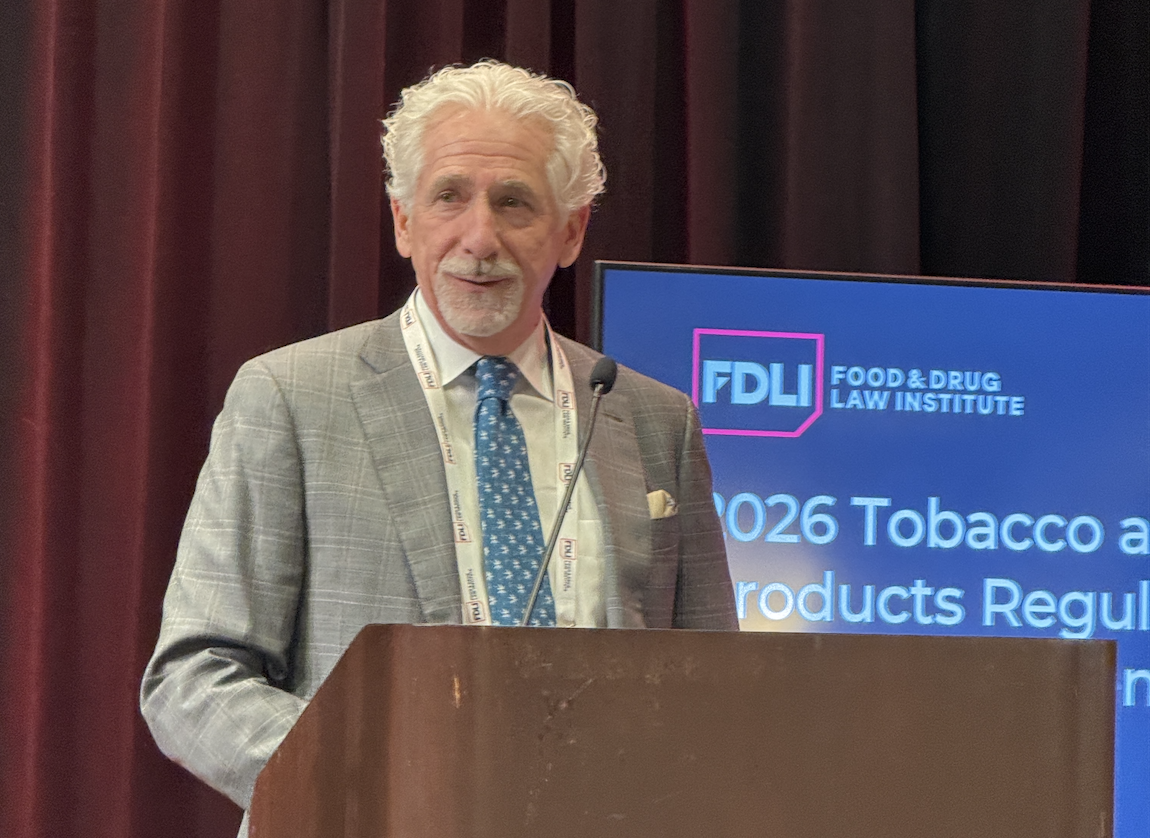
FDA CTP Director Bret Koplow used his FDLI keynote in Washington to outline how the agency is rethinking the PMTA framework. He discussed category-specific review, nicotine pouch and sPMTA pilots, AI-assisted review, a 70% reduction in pending applications, and a major staffing constraint: CTP currently has only nine scientific review teams. He also reaffirmed tobacco harm reduction while stressing youth protection, flavored products, risk communication, and the challenge of unauthorized e-cigarettes.
Regulations
Oct.06
Product | PMI Launches ZYN Melts in UK, Extending ZYN Beyond Nicotine Pouches Into Dissolvable Tablets
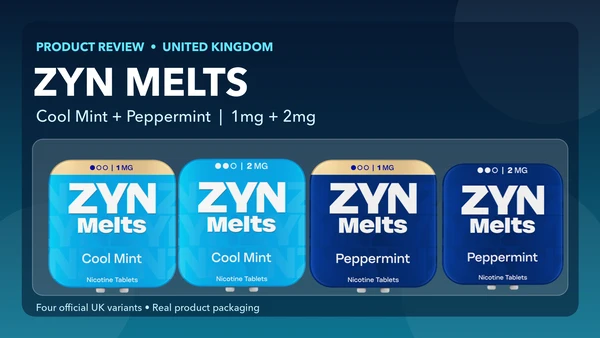
Philip Morris International (PMI) has launched ZYN Melts in the UK, introducing a fully dissolvable oral nicotine tablet format alongside the brand's existing nicotine pouches. The range includes Cool Mint and Peppermint, each offered at 1mg and 2mg of nicotine per tablet, creating four SKUs. Each can contains 20 tablets and is priced at £6.50 in the UK. Unlike ZYN nicotine pouches, Melts are placed between the upper lip and gum and dissolve completely during use.
News
Sep.29 by 2Firsts Perspectives