Key Points
- South Korea's Ministry of Health and Welfare reported 765 million won in national health promotion charges assessed on synthetic-nicotine vaping products between April 24 and September.
- The Chosun Ilbo estimated combined major taxes and charges at 2.622 billion won, with the monthly average representing approximately 1.3% of a previous government projection adjusted for temporary reductions.
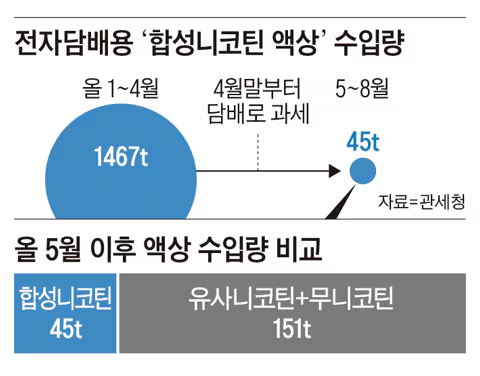
- Synthetic-nicotine imports fell nearly 96.9%, from approximately 1,467 metric tons in January–April to 45 metric tons in May–August.
- Nicotine-analog and nicotine-free liquid imports totaled 151 metric tons in May–August, compared with 165 metric tons during the preceding four months.
2Firsts
November 19, 2026
South Korea's synthetic-nicotine tax collections are running far below earlier government forecasts nearly five months after the country brought synthetic nicotine under its tobacco tax and regulatory framework.
The Chosun Ilbo reported on November 18 that the office of Democratic Party lawmaker Lee In-young had obtained data from the Ministry of Health and Welfare on November 17 showing that national health promotion charges assessed on synthetic-nicotine liquid e-cigarettes totaled 765 million won between April 24 and September.
Using the health charge figure and statutory tax rates, the newspaper estimated that tobacco consumption tax, individual consumption tax, local education tax and national health promotion charges amounted to approximately 2.622 billion won over the period, averaging about 500 million won per month.
The government had previously projected approximately 930 billion won in additional annual taxes and charges from bringing synthetic nicotine under the tobacco definition. Adjusting that projection for temporary tax reductions through April 2028, The Chosun Ilbo calculated an expected monthly average of approximately 38.8 billion won. Its estimate of tax charges assessed following implementation was approximately 1.3% of that monthly forecast.
Meanwhile, customs figures showed a sharp decline in synthetic-nicotine imports. South Korea imported approximately 1,467 metric tons in January–April 2026, compared with 45 metric tons in May–August, a decrease of about 96.9%.
Estimated Major Taxes and Charges Total 2.62 Billion Won
South Korea's amended Tobacco Business Act took effect on April 24, 2026, expanding the statutory definition of tobacco beyond products made from tobacco leaves to include products manufactured wholly or partly using tobacco or nicotine.
Synthetic-nicotine vaping products, previously outside that definition because their nicotine was not tobacco-derived, consequently became subject to tobacco-related taxation and rules governing sales and advertising.
Temporary tax reductions were introduced for affected liquid e-cigarette products, with certain tax charges subject to a 50% reduction until April 2028.
According to the Ministry of Health and Welfare data obtained by Lee In-young's office, national health promotion charges assessed on synthetic-nicotine vaping products totaled 765 million won between April 24 and September.
The Chosun Ilbo used that figure and applicable statutory rates to estimate combined major taxes and charges at approximately 2.622 billion won.
That amount is a newspaper calculation based on one category of government-reported charges, not a directly published government total for tax revenue received.
The government had earlier projected approximately 930 billion won in additional annual taxes and charges following the expansion of tobacco regulation to synthetic nicotine.
The newspaper adjusted that forecast to reflect temporary tax reductions, producing a monthly benchmark of approximately 38.8 billion won. Its estimated monthly tax charges following implementation amounted to approximately 1.3% of that figure.
Synthetic-Nicotine Imports Fall 97% While Other Liquids Total 151 Tons
Korea Customs Service data also indicate a substantial change in the volume of synthetic nicotine imported before and after the April 24 regulatory change.
Synthetic-nicotine imports totaled approximately 1,467 metric tons during January–April 2026, declining to around 45 metric tons in May–August. That represents a drop of approximately 1,422 metric tons, or 96.9%.
Nicotine-analog and nicotine-free liquids continued to enter the country during the same period.
Customs figures published on September 23 showed that imports of these two categories totaled 151 metric tons in May–August, approximately 3.4 times the volume of synthetic-nicotine imports.
However, combined imports of nicotine-analog and nicotine-free liquids were also lower than in the preceding four months.
South Korea's E-Cigarette Liquid Import Volumes
| Product category | Jan–Apr 2026 | May–Aug 2026 | Change |
|---|---|---|---|
| Synthetic nicotine | Approx. 1,467 tons | Approx. 45 tons | -96.9% |
| Nicotine-analog liquids | Approx. 12 tons | Approx. 2 tons | -83.3% |
| Nicotine-free liquids | Approx. 153 tons | Approx. 149 tons | -2.6% |
| Nicotine-analog and nicotine-free liquids combined | Approx. 165 tons | Approx. 151 tons | -8.5% |
Sources: The Chosun Ilbo, November 18, 2026; Korea Customs Service, September 23, 2026. Figures represent customs import volumes, not consumer sales.
The Chosun Ilbo also reported that monthly nicotine-analog imports had increased from approximately 364 kilograms in October 2025 to 10.2 metric tons in April 2026, before the revised tobacco definition took effect.
Subsequent customs measures tightened scrutiny of nicotine-analog and nicotine-free imports. Nicotine-analog liquid imports fell to approximately 2 metric tons during May–August.
Retail Price Changes and Customs Controls
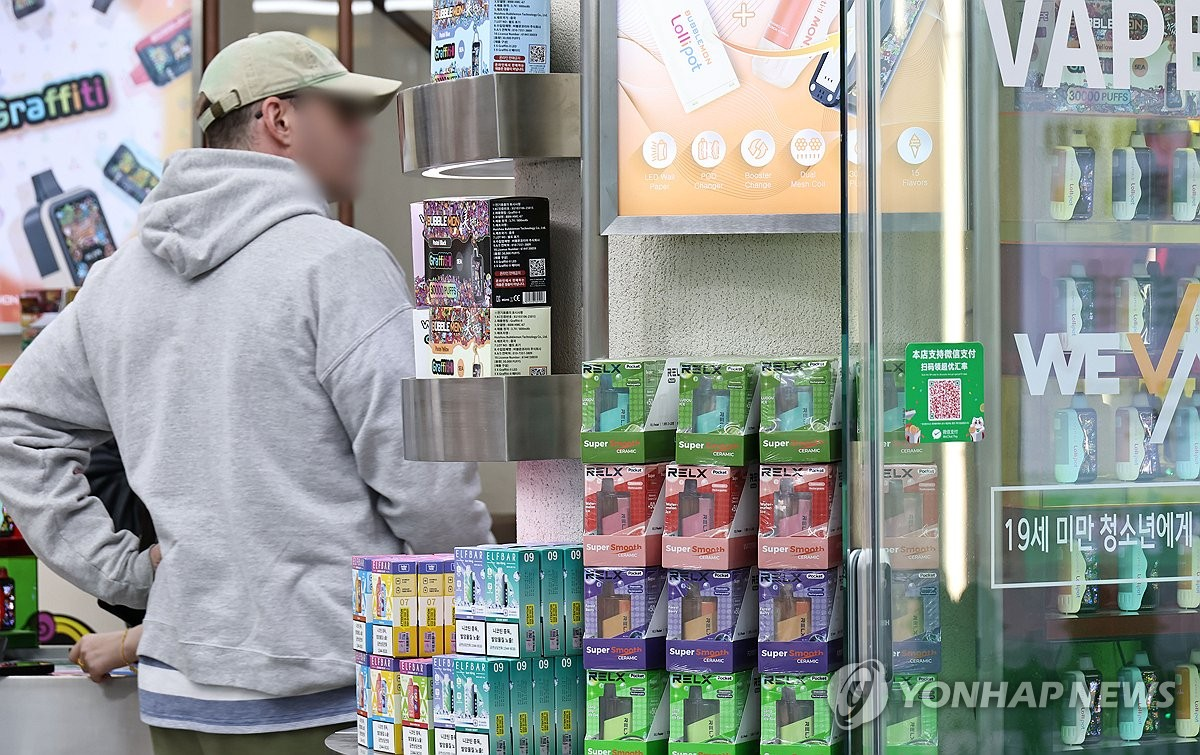
The Chosun Ilbo interviewed a 43-year-old liquid-vape consumer who said the price of his usual synthetic-nicotine liquid had increased from 13,000 won to approximately 20,000 won, prompting him to switch to a nicotine-analog product still priced at 13,000 won.
The prices and purchasing decision reflected the individual consumer's experience.
Lee Sung-kyu, head of the Korea Tobacco Regulation Research and Education Center, said businesses and consumers had incentives to avoid higher prices associated with the taxation of synthetic nicotine, while nicotine-analog and nicotine-free products remained subject to different regulatory treatment.
Korea Customs Service has meanwhile tightened import controls on these products.
According to its September 23 announcement, importers of nicotine-analog and nicotine-free liquids have been required to submit material safety data sheets since June 15. From August 18, all such liquid imports became subject to document review, including evidence covering overseas manufacturing, distribution and export transactions.
Customs authorities have also strengthened pre-clearance ingredient testing and investigated companies suspected of declaring nicotine-containing liquids as nicotine-free products to evade taxes.
As of September 20, South Korea had imported approximately 15 metric tons of nicotine-analog liquids, 99.99% of them from China. Nicotine-free liquid imports totaled approximately 316 metric tons, with China accounting for 99.7%.
Nicotine-Analog Regulation Remains Under Review
South Korea's April 2026 expansion of the legal tobacco definition brought nicotine products under tobacco regulation but did not automatically include all nicotine analogs.
One such compound is 6-methylnicotine, or 6-MN, which has a chemical structure similar to nicotine.
Earlier government testing of 105 liquid inhalation products marketed as nicotine-free detected nicotine in 13 products and 6-MN in 12.
The Ministry of Food and Drug Safety has said research into the hazards of nicotine analogs is underway, with results expected by the end of 2026. The findings will inform subsequent discussions with relevant government agencies.
Cho Hong-jun, an emeritus professor at the University of Ulsan College of Medicine, told The Chosun Ilbo that some nicotine-analog or nicotine-free products may contain substances capable of causing dependence, while the health effects of additives after aerosolization remain insufficiently studied.
The latest tax estimates and customs figures show substantial changes in synthetic-nicotine imports and the taxes assessed after the regulatory expansion. Further government decisions are pending on the treatment of nicotine analogs and related products.
Follow 2Firsts for timely updates on global tobacco and nicotine regulations, market developments and industry trends.
Cover Image: The Chosun Ilbo