Key Points
- South Korea's first Tobacco Harm Management Basic Plan for 2027–2031 would increase the number of constituents tested in liquid e-cigarettes from 20 to approximately 30, but nicotine analogs such as 6-methyl nicotine remain outside its scope.
- Amendments to the Tobacco Business Act brought synthetic nicotine within tobacco regulation on April 24. A June investigation of 105 liquid inhalation products marketed as nicotine-free detected nicotine in 13 products and 6-methyl nicotine in 12.
- Customs data showed that imports of nicotine analog solutions fell 83.3%, from 12 metric tons in January–April to 2 metric tons in May–August. Approximately 99.99% of such imports originated from China in the year through September 20.
- Customs authorities have introduced pre-clearance chemical analysis and expanded supply-chain documentation requirements, alongside investigations into suspected misdeclaration and tobacco tax evasion. The MFDS expects to complete its hazard research on nicotine analogs by the end of 2026.
2Firsts
November 4, 2026
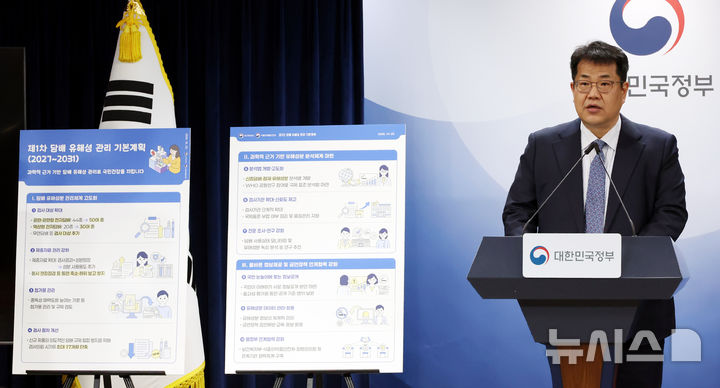
South Korea's Ministry of Health and Welfare (MOHW) and Ministry of Food and Drug Safety (MFDS) unveiled the country's first Tobacco Harm Management Basic Plan for 2027–2031 on October 29, proposing broader testing of e-cigarettes and heated tobacco products and expanded disclosure requirements for manufacturers and importers. However, nicotine analogs such as 6-methyl nicotine remain outside the plan.
South Korea brought synthetic nicotine under tobacco regulation on April 24, 2026. A government investigation in June subsequently found 6-methyl nicotine in 12 liquid inhalation products marketed as nicotine-free.
According to data released by the Korea Customs Service (KCS) on September 23, imports of nicotine analog solutions fell 83.3%, from 12 metric tons in January–April to 2 metric tons in May–August. Customs authorities have tightened pre-clearance chemical testing, supply-chain documentation requirements and investigations into suspected tax evasion.
The MFDS said research into the hazards of nicotine analogs was underway, with results expected by the end of 2026. Further regulatory measures will be discussed with relevant government agencies.
Five-Year Plan Expands Vape Testing but Leaves 6-Methyl Nicotine Outside Its Scope
The First Tobacco Harm Management Basic Plan, announced on October 29, is South Korea's first five-year programme under the Tobacco Harm Management Act, which came into force in November 2025.
Covering 2027 through 2031, the plan sets out measures to expand harmful constituent testing, strengthen manufacturer and importer disclosures, develop analytical methods and coordinate tobacco control policies.
Under the government's proposals, the number of constituents tested in conventional cigarettes and heated tobacco products will increase from 44 in 2025 to approximately 50 by 2030. For liquid e-cigarettes, the number will rise from 20 to approximately 30.
Categories previously outside the testing programme, including smokeless tobacco, cigars and waterpipe tobacco, will gradually be added.
Manufacturers and importers will be required to provide more information about their products. In addition to constituent testing results and the names of ingredients and additives, companies will have to disclose the purposes for which those substances are used.
Authorities plan to conduct unannounced on-site inspections to verify the accuracy of submitted information.
For newly marketed tobacco products, the government proposes reducing the deadline for requesting constituent testing from the first half of the following year to within one month of the start of sales, bringing applications forward by as much as 17 months.
South Korea will also assess the use and potential hazards of menthol, fruit flavourings and other additives, including the possibility of gradually restricting specific substances. No definitive list of prohibited ingredients or implementation dates has been announced.
Nicotine analogs, however, remain outside the new plan.
According to an October 29 report by South Korean news agency Newsis, MFDS officials explained that the Tobacco Harm Management Act follows the definition of tobacco under the Tobacco Business Act. Nicotine-free products and nicotine analogs are therefore not covered by the five-year programme.
The MFDS is conducting research into the toxicity of nicotine analogs, with findings expected by the end of 2026. The government plans to consult fiscal, environmental and other relevant agencies on possible regulatory measures.
Synthetic Nicotine Regulated Since April; June Tests Find 6-Methyl Nicotine in 12 Products
On April 24, 2026, South Korea implemented amendments to the Tobacco Business Act, expanding the definition of tobacco beyond products made from tobacco leaves to include products made using tobacco or nicotine.
The change brought synthetic nicotine e-cigarettes within the tobacco regulatory framework, subjecting them to applicable sales, advertising, packaging warning and tax requirements.
However, nicotine analogs with different chemical structures, including 6-methyl nicotine, were not automatically brought within the tobacco definition.
On June 24, South Korean authorities announced the findings of a joint investigation into liquid inhalation products marketed as nicotine-free.
The MFDS sampled 105 products sold online and advertised as containing no nicotine. Tests detected nicotine in 13 products and 6-methyl nicotine in 12.
The MFDS identified 6-methyl nicotine as a nicotine analog. Previous studies had reported nicotine-like biological effects, but comprehensive hazard assessments of the substance remained insufficient.
For products testing positive for nicotine, the government's fiscal authorities requested investigations into possible violations of the Tobacco Business Act.
For products containing 6-methyl nicotine, the MFDS recommended that the relevant businesses suspend sales and requested cooperation from online platforms, including Naver and Coupang, to block the products.
On August 26, the MFDS published a simultaneous analytical method for detecting nicotine and 6-methyl nicotine in liquid inhalation products, providing a technical basis for further product testing.
Customs Tightens Import Controls as Nicotine Analog Solution Imports Fall 83.3%
On September 23, the Korea Customs Service released updated import statistics and details of its strengthened clearance procedures for e-cigarette liquids.
According to KCS data, South Korea imported approximately 15 metric tons of nicotine analog solutions between January 1 and September 20, 2026. Imports originating from China accounted for 99.99% of that total.
During the same period, imports of nicotine-free solutions reached approximately 316 metric tons, including 315 metric tons from China, equivalent to 99.7%.
Customs records classify nicotine analog solutions and nicotine-free solutions separately. The latter category should not be treated as consisting entirely of products containing nicotine analogs.
KCS data showed that imports of nicotine analog solutions declined from 12 metric tons in January–April to 2 metric tons in May–August, a decrease of 83.3%. Imports of nicotine-free solutions fell from 153 metric tons to 149 metric tons over the same periods, down 2.6%.
South Korea's E-Cigarette Liquid Import Data
| Product category | Jan–Apr 2026 | May–Aug 2026 | Change by volume |
|---|---|---|---|
| Nicotine analog solutions | 12 metric tons | 2 metric tons | -83.3% |
| Nicotine-free solutions | 153 metric tons | 149 metric tons | -2.6% |
Source: Korea Customs Service, September 23, 2026. Figures refer to customs-cleared import quantities, not retail sales.
South Korea progressively strengthened import controls on the relevant products from June 2026.
From June 15, importers of nicotine analog and nicotine-free solutions were required to submit material safety data sheets (MSDS) to help verify whether shipments contained nicotine.
From July 16, the Central Customs Laboratory began conducting pre-clearance chemical analysis on all import declarations for e-cigarette liquids.
On July 28, customs authorities worked with the MFDS to establish a standardised analytical approach for nicotine analogs, combining qualitative and quantitative testing for consistent application nationwide.
On August 18, KCS expanded documentary review to all import declarations for nicotine analog and nicotine-free solutions.
Importers were required to submit five categories of supporting documents, including material safety data sheets, special electronic transaction contracts, records of commercial relationships among overseas producers and supply-chain participants, export declarations and relevant manufacturing licences.
Given the concentration of imports from China, customs authorities also examined China's e-cigarette licensing system and strengthened scrutiny of documentation covering production, distribution and export transactions within the country.
Beyond pre-clearance inspections, KCS launched investigations into companies suspected of misdeclaring natural nicotine as nicotine analog or nicotine-free solutions to evade tobacco-related taxes.
According to customs statistics, authorities identified 22 cases involving e-cigarette liquids containing nicotine but declared as nicotine-free between January 2025 and September 20, 2026. The cases involved a combined 65.43 litres of liquid.
The investigations also cover suspected underreporting of import values and improper cross-border payments.
In its September announcement, KCS said imports of nicotine analog and nicotine-free solutions had slowed following the tighter clearance measures. The available figures do not establish that individual measures caused the entire decline.
First Constituent Results Cover 465 Tobacco Products; Synthetic Nicotine Testing Starts in 2027
On October 29, the MFDS also published South Korea's first product-level results of harmful constituent testing, covering 465 tobacco products manufactured or imported by 20 companies.
The dataset comprised 256 conventional cigarette products, 104 heated tobacco products and 105 liquid e-cigarette products.
The 105 liquid e-cigarette products in this testing programme were separate from the 105 liquid inhalation products marketed as nicotine-free that were investigated in June.
According to the government, nicotine and tar were detected in all 256 conventional cigarette products. Nicotine, tar and formaldehyde were detected in all 104 heated tobacco products.
All 105 liquid e-cigarette products tested positive for nicotine, propylene glycol and glycerol, while formaldehyde was detected in 99 products.
The government cautioned that the different tobacco product categories were tested using different methods and measurement units. The results cannot be directly compared to establish the relative health risks of different product categories.
The 465-product dataset did not include synthetic nicotine products brought within the tobacco definition in April 2026.
The MFDS said constituent testing and public disclosure for synthetic nicotine tobacco products would begin in 2027. The agency also plans to develop standardised analytical methods for emissions from liquid e-cigarettes.
As of November 3, synthetic nicotine was already covered by South Korea's tobacco legislation, although its constituent testing and disclosure programme had yet to begin.
Nicotine analogs such as 6-methyl nicotine remain outside the latest five-year tobacco harm management plan, despite being subject to import inspections, product testing and certain sales-related interventions.
South Korea has not announced a specific legislative proposal to formally include 6-methyl nicotine in the tobacco definition, nor has it set a nationwide product ban or implementation date for the substance.
Follow 2Firsts for timely updates on global tobacco and nicotine regulations, market developments and industry trends.
Cover Image: Ministry of Health and Welfare