Surrey councillor calls for tougher vape sales controls, seeking the “most restrictive legally supportable” package

Feb.10
Surrey councillor calls for tougher vape sales controls, seeking the “most restrictive legally supportable” package
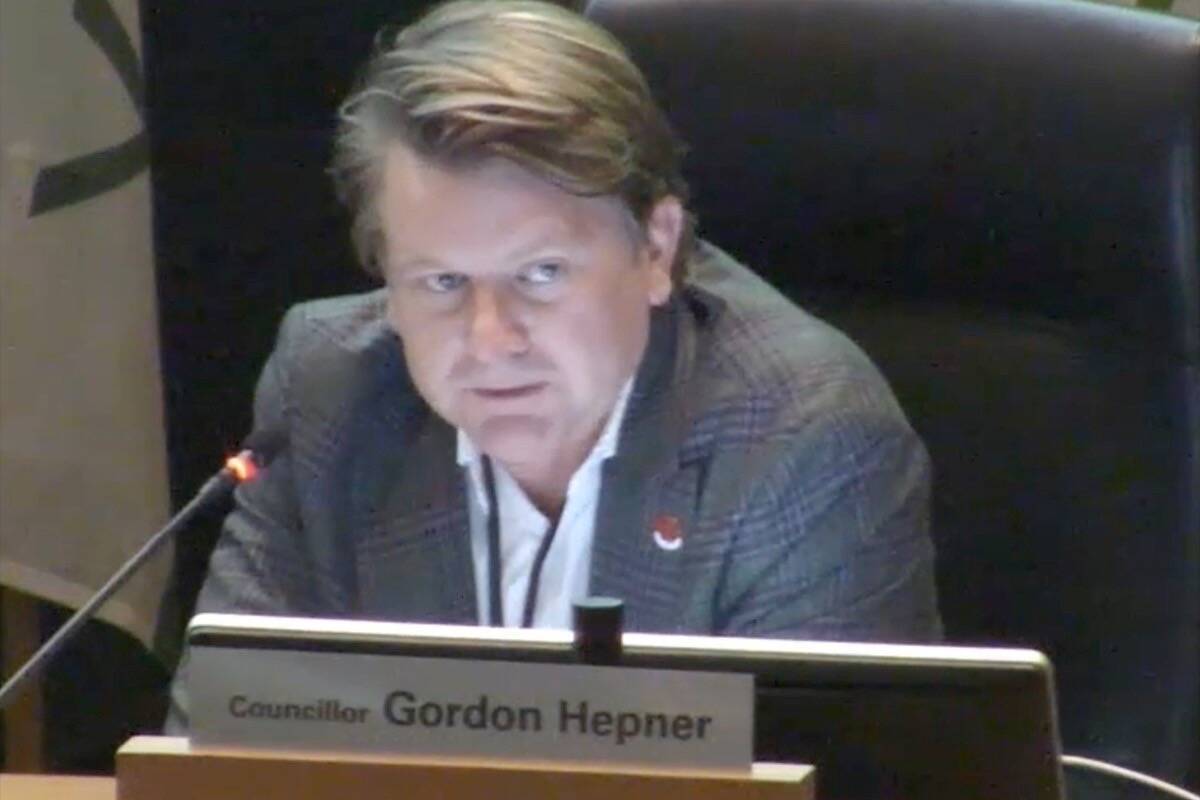
Surrey Councillor Gordon Hepner presented a notice of motion calling on council to “wage war on vaping” by strengthening controls on the sale of vaping products in the city, citing vaping as a “serious health concern,” especially among youth. Hepner said the motion directs staff to bring back the “most restrictive legally supportable” package from the City’s 2019 bylaw work to materially reduce where and how vape products can be sold, including licensing controls and enforcement.


Key Takeaways


  • Proponent: Surrey Councillor Gordon Hepner introduced a motion to tighten vape sales controls
  • Aim: staff to deliver the “most restrictive legally supportable” package from 2019 bylaw work
  • Proposed tools: new vapour-retailer business licence; strong limits, licensing controls and enforcement
  • Retail limits: restrict sales to 19-plus parties; prohibit sales in convenience stores and gas stations
  • Next step: council meeting scheduled for Feb. 23; mayor expects debate


2Firsts, Feb 10 2026


According to Peace Arch News, Surrey Councillor Gordon Hepner called on council to “wage war on vaping” in the city and presented a notice of motion aimed at strengthening controls on the sale of vaping products. Hepner said vaping has become a “serious health concern” in Surrey, especially among younger people.


The report quotes Hepner saying he sees youth vaping around schools and elsewhere, and that nicotine addiction can quickly develop into poorer habits for teenagers. He also said the brain continues to develop into adulthood, up to 25 years old, and that youth can become dependent at lower levels of exposure than adults.


The report also quotes Hepner describing “practical impacts” including challenges with concentrating, learning, mood, stress and regulation, and saying vaping carries “acute risks” of developing serious lung diseases.


Hepner said the motion directs staff to bring back the “most restrictive legally supportable package” from the City’s 2019 bylaw work to materially reduce where and how vape products can be sold in Surrey, with strong limits, licensing controls and enforcement. The motion calls on staff to return to council with a report containing draft bylaw amendments for council’s consideration, including a new business licence for vapour-related product retailers requiring a specific licence to sell, offer for sale, provide and distribute these products in Surrey, and major measures to reduce retail availability—such as restricting vapour product sales to 19-plus parties and prohibiting sales in general-access retail outlets like convenience stores or gas stations.


The report says Hepner also called for a city-wide “cap,” removing vape retail from youth-sensitive locations such as schools, parks and recreation centres, with clear consequences for violations.


Council’s next meeting is set for February 23, the report adds, quoting Mayor Brenda Locke as saying she looks forward to the debate.


Image Source: Peace Arch News

We welcome news tips, article submissions, interview requests, or comments on this piece.

Please contact us at info@2firsts.com, or reach out to Alan Zhao, CEO of 2Firsts, on LinkedIn


Notice

1.  This article is intended solely for professional research purposes related to industry, technology, and policy. Any references to brands or products are made purely for objective description and do not constitute any form of endorsement, recommendation, or promotion by 2Firsts.

2.  The use of nicotine-containing products — including, but not limited to, cigarettes, e-cigarettes, nicotine pouchand heated tobacco products — carries significant health risks. Users are responsible for complying with all applicable laws and regulations in their respective jurisdictions.

3.  This article is not intended to serve as the basis for any investment decisions or financial advice. 2Firsts assumes no direct or indirect liability for any inaccuracies or errors in the content.

4.  Access to this article is strictly prohibited for individuals below the legal age in their jurisdiction.


Copyright


This article is either an original work created by 2Firsts or a reproduction from third-party sources with proper attribution. All copyrights and usage rights belong to 2Firsts or the original content provider. Unauthorized reproduction, distribution, or any other form of unauthorized use by any individual or organization is strictly prohibited. Violators will be held legally accountable.

For copyright-related inquiries, please contact: info@2firsts.com


AI Assistance Disclaimer


This article may have been enhanced using AI tools to improve translation and editorial efficiency. However, due to technical limitations, inaccuracies may occur. Readers are encouraged to refer to the cited sources for the most accurate information.

We welcome any corrections or feedback. Please contact us at: info@2firsts.com

New York City Opens Lottery for 55 Vape Retail License Slots Across 23 Community Districts, Including 28 in Brooklyn
New York City's Department of Consumer and Worker Protection (DCWP) opened applications on November 2, 2026, for a lottery covering tobacco and electronic cigarette retail dealer licenses, with a deadline of 5 p.m. New York local time on November 30. According to the city's October 1 notice, 55 electronic cigarette retail license slots are available across 23 community districts, including 28 in Brooklyn, alongside 322 tobacco retail license slots across 41 districts. Businesses must enter the lottery and, if invited, complete licensing requirements within 65 days. New York City continues to restrict e-cigarette retail sales to tobacco-flavored or unflavored products, while city retail licenses do not replace FDA product marketing authorization.
Market
Nov.04
South Korea Constitutional Court Upholds Volume-Based E-Liquid Tax, With Challenged Rates at KRW 370 and KRW 628 per Milliliter
South Korea's Constitutional Court has upheld fixed taxes on nicotine-containing e-cigarette liquids based on solution volume, ruling that challenged provisions imposing KRW 370 per milliliter in individual consumption tax and KRW 628 per milliliter in tobacco consumption tax do not violate the Constitution. The cases stemmed from historical disputes involving importers that reported nicotine as being extracted from tobacco stems rather than leaves. South Korea has since broadened its tobacco definition to include synthetic nicotine, while current tax laws provide reduced rates for certain products not derived from tobacco.
Sep.18
Special Report | Vape bans and tougher rules: the South Caucasus takes different paths
Azerbaijan's sweeping e-cigarette ban has raised concerns over enforcement errors and the emergence of illicit sales, while neighboring Armenia is tightening technical rules and preparing higher excise taxes. Georgia, meanwhile, has resisted calls for broader vape restrictions and introduced preferential taxes for some domestically produced cigarettes. The divergent approaches across the South Caucasus highlight a regional policy dilemma: how to curb nicotine use and protect public health without encouraging black markets or creating unintended economic consequences for businesses and consumers.
Nov.03
Special Report|Japan Tobacco Buys CLEW: Can Its 160,000-Store Cigarette Network Help It Vie for U.S. Nicotine Pouch Share Against PMI and BAT?
Japan Tobacco Inc. (JT) announced on November 12, 2026, that it had acquired the U.S. assets of nicotine pouch brand CLEW from Nevcore Innovations Inc., including trademarks, intellectual property, product formulations and a Premarket Tobacco Product Application (PMTA). CLEW, currently distributed through selected outlets in 13 U.S. states, will immediately join the JTI LIGGETT portfolio. The transaction follows JT's approximately $2.4 billion acquisition of U.S. cigarette maker Vector Group in 2024. JTI LIGGETT says its existing cigarette brands reach more than 160,000 U.S. retail stores. During the 2026 NACS Show in October, JTI LIGGETT booth staff told 2Firsts that the company had not yet launched nicotine pouches in the United States. Although Nevcore previously announced FDA acceptance of CLEW's PMTA, the brand is absent from the agency's current list of authorized nicotine pouch products. JT has not disclosed a retail expansion plan for CLEW.
Business
Nov.12
Australia Extends Illicit Tobacco Crackdown From Tougher Penalties to Customs and Logistics Supply Chains
Australia's federal government introduced a new illicit tobacco enforcement bill on September 10 that would strengthen evidentiary presumptions, representative sampling, seizure and forfeiture procedures, proceeds-of-crime powers and obligations for customs and logistics operators. The proposal follows the Combatting Illicit Tobacco Act 2026, which took effect in August and increased penalties while expanding investigative and asset-recovery tools. Together, the reforms extend Australia's crackdown from tougher criminal sanctions into import, logistics and evidentiary enforcement.
Sep.14
Product | KIWI Launches Spark 2 and Spark 2 Pro in Germany, Two Hardware Tiers Share Backward-Compatible 2ml Pods
KIWI has launched the Spark 2 and Spark 2 Pro refillable pod systems in Germany at official prices of €18 and €29, respectively. Spark 2 uses an 800mAh removable lithium-ion battery in a pen-style body, while Spark 2 Pro features a 1,400mAh removable battery, a box-shaped design and vibration feedback every 20 puffs. Both devices use the same 2ml Spark V2 pods in 0.8Ω and 1.2Ω versions, with AirSync airflow adjustment and a choice between Cotton Tips and conventional Drip Tips. The new pods also remain compatible with the original KIWI Spark.
News
Sep.29 by 2Firsts Perspectives