Key Points:
1.Policy Update: The Swiss National Council has passed a motion to ban disposable e-cigarettes by a significant margin during the summer session of 2024. The proposal is currently awaiting further review by the Senate.
2.Legislative purpose: The ban aims to address potential health risks to adolescents, particularly the addictive risks posed by high nicotine content and flavor additives.
3.Health Risk: Disposable e-cigarettes commonly contain nicotine salt, which is more addictive. The nicotine concentration in some products exceeds the legal limit of 20 milligrams per milliliter.
4.Political disagreement: While the National Assembly and the Social Health Committee support the motion, the Federal Commission believes the ban is premature and advises cautious progress to comply with international obligations.
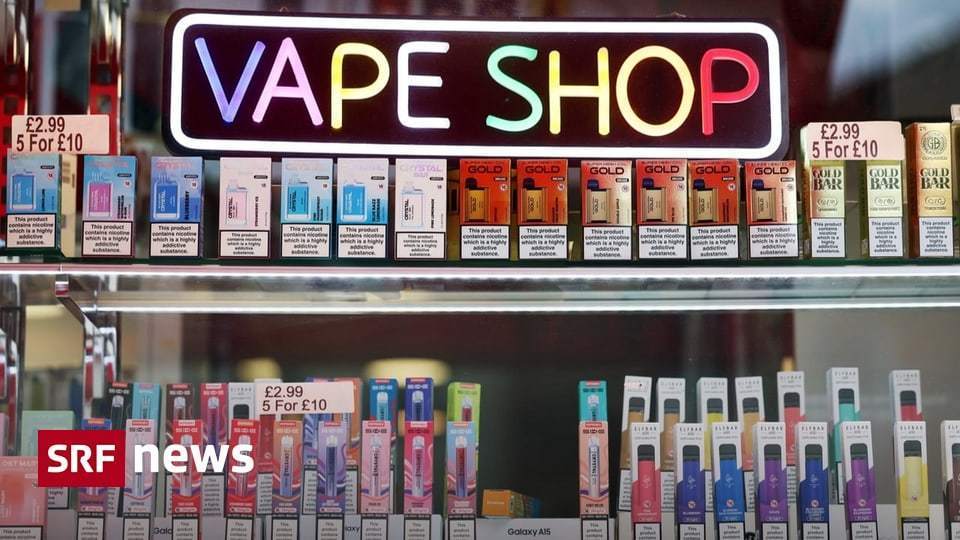
According to local Swiss media reports, disposable e-cigarettes (also known as Puff-Bars) have been widely available on the Swiss market since 2020. Due to their cheap price, ease of access, and multiple flavors, they have become popular among young people, leading to high levels of consumption.
The motion to ban the sale of disposable e-cigarettes was passed by the National Assembly at its summer session in 2024 with a vote of 122 in favor, 63 against, and 4 abstentions. The issue is currently being further discussed in the Senate. The Federal Committee has been asked to amend the current Federal Law on Tobacco Products and E-cigarettes at the summer session to prohibit the sale of disposable e-cigarettes, while rechargeable e-cigarettes are not affected by this ban.
According to data from the Addiction Prevention Center in the Canton of Zurich, the ban has become a focal point of discussion mainly due to its potential health risks, especially its impact on teenagers. These devices have high nicotine content, some of which even exceed the legal limit of 20 milligrams per milliliter, equivalent to the intake of multiple packs of traditional cigarettes.
In addition, these products often contain nicotine salts, which, while not more dangerous than pure nicotine, are more addictive. The use of sweet flavorings and marketing tactics targeting young people has raised concerns among authorities about the high addictive potential for adolescents, as their brains are still developing. Improper disposal of these products also poses environmental issues.
In Parliament, the Upper House received a motion for the first time on March 9, 2023, submitted by National Assembly member of the Green Party, Christophe Clivaz, which was initially rejected by the Federal Council. A year later, Clivaz resubmitted the motion, stating that the Federal Council's previous position was no longer applicable.
The National Council and its Committee for Social Security and Health support the motion, however, the Swiss government still advises against it. The Federal Council acknowledges the issue of e-cigarettes, but states that further evaluation is needed to assess the compatibility of a ban with Switzerland's international obligations. Faced with numerous unresolved issues, the Federal Council believes that enacting legislation is premature, and recommends monitoring the situation closely.
The cantons of Graubünden, Valais, and Bern in Switzerland have banned the use of disposable e-cigarettes. Similar measures have been taken in the city cantons of Basel, Ticino, Solothurn, Schaffhausen, Geneva, and Vaud.
In the international arena, France, Belgium, and the UK have already banned the sale of disposable e-cigarettes. Germany and Ireland are also considering implementing similar bans, while Australia and New Zealand have already implemented bans. If Switzerland ultimately passes this legislation, it will align with an increasing number of countries that have banned e-cigarettes.
We welcome news tips, article submissions, interview requests, or comments on this piece.
Please contact us at info@2firsts.com, or reach out to Alan Zhao, CEO of 2Firsts, on LinkedIn
Notice
1. This article is intended solely for professional research purposes related to industry, technology, and policy. Any references to brands or products are made purely for objective description and do not constitute any form of endorsement, recommendation, or promotion by 2Firsts.
2. The use of nicotine-containing products — including, but not limited to, cigarettes, e-cigarettes, nicotine pouchand heated tobacco products — carries significant health risks. Users are responsible for complying with all applicable laws and regulations in their respective jurisdictions.
3. This article is not intended to serve as the basis for any investment decisions or financial advice. 2Firsts assumes no direct or indirect liability for any inaccuracies or errors in the content.
4. Access to this article is strictly prohibited for individuals below the legal age in their jurisdiction.
Copyright
This article is either an original work created by 2Firsts or a reproduction from third-party sources with proper attribution. All copyrights and usage rights belong to 2Firsts or the original content provider. Unauthorized reproduction, distribution, or any other form of unauthorized use by any individual or organization is strictly prohibited. Violators will be held legally accountable.
For copyright-related inquiries, please contact: info@2firsts.com
AI Assistance Disclaimer
This article may have been enhanced using AI tools to improve translation and editorial efficiency. However, due to technical limitations, inaccuracies may occur. Readers are encouraged to refer to the cited sources for the most accurate information.
We welcome any corrections or feedback. Please contact us at: info@2firsts.com