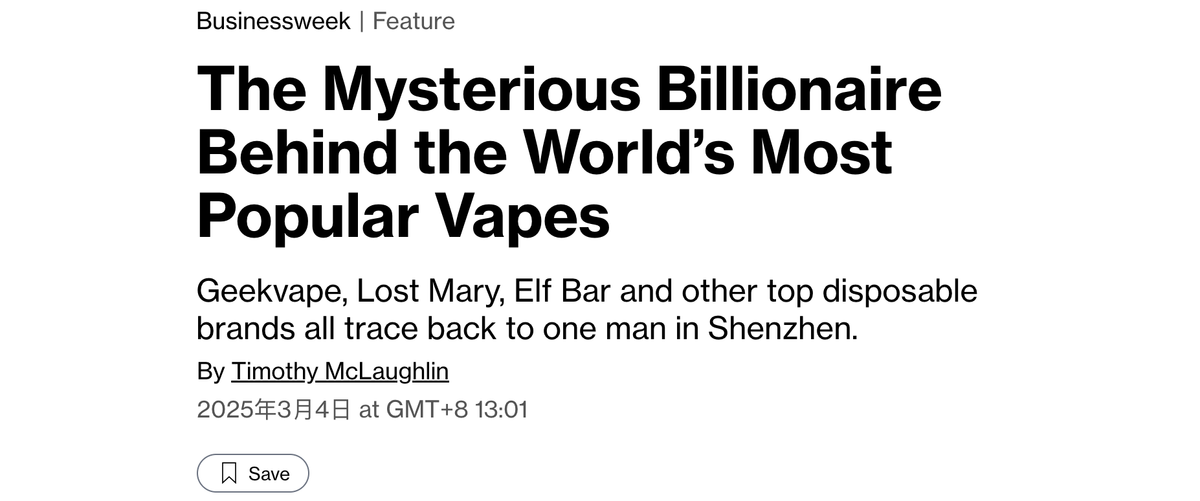
Bloomberg: The Mysterious Billionaire Behind the World's Most Popular Vapes (Heaven Gifts)

Mar.05.2025
Bloomberg: The Mysterious Billionaire Behind the World's Most Popular Vapes (Heaven Gifts)
Bloomberg's report on March 4 reveals the success story of Heaven Gifts in becoming the world's top e-cigarette brand.

Statement:

1. All information in this article is sourced from Bloomberg reports. The facts and data listed in the article only represent the views of the original author.

2. The author of the Bloomberg article reached out to 2Firsts for an interview on the relevant issues. However, Alan Zhao, the founder and CEO of 2Firsts, declined to provide commentary on any specific individuals, instead offering a written analysis on the industry-level aspects such as product categories and compliance.


On March 4th, Bloomberg published an article titled "The Mysterious Billionaire Behind the World's Most Popular Vapes," detailing how Heaven Gifts and its controlling shareholder transformed their e-cigarette business from a small online shop into a global industry worth billions of dollars. 


The article mentioned that Heaven Gifts started as an online store and gradually became a prominent player in the e-cigarette industry, introducing brands like Geekvape, Lost Mary, and Elf Bar, which have captured markets worldwide. According to the Bloomberg Billionaires Index, the controlling shareholder's net worth is estimated to be $2.9 billion, and his core company, iMiracle Shenzhen Technologies Ltd., has 30 million customers in over 80 countries. (Original text: Heaven Gifts has at least 30 million customers in more than 80 countries, and a survey of US e-cigarette users conducted in October by research firm ECigIntelligence found that Geekvape and Lost Mary were the two most popular brands, with Elf Bar not far behind. Zhang’s wealth has risen in step, to the point that he’s now worth $2.9 billion, according to the Bloomberg Billionaires Index, which calculated his net worth for the first time for this story. )


The success of Heaven Gifts is credited to its keen market insight and flexible response to regulations. The company specializes in disposable e-cigarettes, offering a wide variety of flavors at affordable prices to attract consumers, particularly in the European and American markets. However, the company also faces regulatory challenges. In the US, it has been accused of ignoring FDA regulations to profit from regulatory loopholes, while in the UK, Elf Bar has faced criticism for illegal products and false advertising. The article mentioned that Heaven Gifts' strategy includes splitting brands (such as Funky Lands, EB Create) to evade regulations and establishing a production base in Shenzhen to supply the global market. 


The article also highlighted competition from major tobacco companies and an investigation by the US International Trade Commission that Heaven Gifts is facing. Nevertheless, Trump's promise to "save e-cigarettes" may provide some breathing room for the company, although his specific policies are still unclear. A spokesperson for Heaven Gifts was interviewed for the article, stating that the company is withdrawing from the US market and aiming to expand its business in Europe. However, the article noted that their products are still circulating in the US, indicating that compliance commitments have not been fully met.


The above is compiled based on the English content. Please refer to the original English text for accuracy. (Read the original article)


We welcome news tips, article submissions, interview requests, or comments on this piece.

Please contact us at info@2firsts.com, or reach out to Alan Zhao, CEO of 2Firsts, on LinkedIn


Notice

1.  This article is intended solely for professional research purposes related to industry, technology, and policy. Any references to brands or products are made purely for objective description and do not constitute any form of endorsement, recommendation, or promotion by 2Firsts.

2.  The use of nicotine-containing products — including, but not limited to, cigarettes, e-cigarettes, nicotine pouchand heated tobacco products — carries significant health risks. Users are responsible for complying with all applicable laws and regulations in their respective jurisdictions.

3.  This article is not intended to serve as the basis for any investment decisions or financial advice. 2Firsts assumes no direct or indirect liability for any inaccuracies or errors in the content.

4.  Access to this article is strictly prohibited for individuals below the legal age in their jurisdiction.


Copyright


This article is either an original work created by 2Firsts or a reproduction from third-party sources with proper attribution. All copyrights and usage rights belong to 2Firsts or the original content provider. Unauthorized reproduction, distribution, or any other form of unauthorized use by any individual or organization is strictly prohibited. Violators will be held legally accountable.

For copyright-related inquiries, please contact: info@2firsts.com


AI Assistance Disclaimer


This article may have been enhanced using AI tools to improve translation and editorial efficiency. However, due to technical limitations, inaccuracies may occur. Readers are encouraged to refer to the cited sources for the most accurate information.

We welcome any corrections or feedback. Please contact us at: info@2firsts.com

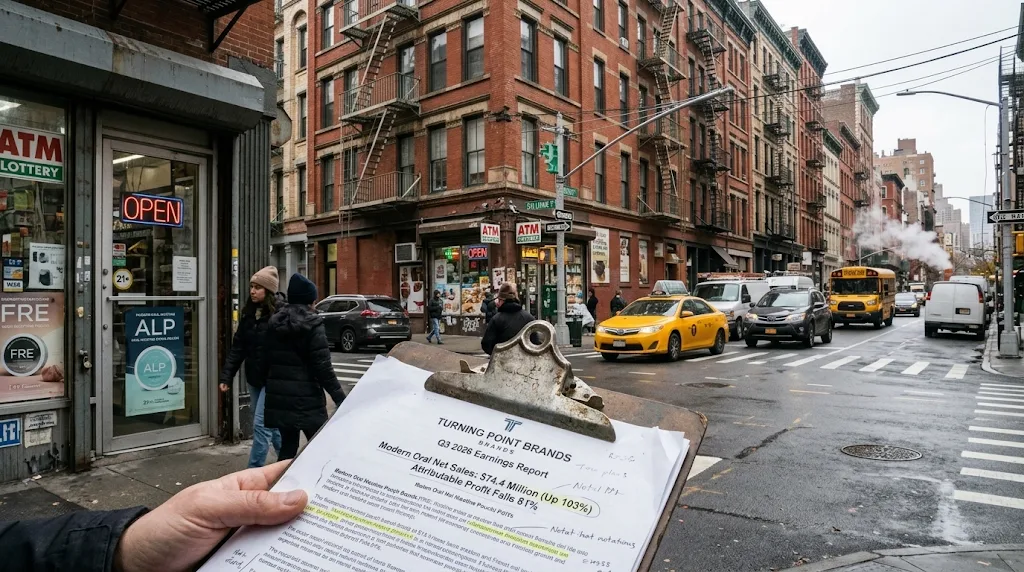
Turning Point Brands Q3 Modern Oral Net Sales Rise 103% to $74.4 Million as Attributable Profit Falls 81%
Turning Point Brands (TPB) reported third-quarter 2026 Modern Oral net sales of $74.4 million on November 9, up 102.9% year over year and representing 49.2% of consolidated net sales. Total company net sales rose 27.0% to $151.1 million, while net income attributable to TPB declined 81.4% to $3.93 million. The company is expanding the US retail presence of its FRE and ALP nicotine pouch brands and expects its Modern Oral chain-store footprint to grow by more than 70% during 2026. Selling, general and administrative expenses increased 69.1% to $75.3 million, while PMTA-related expenses reached approximately $3.15 million and manufacturing start-up costs totaled about $593,000. ALP plans to open a branded pop-up in New York City's SoHo neighborhood on November 13, alongside a marketing campaign extending into January 2027. TPB owns 50% of ALP but consolidates the venture in its financial statements.
company
Nov.11
German Tobacco Tax Revenue Falls 10.8% Through August as Tax-Paid Cigarette Volume Drops 12.6%
Germany collected €9.789 billion in total tobacco tax revenue from January through August 2026, down 10.8% from a year earlier, according to the Federal Ministry of Finance. Germany's tobacco tax base covers not only cigarettes and fine-cut tobacco but also heated tobacco and vaping liquids taxed as tobacco substitutes. The German Association of the Tobacco Industry and Novel Products, or BVTE, citing federal statistical data, said tax-paid cigarette volume fell 12.6% to 40.6 billion sticks. BVTE is using the latest figures to argue against further tax increases planned from 2027 through 2030, while Germany's parliament is scheduled to hold a first reading of the bill on September 24.
Sep.23
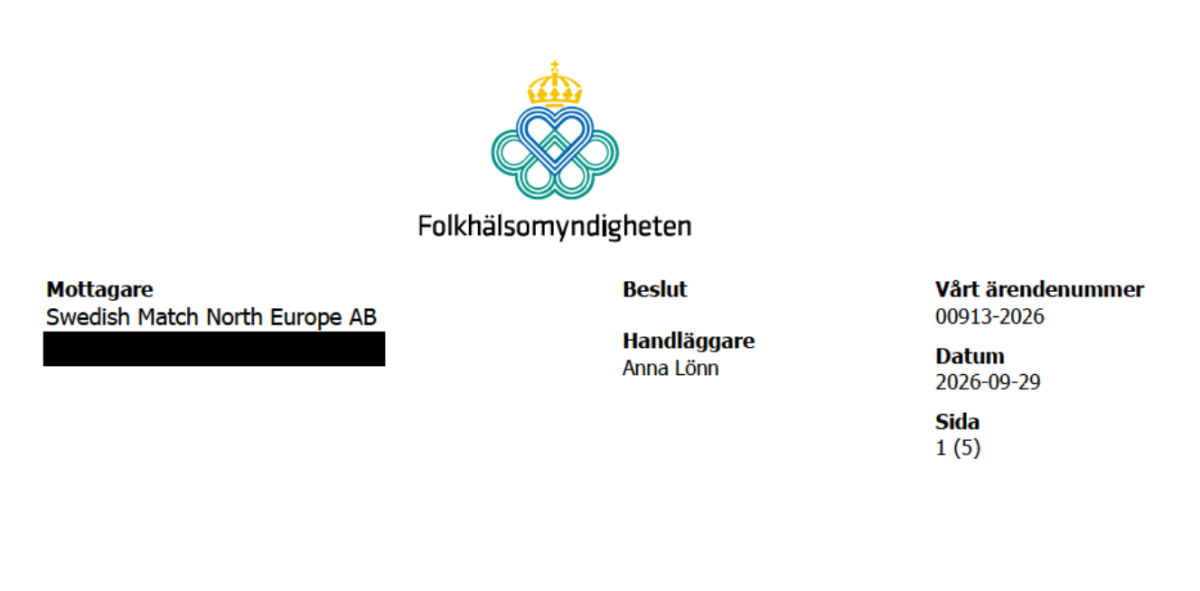
Swedish Match Faces Broader Labeling Order After ZYN Inspection, Documents Obtained by 2Firsts Show
Documents obtained by 2Firsts show that Sweden's Public Health Agency ordered Swedish Match to revise ingredient labels beyond the five ZYN products inspected. The dispute centers on whether flavoring ingredients must be individually disclosed, with Swedish Match citing trade-secret protection and the regulator insisting on full ingredient disclosure. The company faces a conditional penalty of SEK 2 million per month for noncompliance. As of October 22, the agency had received no appeal, despite the company's stated intention to challenge the decision.
Oct.22
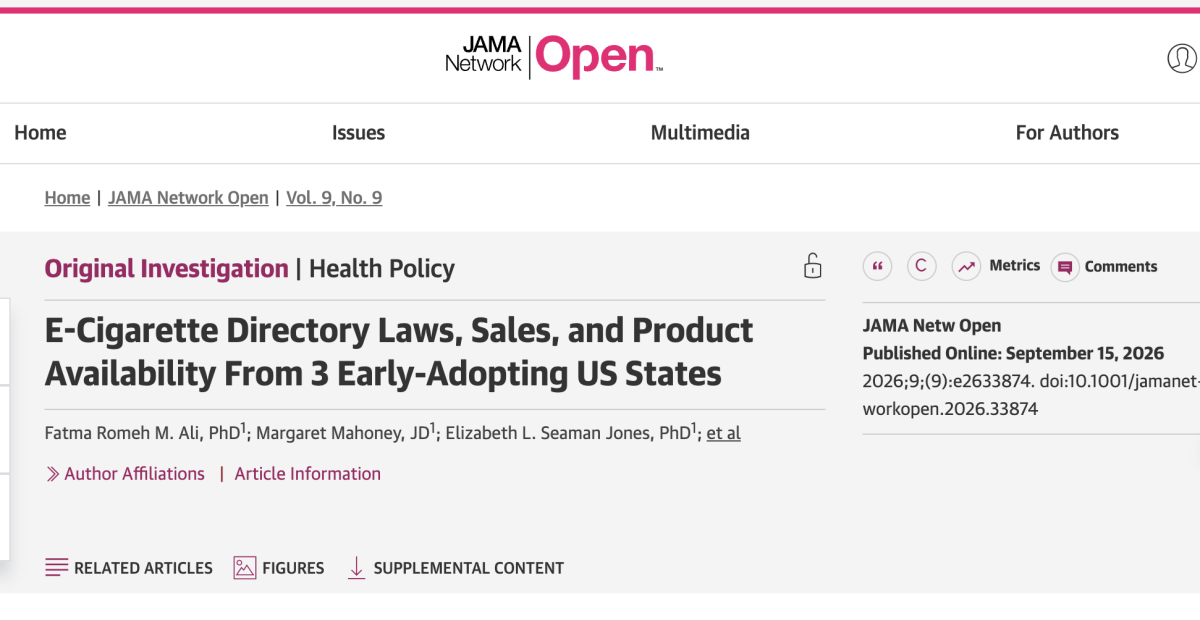
JAMA Study: U.S. Vape Directories Fail to Sustainably Curb Unlisted Sales as Product Shifts May Redistribute Brand Share 2Firsts Recommended
A study by CDC Foundation researchers found no sustained decline in e-cigarette sales across Alabama, Oklahoma and Louisiana, the first three U.S. states to implement e-cigarette directory laws. Louisiana initially saw a significant sales decline, followed by a rebound and a persistent reduction in product availability. Sales also shifted from nontobacco-flavored disposables toward prefilled cartridges, with Vuse Alto driving much of the increase in menthol cartridges. By April 2025, unlisted products still accounted for more than half of e-cigarette nicotine sales in all three states.
Sep.18
Indonesia's Influential Islamic Body MUI Urges Vape Permit Freeze, Raising Uncertainty for 200 Manufacturers
Indonesia's Ulema Council (MUI) published Fatwa No. 131/2026 on November 9, declaring electronic cigarette use, production and trade haram under Islamic religious rules. The council urged the Industry Ministry to prohibit the issuance of vape industry permits and review licensing policies, while calling on the president and parliament to enact a comprehensive ban. On November 10, the Constitutional Court heard a challenge to provisions of the 2023 Health Law seeking a prohibition on vape production, importation, distribution and use. The Health Ministry said on November 11 it was studying stronger restrictions, including a possible ban on circulation, while industry association APVI called for tighter oversight rather than a total ban. Indonesia's Industry Ministry previously estimated the sector comprises about 200 companies, Rp31 trillion ($1.7 billion) in cumulative investment and approximately 100,000 supply-chain jobs. No nationwide statutory ban has been enacted.
Regulations
Nov.12
New York City Opens Lottery for 55 Vape Retail License Slots Across 23 Community Districts, Including 28 in Brooklyn
New York City's Department of Consumer and Worker Protection (DCWP) opened applications on November 2, 2026, for a lottery covering tobacco and electronic cigarette retail dealer licenses, with a deadline of 5 p.m. New York local time on November 30. According to the city's October 1 notice, 55 electronic cigarette retail license slots are available across 23 community districts, including 28 in Brooklyn, alongside 322 tobacco retail license slots across 41 districts. Businesses must enter the lottery and, if invited, complete licensing requirements within 65 days. New York City continues to restrict e-cigarette retail sales to tobacco-flavored or unflavored products, while city retail licenses do not replace FDA product marketing authorization.
Market
Nov.04