Key Points
- Youth disposable vape use fell to 13%.
- Adult disposable vape use fell to 8%.
- Convenience sales lost over £5 million.
- Youth smoking trends need monitoring.
2Firsts
June 18, 2026
According to EcigClick, one year after the UK ban on single-use disposable vapes took effect on June 1, 2025, new YouGov data commissioned by Action on Smoking and Health (ASH) shows a sharp decline in reported disposable vape use among both young people and adults.
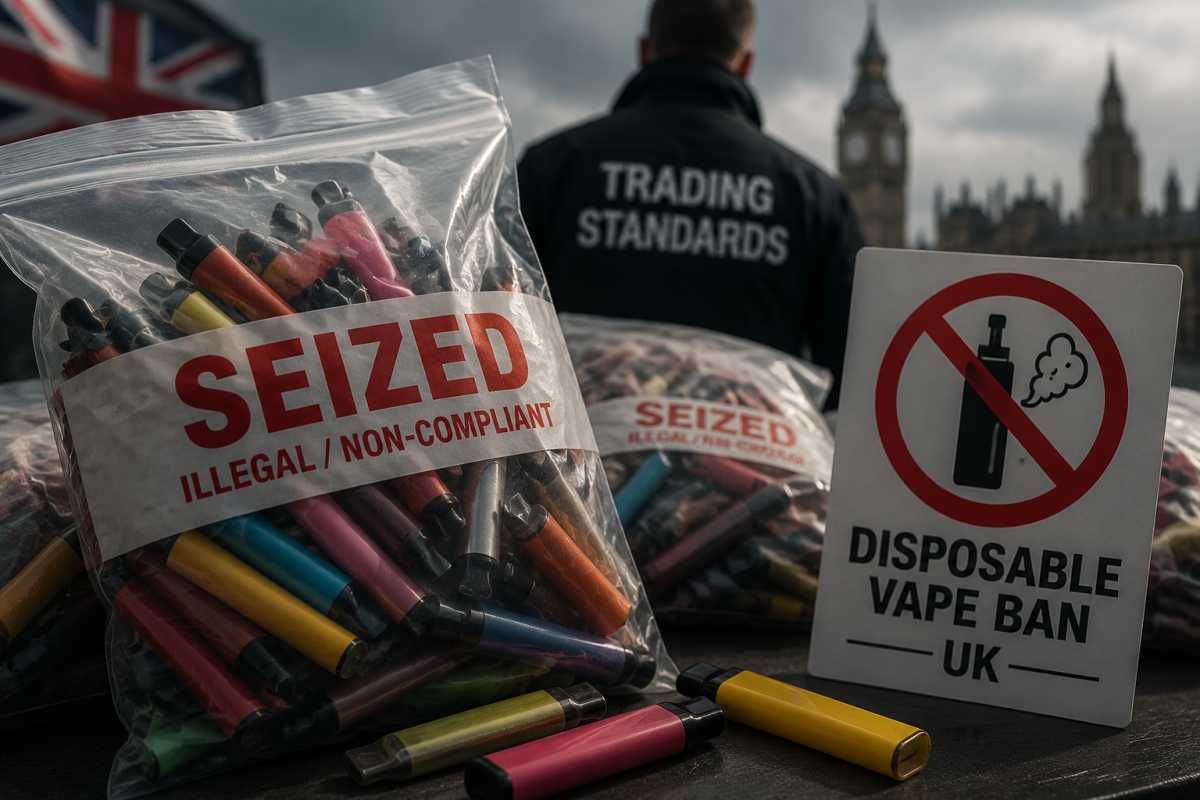
The UK government made it illegal to sell, supply or stock single-use disposable vapes from June 1, 2025. The policy was introduced mainly in response to rising youth use and concerns over vape waste. Government guidance says the ban applies to all single-use vape products, regardless of whether they contain nicotine.
YouGov data published by ASH on May 29, 2026, showed that among 11-17-year-olds who vape, only 13% now say they mainly use disposable vapes. That was down from 42% before the ban came into force in 2025 and far below the 69% peak recorded in 2023, when disposables were at their most widespread.
A similar shift was seen among adults. Among adult vapers, only 8% now say they mainly use disposable products, down from 24% in 2025 and a peak of 31% in 2023. EcigClick said the figures show the ban has had a clear effect on the product mix in the legal market.
The adult figures came from a YouGov survey of 13,259 adults conducted between February and March 2026 and weighted to be representative of adults aged 18 and over in Great Britain. The youth data came from a separate YouGov poll of 2,926 11-17-year-olds conducted between April and May 2026.
The market impact was immediate. EcigClick cited data from Serve Legal, Talysis and CD:UK showing that in the first week after the ban, UK convenience-store vape revenue fell from about £23 million a week to £17.8 million, a decline of more than £5 million. Scotland recorded the sharpest fall, with vape revenue down 36% in that week.
However, the market did not collapse; it shifted toward reusable products. The report said sales of smaller 2 ml reusable vapes rose by 11% in the weeks immediately after the ban. Pod systems and prefilled rechargeable devices also grew quickly in the convenience channel, offering a similar user experience to disposables while meeting the reusable-product format.
ASH data also showed that among adult vapers who had switched to reusable products, 60% said they reused their products, while 46% reported reusing them 10 times or more. However, 18% of adult vapers said they rarely or never reused their devices, suggesting that some consumers still treat rechargeable or pod-based products in a single-use way.
EcigClick said the data does not make clear whether that behaviour reflects continued access to black-market disposable vapes or consumers discarding rechargeable products prematurely. The issue is relevant to the ban’s longer-term impact on both waste reduction and consumer behaviour.
Enforcement was uneven in the early weeks of the ban. Serve Legal previously reported that more than £1 million worth of banned disposable vapes were still sold in UK convenience stores during the first full week after the ban, the week ending June 8, 2025. In Yorkshire, disposables still accounted for 18% of vape revenue that week.
Enforcement arrangements vary across the UK. In England, local Trading Standards authorities lead enforcement. Government information says violators can face a £200 civil penalty, while persistent offenders may face an unlimited fine or up to two years in prison. EcigClick said comprehensive national enforcement data for the full first year has not yet been published, making it difficult to assess how consistently the ban has been policed across regions.
Hazel Cheeseman, chief executive of ASH, said the sharp decline in disposable vape use was encouraging and suggested the policy was having an impact in moving people toward reusable products. She also said that while some people were still clearly treating products as disposable, the law change was helping drive regular reuse.
One figure in the data still requires attention. The 2025 ASH Smokefree GB Youth Survey found that ever-smoking among young people rose from 14% in 2023 to 21% in 2025. EcigClick noted that the increase took place in the years leading up to the disposable vape ban, rather than after a full year of the ban, and therefore should not be treated as evidence that the ban caused youth smoking to rise.
However, EcigClick said the finding raises a question previously highlighted by harm-reduction advocates: if vaping becomes less accessible, could some young people shift toward cigarettes instead. Current data does not prove that is happening, and youth smoking is influenced by many factors, but the trend requires close monitoring by public health bodies, the government and the vaping industry during the second year of the ban.
In its view section, EcigClick said the ban appears to have achieved one of its core objectives after one year by sharply reducing reported disposable vape use. It said disposables have largely been removed from the legal market, the shift to reusables happened faster than many expected, and youth data shows a dramatic fall in disposable use. That assessment is EcigClick’s commentary and does not represent the position of 2Firsts.
EcigClick also said the rise in youth ever-smoking in the years before the ban remains a significant concern. If restrictions on vape access contribute to that trend in any way, the public health calculation could become more complicated. The outlet also noted that the UK Vaping Products Duty is due to take effect in October 2026, which could further affect rechargeable product prices and consumer choices.
For the UK vaping sector, the first-year data shows that regulation has changed the structure of the legal market, sharply reducing disposable vape use and accelerating the move toward reusable, rechargeable and pod-based devices. However, enforcement differences, black-market supply, consumer reuse habits and youth smoking trends will continue to shape the policy’s long-term regulatory and public health impact.
Cover image:EcigClick
Disclaimer
This article is provided solely for professional research, industry discussion, and informational purposes. Any references to brands, companies, products, technologies, or policies are made for factual reporting and analytical purposes only, and do not constitute endorsement, recommendation, promotion, or advertising by 2Firsts.
Nicotine-containing products, including but not limited to cigarettes, e-cigarettes, heated tobacco products, and nicotine pouches, carry significant health risks. Readers are responsible for complying with all applicable laws and regulations in their respective jurisdictions, including age restrictions and access limitations.
The information contained in this article should not be regarded as investment, legal, medical, regulatory, or commercial advice. While 2Firsts strives to ensure the accuracy and reliability of its content, it does not assume liability for any direct or indirect loss arising from errors, omissions, inaccuracies, or reliance on the information contained herein.
This article is not intended for individuals below the legal age for accessing tobacco or nicotine-related information in their jurisdiction.
Copyright Notice
This article is either original content produced by 2Firsts or content reproduced, translated, summarized, or adapted from third-party sources with attribution where applicable. The intellectual property rights of the original content remain with 2Firsts or the respective original rights holders.
No individual or organization may copy, reproduce, distribute, republish, modify, translate, or otherwise use this content without prior authorization. Any unauthorized use may result in legal action.
For copyright-related inquiries, corrections, or removal requests, please contact: info@2firsts.com.
AI-Assisted Translation and Editing Notice
Portions of this article may have been translated, edited, or reviewed with the assistance of artificial intelligence tools to improve efficiency and readability. Due to the limitations of AI-assisted translation and editing, discrepancies, omissions, or inaccuracies may exist when compared with the original source.
Where applicable, readers are advised to refer to the original source for the most complete and accurate information. If you identify any errors or believe that any content infringes upon your rights, please contact us at info@2firsts.com, and we will review and address the matter promptly.