Key Points
- About 30% of U.S. service members use tobacco, roughly double the civilian rate.
- Pentagon data show 37.8% of active-duty personnel used tobacco or nicotine products in 2018.
- At a forum hosted by The Hill and sponsored by PMI US, e-cigarettes and nicotine pouches were discussed as potential “bridges” from combustible cigarettes.
- DOD and VA issued a joint tobacco cessation clinical guideline in January 2026.
- Full cessation remains the stated goal, with harm-reduction approaches still under debate.
2Firsts
March 23, 2026
According to The Hill, Tobacco use among U.S. military personnel continues to exceed that of the civilian population, prompting renewed discussions about cessation strategies and harm reduction approaches within the armed forces.
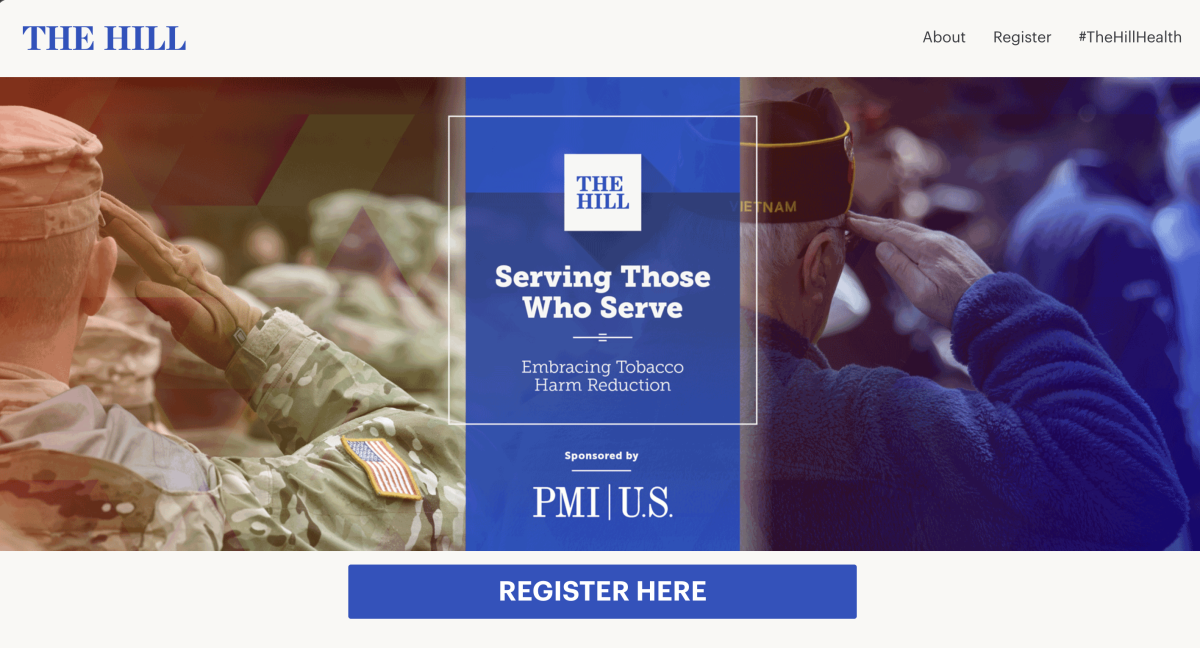
During a forum held Tuesday(March 17) titled “Serving Those Who Serve, Embracing Tobacco Harm Reduction,” hosted by The Hill and sponsored by PMI US, senior defense health officials, members of Congress, and industry representatives addressed the issue of tobacco use among service members and veterans.

Dr. Stephen Ferrara, Principal Deputy Assistant Secretary of Defense for Health Affairs, stated that reducing combustible cigarette use remains a priority within the Department of Defense (DOD). Drawing from his experience as a vascular and interventional radiologist, he referenced the severe health consequences of smoking, including stroke and critical limb ischemia.
Ferrara estimated that approximately 30% of U.S. service members use tobacco products, describing the rate as “about twice” that of the general population.
Pentagon data from 2018 show that 37.8% of active-duty service members reported using tobacco or nicotine products. Among them, 18.4% reported smoking cigarettes, and 13.4% reported using chewing tobacco.
For comparison, the Centers for Disease Control and Prevention (CDC) estimated that 11.6% of U.S. adults smoked cigarettes in 2022.
Ferrara emphasized that the department is seeking to move personnel away from combustible cigarettes. He described nicotine replacement therapies and other smoke-free nicotine products as potential “bridges” that could help individuals avoid the “most toxic part” of tobacco use — combustion — while working toward eventual cessation.
“We’re trying to get folks away from the combustible cigarettes,” Ferrara said.
In January 2026, the Department of Defense and the Department of Veterans Affairs (VA) published a joint clinical practice guideline (CPG) on tobacco cessation. Ferrara noted that there are only 28 such joint DOD-VA clinical practice guidelines across all areas of medicine, making tobacco cessation the newest addition.
Tobacco use screening is incorporated into the military’s annual periodic health assessment, during which service members are asked about tobacco use and offered cessation support if applicable.
Military Culture and Leadership Influence
Panelists also acknowledged the longstanding culture of tobacco use in the military, including historical practices such as distributing cigarettes during deployments. Ferrara stated that leadership behavior plays a role in shaping norms, noting that visible tobacco use by senior officers may influence subordinates.
Industry Perspective on Smoke-Free Products
Dr. Brian Erkkila of PMI US participated in the forum and addressed the distinction between nicotine and combustion-related toxicants. He stated that while nicotine is addictive, much of the disease burden from smoking is associated with tar and other chemicals produced during combustion.
Smoke-free nicotine products discussed during the event included nicotine pouches, which are placed under the lip, and electronic vaping devices, which deliver nicotine without burning tobacco.
Erkkila stated that such products may help some individuals move away from combustible cigarettes, while acknowledging that scientific research in this area continues to evolve.
Congressional Perspective
Rep. Rob Wittman (R-Va.), a member of the House Armed Services Committee, also participated in the discussion. He emphasized that tobacco addiction involves both nicotine dependence and behavioral habits and stressed the importance of providing service members with information about cessation pathways and available alternatives.
Veteran Health Advocacy
Chelsey Simoni, co-founder and chief health officer of HunterSeven, an organization researching military exposures, shared personal experiences related to tobacco harm reduction. She emphasized the importance of improving understanding among veterans, service members, and healthcare providers regarding the distinction between nicotine addiction and the health risks associated with combustible tobacco.
Public Health Context
Despite discussions of alternatives, public health authorities maintain that no tobacco product is risk-free. According to the CDC, cigarette smoking remains the leading cause of preventable disease and death in the United States.
The forum did not announce any formal policy changes regarding specific nicotine products. However, the discussion reflects continued debate over how harm reduction strategies may fit within broader military tobacco control efforts.
Cover Image:Screenshot of the event theme description page for The Hill’s “Serving Those Who Serve, Embracing Tobacco Harm Reduction” forum|Source: The Hill event website.
This document has been generated through artificial intelligence translation and is provided solely for the purposes of industry discourse and learning. Please note that the intellectual property rights of the content belong to the original media source or author. Owing to certain limitations in the translation process, there may be discrepancies between the translated text and the original content. We recommend referring to the original source for complete accuracy. In case of any inaccuracies, we invite you to reach out to us with corrections. If you believe any content has infringed upon your rights, please contact us immediately for its removal.