Vietnam to Ban Investment and Trade in E-cigarettes and Heated Tobacco, with Exceptions for Export and Research

Oct.17.2025
Vietnam to Ban Investment and Trade in E-cigarettes and Heated Tobacco, with Exceptions for Export and Research
Vietnam’s finance vice minister proposes banning investment and business in e-cigarettes and heated tobacco under a 2024 resolution, with possible exceptions for export-only products and research/medical/defense uses.

Key points at a glance


  • Vietnam’s Deputy Finance Minister proposes classifying e-cigarettes and heated tobacco as prohibited investment and business sectors, to implement National Assembly Resolution No. 173/2024/QH15 (adopted Nov 30, 2024).
  • The Chair of the NA’s Economic & Financial Committee suggests exceptions for products “for export only” and for specific uses such as research, healthcare, and national defense.
  • Plan to trim up to 21 conditional business lines, shifting toward post-market (ex post) regulation.
  • The draft was reviewed and commented on at the 50th session of the National Assembly Standing Committee.


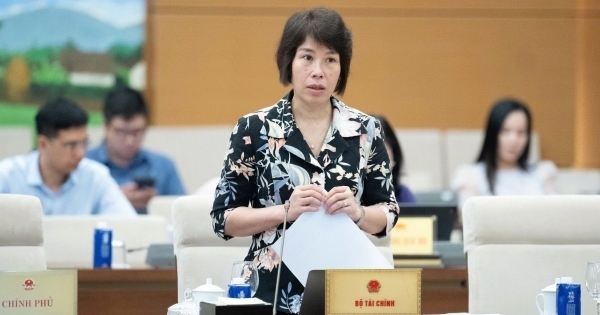
2Firsts, October 17, 2025 — According to Đời sống & Pháp luật (“Life & Law”), the National Assembly Standing Committee’s 50th session continued deliberations on the Investment Law (replacement) draft. In her presentation, Deputy Minister of Finance Nguyễn Thị Bích Ngọc stated that the draft proposes listing “business in e-cigarettes and heated tobacco” under Article 6 of the Investment Law as a prohibited investment and business sector, in order to implement Resolution No. 173/2024/QH15 of the National Assembly (adopted on November 30, 2024). That resolution expressly agrees to ban the production, trading, import, concealment/harboring, transport, and use of e-cigarettes, heated tobacco products, and addictive, health-harming gases and substances.


The draft comprises 7 chapters, 60 articles, and 4 appendices: it amends or supplements 33 of the current law’s 77 articles, repeals 17, retains 25, and adds 2 new articles, while adjusting the structure. Beyond the above prohibition, the draft also proposes removing 21 business lines that do not meet the criteria of Article 7 (business lines subject to conditions), establishing clearer principles for setting conditions so that more areas can shift from prior licensing to post-market oversight.


On adding “business in e-cigarettes and heated tobacco” to the prohibited list, Phan Văn Mãi, Chair of the Economic and Financial Committee (Ủy ban Kinh tế và Tài chính), recommended considering exceptions for items “for export only, not for consumption in Vietnam,” as well as for warranty/inspection, scientific research, healthcare, pharmaceutical production, and national defense/security.


Responding to members’ opinions, Deputy Minister Nguyễn Thị Bích Ngọc said the Ministry of Finance will continue, together with the Ministry of Industry and Trade and others, to review condition-setting for relevant sectors. As for investment and business activities involving e-cigarettes and heated tobacco, the issue should be carefully studied based on the implementation review of Resolution No. 173, and coordinated with the Ministry of Health and other agencies to report to the Government so as to ensure the feasibility and effectiveness of the policy.


Cover image: Đời sống & Pháp luật.

We welcome news tips, article submissions, interview requests, or comments on this piece.

Please contact us at info@2firsts.com, or reach out to Alan Zhao, CEO of 2Firsts, on LinkedIn


Notice

1.  This article is intended solely for professional research purposes related to industry, technology, and policy. Any references to brands or products are made purely for objective description and do not constitute any form of endorsement, recommendation, or promotion by 2Firsts.

2.  The use of nicotine-containing products — including, but not limited to, cigarettes, e-cigarettes, nicotine pouchand heated tobacco products — carries significant health risks. Users are responsible for complying with all applicable laws and regulations in their respective jurisdictions.

3.  This article is not intended to serve as the basis for any investment decisions or financial advice. 2Firsts assumes no direct or indirect liability for any inaccuracies or errors in the content.

4.  Access to this article is strictly prohibited for individuals below the legal age in their jurisdiction.


Copyright


This article is either an original work created by 2Firsts or a reproduction from third-party sources with proper attribution. All copyrights and usage rights belong to 2Firsts or the original content provider. Unauthorized reproduction, distribution, or any other form of unauthorized use by any individual or organization is strictly prohibited. Violators will be held legally accountable.

For copyright-related inquiries, please contact: info@2firsts.com


AI Assistance Disclaimer


This article may have been enhanced using AI tools to improve translation and editorial efficiency. However, due to technical limitations, inaccuracies may occur. Readers are encouraged to refer to the cited sources for the most accurate information.

We welcome any corrections or feedback. Please contact us at: info@2firsts.com

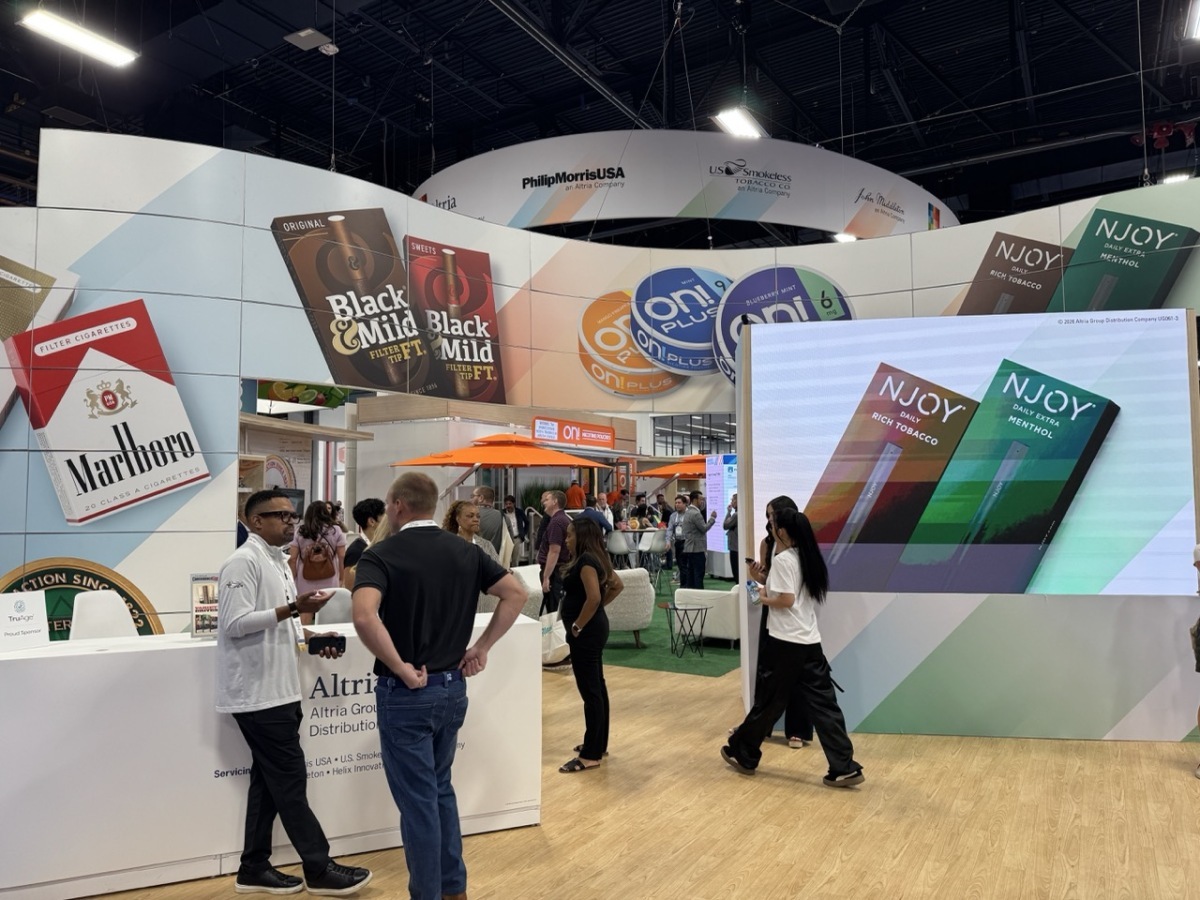
Special Report | Altria's NACS Booth Raises Questions Over U.S. Tobacco Advertising Warnings
During its coverage of Altria's booth at NACS Show 2026, 2Firsts documented product displays that prompted questions about U.S. tobacco advertising warning requirements. Following public comments from a former FDA official, 2Firsts sought responses from Altria and independently consulted U.S. regulatory lawyer Azim Chowdhury. Altria maintained that its B2B communications complied with applicable laws, while Chowdhury explained that federal warning rules provide no general trade-show exemption for e-cigarettes and nicotine pouches. The special report examines the broader regulatory implications.
Nov.04
Indonesia's Influential Islamic Body MUI Urges Vape Permit Freeze, Raising Uncertainty for 200 Manufacturers
Indonesia's Ulema Council (MUI) published Fatwa No. 131/2026 on November 9, declaring electronic cigarette use, production and trade haram under Islamic religious rules. The council urged the Industry Ministry to prohibit the issuance of vape industry permits and review licensing policies, while calling on the president and parliament to enact a comprehensive ban. On November 10, the Constitutional Court heard a challenge to provisions of the 2023 Health Law seeking a prohibition on vape production, importation, distribution and use. The Health Ministry said on November 11 it was studying stronger restrictions, including a possible ban on circulation, while industry association APVI called for tighter oversight rather than a total ban. Indonesia's Industry Ministry previously estimated the sector comprises about 200 companies, Rp31 trillion ($1.7 billion) in cumulative investment and approximately 100,000 supply-chain jobs. No nationwide statutory ban has been enacted.
Regulations
Nov.12
New York City Opens Lottery for 55 Vape Retail License Slots Across 23 Community Districts, Including 28 in Brooklyn
New York City's Department of Consumer and Worker Protection (DCWP) opened applications on November 2, 2026, for a lottery covering tobacco and electronic cigarette retail dealer licenses, with a deadline of 5 p.m. New York local time on November 30. According to the city's October 1 notice, 55 electronic cigarette retail license slots are available across 23 community districts, including 28 in Brooklyn, alongside 322 tobacco retail license slots across 41 districts. Businesses must enter the lottery and, if invited, complete licensing requirements within 65 days. New York City continues to restrict e-cigarette retail sales to tobacco-flavored or unflavored products, while city retail licenses do not replace FDA product marketing authorization.
Market
Nov.04
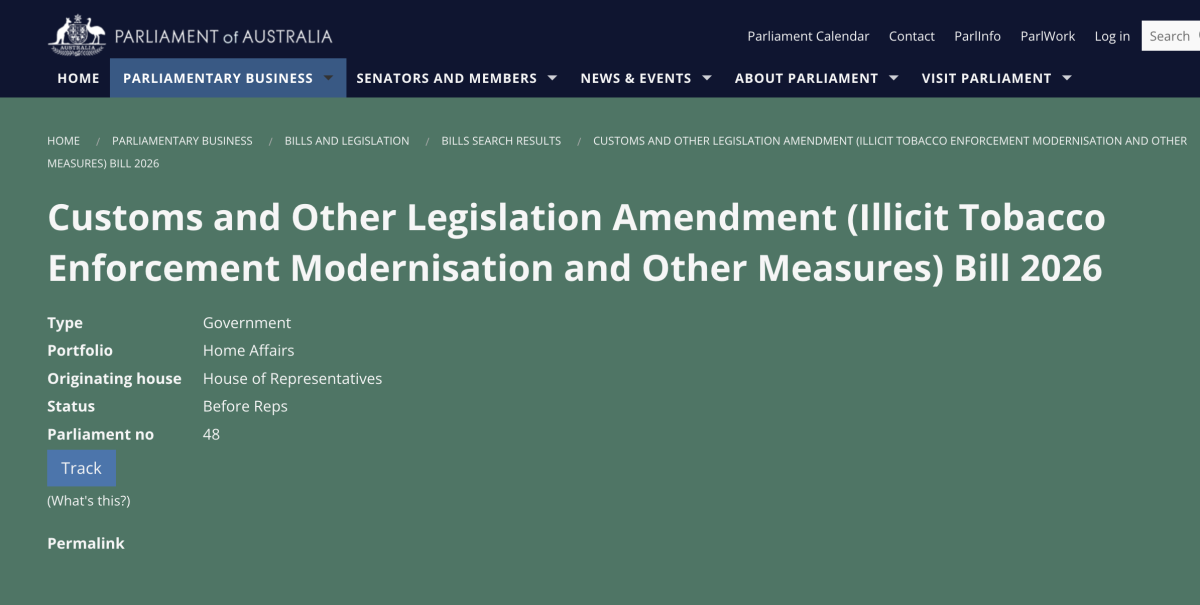
Australia Extends Illicit Tobacco Crackdown From Tougher Penalties to Customs and Logistics Supply Chains
Australia's federal government introduced a new illicit tobacco enforcement bill on September 10 that would strengthen evidentiary presumptions, representative sampling, seizure and forfeiture procedures, proceeds-of-crime powers and obligations for customs and logistics operators. The proposal follows the Combatting Illicit Tobacco Act 2026, which took effect in August and increased penalties while expanding investigative and asset-recovery tools. Together, the reforms extend Australia's crackdown from tougher criminal sanctions into import, logistics and evidentiary enforcement.
Sep.14
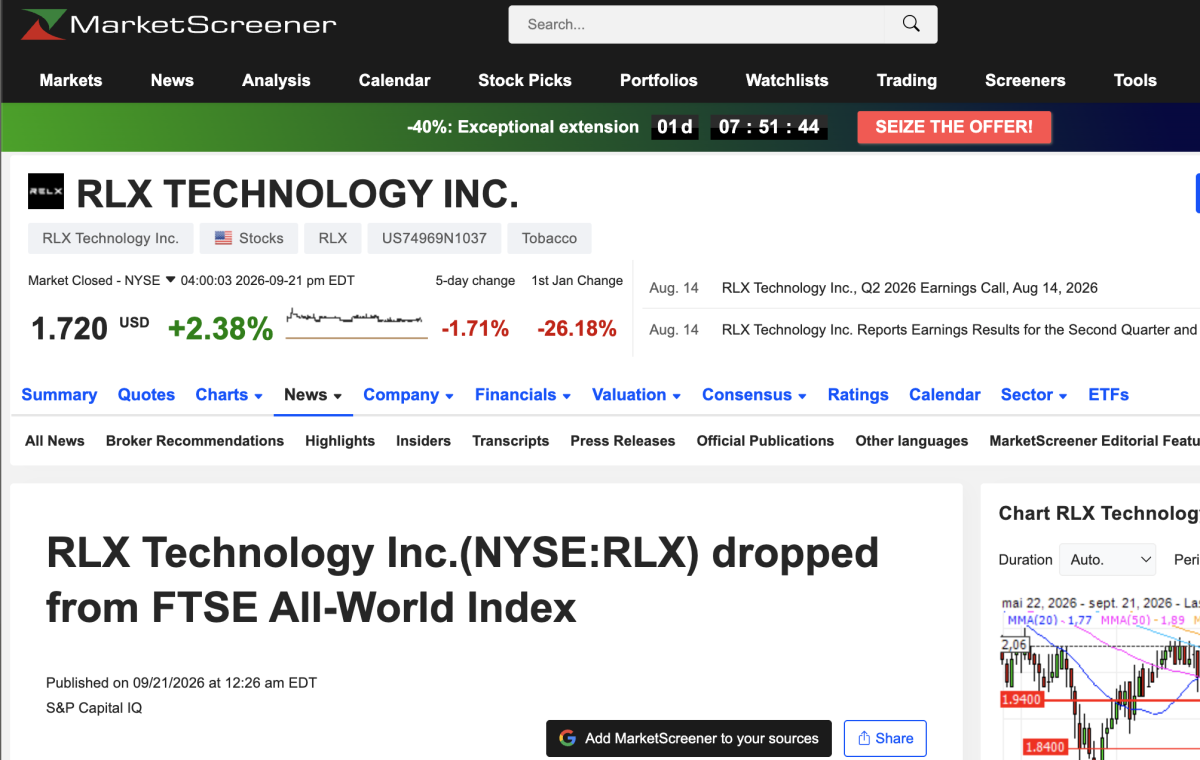
RLX Technology Dropped From FTSE All-World as International Business Reaches 68.5% of Q2 Revenue
RLX Technology (NYSE: RLX) has been removed from the FTSE All-World Index, effective September 21. FTSE Russell records show RLX was already part of its global equity index universe by 2022, when its American depositary receipts were classified as China Large Cap securities. Trading volume rose to about 44.77 million shares on September 18, roughly 23 times the previous session's volume. RLX reported RMB1.0105 billion in second-quarter revenue, up 14.8% year over year, with international operations contributing 68.5%. The company also acquired a 51% stake in one of Western Europe's largest distributors of next-generation smoke-free and FMCG products in July.
Sep.22
Reynolds Seeks to Join Altria Lawsuit Challenging FDA PMTA Rule and Calculation of 180-Day Deadline
Three R.J. Reynolds companies are seeking to intervene in a lawsuit filed by Altria subsidiaries Helix Innovations and NJOY challenging the FDA's 2021 PMTA final rule. The companies dispute how the agency uses Acceptance and Filing reviews and completeness determinations to establish when the Tobacco Control Act's 180-day decision period begins. Reynolds has also linked prolonged PMTA reviews to competition from unauthorized vaping products. The FDA, meanwhile, has been accelerating reviews and reducing its backlog.
Sep.14