
West Virginia Bill Seeks to Replace Per-mL Vape Liquid Tax With 50% Sales-Price Tax

Feb.02
West Virginia Bill Seeks to Replace Per-mL Vape Liquid Tax With 50% Sales-Price Tax
West Virginia proposes tax rate adjustments on e-cigarette devices and e-liquids, with penalties for late reporting. Effective from July 1, 2026.

Key points


  • Tax rate reset (devices): proposes a 50% excise tax on the taxable sales price of e-cigarette devices (including open and closed systems).
  • Liquid taxation change: shifts away from a per-milliliter approach to a 50% ad valorem tax; closed cartridges would be taxed at 50% of the taxable sales price per cartridge.
  • Effective date: proposed to take effect July 1, 2026; first monthly filing would be due Aug. 15, 2026 (for July 2026 activity).
  • Higher penalties: late filing when no tax is due would rise from $25 to $500 per month.
  • Licensing fee authority: allows the Tax Commissioner to set an initial and annual renewal licensing fee up to $500 for distributors.


2Firsts, Feb 2, 2026


According to documents from the West Virginia Legislature, House Bill 4482 (HB 4482) has been introduced to overhaul the state’s excise tax framework for e-cigarettes and related liquids, while also increasing penalties tied to reporting violations.


HB 4482 would amend West Virginia Code §11-17-4b to update how the state taxes e-cigarettes, vaping systems, and associated liquids. The bill expands and clarifies definitions, and treats “vapor products” — including closed vapor cartridges and open vaping systems — as e-cigarettes for taxation, regulation, and enforcement purposes.


On taxation, the proposal would set an excise tax of 50% of the taxable sales price on e-cigarette devices, including both open and closed vaping system hardware. For liquids, it would move away from the existing per-milliliter method and adopt an ad valorem approach: closed vapor cartridges would be taxed at 50% of the taxable sales price per cartridge, while liquid sold separately would be taxed at 50% of the taxable sales price at which the distributor sells the liquid. If products are not sold and instead used by a wholesaler or dealer, the same rates would apply.


The bill also tightens compliance consequences. Where a required monthly report is late even when no tax is due, the penalty would increase to $500 per month (or fraction thereof). In addition, HB 4482 authorizes the Tax Commissioner to establish an initial application and annual renewal fee — capped at $500 — to cover administrative costs such as processing distributor licenses and conducting background investigations.


The updated tax framework is proposed to apply starting July 1, 2026, with the first monthly report due Aug. 15, 2026 for sales completed in July 2026.


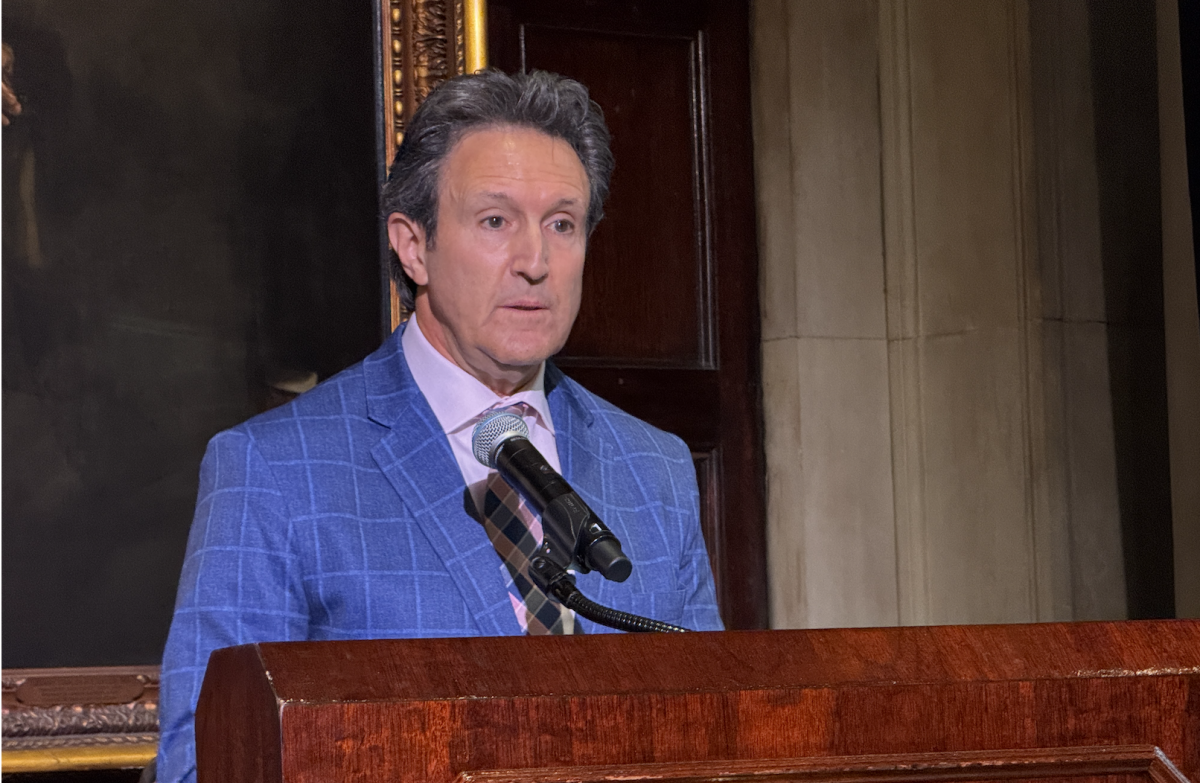
Image source: West Virginia State Capitol


We welcome news tips, article submissions, interview requests, or comments on this piece.

Please contact us at info@2firsts.com, or reach out to Alan Zhao, CEO of 2Firsts, on LinkedIn


Notice

1.  This article is intended solely for professional research purposes related to industry, technology, and policy. Any references to brands or products are made purely for objective description and do not constitute any form of endorsement, recommendation, or promotion by 2Firsts.

2.  The use of nicotine-containing products — including, but not limited to, cigarettes, e-cigarettes, nicotine pouchand heated tobacco products — carries significant health risks. Users are responsible for complying with all applicable laws and regulations in their respective jurisdictions.

3.  This article is not intended to serve as the basis for any investment decisions or financial advice. 2Firsts assumes no direct or indirect liability for any inaccuracies or errors in the content.

4.  Access to this article is strictly prohibited for individuals below the legal age in their jurisdiction.


Copyright


This article is either an original work created by 2Firsts or a reproduction from third-party sources with proper attribution. All copyrights and usage rights belong to 2Firsts or the original content provider. Unauthorized reproduction, distribution, or any other form of unauthorized use by any individual or organization is strictly prohibited. Violators will be held legally accountable.

For copyright-related inquiries, please contact: info@2firsts.com


AI Assistance Disclaimer


This article may have been enhanced using AI tools to improve translation and editorial efficiency. However, due to technical limitations, inaccuracies may occur. Readers are encouraged to refer to the cited sources for the most accurate information.

We welcome any corrections or feedback. Please contact us at: info@2firsts.com

Ukraine Raises Excise Stamp Fees for Tobacco, Heated Tobacco and Vape Liquids by 30.5% as Parliament Backs E-Excise Delay to 2027
Ukraine's Cabinet of Ministers adopted Resolution No. 1259 on October 15, 2026, increasing excise stamp production fees for tobacco products and e-cigarette liquids by approximately 30.5%, from UAH 0.1643 to UAH 0.2144 per stamp. Fees for alcoholic beverages rose by about 30.2%. Separately, Ukraine's parliament passed Bill No. 15532 on October 13, proposing to postpone the full implementation of electronic excise stamps and traceability for alcohol, tobacco and e-cigarette liquids from November 1, 2026, to July 1, 2027. Parliament cited additional testing, configuration and integration requirements. The bill was sent to the president for signature on October 19.
Regulations
Oct.21
NAS 2026 | Cliff Douglas: Risk Continuum Should Play a Central Role in Tobacco Policy
Cliff Douglas, a veteran U.S. tobacco-control and public health policy figure, told NAS 2026 that the “continuum of risk” should play a central role in tobacco policy. He called for clearer market pathways, stronger risk communication, differentiated regulation and enforcement, and said possible FDA reforms to PMTA reviews could be a “welcome correction” if they create a more efficient, predictable route for scientifically substantiated lower-risk products. Read 2Firsts’ on-site coverage.
Sep.26
Former Roche Neuroscience and Rare Diseases Communications Director Ria Kioupritzi Joins PMI as Scientific Affairs Director
Eleftheria (Ria) Kioupritzi, a biopharmaceutical professional with more than 15 years of experience, has joined Philip Morris International as Director Scientific Affairs within Corporate Affairs. She previously served at Roche as Senior Scientific Communications Director for Neuroscience and Rare Diseases and worked extensively in spinal muscular atrophy. Her earlier career also covered competitive intelligence, clinical and regulatory monitoring, pipeline development and launch preparation. During her time working in Roche's SMA field, Evrysdi passed through several U.S. FDA milestones, including its initial approval, an expanded indication for younger infants and approval of a tablet formulation. Public records do not show that Kioupritzi herself led the FDA submissions.
Sep.22
Huabao International Buys Indonesian HNB Manufacturer for RMB 90 Million, Adding OEM/ODM Capacity
Huabao International Holdings Limited will acquire 100% of PT Broad Far Indonesia through two wholly owned subsidiaries for approximately RMB 90 million. The Indonesian company manufactures and sells heat-not-burn tobacco sticks and provides OEM/ODM services. The sellers are part of a related-party group controlled by Huabao International Chair and controlling shareholder Zhu Linyao. PT Broad Far Indonesia generated $4.37 million in revenue and $177,000 in profit after tax in the first half of 2026, while net assets stood at about $326,000 at June-end. An independent valuer assessed the company’s equity at approximately RMB 93.06 million. Following completion, the HNB manufacturing operation will be consolidated into Huabao International.
News
Sep.29 by 2Firsts Perspectives
Australia Adds 6-Methylnicotine to Schedule 9 Prohibited Substances, Effective October 1
Australia's Therapeutic Goods Administration published a final decision on September 25 to classify 6-methylnicotine as a Schedule 9 prohibited substance under the Poisons Standard, effective October 1, 2026. TGA said the chemical has been reported in e-cigarette liquids sold in Australia and marketed as nicotine-free or nicotine alternatives, while evidence also indicates its use in preparations such as oral pouches. The government originally proposed a Schedule 7 classification but ultimately adopted the stricter Schedule 9 designation, citing acute toxicity, dependence risk, use in unapproved consumer products and misleading marketing.
News
Sep.29 by 2Firsts Perspectives
Smoke-Free Business Hits 42% of Q2 Net Revenue as PMI’s First TNFD Report Covers Single-Use Electronics, Critical Raw Materials and IQOS Repairs
Philip Morris International has published its first report aligned with the Taskforce on Nature-related Financial Disclosures, bringing its electronics supply chain and the use and end-of-life stages of smoke-free devices and consumables into its nature-related assessment. PMI said its smoke-free business accounted for about 42% of total net revenues in the second quarter of 2026. The report says non-circular electronic products, particularly single-use items, can increase consumption of limited natural resources and also details an IQOS repair pilot. A 2040 circularity scenario tests assumptions including a 50% reduction in product waste-related costs, 10% raw-material savings and a 25% substitution rate for refurbished products versus new products.
Sep.23