Key Points:
1. Tobacco harm reduction could potentially reduce tobacco-related deaths by 3 million to 4 million by 2060. It is an important public health strategy, especially given the millions of deaths annually linked to smoking-related diseases.
2. The biggest barriers to the adoption of THR in Asia include WHO’s strong anti-THR stance, political and economic constraints, and misinformation.
3. While the Framework Convention on Tobacco Control has been successful in reducing smoking prevalence through taxation, advertising bans and age restrictions, it has major shortcomings—especially its lack of legal power to enforce its measures and the exclusion of THR as a smoking cessation strategy.
4. As the home to 70% of the world’s smokers, Asia faces unique challenges in implementing tobacco control policies due to economic factors. For instance, government ownership of the tobacco industry in China and Indonesia’s non-ratification of the FCTC significantly limit the effectiveness of global tobacco control initiatives in the region.
5. To promote THR, stakeholders must advocate for better regulation, evidence-based policies and public education. Proper regulation should balance reducing risks for adults while preventing youth uptake, ensuring adult access to affordable products, and preventing illicit trade.
On Aug. 27, 2025, experts will debate tobacco harm reduction (THR) at the inaugural Asia Forum on Nicotine (AFN) (AFN25). As the largest and most populous continent, Asia offers significant potential for THR. Not only is the region home to more than half the world’s smokers, but it also contains some of the most dynamic markets for next-generation products.
The success of THR will be determined by the affordability of new products and appropriate regulation. After all, even the best smoking alternatives will fail to deliver on their promise if they are too expensive for the average consumer. Meanwhile, ill-considered regulation could inadvertently discourage smokers from transitioning to less harmful nicotine delivery systems.
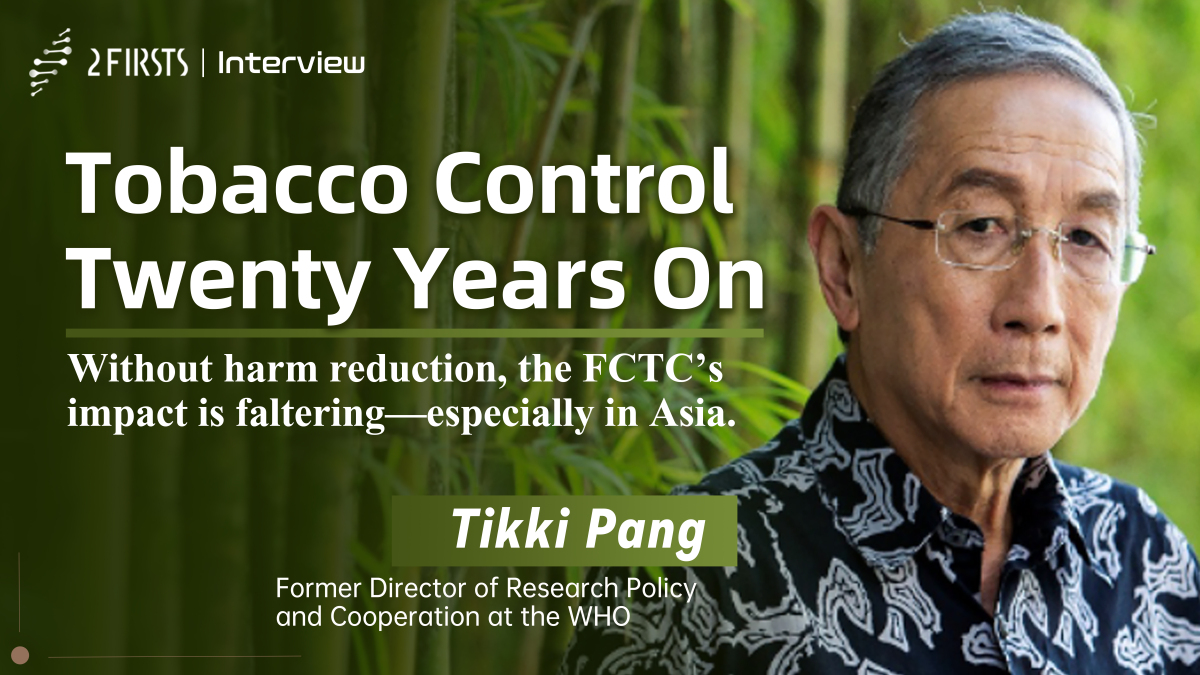
2Firsts spoke about these and other issues with Tikki Pang, a vocal THR proponent and key participant in the AFN25. Currently a visiting professor at a leading academic institution in Asia, Pang was previously (1999-2012) director for research policy and cooperation at the World Health Organization (WHO) in Geneva.
Prior to joining the WHO, he worked in Kuala Lumpur as a professor of biomedical sciences at the University of Malaya’s Institute of Postgraduate Studies & Research (1989-1999) and as a lecturer/associate professor at the University of Malaya Faculty of Medicine’s Department of Microbiology (1977-1989). From 1982 to 1995, Pang was co-director of the WHO Collaborating Centre for Dengue & Dengue Haemorrhagic Fever at the University of Malaya.
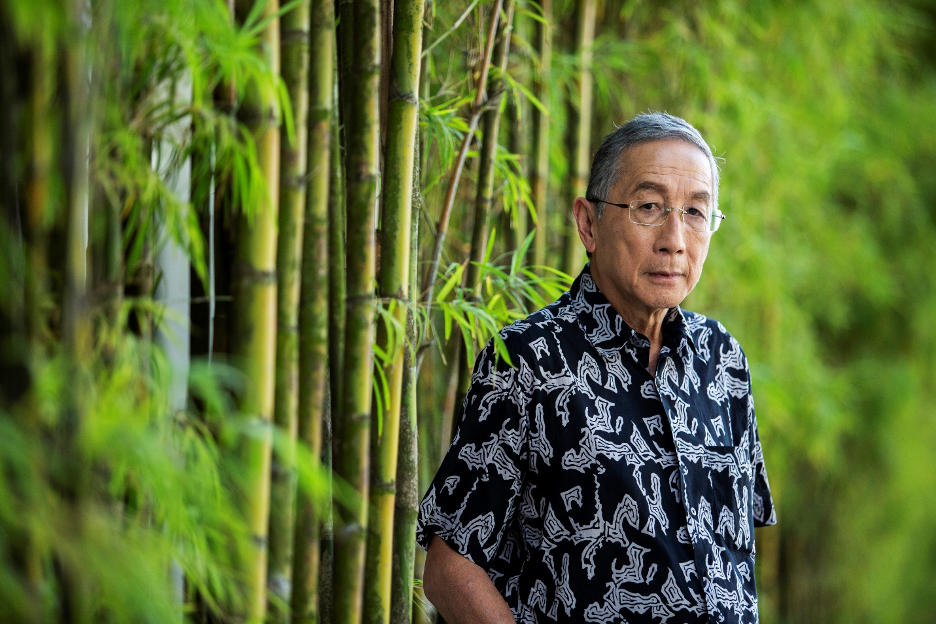
Armed with a PhD in immunology-microbiology from the Australian National University, Canberra, Pang’s interests are in the epidemiology, pathogenesis, laboratory diagnosis and prevention of infectious diseases, biosecurity and dual-use research, genomics and health, and in health research policy, health research systems, global health governance, development of research capabilities in developing countries, linkages between research and policy, vaccine confidence and harm reduction approaches to mitigate public health problems.
At the AFN, Pang will reflect on the 20th anniversary of the Framework Convention on Tobacco Control, especially as it relates to Asia.
The Potential of THR
2Firsts: Your expertise spans multiple medical fields. Please comment on tobacco harm reduction’s potential contribution to overall public health. How does it compare to the potential contributions of public health initiatives in other fields?
Pang: THR represents a much safer alternative to cigarettes and has been shown to be effective in helping adults quit smoking. With 7 million deaths annually linked to smoking-related diseases, the public health impact is highly significant. Adoption of THR products could reduce tobacco-related deaths by between 3 million and 4 million by 2060.
2Firsts: Why does the Asia region justify its own THR conference? What sets the region apart from other regions in terms of tobacco consumption, tobacco control policies and the tobacco industry’s economic significance?
Pang: Asia is home to 70% of the world’s smokers, three out of the 10 countries with the highest death rates due to smoking—China, Vietnam and Bangladesh—are in Asia, and Asia is the largest producer of tobacco in the world (i.e., China, India, Indonesia). This is a strong economic barrier for implementing strong tobacco control policies.
2Firsts: What are the other big barriers to THR in Asia?
Pang: The greatest barrier remains WHO’s strong anti-THR position as many Asian countries look to WHO for guidance and direction in formulating policies related to THR. Additional barriers include political and economic constraints and misinformation on the value and benefits of THR. Misinformation in the Asian context is sometimes propagated by strong tobacco control lobbies and even by HCPs.
Evaluating the FCTC
2Firsts: What have been the FCTC’s biggest accomplishments and gravest shortcomings?
Pang: Biggest accomplishment: Since its adoption in 2005, the FCTC has been the cornerstone of global tobacco control. With 183 parties covering over 90% of the world's population, the FCTC has achieved successes particularly in its early years—significantly reducing smoking prevalence—avoiding between 22 million and 24 million deaths; though this has slowed/plateaued in recent years—through taxation, advertising bans and restrictions on sales to minors. Gravest shortcomings: no legal power to enforce articles, non-inclusion and non-acknowledgment of THR as a smoking cessation strategy to help adults quit smoking.
2Firsts: Has the FCTC impacted Asia differently than it has other regions? Please explain.
Pang: To some extent, yes, mainly due to economic factors. Its impact in China and Indonesia has been limited (Indonesia has not ratified the FCTC and has the highest smoking prevalence in males in the world at 67%; meanwhile, China’s major tobacco company is a state-owned enterprise.)
2Firsts: How do you explain the COP’s hostility to tobacco harm reduction? Is there reason to believe the organization’s stance may shift?
Pang: It is hard to explain the reason for the hostility and the evidence-blind position of the organization. One reason could be the strong financial support it receives for its Tobacco Free Initiative from Bloomberg, a powerful tobacco-control philanthropy.
The WHO’s stance is unlikely to shift in the near term but consider two potential game-changers: the ongoing drastic restructuring of the organization linked to the U.S. withdrawal [from the global health body]; and the election of a new director general in 2027.
2Firsts: From a THR perspective, what would be the best-case outcome from COP11, and what would be the worst-case outcome?
Pang: The best-case outcome would be the formation of a THR working group to openly discuss the potential value of THR in reducing smoking prevalence; The worst-case outcome would be the maintenance of the anti-THR stance/status-quo and even strengthening of the anti-THR rhetoric.
Promoting THR
2Firsts: How in your view should the benefits of reduced-risk products be weighed against the risks of youth uptake? And how can regulation ensure a proper balance?
Pang: It is [important] to try and avoid conflating the arguments between hypothetical youth uptake leading to smoking vs helping adults quit smoking; to avoid conflating reduced health risks vs severe disease caused by smoking. Regulation can ensure a proper balance by facilitating affordable access and by preventing access to youth, as well as ensuring product quality and safety. Legitimizing THR products through risk-proportionate regulations will, critically, avoid the emergence of a black market and illicit trade in these products.
2Firsts: What steps can be taken to promote THR worldwide and in Asia? Please comment on the roles of stakeholder such as regulators, consumers, medical professionals and industry.
Pang: [Such steps can include] advocacy and dissemination of information and evidence, support/endorsement from professional societies and medical professionals, stronger voices/demands from consumers/smokers, more local research on benefits and harms of THR, outreach to policy makers and legislators (e.g., parliamentarians).