Key Takeaways
- Argentina published Resolution 549/2026, creating a comprehensive regulatory framework for nicotine products.
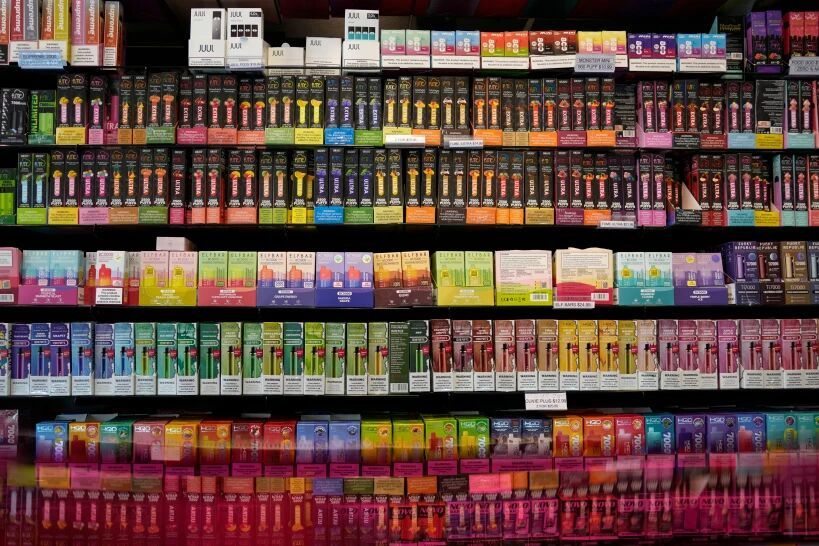
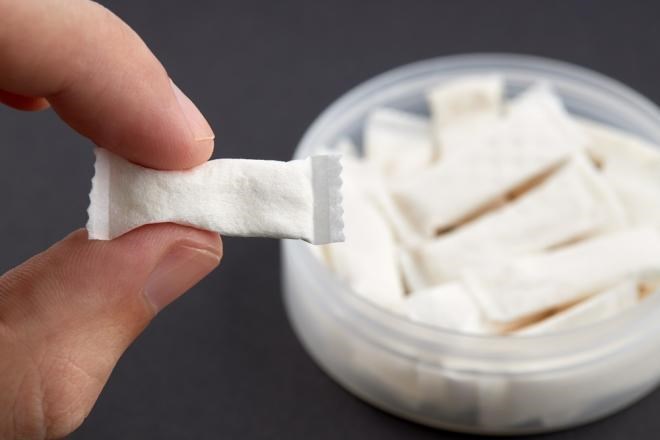
- The regulation covers vapes, heated tobacco and nicotine pouches.
- All products must be registered, and manufacturers and sellers must meet traceability, quality and ingredient disclosure requirements.
- Vape flavorings will be eliminated, which government sources said experts identify as a main mechanism for adolescent initiation.
- The government said the framework aims to control, inspect and sanction irregular sales of nicotine products.
2Firsts, May 6,2026
According to Infobae, Argentina’s government has created a comprehensive regulatory framework for nicotine products, including vapes, heated tobacco and nicotine pouches, through Resolution 549/2026 published in the Official Gazette.
The new rules end the previous prohibitive framework
The report said the new regulation ends the previous prohibitive approach and establishes rules to organize the market by requiring traceability, quality standards and mandatory registration for all manufacturers and merchants operating in Argentina.
Government said it will strengthen control, inspection and sanctions
Government sources told Infobae that the aim is to provide the state with concrete tools to control, inspect and sanction irregular sales of these products.
The informal circuit currently dominates the market
According to government spokespeople, the informal circuit currently dominates the market for nicotine products.
These products are consumed regularly even though they are sold illegally, lack traceability, have no control over their composition and do not pay taxes.
Vapes and heated tobacco were previously subject to restrictions
The report said Argentina previously had a restrictive framework supported by ANMAT and the Ministry of Health.
ANMAT Provision 3226/2011 prohibited the importation, distribution, commercialization and advertising of vapes and electronic cigarettes.
The 2023 restriction extended to heated tobacco devices
In 2023, Joint Resolution 565/2023 by the Ministry of Health and ANMAT reaffirmed the prohibition on electronic nicotine delivery systems and extended the restriction to heated tobacco devices, which also could not be legally sold or imported because they lacked health authorization.
Nicotine pouches were not specifically regulated before
Regarding nicotine pouches, the report said they had not been specifically regulated before, but their commercialization was under health alert and had been the subject of complaints from medical societies.
As a result, none of these products had legal permission for sale in the country, although they continued to be obtained informally and without official controls.
All products must be registered and disclose components
Government sources said the new framework will require that no product can be sold without registration.
Companies must declare components and comply with quality standards, while strict limits will be set on permitted ingredients, nicotine concentration, banned substances and manufacturing conditions.
Vape flavorings will be eliminated
The report said the elimination of flavorings in vapes will be a central point of the new regulation. Government sources said experts identify flavorings as the main mechanism for adolescent initiation.
The report said the Ministry of Economy, the Ministry of Health, ANMAT and the Cabinet Office coordinated the development of the regulatory framework.
The framework seeks to end the predominance of smuggling and formalize differentiated taxation according to product category.
The new system requires full traceability and ingredient limits
Government sources said the state had until now lacked effective mechanisms to control mass nicotine consumption entering through a “completely black” market.
The strategy focuses on mandatory registration, composition control, full traceability and limiting permitted ingredients, under the responsibility of declared manufacturers and sellers. Only registered products may be commercialized, and omission of registration will make legal sale impossible.
Government said the change does not create a new market
The report quoted government sources as saying the change does not create a new market, but introduces order into a pre-existing circuit where nicotine is consumed through multiple unregulated channels.
Products will enter the formal tax system
From an economic perspective, the report said the products will move into the formal system and be subject to inspection and taxes, allowing the current monopoly of smuggling to be dismantled. From a health perspective, state intervention will try to reduce harm caused by uncontrolled consumption without standards, especially among adolescents and young people, who show rising initiation rates.
The report cited reducing exposure to cigarette smoke as another goal
The report said an additional goal is to reduce third-party exposure to smoke from traditional cigarettes, which causes serious diseases such as cancer, cardiovascular and respiratory conditions. It cited international precedents in the United States, Sweden and Japan, where similar regulations reduced consumption and passive exposure.
Experts said all nicotine products carry cardiovascular risks
The report said growing evidence gathered by international research teams confirms that all products containing nicotine increase cardiovascular health risks, regardless of format. Researchers from Germany, Italy, the United States, Switzerland and the United Kingdom concluded that nicotine is a “direct cardiovascular toxin” and that no consumption route is harmless.
German expert said nicotine carries risk in any form
Thomas Münzel of the University Medical Center Mainz said nicotine, in any presentation, causes increased blood pressure, vascular damage and higher risk of heart disease, meaning no product that delivers nicotine is safe for the heart.
European report called for unified regulation
The report said a study published in the European Heart Journal raised the need for unified regulation at the European level, stressing protection for adolescents, who have become a priority target for marketing of these products. Münzel warned that the next heart attack, stroke or cardiovascular death may not come from a cigarette, but from a flavored vape pod, a nicotine pouch or shisha in a café.
Argentine expert said non-combustion nicotine products may also damage blood vessels
In Argentina, cardiologist Guido Bergman, coordinator of smoking cessation at ICBA, told Infobae that any form of nicotine delivery, even without combustion, can cause early vascular damage and serious cardiovascular events.
Expert said use of emerging products has increased among students
Guillermo Espinosa, coordinator of the tobacco control program at Hospital Italiano de Buenos Aires, said there is concern because use of emerging products has increased among schoolchildren. The report said this has been stimulated by accessibility and the variety of flavors, with growing use even among people who have never smoked cigarettes.
Nicotine pouches raise concern over adolescent impact
The report said the advance of nicotine pouches also worries experts, especially because of their impact among adolescents. According to the Argentine Anti-Tobacco Union, cited by Infobae, the rise in pouch consumption in the country led to claims and complaints to health authorities amid fears that they may become a new source of youth addiction.
Image Source: Infobae
We welcome news tips, article submissions, interview requests, or comments on this piece.
Please contact us at info@2firsts.com, or reach out to Alan Zhao, CEO of 2Firsts, on LinkedIn
Notice
1. This article is intended solely for professional research purposes related to industry, technology, and policy. Any references to brands or products are made purely for objective description and do not constitute any form of endorsement, recommendation, or promotion by 2Firsts.
2. The use of nicotine-containing products — including, but not limited to, cigarettes, e-cigarettes, nicotine pouchand heated tobacco products — carries significant health risks. Users are responsible for complying with all applicable laws and regulations in their respective jurisdictions.
3. This article is not intended to serve as the basis for any investment decisions or financial advice. 2Firsts assumes no direct or indirect liability for any inaccuracies or errors in the content.
4. Access to this article is strictly prohibited for individuals below the legal age in their jurisdiction.
Copyright
This article is either an original work created by 2Firsts or a reproduction from third-party sources with proper attribution. All copyrights and usage rights belong to 2Firsts or the original content provider. Unauthorized reproduction, distribution, or any other form of unauthorized use by any individual or organization is strictly prohibited. Violators will be held legally accountable.
For copyright-related inquiries, please contact: info@2firsts.com
AI Assistance Disclaimer
This article may have been enhanced using AI tools to improve translation and editorial efficiency. However, due to technical limitations, inaccuracies may occur. Readers are encouraged to refer to the cited sources for the most accurate information.
We welcome any corrections or feedback. Please contact us at: info@2firsts.com