Call for Regulation of E-cigarette Industry in Malaysia without GEG

Nov.24.2023
Call for Regulation of E-cigarette Industry in Malaysia without GEG
Malaysian Vapers Alliance (MVA) urges government to regulate e-cigarette industry to protect consumers without implementing tobacco endgame policy.

According to a report by Sinar Harian on November 23, the Malaysian Vapers Alliance (MVA) has openly called on the local government to regulate the e-cigarette industry to safeguard consumer interests, without implementing a Tobacco Endgame Policy (GEG).


The President of the Malaysian Vaping Association (MVA), Khairil Azizi Khairuddin, has openly expressed support for the government's efforts to promote tobacco control regulations for public health in 2023, without the need for GEGs to protect public health and without infringing on citizens' rights.


We welcome news tips, article submissions, interview requests, or comments on this piece.

Please contact us at info@2firsts.com, or reach out to Alan Zhao, CEO of 2Firsts, on LinkedIn


Notice

1.  This article is intended solely for professional research purposes related to industry, technology, and policy. Any references to brands or products are made purely for objective description and do not constitute any form of endorsement, recommendation, or promotion by 2Firsts.

2.  The use of nicotine-containing products — including, but not limited to, cigarettes, e-cigarettes, nicotine pouchand heated tobacco products — carries significant health risks. Users are responsible for complying with all applicable laws and regulations in their respective jurisdictions.

3.  This article is not intended to serve as the basis for any investment decisions or financial advice. 2Firsts assumes no direct or indirect liability for any inaccuracies or errors in the content.

4.  Access to this article is strictly prohibited for individuals below the legal age in their jurisdiction.


Copyright


This article is either an original work created by 2Firsts or a reproduction from third-party sources with proper attribution. All copyrights and usage rights belong to 2Firsts or the original content provider. Unauthorized reproduction, distribution, or any other form of unauthorized use by any individual or organization is strictly prohibited. Violators will be held legally accountable.

For copyright-related inquiries, please contact: info@2firsts.com


AI Assistance Disclaimer


This article may have been enhanced using AI tools to improve translation and editorial efficiency. However, due to technical limitations, inaccuracies may occur. Readers are encouraged to refer to the cited sources for the most accurate information.

We welcome any corrections or feedback. Please contact us at: info@2firsts.com

Philippines Mandates Safety Certification for Nicotine Pouches, Gives Industry 12 Months to Comply
The Philippines Department of Trade and Industry has placed nicotine pouches under mandatory product certification through Department Administrative Order No. 26-07, Series of 2026. Nicotine pouches must obtain a Philippine Standard, or PS, license before they can be manufactured, imported, packed, distributed or sold in the country. The regime requires testing for nicotine content, pH and water activity, while packaging must disclose nicotine strength, ingredients, allergens, batch information, the PS certification mark and prescribed health warnings. Existing market participants have a 12-month transition period to comply.
Regulations
Oct.12
2Firsts First Look|China to End VAT Export Rebates on Vape Devices and Nicotine in April 2027, Following Earlier Removal for HTP Devices and Nicotine Vapes
China's Ministry of Finance and State Taxation Administration announced on October 12, 2026, that value-added tax (VAT) export rebates for vape devices, nicotine and its salts, and certain non-combustible inhalation products will be eliminated from April 1, 2027. The measure adds four tobacco- and nicotine-related customs codes, including 8543400010, which covers vape devices and qualifying empty pods. China previously eliminated rebates for nicotine-containing vaping products and devices under code 8543400090 in April 2026. According to industry classification information held by 2Firsts, the latter currently corresponds to heated tobacco devices. Export excise tax refund and exemption arrangements will remain unchanged.
Special Report
Oct.12
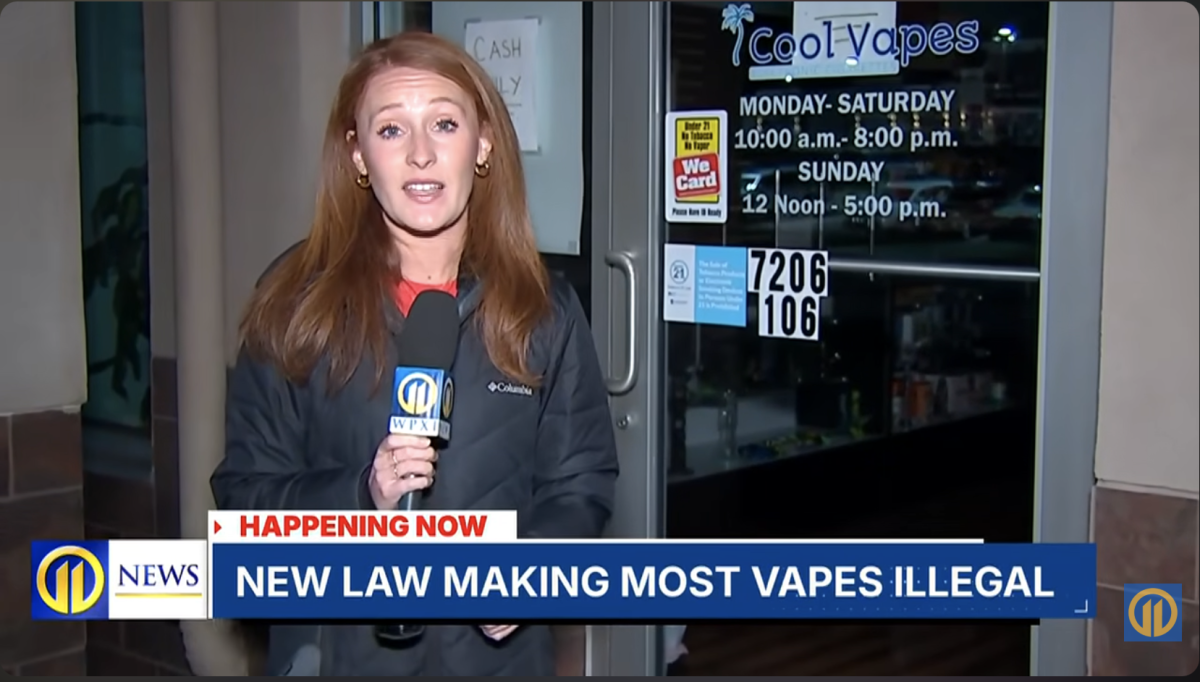
Pennsylvania Lists 163 Vape Products Eligible for Sale, Including Vuse and JUUL; Previously Pending Chinese Brands Such as OXBAR Remain Absent, While Unlisted Products Including Geek Bar Face Enforcement From October 19
Pennsylvania begins enforcing its electronic nicotine delivery system (ENDS) directory restrictions on October 19, 2026. The October 18 directory contained 163 product records from seven manufacturers, including Vuse, JUUL, NJOY, Logic and Naked 100. Geek Bar, RAZ and Lost Mary were absent. BAT, Altria, Japan Tobacco and JUUL collectively accounted for 112 records, or 68.7%, while Imperial Brands' blu had no listings. The directory included 15 disposable vape records, 40 bottled e-liquids and 10 products labeled 0mg, but no open-system refillable devices. Twenty-two manufacturer certifications remained under review. Four Logic models corresponding to Smoore's pending records were listed under the brand owner, while LYCO, OXBAR and Boulder/Rock had no approved directory entries.
Regulations
Oct.19
Germany Probes 7.6 Million Illegal Vape Case With Estimated €33.3 Million Tax Loss; Four Chinese Manufacturer Employees Under Investigation, Some Packaging in Enforcement Images Resembles FUMOT Products
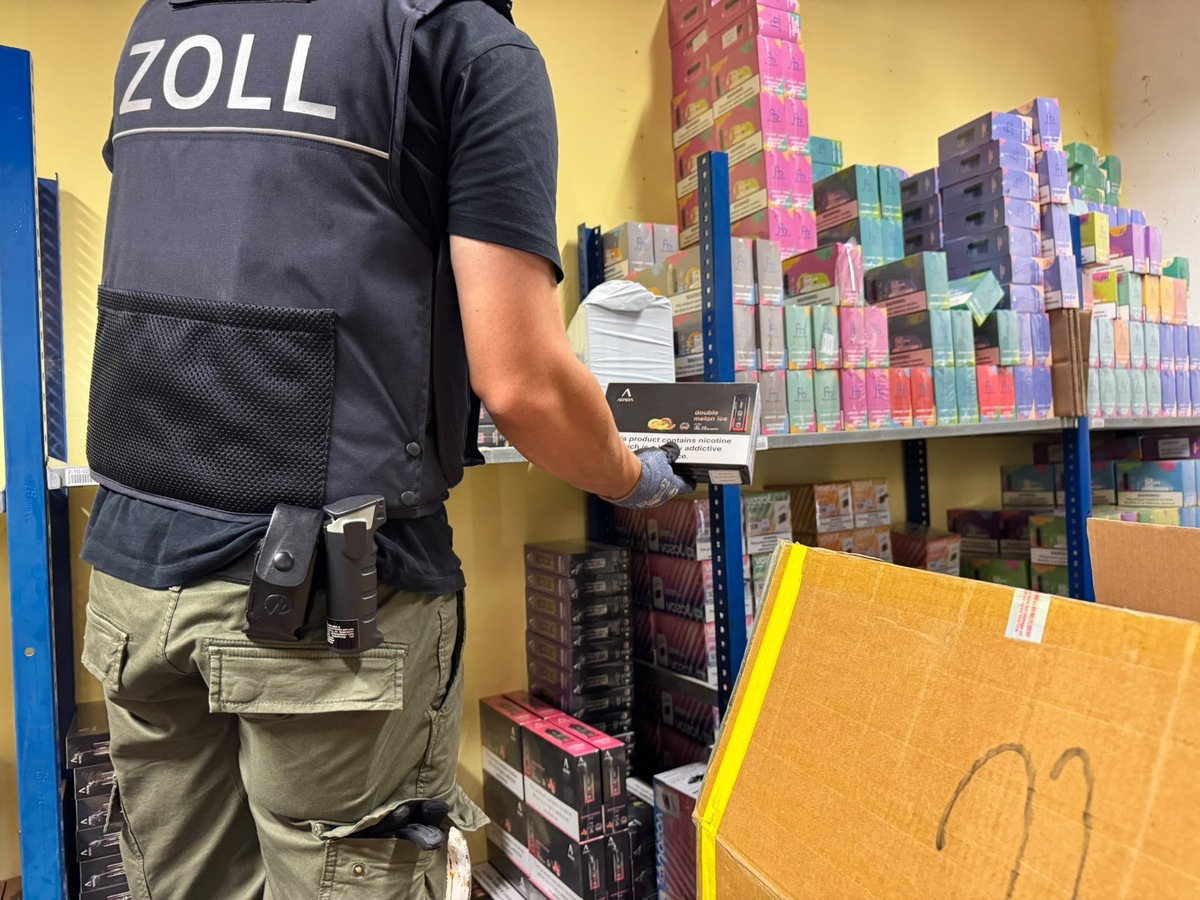
German prosecutors and customs authorities are conducting a criminal investigation into an alleged cross-border organised vape network. Authorities say that between January 2024 and March 2025, four employees of an unnamed Chinese e-cigarette manufacturer allegedly built a network of sales agents and wholesalers that brought more than 7.6 million nicotine disposable vapes into Germany, causing an estimated €33.3 million in excise-tax losses. The manufacturer has not been named. Some products visible in enforcement images have packaging resembling products from FUMOT’s portfolio. European regulatory records from 2024, FUMOT’s public overseas-sales materials and records involving German vape importer and distribution company Zamu-Pro GmbH also show FUMOT/RandM products and German distribution activity during the period covered by the investigation.
Sep.21
JAMA Study: U.S. Vape Directories Fail to Sustainably Curb Unlisted Sales as Product Shifts May Redistribute Brand Share 2Firsts Recommended
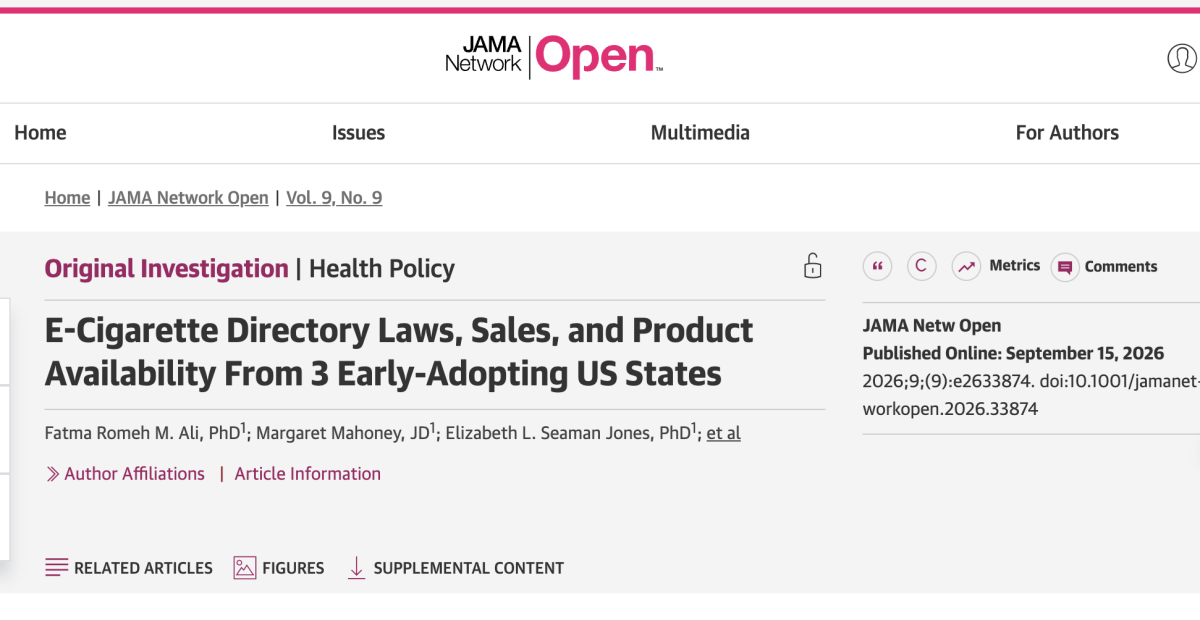
A study by CDC Foundation researchers found no sustained decline in e-cigarette sales across Alabama, Oklahoma and Louisiana, the first three U.S. states to implement e-cigarette directory laws. Louisiana initially saw a significant sales decline, followed by a rebound and a persistent reduction in product availability. Sales also shifted from nontobacco-flavored disposables toward prefilled cartridges, with Vuse Alto driving much of the increase in menthol cartridges. By April 2025, unlisted products still accounted for more than half of e-cigarette nicotine sales in all three states.
Sep.18
South Korea's Tobacco Plan Excludes 6-Methyl Nicotine as Customs Tightens Import Controls and Analog Liquid Imports Fall 83%
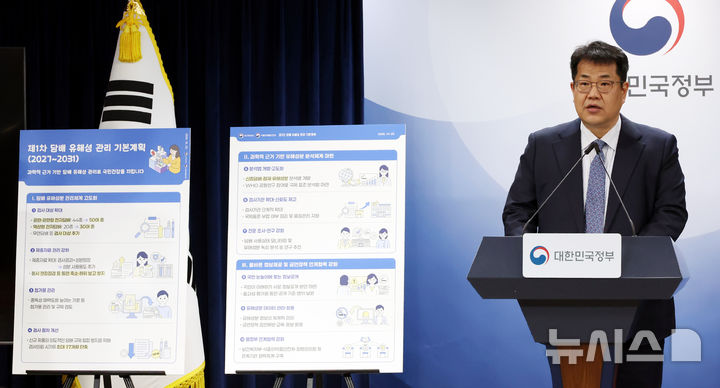
South Korea's government unveiled its first Tobacco Harm Management Basic Plan for 2027–2031 on October 29, 2026, proposing broader testing of vaping and heated tobacco products while excluding nicotine analogs such as 6-methyl nicotine. Synthetic nicotine came under tobacco regulation on April 24, and a June investigation found 6-methyl nicotine in 12 liquid inhalation products marketed as nicotine-free. Customs data released in September showed that imports of nicotine analog solutions fell 83.3%, from 12 metric tons in January–April to 2 metric tons in May–August. By September 20, imports had reached approximately 15 metric tons for the year, with 99.99% originating from China. Customs authorities have tightened pre-clearance testing and supply-chain documentation requirements, while the MFDS expects to complete its assessment of nicotine analog hazards by the end of 2026.
Regulations
Nov.04