Controversial New Zealand Proposal: Freezing Cigarette Tax for Three Years

Regulations by 2FIRSTS.ai
Jan.25.2024
Controversial New Zealand Proposal: Freezing Cigarette Tax for Three Years
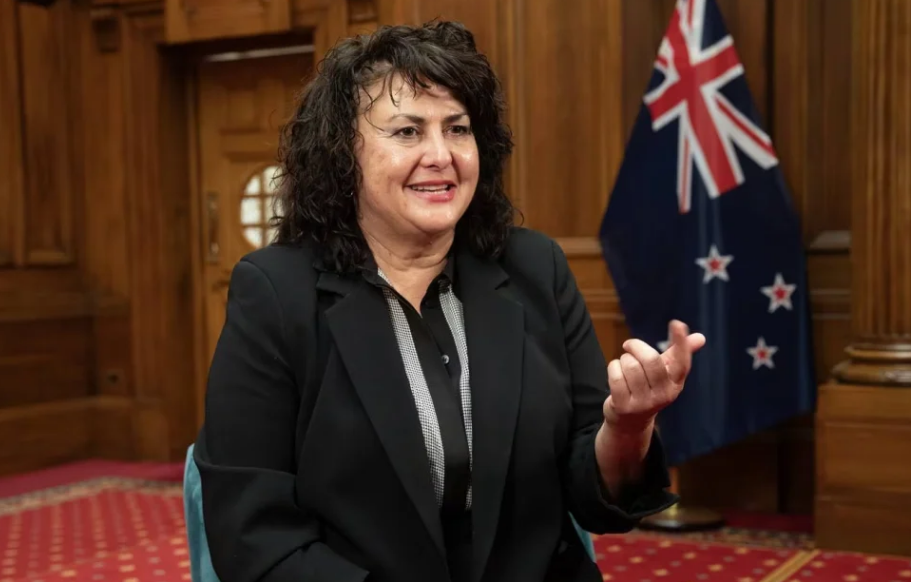
New Zealand's deputy health minister, Casey Costello, has faced controversy over proposals to freeze tobacco taxes.

On January 25, the New Zealand Herald reported that Casey Costello, the Deputy Minister of Health for New Zealand, has put forward a series of innovative ideas for tobacco control, sparking widespread controversy. One of the proposals is to freeze cigarette taxes in order to prevent cigarettes from being affected by overall inflation.


Currently, the tobacco consumption tax is subjected to annual adjustments based on the Consumer Price Index (CPI). Costello is now proposing a suggestion to freeze the growth of the tobacco-related CPI for three years.


However, during the interview with Costello, when asked about this proposal, she stated that she hadn't considered it at all. She said, "I haven't even discussed it. It's not something I specifically sought advice on.


Despite stating in the interview that she did not seek any advice on the matter, the report from the Department of Health tells a different story. The report asked Costello, "Do you wish to receive recommendations regarding the freeze on tobacco-related excise for the next three years starting from January 2024?" The option "yes" on this report was circled and has been signed and confirmed by Costello on December 20, 2023.


Furthermore, although Costello has not confirmed that she is proposing a freeze in the increase of consumption tax, she has shown an openness to this practice.


She expressed, "This is a significant burden for the most vulnerable individuals in our society, as they are dependent on nicotine and yet we continuously penalize this segment of the population." She sympathizes with the freeze in this practice because we are currently dealing with a small group that is under immense economic pressure.


However, Janet Hoek, a professor of public health at the University of Otago, believes that this would put tobacco products in a favorable position compared to other consumer goods. She said, "This freezing measure will effectively shield tobacco from the impact of inflation." Hoek also pointed out that recently, due to the growth of the Consumer Price Index (CPI), we have seen the typical cigarette prices increase by around $2, which may be enough to make smokers consider quitting.


In addition, the New Zealand government has further plans for reforming smoking and e-cigarette laws, such as prohibiting the sale of tobacco among those born on or after January 1, 2009, in order to create a smoke-free generation.


On this basis, the Costa-Lawson Proposal aims to increase the penalties for selling e-cigarettes to minors. Currently, the fine for selling tobacco to minors is $10,000, while in other cases it is $5,000. Although no e-cigarette vendors have been prosecuted for selling to minors, it is understood that Costa-Lawson is proposing to raise the maximum fine for selling e-cigarettes to minors to $30,000.


We welcome news tips, article submissions, interview requests, or comments on this piece.

Please contact us at info@2firsts.com, or reach out to Alan Zhao, CEO of 2Firsts, on LinkedIn


Notice

1.  This article is intended solely for professional research purposes related to industry, technology, and policy. Any references to brands or products are made purely for objective description and do not constitute any form of endorsement, recommendation, or promotion by 2Firsts.

2.  The use of nicotine-containing products — including, but not limited to, cigarettes, e-cigarettes, nicotine pouchand heated tobacco products — carries significant health risks. Users are responsible for complying with all applicable laws and regulations in their respective jurisdictions.

3.  This article is not intended to serve as the basis for any investment decisions or financial advice. 2Firsts assumes no direct or indirect liability for any inaccuracies or errors in the content.

4.  Access to this article is strictly prohibited for individuals below the legal age in their jurisdiction.


Copyright


This article is either an original work created by 2Firsts or a reproduction from third-party sources with proper attribution. All copyrights and usage rights belong to 2Firsts or the original content provider. Unauthorized reproduction, distribution, or any other form of unauthorized use by any individual or organization is strictly prohibited. Violators will be held legally accountable.

For copyright-related inquiries, please contact: info@2firsts.com


AI Assistance Disclaimer


This article may have been enhanced using AI tools to improve translation and editorial efficiency. However, due to technical limitations, inaccuracies may occur. Readers are encouraged to refer to the cited sources for the most accurate information.

We welcome any corrections or feedback. Please contact us at: info@2firsts.com

South Korea Constitutional Court Upholds Volume-Based E-Liquid Tax, With Challenged Rates at KRW 370 and KRW 628 per Milliliter
South Korea's Constitutional Court has upheld fixed taxes on nicotine-containing e-cigarette liquids based on solution volume, ruling that challenged provisions imposing KRW 370 per milliliter in individual consumption tax and KRW 628 per milliliter in tobacco consumption tax do not violate the Constitution. The cases stemmed from historical disputes involving importers that reported nicotine as being extracted from tobacco stems rather than leaves. South Korea has since broadened its tobacco definition to include synthetic nicotine, while current tax laws provide reduced rates for certain products not derived from tobacco.
Sep.18
North Carolina Tightens Vape Product Directory Enforcement, Expands State and Local Powers as Violators Face Fines, Product Seizures and License Suspension or Revocation
North Carolina has expanded enforcement of its vapor product directory rules, authorizing more state and local law enforcement participation and establishing a task force led by the State Bureau of Investigation. The legislation requires at least one unannounced compliance inspection annually for retailers, distributors and wholesalers handling covered products. Penalties effective October 1, 2026, include civil fines of $500–$750 for a first violation and $1,000–$1,500 for repeated violations within 12 months, along with potential license suspension or revocation. Manufacturers may face penalties of $10,000 per unlisted product. The measures strengthen the product directory system established in 2024.
Regulations
Oct.28
Special Report | From Oversupply to Supply Gaps: Global Tobacco Leaf Markets Diverge Ahead of 2027
Global tobacco leaf markets diverged sharply in 2026, with India cutting authorised FCV production amid oversupply while Malawi faced a supply shortfall. U.S. demand improved in some leaf categories, but growers in Brazil, Colombia, Tanzania and Zimbabwe faced pressure from prices, buyer access, costs and weather. With nicotine consumption patterns also shifting, 2027 will test whether supply, demand and grower profitability can move back toward balance.
Oct.26
Philip Morris Malaysia Again Meets Religious Authority Over Cigarette Alternatives as Perlis Mufti Responds on Halal Criteria
Philip Morris Malaysia Managing Director Naeem Shahab Khan met Perlis Mufti Mohd Asri Zainul Abidin on September 17 and presented the company's shift from conventional cigarettes toward alternative products. The mufti said a product could be considered halal if it is clean, its side effects are not harmful or can be controlled, and it does not involve excessive waste. His remarks did not mention IQOS or any other specific PMI product and did not amount to a new product-specific religious ruling. It was at least the second publicly reported engagement between Philip Morris Malaysia and a Malaysian religious institution over cigarette alternatives within six months.
Regulations
Sep.18 by 2Firsts Perspectives
Sweden Threatens EU Tobacco Tax Deal as Nicotine Pouch Duty Dispute Looms Over November 9 Meeting
Sweden is expected to oppose a European Union proposal to raise minimum tobacco excise duties, Law360 reported on October 26, 2026, citing an EU official. A provisional Council agenda dated October 23 confirms that the tobacco taxation package is scheduled for discussion at the November 9 finance ministers' meeting, where member states will seek a general approach. The proposed reforms would raise minimum taxes on conventional tobacco products and establish EU-wide excise rules for vaping liquids, heated tobacco and nicotine pouches. Sweden supports harmonising tobacco taxation rules but objects to requiring nicotine pouches to bear the same minimum tax burden as certain smoking tobacco products. As EU indirect tax legislation requires unanimous Council approval, Swedish opposition could block the proposal in its current form.
Regulations
Oct.29
Why Does JPMorgan Favor BAT Over Philip Morris Despite Forecasting Slower Growth of 3.9% Versus 6.2%?
JPMorgan resumed equity research coverage of British American Tobacco (BAT), Philip Morris International (PMI) and Imperial Brands in November 2026, assigning BAT an Overweight rating and the other two companies Neutral ratings. The bank forecasts like-for-like sales growth of 3.9% for BAT and 6.2% for PMI in 2027, but estimates the two companies will trade at approximately 11 times and 21 times 2027 earnings, respectively. JPMorgan cited BAT's improving position in US nicotine pouches and vaping products as a driver of its investment outlook. BAT reported a 220% constant-currency increase in US modern oral nicotine revenue in the first half of 2026, while PMI's ZYN US shipments returned to growth in the third quarter. Imperial expects NGPs to represent 4% to 5% of sales and has expanded its oral portfolio through acquisitions.
Capital Markets
Nov.12