EU Approves France's Ban on Disposable e-Cigarettes in 2023

Oct.10.2024
EU Approves France's Ban on Disposable e-Cigarettes in 2023
The European Union approves French ban on disposable e-cigarettes, set to take effect in the coming months.

According to Le Progrès on October 10th, the European Union has approved a law banning disposable e-cigarettes in France. The law was passed by the National Assembly in December 2023 and later approved by the Senate, with only the EU's approval remaining. With the EU's approval now granted, it indicates that France will enforce the ban in the coming months.


A survey conducted by the Anti-Tobacco Alliance (ACT) in 2023 revealed that among teenagers aged 13 to 16, 73% of respondents had heard of disposable e-cigarettes, while 15% had used this product. Among users, 47% had their first exposure to nicotine through disposable e-cigarettes, and 23% subsequently moved on to other tobacco and nicotine products.


A bipartisan bill proposed by Francesca Pasquini was passed by the French Parliament in March of this year. At the time, Health Minister Catherine Vautrin condemned the issue of disposable e-cigarettes, referring to them as a "public health, social, and environmental scourge," and pointing out that the marketing of these products is aimed at attracting young people with bright colors, fruity flavors, and low prices.


The European Commission considers the ban to be "reasonable, necessary, and appropriate" on public health grounds, aimed at addressing relevant health issues.


However, the EU approval only applies to disposable e-cigarettes and does not affect other rechargeable e-cigarettes, as the sale of the latter remains permitted.


The European Commission stated:


According to the objectives of Directive 2014/40/EU, which aims to ensure a high level of human health protection, the manufacturing, holding, selling, distributing, or giving away of disposable e-cigarettes containing nicotine is prohibited in France. This ban complies with the requirements of Article 24(3) of the Directive and applies to disposable e-cigarettes placed on the market in France or already sold in France.


The French parliament can now formally confirm its vote to advance the final implementation of the law.


We welcome news tips, article submissions, interview requests, or comments on this piece.

Please contact us at info@2firsts.com, or reach out to Alan Zhao, CEO of 2Firsts, on LinkedIn


Notice

1.  This article is intended solely for professional research purposes related to industry, technology, and policy. Any references to brands or products are made purely for objective description and do not constitute any form of endorsement, recommendation, or promotion by 2Firsts.

2.  The use of nicotine-containing products — including, but not limited to, cigarettes, e-cigarettes, nicotine pouchand heated tobacco products — carries significant health risks. Users are responsible for complying with all applicable laws and regulations in their respective jurisdictions.

3.  This article is not intended to serve as the basis for any investment decisions or financial advice. 2Firsts assumes no direct or indirect liability for any inaccuracies or errors in the content.

4.  Access to this article is strictly prohibited for individuals below the legal age in their jurisdiction.


Copyright


This article is either an original work created by 2Firsts or a reproduction from third-party sources with proper attribution. All copyrights and usage rights belong to 2Firsts or the original content provider. Unauthorized reproduction, distribution, or any other form of unauthorized use by any individual or organization is strictly prohibited. Violators will be held legally accountable.

For copyright-related inquiries, please contact: info@2firsts.com


AI Assistance Disclaimer


This article may have been enhanced using AI tools to improve translation and editorial efficiency. However, due to technical limitations, inaccuracies may occur. Readers are encouraged to refer to the cited sources for the most accurate information.

We welcome any corrections or feedback. Please contact us at: info@2firsts.com

Product | BAT Revises Japan's VELO Convenience Store Lineup, Adding ¥380 Mango Pouches as Selected SKUs Exit
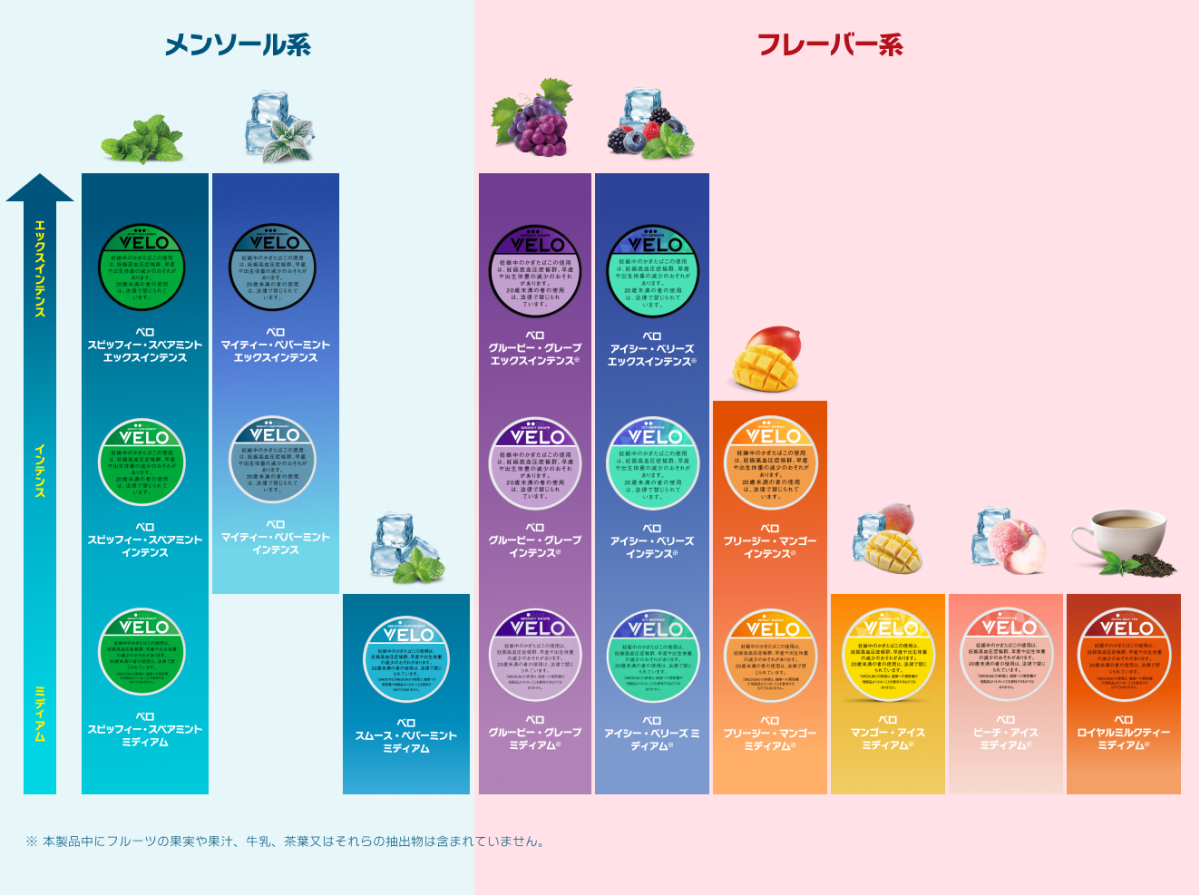
British American Tobacco's Japanese subsidiary, BAT Japan, launched VELO Mango Ice Medium on November 2, 2026, with distribution expanding to selected 7-Eleven, FamilyMart, NewDays and Seicomart stores from November 3. The new oral tobacco product contains 15 pouches per can and retails for ¥380, featuring a mango and cooling flavor profile at Medium intensity. At the same time, BAT Japan raised prices on multiple existing VELO products from ¥360 to ¥380 per can and withdrew selected SKUs from convenience store distribution without discontinuing them entirely. The changes affect product assortment, pricing and retail channel allocation.
product
Nov.04
Vape Manufacturer Ispire Expands Malaysia Operations, Negotiates Southeast Asia OEM Deal as Nicotine Pouch and US Age-Gating Businesses Develop
US-listed vaping technology and manufacturing company Ispire Technology reported fiscal first-quarter 2027 revenue of $27.5 million on November 9, 2026, down 9.3% year over year but up 3.2% sequentially. Gross margin recovered to 16.2%, while its net loss widened to $6.4 million from $3.3 million a year earlier. Management attributed the sales decline primarily to tighter European vaping regulation and reduced distributor orders. Ispire is expanding manufacturing in Malaysia and negotiating an OEM/ODM agreement with a Southeast Asian vaping brand, with an announcement anticipated in January 2027. The company estimates that Malaysian manufacturing offers an approximately 25% US tariff advantage over China-based production. However, it continues to purchase products from Shenzhen Yi Jia Technology Co., Ltd., a manufacturer controlled by its chairman, and reported $52 million in non-current related-party payables at September 30.
company
Nov.11 by 2Firsts Perspectives
U.S. Judge Stays Helix, NJOY Challenge to FDA PMTA Rule Pending New Rulemaking Court Stays Altria's Helix, NJOY Challenge to PMTA Rule as FDA Prepares New Rulemaking
A federal judge in Texas on Oct. 8 granted a joint request by the FDA and plaintiffs including Altria subsidiaries Helix Innovations and NJOY to stay litigation challenging the agency's 2021 PMTA rule. The court cited FDA's anticipated rulemaking concerning the regulation at issue. FDA announced on Sept. 28 that it intends to reassess the PMTA framework and could initiate new rulemaking to replace it. The parties must file a joint status report within 45 days and every 45 days thereafter. A motion by three Reynolds American companies to intervene remains pending.
Regulations
Oct.10
Reynolds Puts Nearly 183,000 U.S. Contracted Outlets Under Age-Verification Rules, Covering 94% of Volume — Can It Shift an Unauthorized Vape Market?
Reynolds American says nearly 183,000 U.S. retail outlets are under contract, with its Retail Marketing Plan Contract covering about 94% of company volume and requiring point-of-sale age verification. The company combines those contracts with We Card, TruAge, NACS-linked infrastructure and POS integration, while enhanced Vuse Pro retail rules add ID scanning, purchase limits and stronger underage-sales accountability. The initial Vuse Pro rollout targets about 50,000 stores. The system is taking shape as unauthorized vapor products remain dominant in parts of the U.S. market: a 2026 study estimated they accounted for 69.4% of tracked brick-and-mortar e-cigarette dollar sales in December 2025.
Special Report
Oct.15
South Korea's Tobacco Plan Excludes 6-Methyl Nicotine as Customs Tightens Import Controls and Analog Liquid Imports Fall 83%
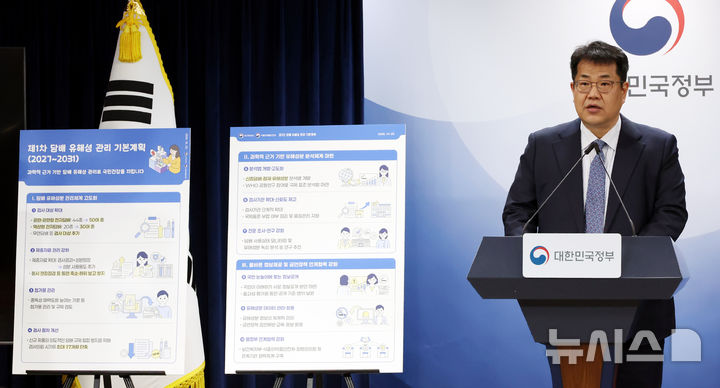
South Korea's government unveiled its first Tobacco Harm Management Basic Plan for 2027–2031 on October 29, 2026, proposing broader testing of vaping and heated tobacco products while excluding nicotine analogs such as 6-methyl nicotine. Synthetic nicotine came under tobacco regulation on April 24, and a June investigation found 6-methyl nicotine in 12 liquid inhalation products marketed as nicotine-free. Customs data released in September showed that imports of nicotine analog solutions fell 83.3%, from 12 metric tons in January–April to 2 metric tons in May–August. By September 20, imports had reached approximately 15 metric tons for the year, with 99.99% originating from China. Customs authorities have tightened pre-clearance testing and supply-chain documentation requirements, while the MFDS expects to complete its assessment of nicotine analog hazards by the end of 2026.
Regulations
Nov.04
South Korea Constitutional Court Upholds Volume-Based E-Liquid Tax, With Challenged Rates at KRW 370 and KRW 628 per Milliliter
South Korea's Constitutional Court has upheld fixed taxes on nicotine-containing e-cigarette liquids based on solution volume, ruling that challenged provisions imposing KRW 370 per milliliter in individual consumption tax and KRW 628 per milliliter in tobacco consumption tax do not violate the Constitution. The cases stemmed from historical disputes involving importers that reported nicotine as being extracted from tobacco stems rather than leaves. South Korea has since broadened its tobacco definition to include synthetic nicotine, while current tax laws provide reduced rates for certain products not derived from tobacco.
Sep.18