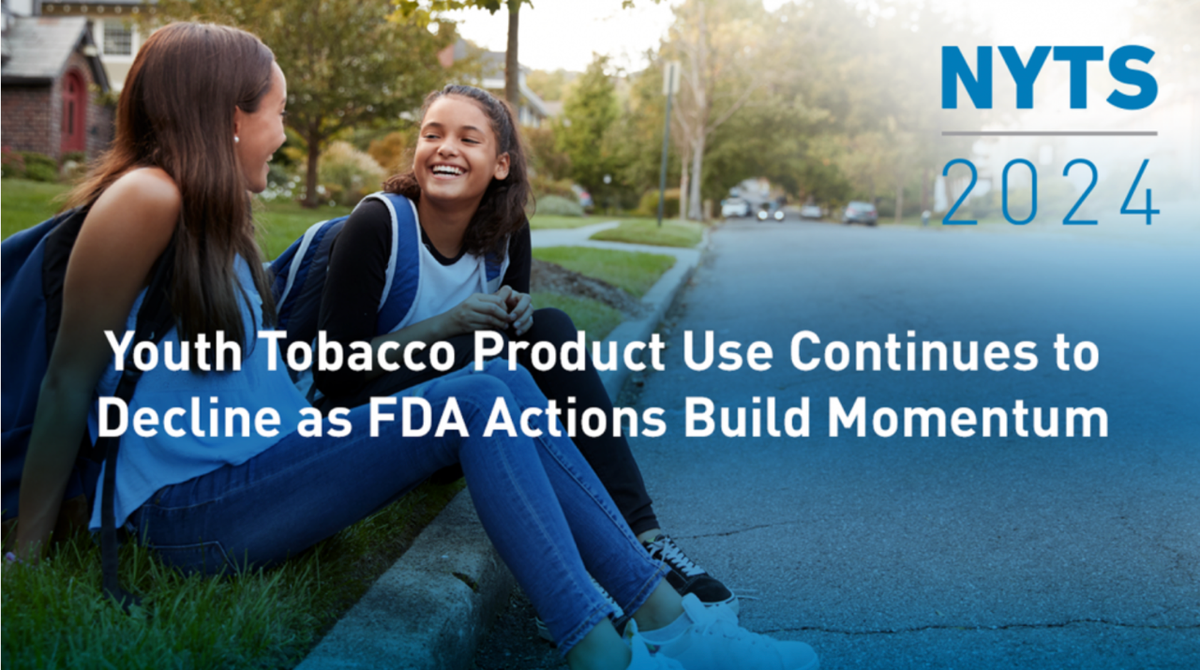
On December 4th, Dr. Brian King, director of the Center for Tobacco Products (CTP) at the U.S. Food and Drug Administration (FDA), announced that, according to the 2024 National Youth Tobacco Survey, the use of tobacco products among young people has reached its lowest point in 25 years. Youth smoking rates have hit a historic low, while e-cigarette use has dropped to its lowest levels in nearly a decade. This achievement is the result of efforts from various parties, including the implementation of federal and local policies, educational campaigns, and strict enforcement. Despite significant progress, the FDA stated that they will continue to take actions to protect young people from the harms of tobacco products.
The following is a translation from AI of Chinese content, for reference only. Please refer to the original English text for accuracy.
As the FDA continues to take action, the use of tobacco products among teenagers continues to decline.
As the director of the Center for Tobacco Products (CTP) at the US Food and Drug Administration (FDA), I often reflect on my interactions with the public, especially those conversations involving the statistics behind tobacco use. This reflection dates back to the early days of my career, when I worked on a tobacco quitline, answering calls from people who were eager to quit smoking. Their reasons for quitting varied: wanting to live to see grandchildren, walk their children down the aisle at weddings, or fulfill longed-for travel dreams with their spouses. However, despite the diversity of reasons, these individuals all shared one heartbreaking commonality - a deep desire to be able to accompany their families and share precious moments in life.
We know that the majority of adults who use tobacco products first encountered tobacco during their adolescent years. Therefore, preventing tobacco products from falling into the hands of adolescents is one of our core missions. The recently released "2024 National Adolescent Tobacco Survey Report" reveals a significant victory in the field of public health: the adolescent tobacco product usage rate has dropped to the lowest point in the 25-year history of the survey. The adolescent smoking rate has reached a historic low. Furthermore, the decline in e-cigarette usage has driven this progress, with adolescent usage of e-cigarettes now at its lowest levels in nearly a decade.
This achievement is the result of the collaboration of governments and organizations at all levels, including the efforts of national, state, local, regional, and tribal entities. At the national level, the FDA has implemented comprehensive and effective tobacco control measures - this is not a coincidence, since the number of youth tobacco product users in the United States has decreased from 4.67 million in 2009 when the CTP was established to 2.25 million in 2024.
It is worth noting that the FDA's work in this area is not yet finished. The policy agenda of the CTP provides guidance and transparency for our plans, including both current and long-term priorities. For example, the FDA recently passed a final rule clarifying the age requirement for tobacco product sales. Since most adults who smoke every day started smoking when they were young, enforcing a federal minimum sales age of 21 is crucial in controlling tobacco use.
Another way to protect teenagers is to review applications for new tobacco products. One of the focuses of the CTP's review work is to consider the potential use of these products by teenagers. So far, we have taken action on over 26 million applications, including denying e-cigarette market authorizations that have designs and flavors (such as candy and fruit) that appeal to teenagers.
At the same time, we have approved the sale of 34 e-cigarette products, including those with tobacco and mint flavors. These approved products and devices have undergone rigorous scientific review and have been deemed by the FDA to meet the legal public health standards - that is, the balance between the risks of the product and the overall health benefits to the population meets the standards set by law. For flavored e-cigarettes, this includes proving that they have greater benefits compared to regular tobacco-flavored e-cigarettes for adult smokers, such as complete cessation or significant reduction in smoking, in order to outweigh their potential risks to youth.
The FDA also protects youth from the harms of tobacco products through enforcement actions. We utilize various tools, including warning letters, civil penalties, injunctions, and seizures, to ensure that stakeholders in the supply chain comply with the law and prevent youth from using tobacco products. Additionally, we collaborate with other federal agencies, such as through a newly established interagency working group, to strengthen enforcement efforts for e-cigarettes.
Education plays a crucial role in preventing young people from starting to use tobacco products. For example, our award-winning campaign "The Real Cost" is estimated to prevent tens of thousands of teenagers from starting to use tobacco products each year. These efforts are considered the "best investment" in the field of public health - for every $1 spent on this campaign, society can save approximately $180 by avoiding tobacco-related health costs. The campaign continues to reach and positively impact the adolescent population. Additionally, we provide promotional resources to parents and teachers, such as the free "Prevention of e-cigarette Use and Education Resource Center".
All of these actions are part of the FDA's ongoing efforts aimed at making tobacco-related diseases and deaths a thing of the past in our country, ensuring a healthier future for our youth. While the current progress is encouraging, there is still a lot of work to be done. We will continue to focus on protecting adolescents from the harms of tobacco products.
The original text is as follows:
The use of tobacco products among youth is continuing to decrease as a result of the actions taken by the FDA gaining momentum.
As the Director of the Center for Tobacco Products at the U.S. Food and Drug Administration, I often think about conversations I've had with the public, particularly those who are involved in tobacco product use statistics. Early in my career, I worked on a tobacco quit line and spoke with people every day who wanted to quit smoking. Each person had their own unique reason for wanting to quit, whether it was to see their grandchildren, walk their child down the aisle, or take a dream vacation with their spouse. Despite their different motivations, they all shared a common desire to be there for their families and to cherish life's special moments with their loved ones.
Most adults who currently use tobacco products started when they were teenagers. Preventing youth from accessing tobacco products is a key goal for us. The 2024 National Youth Tobacco Survey results are a significant success for public health: youth tobacco use is at its lowest point since the survey began 25 years ago. The rate of cigarette smoking among youth is at a historic low. There has also been a decrease in e-cigarette use, with levels among youth dropping to their lowest point in 10 years.
The success can be attributed to efforts taken at various levels of government, including national, state, local, territorial, and tribal. At a national level, the FDA has implemented strong, wide-ranging regulations on tobacco, leading to a significant decrease in youth tobacco use in the U.S. from 4.67 million in 2009 when the Center for Tobacco Products (CTP) was established, to 2.25 million in 2024.
It is important to note that the FDA's efforts in this field are ongoing. The Center for Tobacco Products (CTP) has a policy agenda that outlines both current and future priorities and provides transparency regarding their plans. Recently, the FDA took a step towards one of its priorities by implementing a final rule that raises the age requirements for purchasing tobacco products. Research shows that most adults who smoke daily began smoking in young adulthood, so enforcing the federal minimum age of 21 for tobacco sales is crucial.
The agency also works to protect young people by reviewing applications for new tobacco products. A key part of this review process at the CTP involves assessing the potential impact on youth who may be drawn to the products. To date, over 26 million applications have been reviewed, resulting in decisions to reject marketing of e-cigarettes with appealing designs and flavors targeted toward young people, such as candy and fruit.
Simultaneously, the FDA has approved thirty-four e-cigarette products for sale, including those with tobacco and menthol flavors. These products have undergone thorough scientific evaluation and have been determined to meet the public health standard mandated by law. This evaluation considers the overall benefits and risks of the products to the population. In the case of flavored e-cigarettes, manufacturers must demonstrate that they provide a significant benefit for adult smokers compared to tobacco-flavored e-cigarettes, such as aiding in complete switching or substantial reduction in cigarette use, that justifies the potential risks, particularly to youth.
We also work to protect young people from the dangers of tobacco products by taking enforcement actions. The FDA employs various measures such as warning letters, fines, court orders, and confiscations to make sure that everyone involved in the supply chain follows laws that prohibit the use of tobacco products by minors. Additionally, we collaborate with other government agencies to enforce regulations on e-cigarettes, including through a newly established task force made up of various agencies.
Education is a crucial factor in preventing young people from starting to use tobacco. For instance, our successful campaign called "The Real Cost" has been credited with stopping hundreds of thousands of young people from taking up tobacco every year. These efforts are considered a cost-effective strategy for public health - for every dollar spent on the campaign, an estimated $180 is saved in healthcare costs related to tobacco. The campaign continues to reach and have a positive impact on teenagers. We also offer resources to parents and teachers, such as the Vaping Prevention and Education Resource Center, free of charge. These activities are all part of the FDA's ongoing work to eliminate tobacco-related illnesses and deaths, ensuring a healthier future for young people in our country. While progress has been made, there is still more to be done, and we are dedicated to safeguarding young people from the dangers of tobacco products.
We welcome news tips, article submissions, interview requests, or comments on this piece.
Please contact us at info@2firsts.com, or reach out to Alan Zhao, CEO of 2Firsts, on LinkedIn
Notice
1. This article is intended solely for professional research purposes related to industry, technology, and policy. Any references to brands or products are made purely for objective description and do not constitute any form of endorsement, recommendation, or promotion by 2Firsts.
2. The use of nicotine-containing products — including, but not limited to, cigarettes, e-cigarettes, nicotine pouchand heated tobacco products — carries significant health risks. Users are responsible for complying with all applicable laws and regulations in their respective jurisdictions.
3. This article is not intended to serve as the basis for any investment decisions or financial advice. 2Firsts assumes no direct or indirect liability for any inaccuracies or errors in the content.
4. Access to this article is strictly prohibited for individuals below the legal age in their jurisdiction.
Copyright
This article is either an original work created by 2Firsts or a reproduction from third-party sources with proper attribution. All copyrights and usage rights belong to 2Firsts or the original content provider. Unauthorized reproduction, distribution, or any other form of unauthorized use by any individual or organization is strictly prohibited. Violators will be held legally accountable.
For copyright-related inquiries, please contact: info@2firsts.com
AI Assistance Disclaimer
This article may have been enhanced using AI tools to improve translation and editorial efficiency. However, due to technical limitations, inaccuracies may occur. Readers are encouraged to refer to the cited sources for the most accurate information.
We welcome any corrections or feedback. Please contact us at: info@2firsts.com