Word Vape Show Insights| Divergent Brand-Overseas Routes: UK Brands Target the Middle East, Southeast Asian Brands Land in Africa, and US Hits Struggling for Exports?

Jun.20.2025
At the 2025 Dubai World Vape Show, 2Firsts observed a clear trend: global vape brands are speeding up their overseas expansion, but their routes are parting.

【By 2Firsts, Dubai】The World Vape Show was held in Dubai from June 18th to 20th. As the official media partner, 2Firsts delved into the exhibition and found that global brands have different strategies for expanding internationally.


British Brands are Shifting Their Focus to the Middle East


Under the dual pressure of the ban on disposable e-cigarettes and tightening regulations, several leading brands in the UK are accelerating their pace of expanding overseas, with a particular focus on the Middle East market.


Among them, the brand Sikary under SKE has recently invested a substantial amount of resources into the Middle East market, focusing on promoting their no-fog product ZERO, with a swift response. Another highly recognized brand in the UK, HAYATI, has also chosen the Middle East as its key breakthrough point, accelerating channel development and brand exposure.


Word Vape Show Insights| Divergent Brand-Overseas Routes: UK Brands Target the Middle East, Southeast Asian Brands Land in Africa, and US Hits Struggling for Exports?
Sikary focuses on promoting the new ZERO product in Dubai | Image source: 2firsts.


Word Vape Show Insights| Divergent Brand-Overseas Routes: UK Brands Target the Middle East, Southeast Asian Brands Land in Africa, and US Hits Struggling for Exports?
Hayati is on display in multiple retail stores in Dubai | Image source: 2firsts


This type of action reflects the high level of alertness of British brands to domestic policy risks, as well as the urgent mentality to compete for international market share before policy windows tighten. The Middle East is becoming the preferred target for overseas expansion of these brands due to its higher consumption power, unsaturated market structure, and relatively relaxed regulatory environment.


It can be foreseen that in the near future, brands from the UK will continue to increase their competitiveness in overseas markets, with the Middle East also becoming a key battleground under the "policy spillover effect".


Brand Global Expansion Paths are Diverging


In addition, the 2Firsts found after exchanging with multiple brand merchants, a common trend is: almost all brands are no longer satisfied with consolidating existing markets, but actively seeking new growth curves, exploring "the next blue ocean.


Brands from different market backgrounds exhibit distinct differentiation in their international expansion paths:


·British brands, known in the UK but not based there, often consider the Middle East as their preferred market for expansion. The high spending power and policy environment in the Middle East provide them with ideal opportunities for continued growth.


·Southeast Asian local brands clearly prefer the African market as a priority development area. These brands excel in entering Africa through price and channel advantages, seizing the initiative.


·American brands" (non-American brands that are well-known in the United States) tend to see Canada as their preferred "second base." However, compared to brands in other regions, American brands appear more cautious and even somewhat lost in their further global expansion. While some brands are also trying to enter markets in the Middle East, Asia Pacific, and other regions, their overall expansion strategy is still immature, lacking a clear path forward.


Overall, various brands share the same goal of "going global", but due to differences in the local market environment, product structure, distribution model, etc., their global expansion strategies are gradually diverging. Moving forward, whoever can establish a strong presence in emerging markets may determine the competitive landscape of the next phase.


Welcome to submit articles, request interviews, or submit comments to 2Firsts. Please contact: info@2firsts.com, or connect with the two founders and CEOs of 2Firsts, Alan Zhao, on LinkedIn.


Click on the image below to access the special report.


Word Vape Show Insights| Divergent Brand-Overseas Routes: UK Brands Target the Middle East, Southeast Asian Brands Land in Africa, and US Hits Struggling for Exports?


We welcome news tips, article submissions, interview requests, or comments on this piece.

Please contact us at info@2firsts.com, or reach out to Alan Zhao, CEO of 2Firsts, on LinkedIn


Notice

1.  This article is intended solely for professional research purposes related to industry, technology, and policy. Any references to brands or products are made purely for objective description and do not constitute any form of endorsement, recommendation, or promotion by 2Firsts.

2.  The use of nicotine-containing products — including, but not limited to, cigarettes, e-cigarettes, nicotine pouchand heated tobacco products — carries significant health risks. Users are responsible for complying with all applicable laws and regulations in their respective jurisdictions.

3.  This article is not intended to serve as the basis for any investment decisions or financial advice. 2Firsts assumes no direct or indirect liability for any inaccuracies or errors in the content.

4.  Access to this article is strictly prohibited for individuals below the legal age in their jurisdiction.


Copyright


This article is either an original work created by 2Firsts or a reproduction from third-party sources with proper attribution. All copyrights and usage rights belong to 2Firsts or the original content provider. Unauthorized reproduction, distribution, or any other form of unauthorized use by any individual or organization is strictly prohibited. Violators will be held legally accountable.

For copyright-related inquiries, please contact: info@2firsts.com


AI Assistance Disclaimer


This article may have been enhanced using AI tools to improve translation and editorial efficiency. However, due to technical limitations, inaccuracies may occur. Readers are encouraged to refer to the cited sources for the most accurate information.

We welcome any corrections or feedback. Please contact us at: info@2firsts.com

Japan Survey Finds 49.5% Would Cut Tobacco Use if Prices Rise, 64.6% Show Interest in Nicotine-Free Alternatives
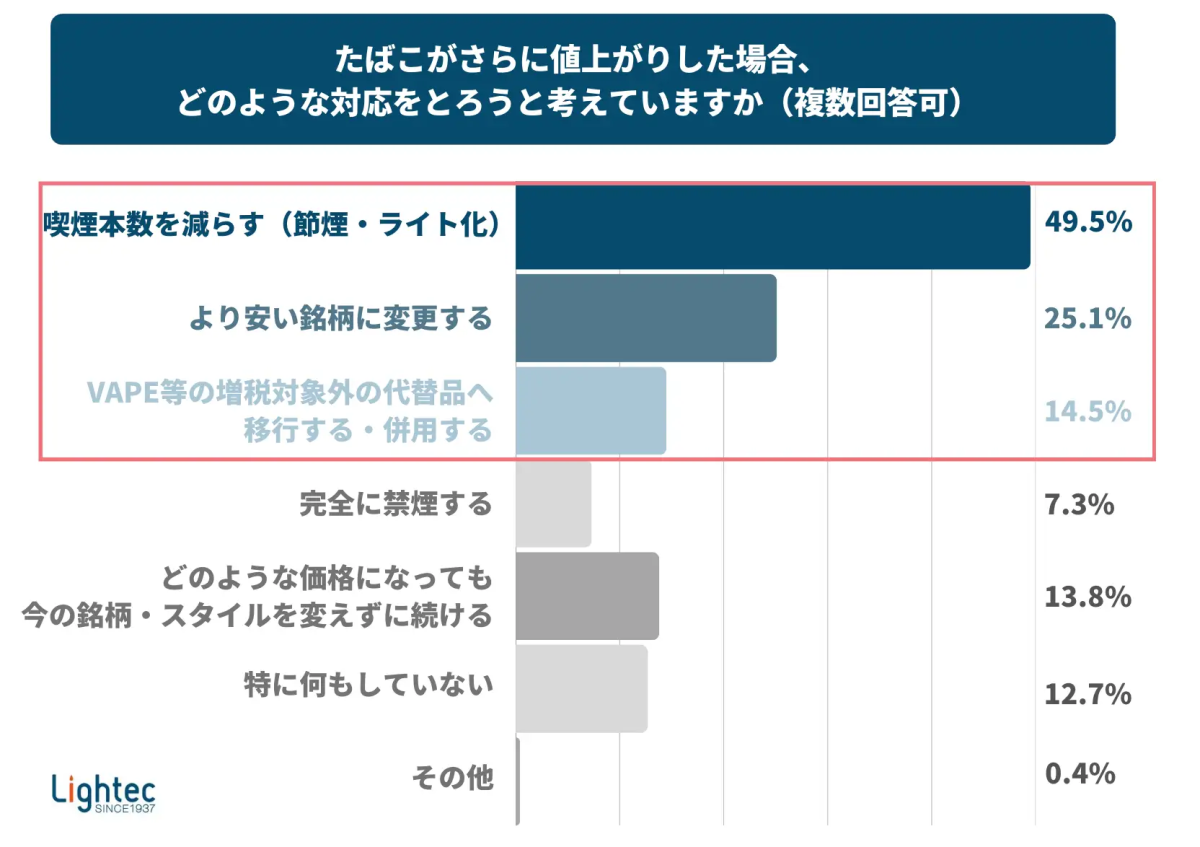
A September online survey commissioned by Japanese smoking-accessories company Lightec found that 49.5% of respondents would consider reducing tobacco use if prices rose further, while 25.1% would consider switching to cheaper brands and 14.5% would consider using or combining alternatives such as vapes and nicotine-free herbal sticks. Another 64.6% expressed some level of interest in such alternatives. The survey covered 1,088 respondents aged 20 to 70 and was conducted by a company that sells NICOLESS nicotine-free vaping and herbal-stick products, meaning its findings should not be treated as representative of Japan's smoking population.
DATA
Oct.12
Why Does JPMorgan Favor BAT Over Philip Morris Despite Forecasting Slower Growth of 3.9% Versus 6.2%?
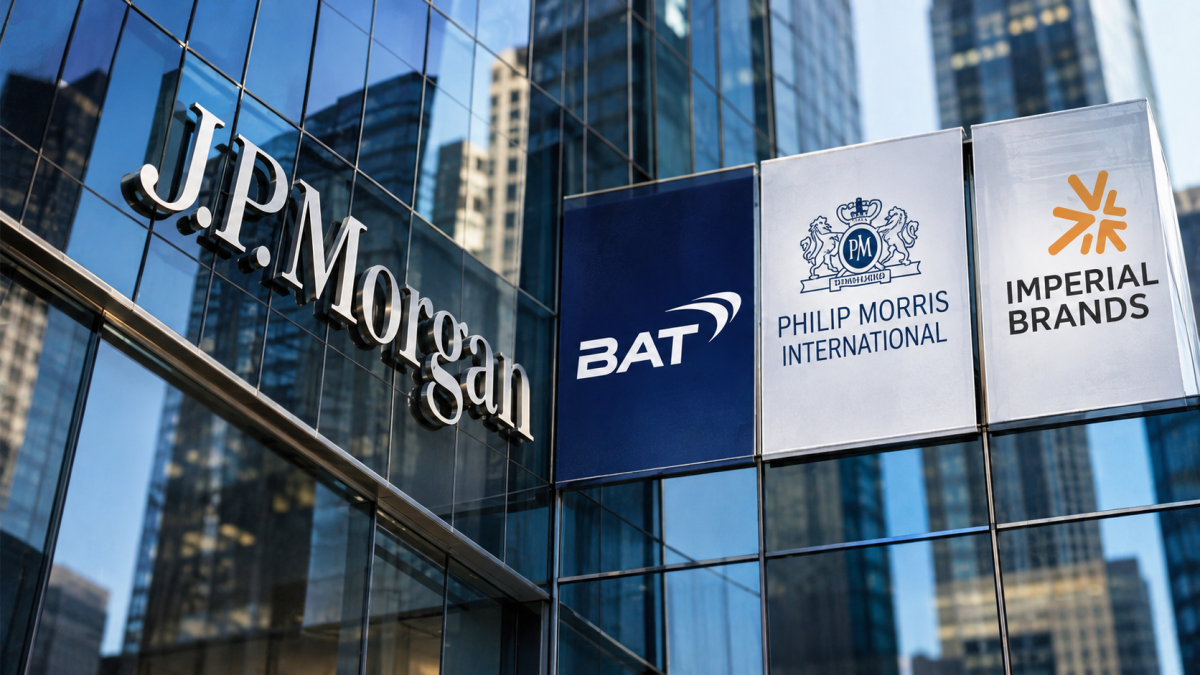
JPMorgan resumed equity research coverage of British American Tobacco (BAT), Philip Morris International (PMI) and Imperial Brands in November 2026, assigning BAT an Overweight rating and the other two companies Neutral ratings. The bank forecasts like-for-like sales growth of 3.9% for BAT and 6.2% for PMI in 2027, but estimates the two companies will trade at approximately 11 times and 21 times 2027 earnings, respectively. JPMorgan cited BAT's improving position in US nicotine pouches and vaping products as a driver of its investment outlook. BAT reported a 220% constant-currency increase in US modern oral nicotine revenue in the first half of 2026, while PMI's ZYN US shipments returned to growth in the third quarter. Imperial expects NGPs to represent 4% to 5% of sales and has expanded its oral portfolio through acquisitions.
Capital Markets
Nov.12
Product | Japan Tobacco Expands Nordic Spirit Nicotine Pouch Range to Eight SKUs in Japan, Launches Melon Variant and Broadens Mint Retail Distribution
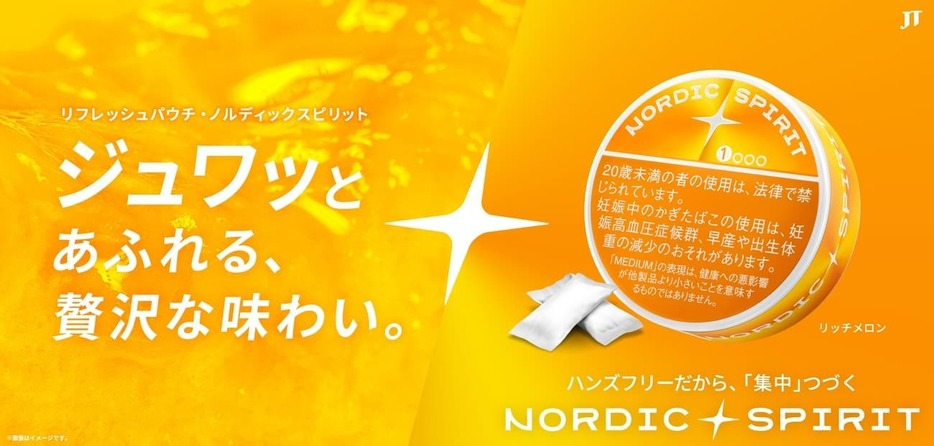
Japan Tobacco Inc. (JT) launched Nordic Spirit Rich Melon Medium through selected tobacco retailers in Japan on November 2, 2026, while expanding physical retail distribution for three existing mint products previously sold through the CLUB JT online store. The melon launch brings Nordic Spirit's Japanese portfolio to eight SKUs. All four products are manufactured in Sweden, contain a standard 14 pouches per can and retail for ¥500 including tax. Since introducing Nordic Spirit in Japan in March, JT has expanded the brand's product lineup and distribution through its online store, convenience stores and selected tobacco retailers.
product
Nov.04
Russia's Vape Ban Decisions Reach 17 Regions With 39 More Considering Laws, Putting Over 3,000 St. Petersburg Retail Outlets in Focus
Russia's regional vape retail restrictions are expanding. State Duma Speaker Vyacheslav Volodin said on November 7 that 17 regions had adopted decisions to ban vape sales, while another 39 were preparing or considering similar legislation. On November 12, lawmakers in Leningrad Oblast and the Republic of Karelia adopted bans scheduled to begin on March 1, 2027. A day earlier, St. Petersburg unanimously approved a five-year ban proposal in its first reading. The city has 615 specialist vape shops and more than 2,400 other retail outlets selling vaping products alongside other goods. Under Federal Law No. 186-FZ, enacted in June 2026, Russian regions may prohibit retail sales of electronic nicotine delivery systems and related liquids between March 2027 and March 2032. The legislation also restricts licensed suppliers from delivering covered products to retail premises in regions where bans apply.
Regulations
Nov.13
How Many Nicotine Pouch Factories Does Europe Need? 2Firsts Interviews AIRSCREAM on the OEM Market
At InterTabac 2026, nicotine pouch growth was visible not only in brands but across equipment, raw materials and OEM manufacturing. 2Firsts interviewed AIRSCREAM commercial head Steve Moore on how many pouch factories Europe may ultimately need and where manufacturers can differentiate, from formulation and flavour to pouch materials, production consistency and customer service. The category continues to expand, but questions remain over future capacity, consolidation and the long-term structure of the supply chain.
Sep.18
Special Report|CrossBar's High-Puff Vapes Draw Attention on Pennsylvania's 163-Product Directory as Link Between Earlier 1.3mL PMTA Filings and New 13mL Products Remains Unclear
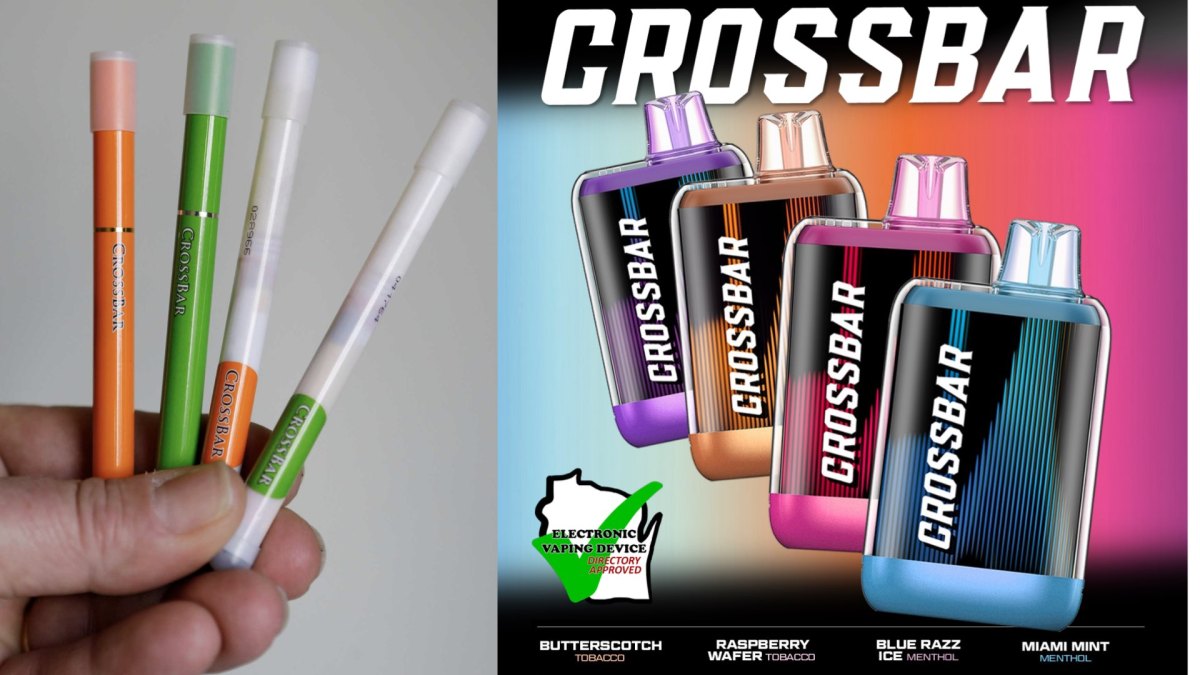
Pennsylvania began enforcing its electronic nicotine delivery system directory restrictions on October 19, 2026. Among 163 product listings recorded before enforcement, four CrossBar 20K disposables stood out with 13mL capacity, advertised puff counts of up to 20,000 and a flattened design distinct from conventional pod systems and compact disposables. Historical records identify earlier 1.3mL CrossBar products associated with Romo LLC, while newer 13mL products appeared in several state directories beginning in 2025 under entities including Blue Nine LLC. PMTA compliance expert Mr. K identified amendments and application ownership transfers as possible regulatory mechanisms, although neither has been confirmed in this case. Separately, Reynolds' $7.5 million acquisition of 16 PACHA products and related assets illustrates the commercial value of products linked to historic PMTA submissions.
Special Report
Oct.22