Key Points
- Logista says tobacco consumption outside France’s official retail network has become a structural issue.
- France’s official TAFE study estimates tax-escaping tobacco consumption at 17.7% in 2023, with a range of 12.3%-22.4%.
- TAFE data show cross-border purchases account for most volumes outside the French tax system, rather than street sales.
- French Customs seized 547.94 tonnes of tobacco domestically in 2025, up 12%, while smoking prevalence also continued to decline.
2Firsts
September 4, 2026
According to French tobacco-industry publication Le Monde du Tabac on August 31, 2026, European logistics and distribution group Logista France describes tobacco consumption outside France’s official tobacconist network as a “massive and structural” phenomenon in its latest white paper.
But estimates of the market’s actual size vary sharply between official and industry research.
Logista cites studies suggesting that more than half of tobacco consumption now takes place outside France’s tobacconist network. By contrast, the TAFE study commissioned by France’s Directorate-General of Customs and Indirect Taxes and the Interministerial Mission for Combating Drugs and Addictive Behaviours estimates that an average 17.7% of tobacco consumption escaped French domestic taxation in 2023, with a range of 12.3% to 22.4%.
The apparent gap largely reflects differences in methodology and definitions.
Off-Channel Does Not Mean Illicit
The official TAFE study estimates that around 8,081 tonnes of tobacco consumed in France in 2023 escaped the domestic tax system, corresponding to an average fiscal loss of about €4.3 billion.
However, the study’s breakdown shows that the largest source was cross-border purchasing.
TAFE estimates that around 6,863 tonnes came from tobacco bought abroad, while street purchases accounted for about 366 tonnes.
This distinction is critical.
Tobacco legally purchased in another country and brought back into France may fall outside French tobacconist sales and French tobacco taxation without necessarily being illicit.
As a result, estimates of tobacco “outside the tobacconist network” can be substantially larger than estimates of smuggling, counterfeit products or illegal street sales.
Industry Research Uses Broader Measures
Le Monde du Tabac, citing Logista’s white paper, notes wide differences among available estimates.
The official TAFE study puts tax-escaping consumption at 12.3%-22.4%.
Industry research using broader definitions of the “parallel market” or products not purchased through French tobacconists produces much higher estimates, with some studies around 38% and others above 50%.
Le Monde du Tabac previously cited KPMG’s 2025 report as estimating that 53.6% of cigarette consumption in France came from the parallel market.
Those figures should not be directly compared with TAFE as though they measure the same thing.
For 2Firsts, the key distinction is between tobacco escaping French taxation, tobacco purchased outside the official tobacconist network, and genuinely illicit trade.
The categories overlap, but they are not identical.
Customs Seizures Show Illicit Trade Remains Significant
Despite disagreement over market share, official enforcement figures show that illicit tobacco remains a substantial and growing challenge.
French Customs says it seized 547.94 tonnes of tobacco within France in 2025, up 12% from the previous year, across 20,486 recorded offences.
Authorities also dismantled two clandestine cigarette factories.
French Customs said 99 organised-crime groups were dismantled in 2025 across tobacco, narcotics, financial fraud, counterfeiting and other customs offences.
Large seizures have continued into 2026, including more than 26 tonnes of cigarettes intercepted at Fos-sur-Mer in March following another seizure of around 16 tonnes earlier in the year.
Those enforcement figures support the view that illicit tobacco is a real organised-crime and public-security issue, but they do not establish that more than half of French tobacco consumption is illicit.
Falling Official Sales Do Not All Represent Black-Market Growth
Logista also highlights the continued decline in sales through France’s tobacconist network.
That issue is directly relevant to its business.
French Customs retail-sales datasets draw on distribution information supplied by Logista, which is one of the principal suppliers to the country’s tobacconist network.
However, declining official sales cannot simply be interpreted as consumers shifting to the black market.
Santé publique France reported that in 2024, 24.0% of people aged 18 to 79 smoked tobacco and 17.4% smoked daily.
Among adults aged 18 to 75, the daily smoking rate fell from 28.6% in 2014 to 18.2% in 2024.
The public-health agency says France has around four million fewer daily smokers than a decade ago.
Official tobacco sales are therefore being affected by at least three forces: declining smoking prevalence, cross-border purchasing and illicit trade.
Treating all lost tobacconist sales as illicit consumption would overstate the size of the black market.
Logista Calls for Five-Year Tax Moratorium
Logista argues that repeated tobacco-tax increases have widened price gaps between France and neighbouring countries, making both cross-border and illicit purchasing more attractive.
Its white paper therefore calls for a moratorium on further tobacco-tax increases.
Le Monde du Tabac previously reported that Logista favors a five-year pause, giving other European markets time to narrow tax and price differences while enforcement and other regulatory measures are assessed.
Logista acknowledges that higher prices have contributed to lower smoking rates, but argues that additional increases could produce diminishing returns and further stimulate off-channel purchasing.
That is Logista’s policy position and has not been adopted by the French government.
Tobacco Tax Remains a Core Public-Health Tool
France continues to maintain a high tobacco-tax burden.
French Customs’ 2026 framework applies both ad valorem and specific excise components to cigarettes, along with minimum taxation requirements.
Tobacco duty is also closely linked to public finances. French Customs says around 99.5% of tobacco-excise revenue collected in mainland France is allocated to the social-security branch covering illness, maternity, disability and death benefits.
Logista’s proposal to halt further increases therefore cuts across both public-health policy and fiscal arrangements.
Public-health authorities have long identified higher tobacco prices as one of the tools contributing to reductions in smoking prevalence.
Logista Has Both Data Access and Industry Interests
The source of the white paper is also relevant.
Logista is a major Spain-based logistics and distribution group with a significant role in France’s legal tobacco supply chain.
Imperial Brands holds a 50.01% stake in Logista and includes the business within its Distribution segment.
That gives Logista direct access to detailed legal-market distribution data and operational insight, but also means it is a commercial participant in the tobacco value chain.
Its data can therefore be useful for understanding legal distribution and supply-chain pressures, while its conclusions on taxation and market policy should not be treated as those of an independent public-health body.
Debate Is Increasingly About Definitions
The French debate over the parallel tobacco market is increasingly a debate over what is being measured.
If the metric is products not purchased through French tobacconists, the share can be very high.
If the measure is consumption escaping French domestic taxation, the official TAFE estimate is around 17.7%.
If the focus narrows further to smuggling, counterfeit products and illegal street sales, the share is smaller again.
At the same time, customs seizures show that illicit tobacco crime remains significant and continues to place pressure on enforcement agencies.
Understanding the French market therefore requires separating four different trends: declining smoking prevalence, cross-border purchasing, illicit trade and falling sales through the official tobacconist network.
Follow 2Firsts for timely updates on global tobacco taxation, illicit-market policy and nicotine regulation.
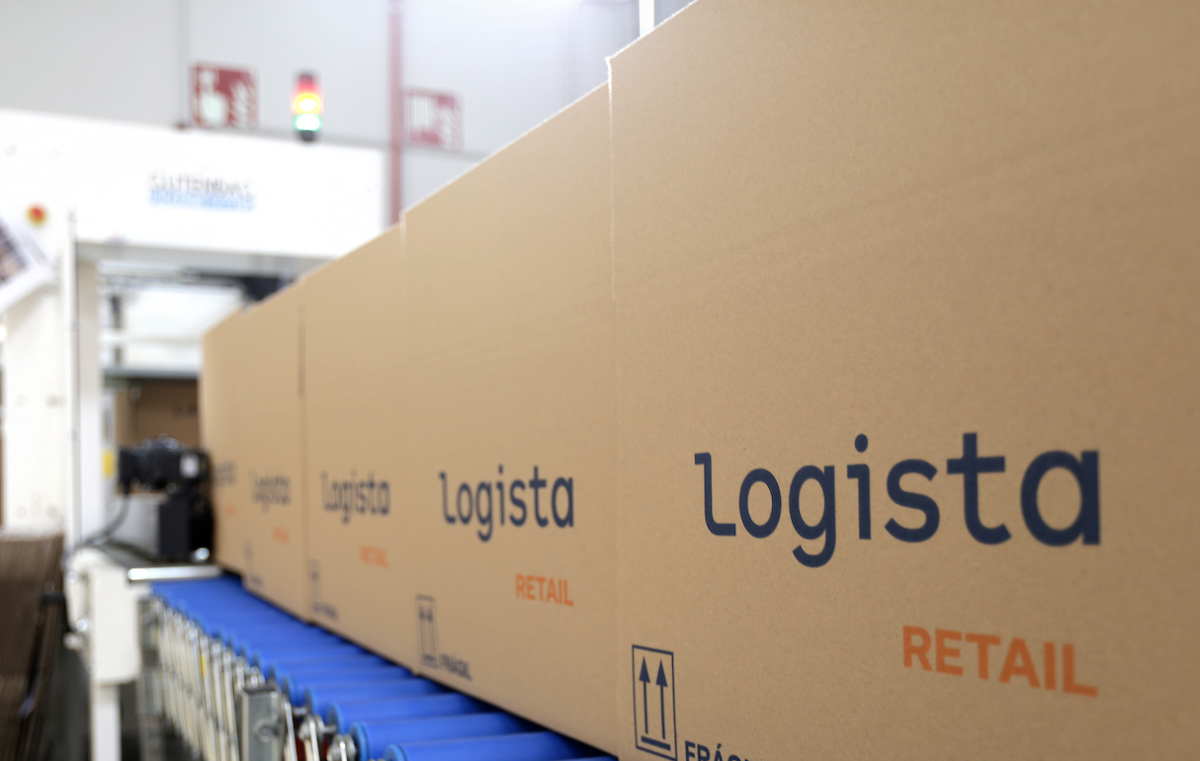
Cover Image: Logista France
Disclaimer
This article is provided solely for professional research, industry discussion, and informational purposes. Any references to brands, companies, products, technologies, or policies are made for factual reporting and analytical purposes only, and do not constitute endorsement, recommendation, promotion, or advertising by 2Firsts.
Nicotine-containing products, including but not limited to cigarettes, e-cigarettes, heated tobacco products, and nicotine pouches, carry significant health risks. Readers are responsible for complying with all applicable laws and regulations in their respective jurisdictions, including age restrictions and access limitations.
The information contained in this article should not be regarded as investment, legal, medical, regulatory, or commercial advice. While 2Firsts strives to ensure the accuracy and reliability of its content, it does not assume liability for any direct or indirect loss arising from errors, omissions, inaccuracies, or reliance on the information contained herein.
This article is not intended for individuals below the legal age for accessing tobacco or nicotine-related information in their jurisdiction.
Copyright Notice
This article is either original content produced by 2Firsts or content reproduced, translated, summarized, or adapted from third-party sources with attribution where applicable. The intellectual property rights of the original content remain with 2Firsts or the respective original rights holders.
No individual or organization may copy, reproduce, distribute, republish, modify, translate, or otherwise use this content without prior authorization. Any unauthorized use may result in legal action.
For copyright-related inquiries, corrections, or removal requests, please contact: info@2firsts.com.
AI-Assisted Translation and Editing Notice
Portions of this article may have been translated, edited, or reviewed with the assistance of artificial intelligence tools to improve efficiency and readability. Due to the limitations of AI-assisted translation and editing, discrepancies, omissions, or inaccuracies may exist when compared with the original source.
Where applicable, readers are advised to refer to the original source for the most complete and accurate information. If you identify any errors or believe that any content infringes upon your rights, please contact us at info@2firsts.com, and we will review and address the matter promptly.