Irish MEP Urges Complete Ban on Disposable E-cigarettes in Ireland

Regulations by 2FIRSTS.ai
Mar.29.2024
Irish MEP Urges Complete Ban on Disposable E-cigarettes in Ireland
Irish MEP Barry Andrews calls for complete ban on disposable e-cigarettes, applauds government restrictions on sales to minors.

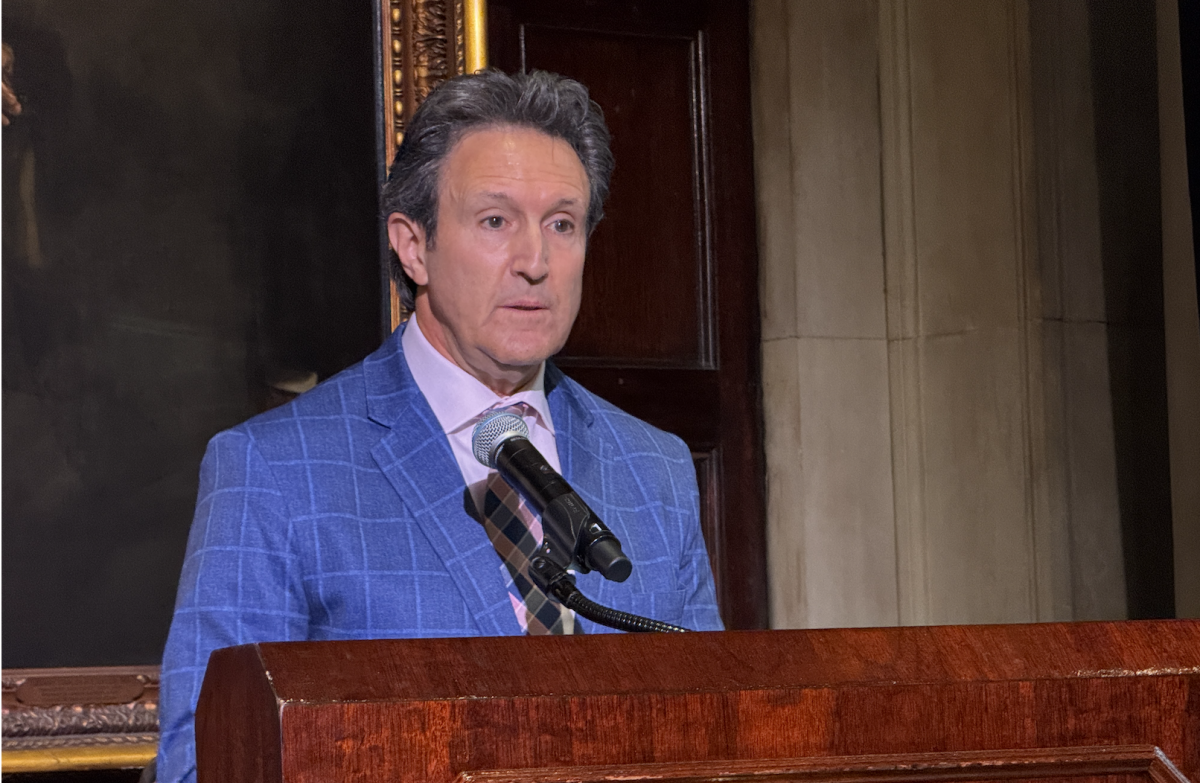
According to FM104, on March 29, Irish Dublin MEP Barry Andrews has written to the Irish Ministers of Health and Environment, expressing his desire for disposable e-cigarettes to be completely banned.


The parliamentarian expressed approval of the recent progress made by the Irish government in restricting the sale of e-cigarettes to minors.


I am pleased to see the recent progress made by the government in restricting the sale of e-cigarettes to minors, but we should do more.


The Irish government has restricted advertising and sales of e-cigarettes in vending machines. Andrews is calling on ministers to take the lead in completely banning disposable e-cigarettes.


We welcome news tips, article submissions, interview requests, or comments on this piece.

Please contact us at info@2firsts.com, or reach out to Alan Zhao, CEO of 2Firsts, on LinkedIn


Notice

1.  This article is intended solely for professional research purposes related to industry, technology, and policy. Any references to brands or products are made purely for objective description and do not constitute any form of endorsement, recommendation, or promotion by 2Firsts.

2.  The use of nicotine-containing products — including, but not limited to, cigarettes, e-cigarettes, nicotine pouchand heated tobacco products — carries significant health risks. Users are responsible for complying with all applicable laws and regulations in their respective jurisdictions.

3.  This article is not intended to serve as the basis for any investment decisions or financial advice. 2Firsts assumes no direct or indirect liability for any inaccuracies or errors in the content.

4.  Access to this article is strictly prohibited for individuals below the legal age in their jurisdiction.


Copyright


This article is either an original work created by 2Firsts or a reproduction from third-party sources with proper attribution. All copyrights and usage rights belong to 2Firsts or the original content provider. Unauthorized reproduction, distribution, or any other form of unauthorized use by any individual or organization is strictly prohibited. Violators will be held legally accountable.

For copyright-related inquiries, please contact: info@2firsts.com


AI Assistance Disclaimer


This article may have been enhanced using AI tools to improve translation and editorial efficiency. However, due to technical limitations, inaccuracies may occur. Readers are encouraged to refer to the cited sources for the most accurate information.

We welcome any corrections or feedback. Please contact us at: info@2firsts.com

FDA Authorizes 24 VELO Nicotine Pouches, Increasing U.S. Authorized Total by 56%
The U.S. FDA authorized 24 VELO nicotine pouch products from a British American Tobacco subsidiary, raising the total number of authorized products from 43 to 67, a 55.8% increase. The newly authorized 4 mg products include lime and passion fruit flavors and feature certified child-resistant packaging. VELO's first FDA marketing authorization adds BAT to a list previously limited to PMI and Altria products, while bringing the agency's nicotine pouch review pilot total to 47 authorized products.
Oct.30
Swedish Match Faces Broader Labeling Order After ZYN Inspection, Documents Obtained by 2Firsts Show
Documents obtained by 2Firsts show that Sweden's Public Health Agency ordered Swedish Match to revise ingredient labels beyond the five ZYN products inspected. The dispute centers on whether flavoring ingredients must be individually disclosed, with Swedish Match citing trade-secret protection and the regulator insisting on full ingredient disclosure. The company faces a conditional penalty of SEK 2 million per month for noncompliance. As of October 22, the agency had received no appeal, despite the company's stated intention to challenge the decision.
Oct.22
NAS 2026 | Cliff Douglas: Risk Continuum Should Play a Central Role in Tobacco Policy
Cliff Douglas, a veteran U.S. tobacco-control and public health policy figure, told NAS 2026 that the “continuum of risk” should play a central role in tobacco policy. He called for clearer market pathways, stronger risk communication, differentiated regulation and enforcement, and said possible FDA reforms to PMTA reviews could be a “welcome correction” if they create a more efficient, predictable route for scientifically substantiated lower-risk products. Read 2Firsts’ on-site coverage.
Sep.26
BAT Adds Former Apple General Counsel Bruce Sewell to Board as Finance, Legal, Marketing and Regional Leadership Shift
British American Tobacco has appointed former Apple Senior Vice President, General Counsel and Secretary Bruce Sewell as an independent non-executive director, effective January 1, 2027. He will also join BAT's Audit and Nominations Committees. BAT Chair Luc Jobin highlighted Sewell's experience in technology, government and regulatory affairs, public-company governance and AI-company boards. Over the past 18 months, BAT has changed or announced changes to its CFO, general counsel, CMO and APMEA regional leadership, while the main board has also seen multiple changes. The appointment comes as BAT advances Horizon 2030 and its Fit2Win transformation while expanding New Categories and reshaping parts of its digital, technology and operating structure.
Business
Oct.29
Russia's Vape Ban Decisions Reach 17 Regions With 39 More Considering Laws, Putting Over 3,000 St. Petersburg Retail Outlets in Focus
Russia's regional vape retail restrictions are expanding. State Duma Speaker Vyacheslav Volodin said on November 7 that 17 regions had adopted decisions to ban vape sales, while another 39 were preparing or considering similar legislation. On November 12, lawmakers in Leningrad Oblast and the Republic of Karelia adopted bans scheduled to begin on March 1, 2027. A day earlier, St. Petersburg unanimously approved a five-year ban proposal in its first reading. The city has 615 specialist vape shops and more than 2,400 other retail outlets selling vaping products alongside other goods. Under Federal Law No. 186-FZ, enacted in June 2026, Russian regions may prohibit retail sales of electronic nicotine delivery systems and related liquids between March 2027 and March 2032. The legislation also restricts licensed suppliers from delivering covered products to retail premises in regions where bans apply.
Regulations
Nov.13
Smoke-Free Business Hits 42% of Q2 Net Revenue as PMI’s First TNFD Report Covers Single-Use Electronics, Critical Raw Materials and IQOS Repairs
Philip Morris International has published its first report aligned with the Taskforce on Nature-related Financial Disclosures, bringing its electronics supply chain and the use and end-of-life stages of smoke-free devices and consumables into its nature-related assessment. PMI said its smoke-free business accounted for about 42% of total net revenues in the second quarter of 2026. The report says non-circular electronic products, particularly single-use items, can increase consumption of limited natural resources and also details an IQOS repair pilot. A 2040 circularity scenario tests assumptions including a 50% reduction in product waste-related costs, 10% raw-material savings and a 25% substitution rate for refurbished products versus new products.
Sep.23