Cover image: Dr. Tomohiro Shirasaka, a Japanese addiction psychiatrist and director of the Kotoni Shirasaka Mental Clinic, at the Technovation event in Manila, Philippines, on November 10, 2026. (Photo: 2Firsts)
Key Points
● Harm Reduction Goals: Japanese addiction psychiatrist Dr. Tomohiro Shirasaka said complete abstinence is not always the goal of treatment, with patients' quality of life and individual needs also important.
● Japan's Heated Tobacco Transition: Shirasaka believes many smokers are attempting to move away from conventional cigarettes, although the transition will take time.
● Smoking and Mental Health: Treating underlying psychiatric conditions may help patients with mental illness make further attempts to quit smoking, he said.
● Support Over Punishment: Drawing on his work in the Philippines, Shirasaka advocated supportive addiction treatment rather than punishment or exclusion.
● Health Warning Messages: Shirasaka questioned fear-based graphic warnings and suggested that messages addressing smokers' emotional needs could be more effective.
2Firsts
MANILA, Nov. 10, 2026
Philip Morris International (PMI) held its Technovation Manila event in the Philippines on Tuesday, focusing on tobacco harm reduction, scientific research and smoke-free innovation.
In an interview with 2Firsts on the sidelines of the event, Japanese addiction psychiatrist Dr. Tomohiro Shirasaka said complete abstinence was not always the goal of addiction treatment under a harm-reduction approach.
Shirasaka, director of the Kotoni Shirasaka Mental Clinic in Sapporo and a part-time lecturer at the Health Sciences University of Hokkaido and Okayama University, said treatment should also consider patients' quality of life and individual circumstances.
He also discussed Japan's shift towards heated tobacco products, smoking cessation among people with mental illness and his involvement in addiction treatment projects in the Philippines.
Abstinence Is Not Always the Goal of Harm Reduction
Asked how addiction specialists should assess smokers who stop using cigarettes but continue using nicotine through non-combustible products, Shirasaka said treatment goals should reflect patients' individual circumstances.
"For us, under a harm-reduction approach, complete cessation is not necessarily the treatment goal," he said.
"The most important thing is to improve quality of life."
Shirasaka said continued nicotine use was not necessarily the primary concern in a harm-reduction approach, where improving patients' lives could take precedence over immediate abstinence.
In his clinical practice, one of the first questions he asks patients is: "What do you want to be?"
He described the example of a smoker with young children who wants to quit to protect them but struggles to do so.
In such circumstances, Shirasaka suggested that switching to a non-combustible product could be considered. Although such products were not ideal, he believed the change might be less problematic for the children than continued cigarette smoking.
The priority, he said, was to understand what mattered most to the patient rather than insist on further reductions in substance use at every stage.
Asked about the first Congress of the Asia-Pacific Society of Harm Reduction and Addiction (ASHRA), held in Sapporo in October, which he helped organise, Shirasaka said harm reduction and abstinence could be complementary goals.
Reducing harm could help patients engage with treatment and build confidence to make further changes, he said.
One unresolved question was how to define treatment success. Beyond substance use, Shirasaka said assessments should consider physical health, mental well-being, quality of life and patients' own priorities.

Japan's Shift Towards Heated Tobacco Takes Time
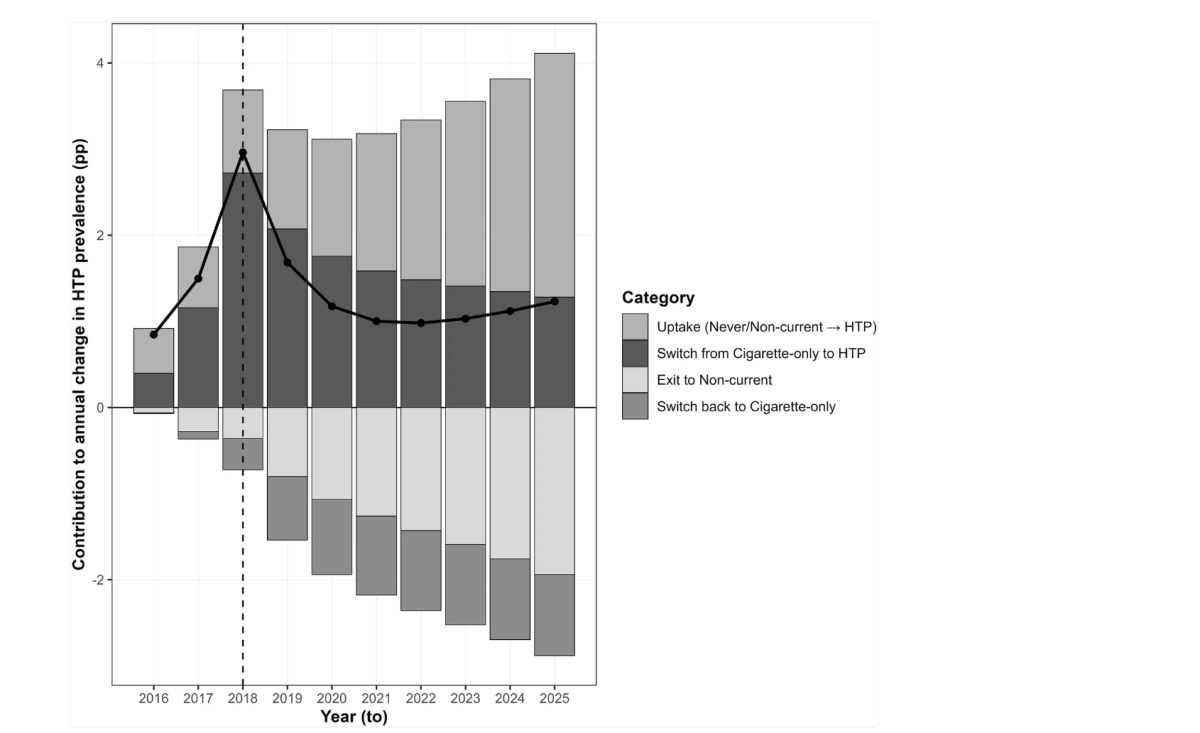
Asked about the continued use of both cigarettes and heated tobacco products in Japan, Shirasaka pointed to declining cigarette use and growing heated tobacco consumption.
He said he believed many smokers were trying to switch from conventional cigarettes to heated tobacco products, although the transition would take time.
Shirasaka said he did not believe the growth of heated tobacco products was necessarily increasing the overall number of tobacco users in Japan.
He noted that heated tobacco products had been available in Japan for about a decade and expressed hope that more smokers would eventually move away from conventional cigarettes.
Mental Illness Can Complicate Smoking Cessation
Shirasaka said people with mental illness could face particular difficulties when trying to stop smoking.
His initial priority would be to treat the underlying psychiatric condition. Improvements in patients' mental health could make it easier for them to attempt smoking cessation.
He recalled that some psychiatric hospitals in Japan had previously permitted smoking and that cigarettes had sometimes been used in approaches to managing patients with schizophrenia.
Shirasaka also raised the possibility that switching from conventional cigarettes to heated tobacco products might be preferable in some circumstances, while acknowledging that he had no supporting data for the suggestion.
"But I have no data on this. This is only what I suppose," he said.
Philippines Addiction Treatment: Support Over Punishment
Drawing on his involvement in addiction treatment work in the Philippines, Shirasaka questioned approaches that rely on punishment or exclusion to force people to stop using addictive substances.
He recalled that such methods had also been common in Japan, where people with alcohol or drug dependence could face threats of divorce, dismissal or social exclusion.
Shirasaka argued that excluding people with addiction could leave them isolated and without support, potentially contributing to repeated substance use.
"What people need is not punishment. They need support," he said.
He described a shift in Japanese addiction treatment towards approaches that respect patients' rights and seek to understand their individual needs.
During his work in the Philippines, Shirasaka observed elements of older treatment practices at some facilities. His team subsequently sought to introduce aspects of Japanese addiction treatment approaches, including educational and treatment materials based on cognitive behavioural therapy (CBT).
He considered the approach beneficial for people with addiction and other mental health difficulties, emphasising patient support rather than punishment.
Shirasaka Questions Fear-Based Health Warnings
Asked about UK proposals to extend packaging restrictions and pictorial health warnings to heated tobacco products, Shirasaka questioned the use of graphic messages focused on severe smoking-related diseases.
He described warnings emphasising lung cancer and other serious health consequences as resembling a punitive approach.
"I do not like this kind of method," he said.
From a harm-reduction perspective, Shirasaka said people should have the right to choose how to address their own tobacco use.
He suggested that public health communication should pay greater attention to why individuals continue smoking, including the possible roles of loneliness and fear.
Rather than relying primarily on images of smoking-related diseases, he would prefer messages offering support to people struggling with smoking.
Shirasaka said he believed such communication could be more effective than simply displaying graphic images of disease.
"If you feel lonely, call me," he said, describing the kind of message he would use.
Disclaimer
This article is provided solely for professional research, industry discussion, and informational purposes. Any references to brands, companies, products, technologies, or policies are made for factual reporting and analytical purposes only, and do not constitute endorsement, recommendation, promotion, or advertising by 2Firsts.
Nicotine-containing products, including but not limited to cigarettes, e-cigarettes, heated tobacco products, and nicotine pouches, carry significant health risks. Readers are responsible for complying with all applicable laws and regulations in their respective jurisdictions, including age restrictions and access limitations.
The information contained in this article should not be regarded as investment, legal, medical, regulatory, or commercial advice. While 2Firsts strives to ensure the accuracy and reliability of its content, it does not assume liability for any direct or indirect loss arising from errors, omissions, inaccuracies, or reliance on the information contained herein.
This article is not intended for individuals below the legal age for accessing tobacco or nicotine-related information in their jurisdiction.
Copyright Notice
This article is either original content produced by 2Firsts or content reproduced, translated, summarized, or adapted from third-party sources with attribution where applicable. The intellectual property rights of the original content remain with 2Firsts or the respective original rights holders.
No individual or organization may copy, reproduce, distribute, republish, modify, translate, or otherwise use this content without prior authorization. Any unauthorized use may result in legal action.
For copyright-related inquiries, corrections, or removal requests, please contact: info@2firsts.com.
AI-Assisted Translation and Editing Notice
Portions of this article may have been translated, edited, or reviewed with the assistance of artificial intelligence tools to improve efficiency and readability. Due to the limitations of AI-assisted translation and editing, discrepancies, omissions, or inaccuracies may exist when compared with the original source.
Where applicable, readers are advised to refer to the original source for the most complete and accurate information. If you identify any errors or believe that any content infringes upon your rights, please contact us at info@2firsts.com, and we will review and address the matter promptly.