JTI Research Finds 31% of UK Respondents Offered Illicit Tobacco, While 63% of Ennis Packs Lack Duty Marks

Aug.19
JTI Research Finds 31% of UK Respondents Offered Illicit Tobacco, While 63% of Ennis Packs Lack Duty Marks
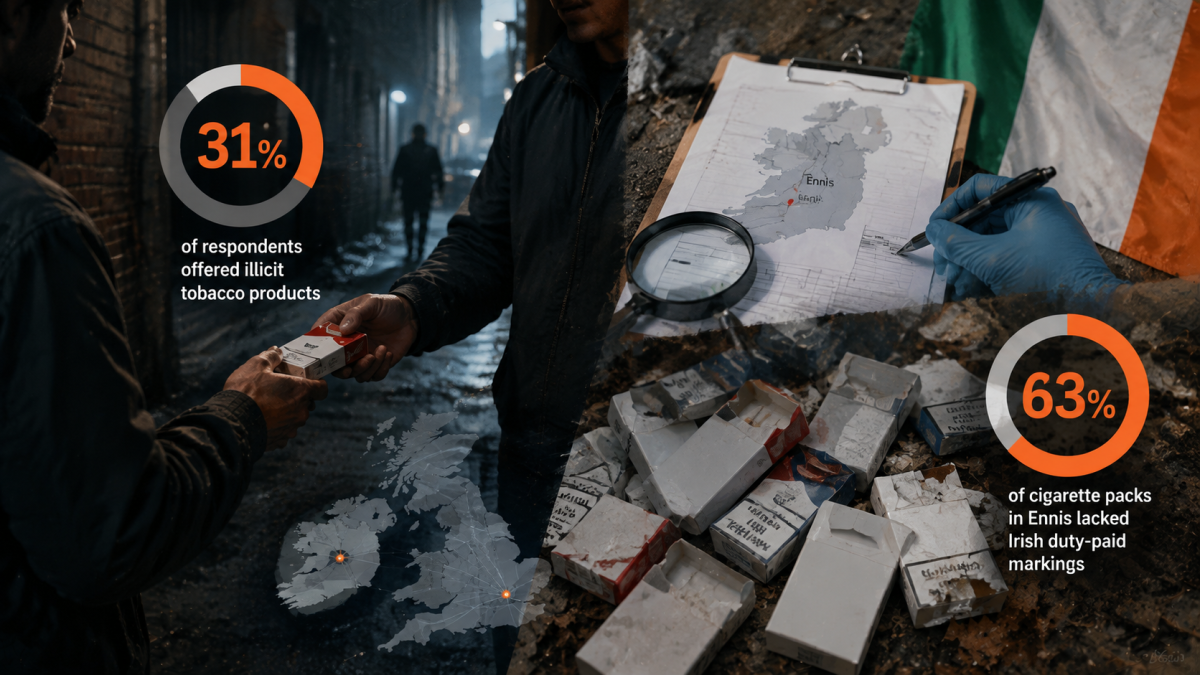
Multiple JTI-backed studies in the UK and Ireland indicate that illicit tobacco remains visible across consumer interactions and local markets. In the UK, JTI research found that 31% of respondents said they had been offered illicit tobacco products. In Ireland’s Ennis area, a JTI-commissioned empty pack survey found that 63% of sampled cigarette packs did not carry Irish duty-paid markings. The findings come from industry research rather than official government estimates of illicit tobacco market size, but highlight continued concerns among regulators, legitimate retailers and tobacco companies over illicit trade.

Key Points

  • JTI UK research found that 31% of respondents said they had been offered illicit tobacco products.
  • A JTI Ireland empty pack survey found 63% of sampled cigarette packs in Ennis lacked Irish duty-paid markings.
  • The UK research suggests illicit tobacco is becoming more visible to consumers.
  • The Irish survey tracked the presence of non-duty-paid cigarette packs through packaging analysis.
  • The figures come from industry studies and should not be interpreted as official government estimates of illicit-market size.

2Firsts

August 19, 2026

Multiple JTI-backed studies in the UK and Ireland indicate that illicit tobacco remains visible across consumer interactions, retail environments and local markets. In the UK, 31% of respondents said they had been offered illicit tobacco products, while an empty pack survey in Ireland’s Ennis area found 63% of sampled cigarette packs lacked Irish duty-paid markings.

The findings come from JTI-related market research projects and reflect the company’s assessment of illicit tobacco activity. They are not official government estimates of the size of the illicit market, but provide insight into consumer exposure and market conditions.

UK: 31% of Respondents Report Being Offered Illicit Tobacco

According to reports by Talking Retail and Better Retailing, JTI UK research found that illicit tobacco has become a product category that some consumers encounter directly.

The survey found that 31% of respondents said they had been offered illicit tobacco products.

JTI said the result suggested illicit tobacco was moving beyond hidden transactions and becoming more visible within consumer environments.

The research also examined public awareness of illicit tobacco and willingness to report suspicious activity. JTI said many consumers remain uncertain about how to identify or report illicit tobacco activity.

JTI UK has continued its “It Costs More Than You Think” campaign, aimed at raising awareness of the links between illicit tobacco, criminal activity, lost tax revenue and consumer risks.

Ireland: 63% of Ennis Packs Lacked Duty Marks

In Ireland, a JTI Ireland-commissioned Empty Pack Survey examined cigarette packs collected in the Ennis area.

The survey found that 63% of sampled cigarette packs did not carry Irish duty-paid markings.

Empty Pack Surveys typically analyse discarded cigarette packaging to identify whether products carry domestic tax markings, providing an indication of non-domestic duty-paid products in a local market.

The survey does not represent an official estimate of Ireland’s overall illicit tobacco market, but provides a snapshot of the presence of non-duty-paid products in the surveyed area.

JTI said illicit tobacco affects government revenue and creates additional pressure on legitimate retailers.

Illicit Tobacco Remains a Shared Regulatory Challenge

The UK and Ireland have both increased attention on illicit tobacco trade in recent years.

In the UK, enforcement agencies have focused on links between illicit tobacco sales, tax crime and organised criminal activity, while retailers have called for stronger action against illegal supply channels.

Ireland has also continued efforts to address illicit tobacco, citing concerns over lost tax revenue and competition faced by legitimate retailers.

JTI argues that illicit tobacco can reduce government revenue and provide funding streams for criminal networks.

However, industry research and government estimates measure different aspects of the market.

Company surveys typically examine consumer exposure, retail conditions and market behaviour, while government assessments generally rely on enforcement data, tax analysis and broader market modelling.

JTI’s research therefore provides one perspective on market visibility but does not replace official estimates of illicit tobacco prevalence.

Illicit Tobacco Remains a Focus for Regulators and Retailers

For legitimate tobacco retailers, illicit products create pricing pressure and can undermine confidence in regulated sales channels.

Retail groups in the UK have continued to call for stronger enforcement through border controls, market monitoring and cooperation between agencies.

At the same time, policymakers face the challenge of balancing taxation, public-health objectives and illicit-trade risks.

JTI’s UK and Ireland studies highlight continued visibility of illicit tobacco in consumer and market environments. Reducing illegal supply, improving public awareness and protecting legitimate retail channels are expected to remain key issues in European tobacco policy discussions.

Follow 2Firsts for the latest updates on global tobacco and nicotine regulation, market developments and policy trends.

Cover Image generated by AI

French Vape Distributor Kumulus Vape Yields About 3% as Earnings Growth Stalls
Listed French vape distributor Kumulus Vape will trade ex-dividend on June 26, 2026, and pay an annual dividend of €0.10 per share on June 30, with Simply Wall St saying the payout is covered by profit and free cash flow, while weak earnings growth remains a concern.
Industry InsightMarketNews
Jun.24
Alaska Warns 1,500 Tobacco Retailers Over Unauthorized Vapes and Nicotine Pouches
Alaska Attorney General Stephen J. Cox has sent notices to more than 1,500 tobacco retailers and distributors warning them against selling vape and nicotine pouch products that lack authorization from the U.S. Food and Drug Administration (FDA). According to the Alaska Department of Law, businesses were advised to verify products against FDA authorization databases and avoid selling unauthorized nicotine products. The action highlights how state-level enforcement is increasingly extending federal product authorization requirements to retail channels.
Jul.24
BAT Calls for Retailer Input in Future Nicotine Regulations
British American Tobacco (BAT) has called for stronger retailer involvement in shaping future nicotine product regulations in the UK, arguing that frontline market feedback should be considered during policy development. BAT said retailers provide direct insight into consumer behavior, market changes and regulatory implementation challenges. The comments come as the UK nicotine market undergoes regulatory changes, including the disposable vape ban, Vaping Products Duty and efforts to address illicit vape sales.
Jul.29
DOJ Trade Fraud Task Force Tops $1 Billion in Cases, Putting Vape Supply Chains at Risk of Fraud Enforcement
According to the U.S. Department of Justice (DOJ), Fox News and other reports, the DOJ’s Trade Fraud Task Force (TFTF) has been linked to more than $1 billion in recoveries, penalties, forfeitures and publicly charged losses in less than one year. The task force focuses on trade fraud issues including country-of-origin fraud, illegal transshipment, false declarations and tariff evasion. While vape products are not the main source of the $1 billion figure, the industry’s reliance on global manufacturing and cross-border supply chains places it within broader U.S. trade enforcement scrutiny. The development suggests that U.S. oversight of cross-border vape products may increasingly extend beyond product authorization into import compliance, supply-chain transparency and corporate accountability.
Jul.23
Malaysia Police Seize RM12.7 Million in Illegal Vapes and Cigarettes as Probe Points to Sea Shipments From China
Police in Malaysia’s Selangor state seized illegal vape products and contraband cigarettes worth about RM12.7 million (approximately $3 million) in two enforcement operations. According to New Straits Times and The Star, the vape-related operation uncovered 131,036 boxes of vape products, 4,900 bottles of e-liquid and 25,510 vape devices, valued at about RM9.4 million. Police said preliminary investigations indicated that some illegal vape products entered Malaysia through sea shipments from China before moving through storage and distribution networks.
Aug.10
Malaysia Withdraws Appeal Against Liquid Nicotine Ruling as Vape Regulation Framework Enters New Phase
Malaysia’s government has withdrawn its appeal against a High Court ruling concerning the regulatory status of liquid nicotine used in vape and e-cigarette products, according to reports by New Straits Times, Free Malaysia Today and CodeBlue on August 18, 2026. The Kuala Lumpur High Court ruled on May 15 that the government’s decision to remove liquid nicotine from the scheduled poisons list under the Poisons Act 1952 was irrational and made without proper consultation with the Poisons Board. The withdrawal ends the government’s appeal process, while the future regulatory framework for nicotine vape products remains under discussion.
Aug.21