KT&G Vice President to Adjust E-Cigarette Profit Margin

Oct.09.2024
KT&G Vice President to Adjust E-Cigarette Profit Margin
KT&G vice president vows profit adjustment for e-cigarette devices at governmental meeting, seeking fair collaboration with store owners.

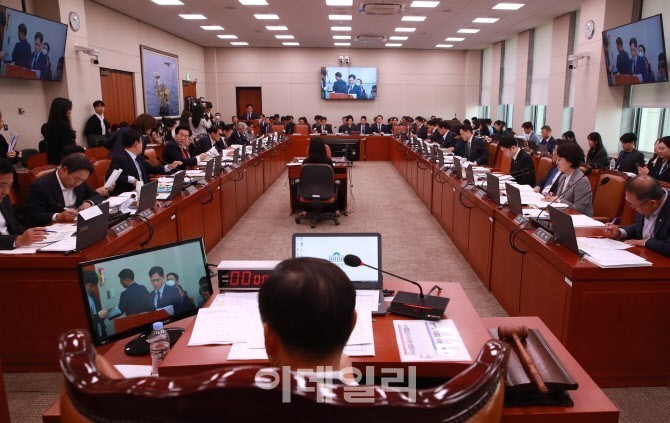
According to a report by N News on October 8, at a national policy inspection meeting in Seoul targeting the Ministry of SMEs and other agencies, vice president of South Korean tobacco company KT&G, Do Hak-young, stated during questioning by Democratic Party lawmaker Oh Se-hee that they will adjust the profit margin of e-cigarette devices to seek a way to coexist with store owners.


According to reports, KT&G currently holds the top position in the e-cigarette device market with a 72% market share. Since entering the market in November 2017, the company has maintained its leading position for seven consecutive years.


Senator Oh Se-hee pointed out that KT&G's market leading position is thanks to the support of 55,000 convenience stores nationwide. However, in recent years, there have been unfair practices in the transactions with convenience stores due to a lack of a win-win cooperation.


According to the Tobacco Industry Act, e-cigarette devices are classified as non-tobacco products and are sold with a 6.1% profit margin, while also bearing the credit card processing fees. They are not tobacco but rather small grocery items, and the profit margin needs to be adjusted.


The lawmaker further explained that KT&G's main purpose in promoting e-cigarette devices in convenience stores is to increase tobacco sales, despite lower profits, as it effectively attracts customers into the stores. Since 2018, convenience store owners have been calling for improvements in unfair trading practices, but have not seen any progress.


He urged KT&G to develop a win-win solution.


In response, Dou Xuerong stated that KT&G is considering actively adjusting its profit margin to achieve a more fair and reasonable cooperative relationship.


We welcome news tips, article submissions, interview requests, or comments on this piece.

Please contact us at info@2firsts.com, or reach out to Alan Zhao, CEO of 2Firsts, on LinkedIn


Notice

1.  This article is intended solely for professional research purposes related to industry, technology, and policy. Any references to brands or products are made purely for objective description and do not constitute any form of endorsement, recommendation, or promotion by 2Firsts.

2.  The use of nicotine-containing products — including, but not limited to, cigarettes, e-cigarettes, nicotine pouchand heated tobacco products — carries significant health risks. Users are responsible for complying with all applicable laws and regulations in their respective jurisdictions.

3.  This article is not intended to serve as the basis for any investment decisions or financial advice. 2Firsts assumes no direct or indirect liability for any inaccuracies or errors in the content.

4.  Access to this article is strictly prohibited for individuals below the legal age in their jurisdiction.


Copyright


This article is either an original work created by 2Firsts or a reproduction from third-party sources with proper attribution. All copyrights and usage rights belong to 2Firsts or the original content provider. Unauthorized reproduction, distribution, or any other form of unauthorized use by any individual or organization is strictly prohibited. Violators will be held legally accountable.

For copyright-related inquiries, please contact: info@2firsts.com


AI Assistance Disclaimer


This article may have been enhanced using AI tools to improve translation and editorial efficiency. However, due to technical limitations, inaccuracies may occur. Readers are encouraged to refer to the cited sources for the most accurate information.

We welcome any corrections or feedback. Please contact us at: info@2firsts.com

2Firsts First Look|China to End VAT Export Rebates on Vape Devices and Nicotine in April 2027, Following Earlier Removal for HTP Devices and Nicotine Vapes
China's Ministry of Finance and State Taxation Administration announced on October 12, 2026, that value-added tax (VAT) export rebates for vape devices, nicotine and its salts, and certain non-combustible inhalation products will be eliminated from April 1, 2027. The measure adds four tobacco- and nicotine-related customs codes, including 8543400010, which covers vape devices and qualifying empty pods. China previously eliminated rebates for nicotine-containing vaping products and devices under code 8543400090 in April 2026. According to industry classification information held by 2Firsts, the latter currently corresponds to heated tobacco devices. Export excise tax refund and exemption arrangements will remain unchanged.
Special Report
Oct.12
Pennsylvania Vape Directory Enforcement Starts Oct. 19, Barring Retail Sales of Unlisted Products
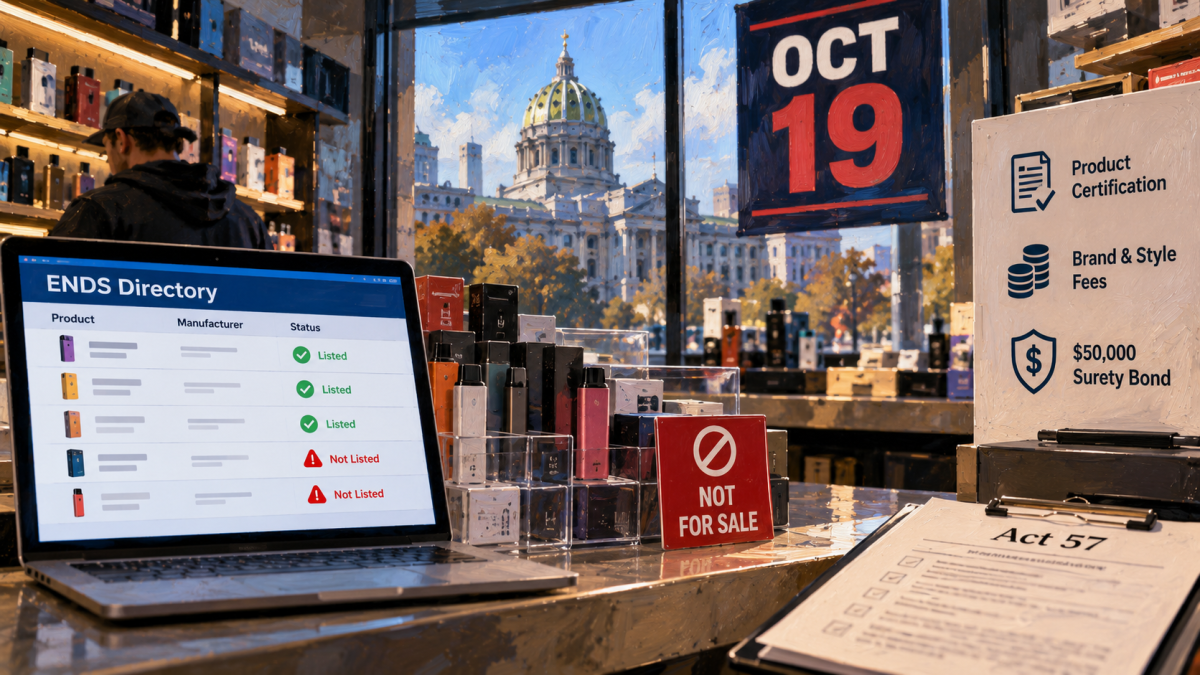
Pennsylvania's Act 57 vape directory regime will reach the end of its 120-day inventory transition period on Oct. 19. Nicotine-containing e-cigarettes intended for retail sale in the state that are not listed on the Attorney General's ENDS directory will then be barred from retail sale and treated as contraband subject to seizure, forfeiture and destruction. Manufacturers face annual product certification, brand- and style-based fees and a minimum $50,000 surety bond, while retailers and wholesalers must source through licensed channels and monitor the directory.
Regulations
Oct.08
JUUL Purchasers Ask Ninth Circuit to Preserve Antitrust Classes in Case Over Altria’s $12.8 Billion Investment
Private antitrust litigation stemming from Altria's 2018 $12.8 billion investment for a 35% economic interest in JUUL is advancing before the U.S. Court of Appeals for the Ninth Circuit. Direct purchasers, indirect purchasers and indirect resellers of JUUL products filed answering briefs this week seeking to preserve class certifications granted by a California federal court in February. Altria and JUUL argue that individual consumers and large distributors differ too much in purchasing terms to remain in a single direct-purchaser class, while a separate dispute concerns whether California antitrust law can apply to indirect purchasers across 27 jurisdictions. A September trial has been put on hold during the appeal.
Sep.23
Russia’s Vape Device Labeling Regime Enters Force: Registration Starts in September, Mandatory Coding in December
Russia's digital labeling regime for reusable e-cigarettes and similar personal vaping devices entered its first mandatory phase in September 2026. From September 1, manufacturers, importers and other market participants must register with the national Chestny ZNAK tracking system. From December 1, newly manufactured and imported covered devices will be required to carry digital identification codes and be reported as entering circulation. Russia has also issued new operational guidance for imports, marking the transition from a voluntary pilot to phased mandatory implementation.
Sep.15
Philippines Mandates Safety Certification for Nicotine Pouches, Gives Industry 12 Months to Comply
The Philippines Department of Trade and Industry has placed nicotine pouches under mandatory product certification through Department Administrative Order No. 26-07, Series of 2026. Nicotine pouches must obtain a Philippine Standard, or PS, license before they can be manufactured, imported, packed, distributed or sold in the country. The regime requires testing for nicotine content, pH and water activity, while packaging must disclose nicotine strength, ingredients, allergens, batch information, the PS certification mark and prescribed health warnings. Existing market participants have a 12-month transition period to comply.
Regulations
Oct.12
Sweden Finds ZYN Ingredient Labels Noncompliant Over Generic Flavoring Disclosure, Swedish Match Faces SEK 2 Million Monthly Penalty
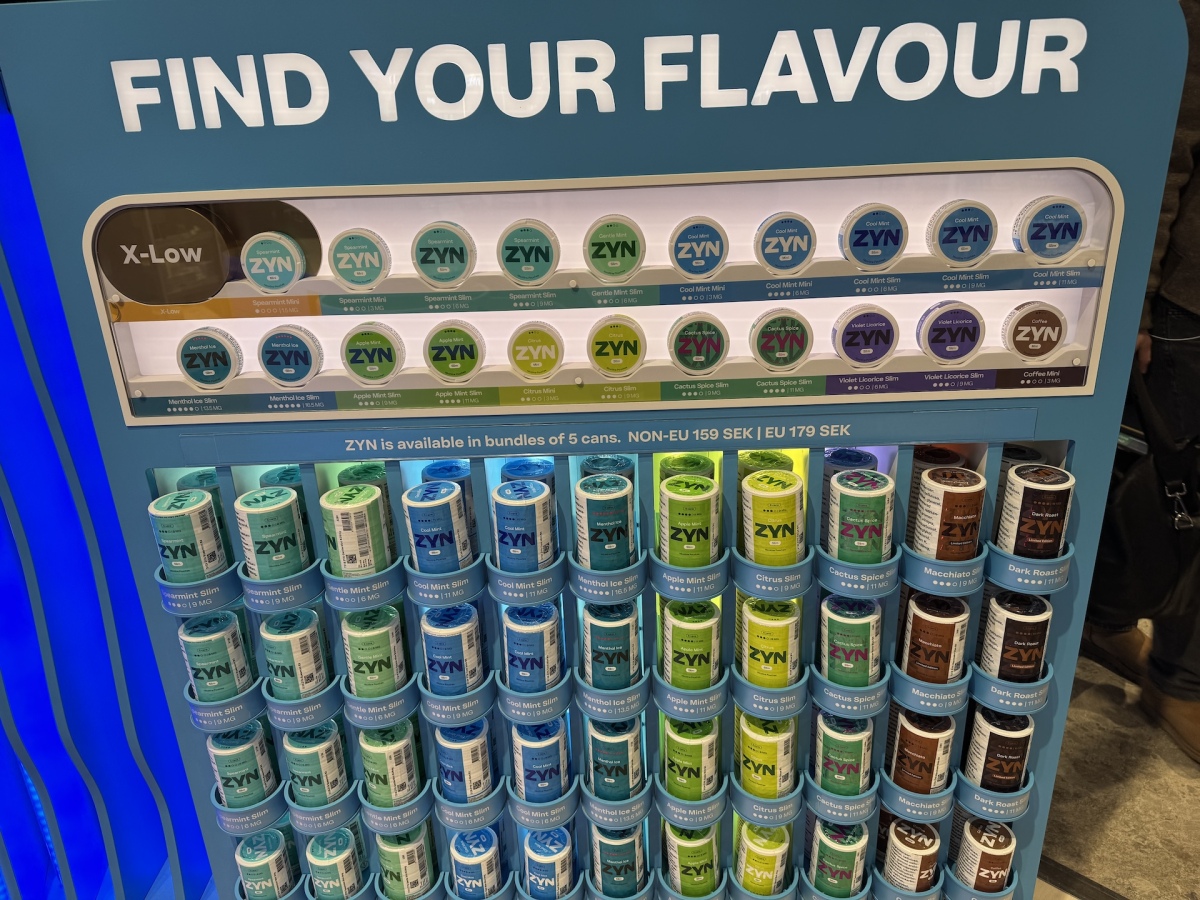
Sweden's Public Health Agency has found ingredient labels on ZYN nicotine pouches sold by Philip Morris International subsidiary Swedish Match to be noncompliant, according to Dagens industri. The products' packaging listed 10 to 13 ingredients, compared with 11 to 42 in regulatory submissions, with multiple flavoring ingredients grouped under the generic term "aromer." The agency ordered corrective action, warning of a conditional penalty of SEK 2 million per month for noncompliance. The order applies only to products manufactured after the decision becomes legally effective and does not require recalls. Swedish Match disputes the agency's interpretation and plans to appeal.
PMI
Oct.22