Ohio Court Allows Cities to Enforce Ban on Flavored Tobacco

Regulations by 2FIRSTS.ai
May.20.2024
Ohio Court Allows Cities to Enforce Ban on Flavored Tobacco
Ohio Judge Rules Statewide Flavor Ban Unconstitutional, Allowing 21 Cities to Enforce Ban on Sale of Flavored Tobacco Products.

According to a report from Halfwheel on May 17th, there has been an update after 18 months regarding the ban on flavored tobacco products in Ohio. Judge Mark Serrott ruled that the recently passed statewide preemption law is unconstitutional, allowing for the enforcement of bans on the sale of flavored tobacco products in 21 cities involved in the lawsuit.


The controversy began in December 2022, when the city council of Columbus, Ohio, as the main plaintiff in the lawsuit, passed a ban on the sale of flavored tobacco products. In response, the Republican-controlled Ohio Legislature, during a special session focused on other issues, quickly passed a preemptive measure aimed at preventing cities from implementing stricter bans than state law.


In January 2023, Governor Mike DeWine, a Republican, vetoed a bill that would have banned the sale of flavored e-cigarettes, citing his longstanding opposition to the measure. Due to technical issues, the state legislature was unable to override DeWine's veto.


Last year, the state legislature attempted to pass a preemptive clause once again and successfully overturned Governor DeWine's second veto. Subsequently, cities like Columbus began to sue, Judge Serothe issued a temporary injunction allowing Columbus's law to remain in effect and halting the implementation of the state law.


However, this issue remains unresolved. The state government has stated that it will appeal the ruling by Judge Serott to the Tenth Circuit Court. Cities not involved in this lawsuit are still bound by state law.


We welcome news tips, article submissions, interview requests, or comments on this piece.

Please contact us at info@2firsts.com, or reach out to Alan Zhao, CEO of 2Firsts, on LinkedIn


Notice

1.  This article is intended solely for professional research purposes related to industry, technology, and policy. Any references to brands or products are made purely for objective description and do not constitute any form of endorsement, recommendation, or promotion by 2Firsts.

2.  The use of nicotine-containing products — including, but not limited to, cigarettes, e-cigarettes, nicotine pouchand heated tobacco products — carries significant health risks. Users are responsible for complying with all applicable laws and regulations in their respective jurisdictions.

3.  This article is not intended to serve as the basis for any investment decisions or financial advice. 2Firsts assumes no direct or indirect liability for any inaccuracies or errors in the content.

4.  Access to this article is strictly prohibited for individuals below the legal age in their jurisdiction.


Copyright


This article is either an original work created by 2Firsts or a reproduction from third-party sources with proper attribution. All copyrights and usage rights belong to 2Firsts or the original content provider. Unauthorized reproduction, distribution, or any other form of unauthorized use by any individual or organization is strictly prohibited. Violators will be held legally accountable.

For copyright-related inquiries, please contact: info@2firsts.com


AI Assistance Disclaimer


This article may have been enhanced using AI tools to improve translation and editorial efficiency. However, due to technical limitations, inaccuracies may occur. Readers are encouraged to refer to the cited sources for the most accurate information.

We welcome any corrections or feedback. Please contact us at: info@2firsts.com

Texas Extends Tobacco Tax Interpretation to a 6-Methylnicotine Product, Citing VELO Ruling
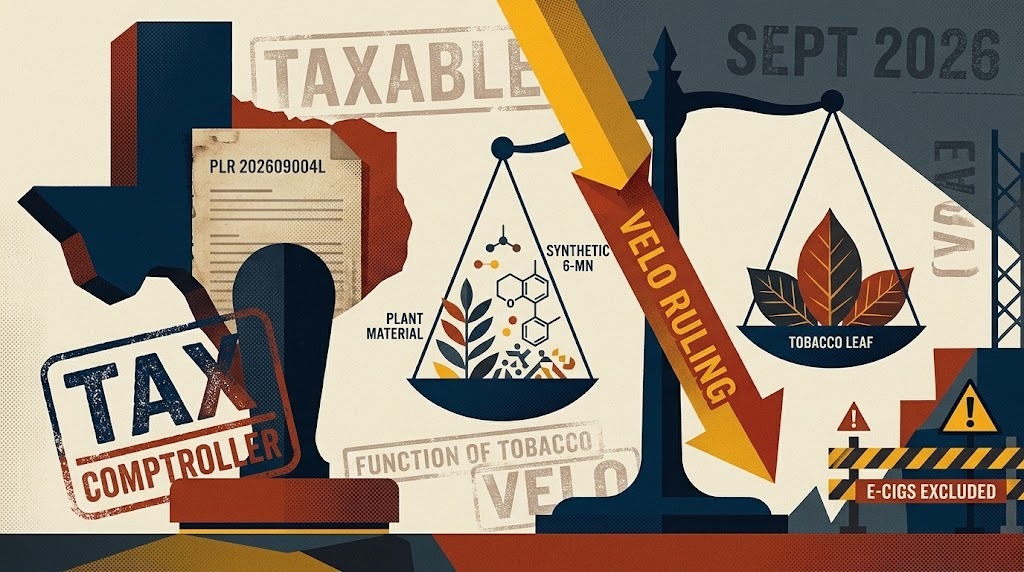
The Texas Comptroller of Public Accounts ruled in September 2026 that a combustible product made with non-tobacco plant material and 6-methylnicotine (6-MN), a synthetic nicotine analog, qualifies as a taxable tobacco product. The applicant said the product contained neither tobacco leaf nor measurable conventional nicotine. The determination applies reasoning from a May Texas Supreme Court decision involving VELO nicotine pouches, finding that the plant material and 6-MN together perform the functions of tobacco in a conventional smoking product. The ruling carries applicable tax, licensing and reporting obligations but is limited to the facts submitted by the taxpayer. It does not establish a blanket tax classification for all 6-MN products or extend the same conclusion to e-cigarettes.
Regulations
Nov.06
Ireland Raises Nicotine Product Taxes Again as Cigarettes Gain €1 and Vape Duty Is Set to Jump 40%
Ireland has increased tobacco excise under Budget 2027 and announced a further rise in its E-liquid Products Tax. From Oct. 7, the tax burden on a pack of 20 cigarettes in the most popular price category increased by €1, with pro-rata increases on other tobacco products. The government plans to raise EPT from €0.50 to €0.70 per millilitre from Jan. 1, 2027, a 40% increase applying to both nicotine-containing and nicotine-free e-liquids. The tobacco duty increase is expected to raise about €63.1 million in a full year.
Regulations
Oct.09
Los Angeles Cracks Down on Illicit Flavored Vapes and Counterfeit Goods: 12 Businesses Searched, 24 Arrested, Eight Truckloads Seized
Los Angeles authorities searched 12 businesses and arrested 24 people during a multi-agency operation targeting illicit flavored vaping products, flavored cigarettes and counterfeit merchandise on October 22, 2026. The Los Angeles County Sheriff's Department said approximately eight tractor-trailer loads of merchandise were seized. Alleged violations involved flavored tobacco sales restrictions, tobacco licensing requirements and counterfeit trademark laws. Local, state and federal agencies participated. Authorities have not disclosed the number, brands or value of vaping products seized. Investigations remain ongoing.
Enforcement
Oct.28
India Steps Up Nicotine Pouch Enforcement as ZYN, White Fox Circulate and Drug Panel Urges Halt to New Nicotine Formulations
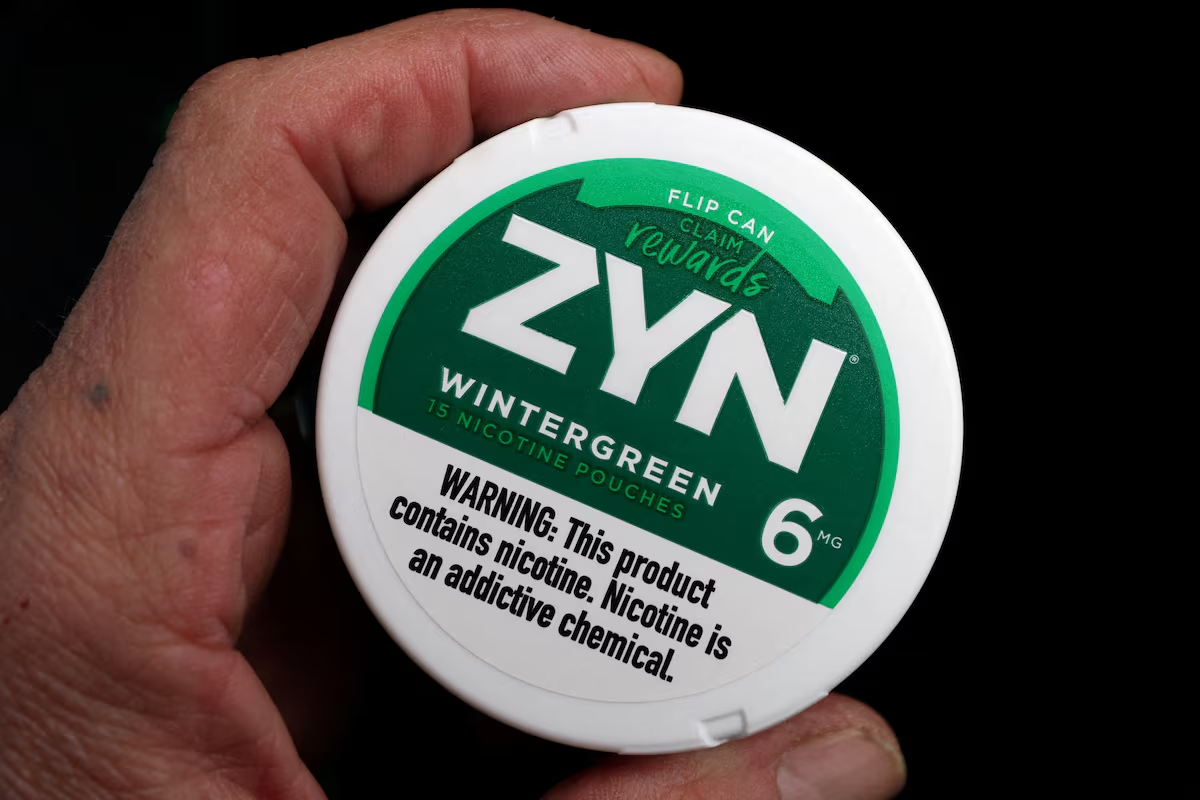
India's Ministry of Health and Family Welfare has directed states to step up enforcement against nicotine pouch sales, citing increased availability through online and offline channels and concern about nicotine exposure among children. Reuters reported that international brands including ZYN and White Fox are being sold in India. A study led by ICMR-NICPR found pouches in seven of 10 surveyed locations and identified 68 brands and 445 flavors online. Separately, India's Drugs Technical Advisory Board recommended in August that no new nicotine formulation be approved.
Regulations
Sep.28 by 2Firsts Perspectives
Arizona Turns to a 50% Retail Vape Tax as Tobacco Tax Revenue Falls 47% From 2008
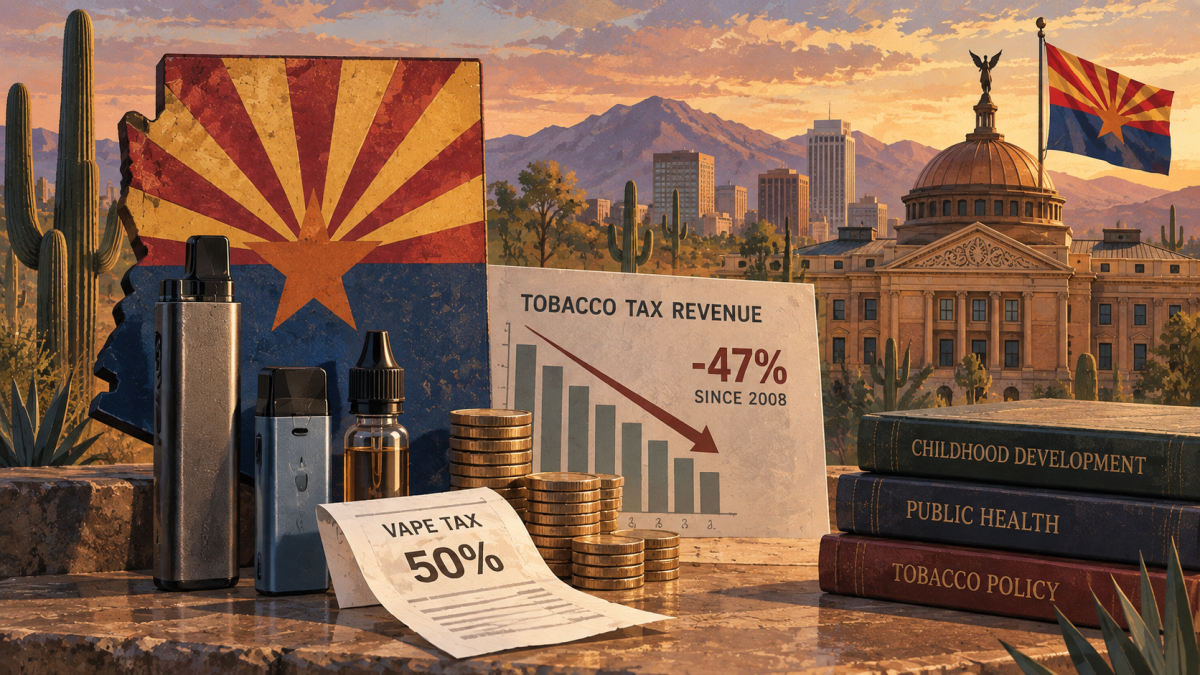
Arizona's First Things First is pushing for an excise tax equal to 50% of the retail price of vaping products, estimating that the measure could generate about $100 million annually. The agency says its tobacco-tax revenue has fallen 47% from 2008 levels. Arizona has attempted to broaden its nicotine tax base in each of the past two years: a 2025 bill proposed a 50% wholesale-price tax, while a 2026 measure shifted to a 50% retail-price tax covering alternative nicotine products and vapor products. Separately, the state enacted HB 4001 this year to establish a new licensing and sales framework for alternative nicotine products.
Sep.21
NAS 2026 | Former FDA Tobacco Chief Mitch Zeller Calls for Shift From “End Game” to “End State”
At the 2026 New Approaches Summit in New York, former FDA Center for Tobacco Products Director Mitch Zeller called for the tobacco harm reduction debate to shift from the traditional “end game” toward defining a desired “end state.” He also highlighted unresolved concerns around dual use, argued that biomarkers of exposure may be more meaningful than cigarettes-per-day in assessing risk reduction, and said nicotine misperceptions remain a major barrier to public health progress.
Sep.25