Key Points
● PMTA backlog declines sharply: CTP said pending PMTAs fell from about 450,000 at the start of 2025 to roughly 135,000 by early September 2026, while applications awaiting acceptance dropped from about 26,000–30,000 to around 600.
● 180-day review goal: CTP said it sees a path toward a more predictable 180-day review timeline beginning with a complete application; currently, Phase 3 timing is measured from the start of substantive scientific review.
● sPMTA pilot process: Current sPMTA reviews generally use a single review cycle, with deficiency letters generally not issued; applicants are expected to submit sufficient evidence upfront and justify any data bridging.
● Alternate suppliers and nicotine changes: CTP encouraged manufacturers to plan alternate suppliers early, while changes in nicotine concentration, salt, source or pH may affect sPMTA eligibility and bridging decisions.
● SE backlog and process improvements: More than 50,300 SE reports remained pending as of early September, with CTP using “mega-bundle” reviews and applying some lessons from the nicotine pouch pilot to ENDS review.
2Firsts
Washington, D.C., October 6, 2026
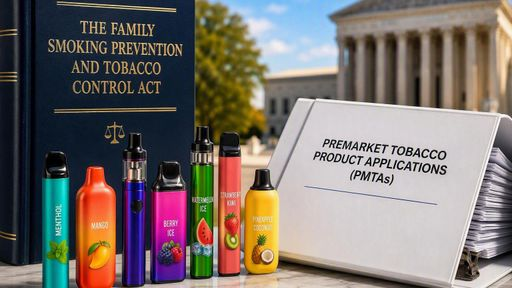
Officials from the U.S. Food and Drug Administration’s Center for Tobacco Products (CTP) provided new figures Tuesday on pending PMTAs and detailed how the agency is handling review timelines, supplemental applications, supplier changes and a backlog of more than 50,000 Substantial Equivalence reports.
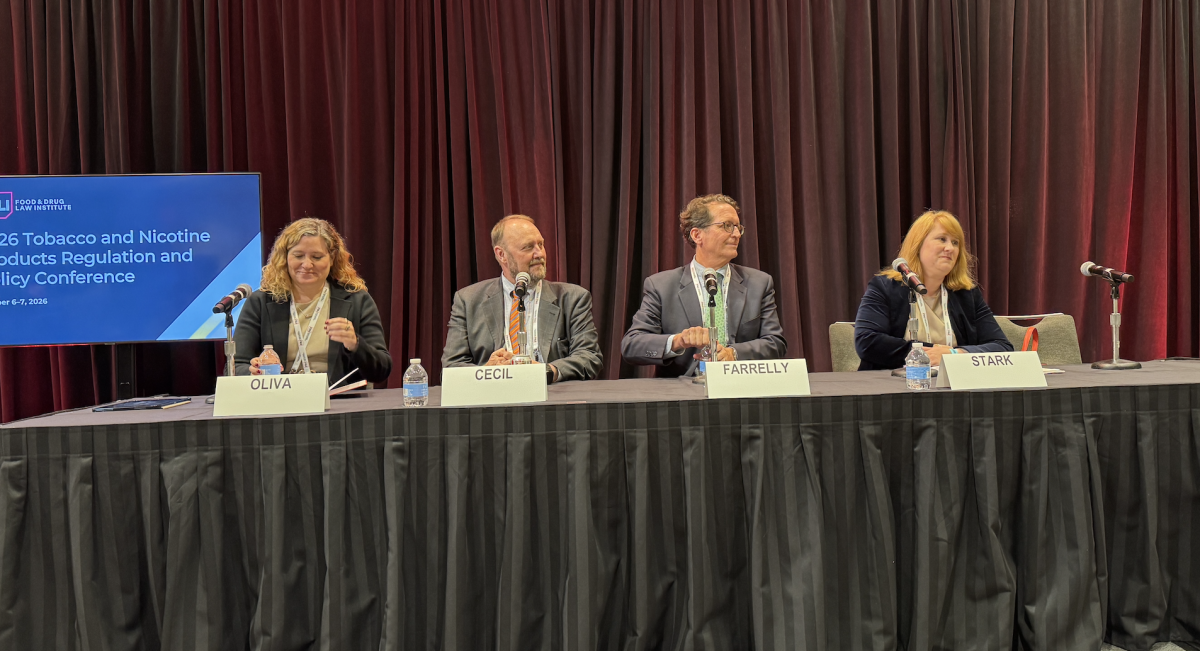
The discussion took place during “Candid Conversation with CTP’s Office of Science: Strategic Direction and Initiatives” at the 2026 Tobacco and Nicotine Products Regulation and Policy Conference in Washington, D.C. The session featured Matthew Farrelly, Director of CTP’s Office of Science; Cristi Stark, Associate Director of the Office of Science; and Todd Cecil, Deputy Director of Regulatory Management in the Office of Science. It was moderated by Beth G. Oliva, Partner at Fox Rothschild LLP and a member of the Food and Drug Law Institute Board of Directors.
2Firsts attended the session on site.

Pending PMTAs Fall From About 450,000 to 135,000
Cristi Stark provided more detailed figures on pending Premarket Tobacco Product Applications, or PMTAs.
At the beginning of 2025, CTP had approximately 450,000 pending PMTAs, Stark said. By the beginning of September 2026, that number had fallen to approximately 135,000, a decline of about 70%.
She said roughly 26,000 to 30,000 applications were awaiting an acceptance determination at the beginning of 2025. By September 1, 2026, that number had fallen to approximately 600.
CTP generally expects applicants to be notified within about 30 days of receipt whether an application has been accepted, Stark said. Applicants that have not received a response can contact their regulatory project manager.
The Office of Science currently has nine PMTA review teams, with resources allocated among product categories based on workload. CTP officials said PMTA review remains a priority and that personnel working on other pathways may be reassigned as priorities change.
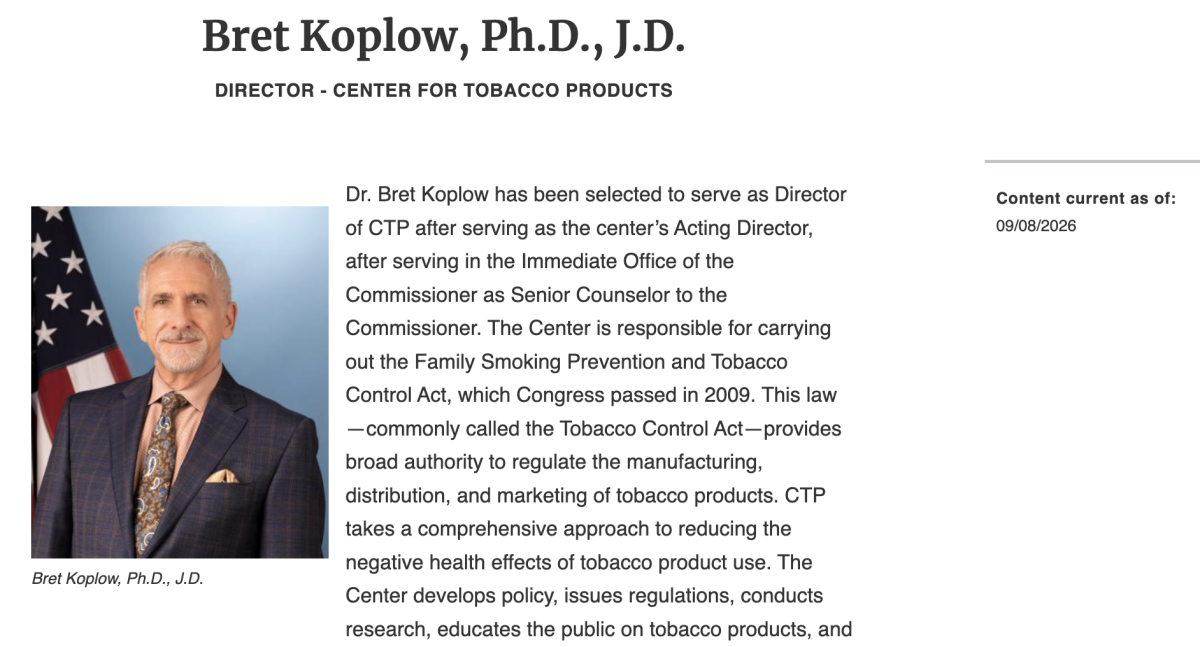
The figures add detail to remarks made earlier in the day by CTP Director Bret Koplow, who said the overall pending PMTA backlog had declined by about 70% and the acceptance-review backlog by more than 99%.
CTP Clarifies Review Stages and Timing
CTP officials said there is still a queue between acceptance and filing.
Timeframes cited for the filing stage begin when CTP formally starts filing review, rather than immediately after an application is accepted.
For Phase 3, the scientific-review timeframe begins when CTP starts substantive scientific review.
Officials said the review timeframes discussed during the session are measured in calendar days.
Once an application enters substantive scientific review, CTP develops an internal timeline with milestones for the review cycle and monitors progress during the review.
Stark Says CTP Can Eventually Reach 180-Day Goal From a Complete Application
Asked whether CTP could eventually reach a 180-day timeline beginning with a complete application, Stark said:
“Yes, from a complete application, I see us getting there.”
She said the agency is still working toward that point.
Stark said she expects greater efficiency over time in the acceptance and filing stages, which could help CTP provide a more predictable timeframe from a complete application through the end of review.
CTP’s current Phase 3 scientific-review timeframe, however, is measured from the kickoff of substantive scientific review.
CTP Plans “Cradle-to-Grave” Tracking of Review Timelines
The panel discussed a recent U.S. Government Accountability Office report concerning FDA’s ability to track tobacco product review timelines.
Stark said the report’s finding was “fair” and “not a surprise.”
She said CTP’s existing systems had not originally been designed for the volume of applications ultimately received or for the queues that developed between different stages of review.
CTP plans to track when individual review cycles begin and end, how long applications remain in queues, whether those queues are shrinking, and the overall time from the beginning of an application through completion of review.
Stark described the latter as “cradle-to-grave” tracking.
Current sPMTA Pilot Generally Uses One Review Cycle
CTP officials provided further detail on the Supplemental Premarket Tobacco Product Application, or sPMTA, pilot.
They emphasized that an sPMTA remains subject to the same Appropriate for the Protection of the Public Health (APPH) standard as a standard PMTA.
The supplemental pathway may allow applicants to rely on information from an already authorized product when seeking authorization for a modified product.
Officials said the pathway was designed with relatively limited changes in mind, but that it is not necessarily restricted to minor changes. Whether a modification is appropriate for an sPMTA depends on the nature of the change and the supporting evidence.
CTP encouraged applicants to engage with the agency before submission. Officials said seeking a meeting only a few weeks before a planned filing may not provide enough time to receive and incorporate agency feedback.
Under the current pilot, officials said sPMTAs are generally reviewed in one cycle and that CTP has generally not issued deficiency letters that would provide applicants with another round to address missing information.
Applicants therefore need to provide sufficient supporting information upfront.
Officials said applicants relying on data from an authorized product should explain why the proposed modification does not affect the information being bridged, rather than simply referring FDA back to the earlier application.
A flavor change, for example, may still require product-specific characterization, ingredient information, testing and other relevant data.
Officials stressed that the program remains a pilot and that its scope and procedures may evolve as CTP gains additional experience.
Nicotine Changes Can Affect Whether Data Can Be Bridged
CTP officials said some changes involving nicotine are currently generally viewed as outside the intended scope of the supplemental pathway.
Examples discussed included changes in nicotine concentration, nicotine salt and the nicotine itself.
Supplier changes may require additional review when they result in a different nicotine source or different product characteristics.
CTP officials stressed that not all supplier changes are treated the same.
For nicotine pouches, officials said free nicotine delivery and pH are important when determining whether data can be bridged from an authorized product.
Relatively small changes in pH modifiers or flavor-related pH may affect nicotine delivery and pharmacokinetics, or PK.
CTP Encourages Manufacturers to Plan Alternate Suppliers Early
CTP officials encouraged manufacturers considering alternate or backup suppliers to raise the issue early, including while an application is under review.
Manufacturers can discuss alternate sourcing arrangements during the application process rather than waiting until a supply disruption occurs.
Officials said that where an alternate source results in a different product, the products may need to be authorized separately.
They cited component end-of-life, transportation disruptions and other supply-chain interruptions as reasons manufacturers may need multiple sources.
CTP officials cautioned that a supply emergency for a manufacturer does not automatically become a priority for FDA.
They encouraged companies to consider alternate suppliers before such problems arise.
More Than 50,300 SE Reports Remain Pending
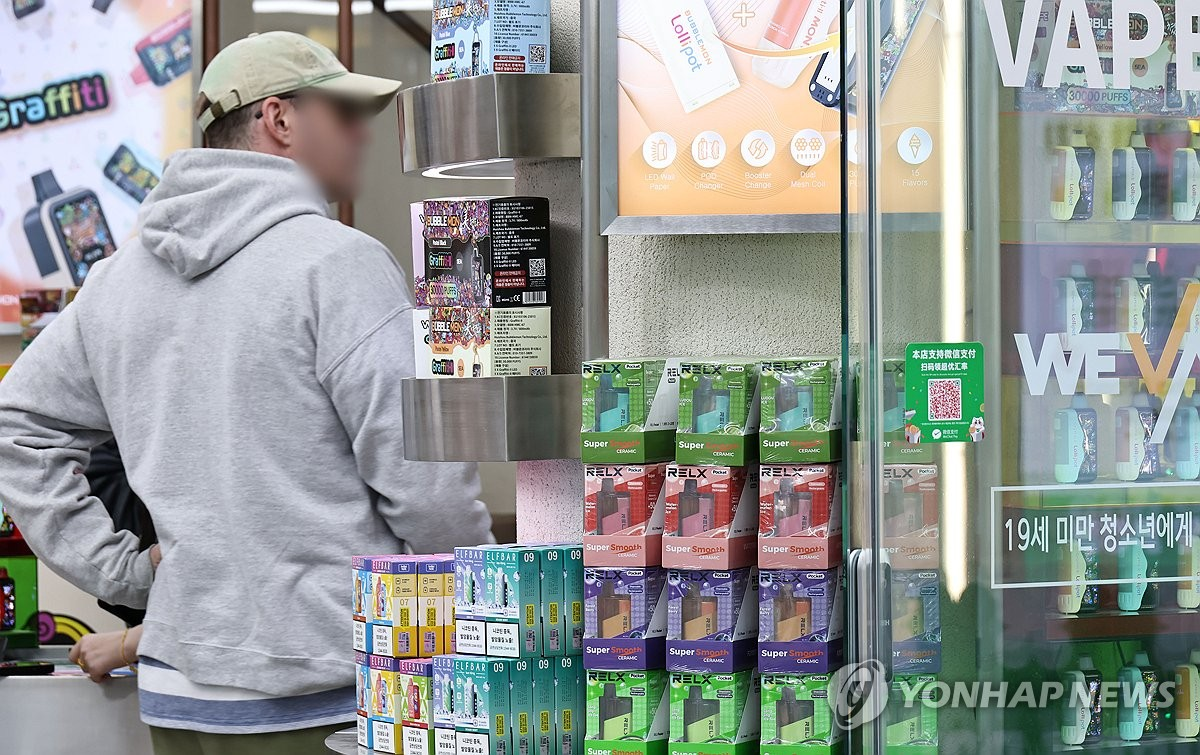
As of the beginning of September, CTP had more than 50,300 pending Substantial Equivalence, or SE, reports.
Under the SE pathway, FDA compares a new tobacco product with an eligible predicate product to determine whether it is substantially equivalent and whether any differences raise different questions of public health.
CTP officials said large groups of related applications create significant review demands because individual products still require evaluation of product-specific information.
To address the backlog, CTP has been grouping similar SE submissions through what officials described as a “mega-bundle” approach.
Under the approach, CTP groups applications involving similar products and similar predicate comparisons rather than processing smaller batches sequentially.
Officials said returning to a model in which only small groups of applications are reviewed at a time would not be sustainable given the current backlog.
CTP also said it is willing to consider extension requests where laboratory capacity or other practical constraints affect an applicant’s ability to respond to a deficiency letter.
Nicotine Pouch Pilot Lessons Have Already Been Applied to ENDS Review
CTP officials said lessons from the nicotine pouch pilot have already been applied to aspects of ENDS review.
They cited streamlined internal review templates as one example, saying the changes help reviewers focus on the information most relevant to the review.
Officials said not every element of the nicotine pouch pilot is transferable to ENDS because the product categories differ, but some process changes have already been incorporated into ENDS review.
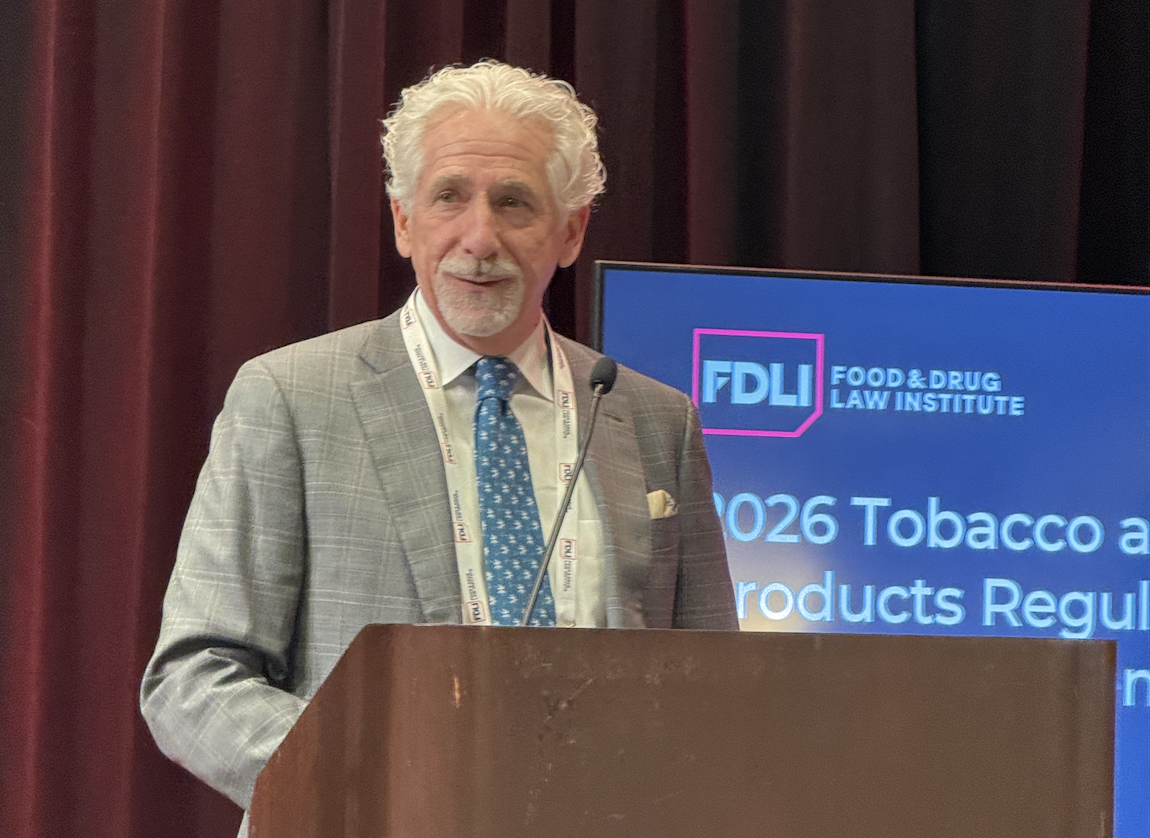
The October 6 discussion followed Koplow’s keynote address earlier in the day, in which he outlined broader priorities for PMTA reform, scientific review capacity, category-specific review and the supplemental PMTA program.
2Firsts will continue reporting on site from Washington, D.C., and following developments in FDA tobacco product review, PMTA reform and U.S. tobacco and nicotine regulation.
Cover image:FDA Center for Tobacco Products (CTP) Office of Science officials participate in the “Candid Conversation with CTP’s Office of Science” session at the FDLI Tobacco and Nicotine Products Regulation and Policy Conference in Washington, D.C., on October 6, 2026. From left: Beth G. Oliva, Todd Cecil, Matthew Farrelly and Cristi Stark. Photo by 2Firsts.
Disclaimer
This article is provided solely for professional research, industry discussion, and informational purposes. Any references to brands, companies, products, technologies, or policies are made for factual reporting and analytical purposes only, and do not constitute endorsement, recommendation, promotion, or advertising by 2Firsts.
Nicotine-containing products, including but not limited to cigarettes, e-cigarettes, heated tobacco products, and nicotine pouches, carry significant health risks. Readers are responsible for complying with all applicable laws and regulations in their respective jurisdictions, including age restrictions and access limitations.
The information contained in this article should not be regarded as investment, legal, medical, regulatory, or commercial advice. While 2Firsts strives to ensure the accuracy and reliability of its content, it does not assume liability for any direct or indirect loss arising from errors, omissions, inaccuracies, or reliance on the information contained herein.
This article is not intended for individuals below the legal age for accessing tobacco or nicotine-related information in their jurisdiction.
Copyright Notice
This article is either original content produced by 2Firsts or content reproduced, translated, summarized, or adapted from third-party sources with attribution where applicable. The intellectual property rights of the original content remain with 2Firsts or the respective original rights holders.
No individual or organization may copy, reproduce, distribute, republish, modify, translate, or otherwise use this content without prior authorization. Any unauthorized use may result in legal action.
For copyright-related inquiries, corrections, or removal requests, please contact: info@2firsts.com.
AI-Assisted Translation and Editing Notice
Portions of this article may have been translated, edited, or reviewed with the assistance of artificial intelligence tools to improve efficiency and readability. Due to the limitations of AI-assisted translation and editing, discrepancies, omissions, or inaccuracies may exist when compared with the original source.
Where applicable, readers are advised to refer to the original source for the most complete and accurate information. If you identify any errors or believe that any content infringes upon your rights, please contact us at info@2firsts.com, and we will review and address the matter promptly.