PMI Responds to 'Why is PMI Still Selling Cigarettes': Stopping Sales Is Not the Solution, Driving Consumer Transformation Is Key

Nov.28.2024
PMI Responds to 'Why is PMI Still Selling Cigarettes': Stopping Sales Is Not the Solution, Driving Consumer Transformation Is Key
PMI recently addressed the ongoing controversy regarding its continued sale of cigarettes on LinkedIn, emphasizing that achieving a smoke-free future requires reducing demand for cigarettes rather than an outright ban. The company's Chief Communications Officer said that simply halting cigarette sales will not solve the demand issue but will instead drive the market toward illegal trade or other brands.

Recently, Philip Morris International (PMI) addressed the long-standing question on LinkedIn: "Why is PMI still selling cigarettes?" In its response, PMI emphasized that achieving a smoke-free future requires a gradual reduction in cigarette demand, rather than an immediate ban.


The company outlined three key reasons:


  • Consumer Behavior Takes Time to Change: PMI's goal is to encourage adults who have not yet quit smoking to switch to smoke-free alternatives. This shift in consumer behavior takes time. The company emphasized that without this change, an outright ban on cigarettes would not solve the issue. Consumers could turn to competing brands or the illegal market, complicating efforts to control smoking.


  • Legal Restrictions Limit Product Diversification: In some countries, current laws only allow the sale of traditional tobacco products (such as cigarettes and cigars). These legal constraints hinder PMI's ability to promote smoke-free products, delaying progress toward a smoke-free future.


  • Balancing Shareholder Responsibility: As a publicly traded company, PMI must balance shareholder interests while ensuring sustainable growth. The company is gradually transitioning away from the cigarette business, but abruptly discontinuing a successful product line would be unrealistic and detrimental to long-term success.


Executive Response: Reducing Demand is Key


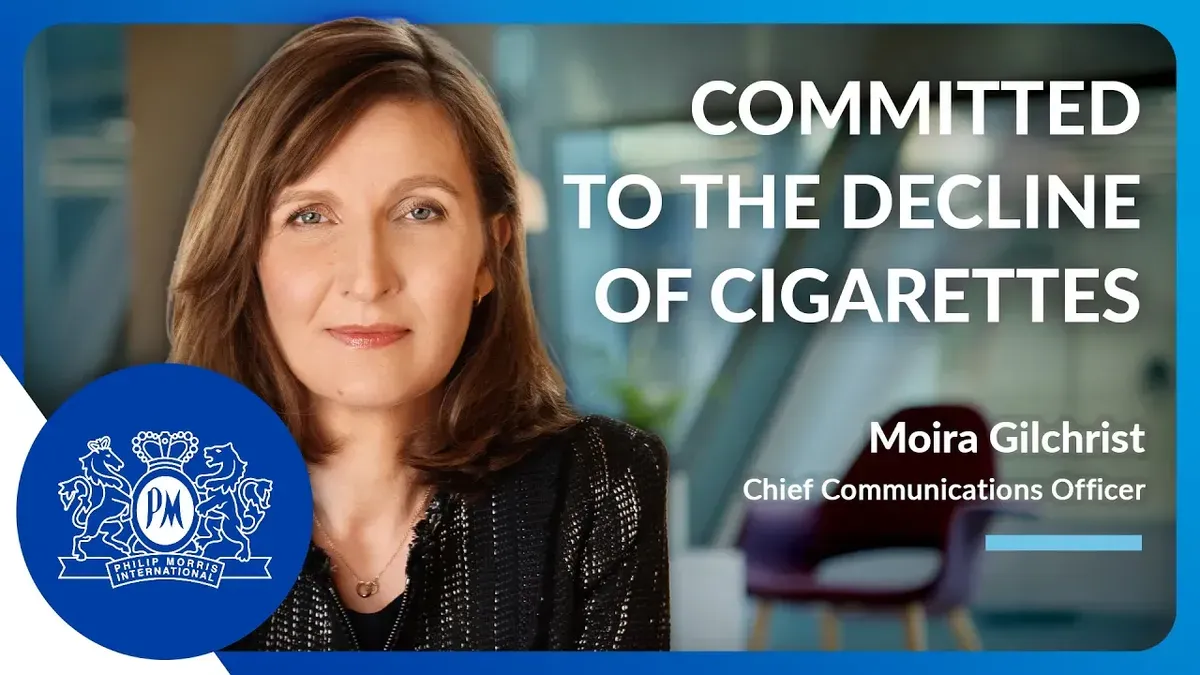
PMI's Chief Communications Officer, Dr. Moira Gilchrist, emphasized in a video that simply halting cigarette sales will not eliminate market demand.
 

PMI Responds to 'Why is PMI Still Selling Cigarettes': Stopping Sales Is Not the Solution, Driving Consumer Transformation Is Key
PMI Chief Communications Officer Dr. Moira Gilchrist


"Philip Morris International unilaterally stopping to sell cigarettes tomorrow won't change a thing. Our transformation makes sense because what we're working on is reducing the demand for cigarettes over the long term," Dr. Moira Gilchrist said.


Dr. Moira Gilchrist emphasized that the key action is to gradually reduce cigarette demand over the long term, rather than abruptly halting production. She noted that when she joined PMI in 2006, the company's revenue was entirely derived from cigarette sales. Since then, PMI has gradually reduced its reliance on cigarettes and has been actively promoting the development of smoke-free products.


"Fast forward to now and all people need to do is look at the published data. Many people have been somewhat surprised by our transformation and the pace of change."


 

NAS 2026 | FDA CTP Director Says PMTA Pathway Is “Predicated on Tobacco Harm Reduction”
At the 2026 New Approaches Summit in New York, FDA Center for Tobacco Products Director Bret Koplow said the PMTA pathway is “predicated on tobacco harm reduction.” He outlined four CTP priorities: youth prevention, helping adults quit or switch to lower-risk products, improving relative-risk communication, and reducing unauthorized products. Koplow also addressed flavored e-cigarettes, public risk perceptions, industry credibility and efforts to make PMTA reviews more efficient and predictable.
Sep.26
South Korea Imports 12,126 Kg of Nicotine Analogues From April to August After Bringing Synthetic Nicotine Under Tobacco Law
South Korea's liquid-vape market is showing changes across raw-material imports, product types and sales channels after synthetic nicotine came under the Tobacco Business Act on April 24. Customs data show nicotine-analogue imports totaled 12,126 kilograms from April through August, while synthetic-nicotine imports over the same five months totaled 231,663 kilograms, just 39.3% of the amount imported in March alone. Physical liquid-vape stores tracked in Seoul and Gyeonggi Province fell 9.9%, unmanned outlets edged higher and online sales listings increased from 27,774 to 42,437. Government testing of 105 liquid inhalation products promoted as nicotine-free separately found nicotine in 13 and 6-methylnicotine in 12.
Sep.22
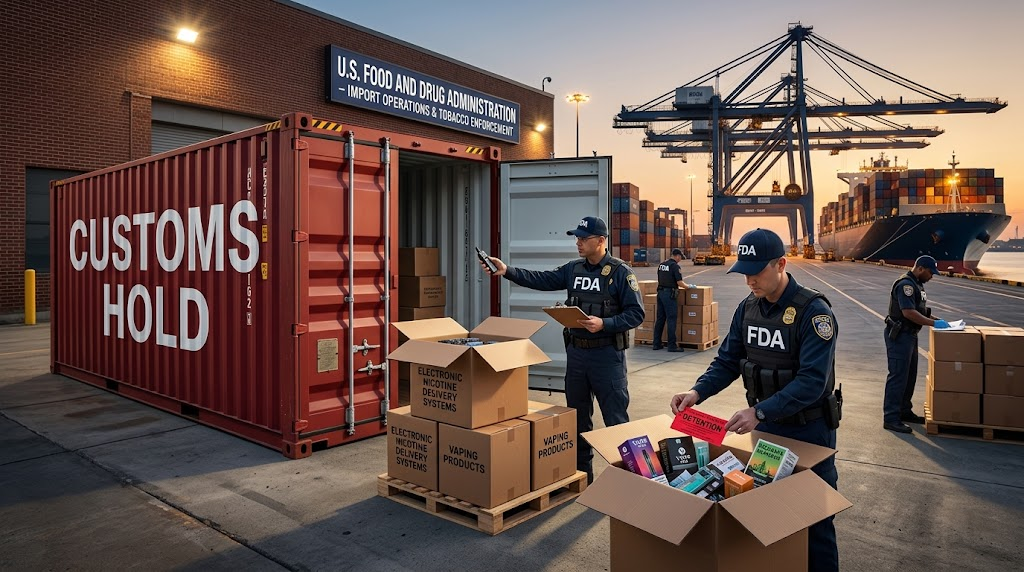
FDA Revises Import Alert 98-07 Rules, Bringing May Enforcement Priorities Into Unauthorized ENDS Detentions
The U.S. Food and Drug Administration has revised the rules under Import Alert 98-07 to incorporate its May 2026 enforcement-priority policy for certain electronic nicotine delivery systems marketed without premarket authorization. The alert continues to allow detention without physical examination, or DWPE, for ENDS lacking required marketing authorization, while directing field divisions to apply the May risk-based framework. When necessary, detention or refusal decisions must also undergo review by the FDA's Center for Tobacco Products. Products including PACHA and Vuse Pro have already emerged as industry examples of the May policy, although enforcement discretion does not constitute FDA marketing authorization.
News
Sep.28 by 2Firsts Perspectives
Couche-Tard Posts Double-Digit U.S. Same-Store Growth in Other Nicotine Products, Led by Pouches
Alimentation Couche-Tard said U.S. same-store sales in its “other nicotine products” category grew at a double-digit rate in the first quarter of fiscal 2027, led by nicotine pouches, while overall U.S. same-store merchandise revenues increased 1.7%. The company also said its Canadian nicotine business continued to face regulatory pressure and illicit-market headwinds. The U.S. performance coincides with Couche-Tard's participation in efforts to reopen Canadian convenience-store access to authorized nicotine pouches, though the company has not established a direct causal link between the two.
Sep.14
Product | KT&G Launches lil HYBRID 3.0 Misty Rosé Edition II in South Korea With Two Pink Finishes at 88,000 Won
South Korean tobacco company KT&G launched the limited-edition lil HYBRID 3.0 Misty Rosé Edition II on September 30, 2026, following the original Misty Rosé Edition introduced in November 2025. The new release comes in two pink finishes, Bloom Rosé and Viva Rosé, each priced at 88,000 won. Both versions initially went on sale through the lil Store online shop and lil MINIMALIUM flagship stores. From October 7, Bloom Rosé became available at approximately 1,500 lil Station retail outlets nationwide. The release retains the existing lil HYBRID 3.0 hybrid heated tobacco platform, with changes focused on exterior design and distribution.
product
Oct.10
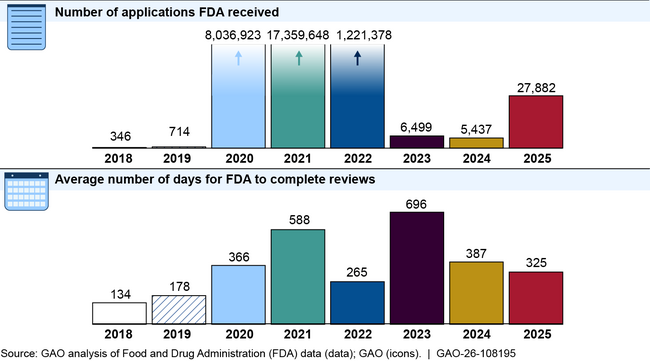
GAO Audit Finds Nearly 132,000 FDA Tobacco Applications Waiting an Average 1,266 Days as Nicotine Pouch Pilot Practices Move Into Vape PMTA Reviews
A U.S. Government Accountability Office audit found that 131,915 tobacco product applications submitted to the FDA since 2018 remained without a final review as of December 31, 2025, with pending applications waiting an average of 1,266 days. GAO also found FDA lacks the data needed to systematically determine whether scientific reviews meet applicable timelines. HHS agreed to upgrade the agency's tracking systems. At the same time, FDA has begun applying lessons from its nicotine pouch PMTA pilot to e-cigarette reviews, while changes to enforcement policy and electronic submissions are making the specific stage of a PMTA increasingly relevant to market access.
FDA
Oct.03