Key Points
- Domestic manufacturing operation raided: California authorities discovered production and packaging equipment, unfinished devices and approximately 850,000 vape-related items associated with Geek Bar and Foger.
- Production evidence: Reuters photographs showed industrial machinery, unfinished vaping devices, Geek Bar Pulse packaging and QR-code authenticity labels. Police said genuine and counterfeit products appeared to be present.
- Importer lobbies over detained shipments: The Wall Street Journal reported four days earlier that Hillfield's advisers had presented a $1 billion US manufacturing proposal while the company sought clearance for detained vape shipments.
- Regulatory and market context: Geek Bar and Foger products lack FDA marketing authorization, while BAT estimates unauthorized devices account for approximately 70% of US vape sales.
2Firsts
November 17, 2026
US authorities raided a suspected illegal vape manufacturing operation in Chino, California, on October 30, discovering production and packaging equipment, unfinished vaping devices and approximately 850,000 vape-related items associated with Chinese brands including Geek Bar and Foger, Reuters reported on November 17, 2026.
The investigation extends concerns over unauthorized vaping products beyond imports of finished devices and retail distribution to manufacturing activities inside the United States. A person involved in the raid told Reuters it provided the first concrete evidence that some production activities involving major Chinese vape labels were taking place domestically after years of reliance on finished-product imports from China.
Four days earlier, The Wall Street Journal reported that Hillfield, a US importer of Geek Bar products, had engaged advisers with close ties to the Trump administration while seeking the release of detained vape shipments. A proposed $1 billion US manufacturing investment was also presented to senior White House officials.
California Raid Uncovers Manufacturing Equipment and 850,000 Vape-Related Items
Law enforcement officers raided units within a warehouse complex in Chino, east of Los Angeles, on October 30, according to a spokesperson for the Ontario Police Department in California.
The operation involved the Ontario Police Department, Homeland Security Investigations (HSI) and several other state and federal agencies.
Investigators found machinery used for applying product branding and shrink-wrapping, as well as large quantities of vaping devices, components and packaging materials. Authorities identified approximately 850,000 items associated with brands including Geek Bar and Foger.
Based on the machinery discovered, the police spokesperson said the facility appeared to be used for illegally manufacturing vaping products.
The spokesperson said the investigation raised concerns about public safety, consumer protection and legal compliance extending beyond the number of products found.
A worker present during the raid told authorities the factory had begun operating in 2026.
Police also said both genuine and counterfeit products appeared to be present.
Reuters identified Guangdong Qisitech Co., Ltd. (QISITECH), a Chinese vaping-device manufacturer, as the producer of Geek Bar vaping products. According to its corporate website, QISITECH is part of the Geekvape group and operates in electronic-cigarette development, manufacturing and OEM/ODM services.
QISITECH did not respond to Reuters' requests for comment. Foger Vapes also did not respond to the news agency's questions.
As of the Reuters report, the facility's operator, the distribution channels for its products and its commercial relationships with Geek Bar, Foger or other brands had not been publicly established.
Reuters Photographs Show Unfinished Devices, Industrial Equipment and Geek Bar Packaging
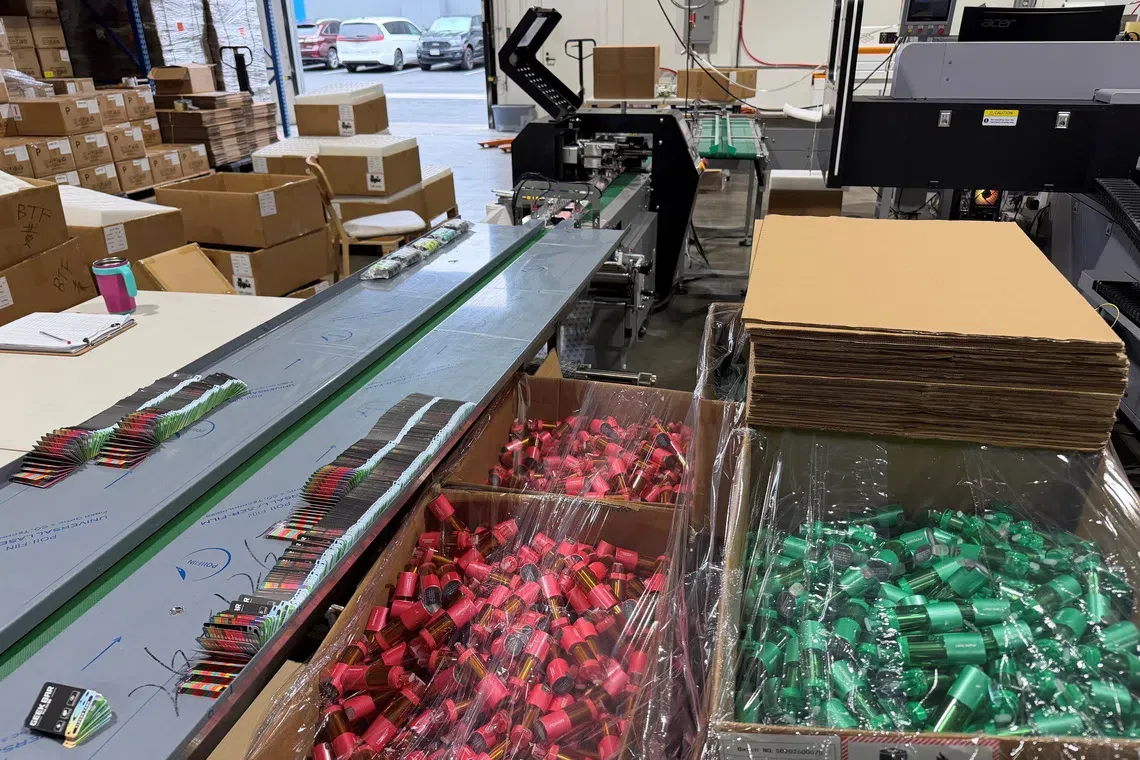
Photographs published by Reuters showed industrial processing machinery, conveyor systems, unfinished vaping devices and packaging materials at the facility.
One image showed large quantities of black-and-silver unfinished devices arranged in orange production trays on an industrial machine. Another showed red and green cylindrical vaping devices stored in boxes near processing equipment.
Additional photographs showed machinery connected to conveyor belts, alongside quantities of individually wrapped vaping products.

Other photographs showed stacks of printed Geek Bar Pulse retail packaging. The flat cardboard boxes had been printed and die-cut but had not yet been assembled.
Some packaging carried product illustrations, US nicotine addiction warnings and other markings. Rolls of labels and additional packaging materials were visible nearby.
Photographs obtained by Reuters also showed rolls of QR-code authenticity labels that consumers can scan to check whether purchased products are counterfeit.
Reuters scanned a code on a finished Geek Bar box appearing in another photograph. The code opened Geek Bar's official website, where the product was verified as authentic.
Police nevertheless said genuine and counterfeit products appeared to be present. Verification of a single QR code did not establish the authenticity of other products or confirm that the facility was authorized by Geek Bar.
Another photograph showed quantities of individually wrapped vaping products near industrial processing and packaging equipment. Geek Bar retail boxes, other packaging materials and bulk product-handling supplies were also visible.
The photographs are consistent with the equipment described by police, including machinery associated with product branding and shrink-wrapping operations.
Four Days Earlier, WSJ Reported Geek Bar Importer's $1 Billion Factory Pitch and Lobbying Over Detained Shipments
On November 13, four days before the Reuters investigation was published, The Wall Street Journal reported on efforts by Hillfield, a US importer of Geek Bar products, to address regulatory barriers affecting its shipments through advisers with close ties to the Trump administration.
According to the Journal, US Customs and Border Protection (CBP) had detained shipments of Geek Bar vaping products imported by Hillfield in Chicago. People familiar with the matter said officials suspected that at least some of the items had been declared as other products.
Hillfield denied that any shipments had been misdeclared and maintained that its products qualified for entry under applicable import policies.
The Journal reported, citing a person familiar with the company, that Hillfield had attempted to import approximately 10 million to 12 million vaping devices since the summer of 2026.
Hillfield managing partner Ben Zhang said approximately 50% of the company's shipments entered the United States during the summer, before all its shipments were detained during the autumn. The 50% figure referred to shipments, not necessarily half the total number of devices.
Against this backdrop, Chris LaCivita, a co-manager of Donald Trump's 2024 presidential campaign, told the Journal that he had contacted senior White House officials to describe Hillfield's plan to invest $1 billion in a US manufacturing facility and bring production onshore.
LaCivita said his role was limited to advising Hillfield on aligning its business strategy with the Trump administration's priorities. He denied discussing detained vape shipments with the White House and rejected suggestions that he had directed government officials to take action.
His son, Chris LaCivita Jr., a registered lobbyist for Hillfield, told the Journal that he had contacted White House and other federal officials to advocate for the company's vaping products to enter the US market.
Federal lobbying disclosures cited by the Journal showed that Hillfield had paid Checkmate Government Relations, the lobbying firm employing LaCivita Jr., $860,000 since late 2025.
The Journal reported, citing people familiar with the matter, that White House officials told FDA officials in late August to authorize the release of certain detained vape shipments following those contacts.
Some shipments were subsequently released. Zhang confirmed that customs and FDA officials had cleared some previously detained Hillfield products for entry into the United States.
He also said the company had complied with import requirements and paid more than $30 million in tariffs. Zhang argued that Hillfield's approach would help reduce counterfeit and deceptively imported vaping products.
However, the dispute over the remaining shipments had not been resolved.
The Journal reported that hundreds of additional Hillfield shipments containing millions of vaping devices remained detained in Chicago during the autumn, pending regulatory decisions.
Hillfield representatives argued that the company's Geek Bar products qualified for the FDA's May 2026 enforcement-discretion policy covering certain unauthorized tobacco products and therefore should be allowed into the US market.
FDA officials believed most Geek Bar products did not meet the relevant criteria, according to people familiar with the matter cited by the Journal.
A White House spokesperson said the administration was focused on preventing youth nicotine use, combating counterfeit vaping products and expanding adult access to authorized alternatives.
As of the publication of the two reports, Hillfield's proposed $1 billion manufacturing investment had not been independently verified as completed. Its construction status, actual capital expenditure and production arrangements remained unconfirmed.
No evidence has linked the proposal to the operation raided in Chino.
From Chinese Imports to Domestic Manufacturing: New Questions for US Enforcement and Competition
Chinese-manufactured disposable vaping devices have maintained a substantial presence in the United States despite Geek Bar, Foger and other brands lacking the FDA marketing authorizations required for lawful sales.
Reuters reported that substantial FDA seizures in 2025 and increased state-level enforcement affected supplies of unauthorized vaping products. US tariffs on Chinese imports added further pressure.
Imports were constrained in early 2025 but subsequently rebounded, according to FDA data cited by Reuters.
Some Chinese companies have adopted new strategies, including marketing products with "Made in the USA" branding.
A person involved in the Chino investigation told Reuters that the raid provided concrete evidence of some production activities involving major Chinese vape labels taking place in the United States.
Separately, the Journal's reporting on Hillfield showed that a proposed domestic manufacturing investment had become part of the commercial strategy presented to senior White House officials by an importer of Chinese-branded vaping products.
Manufacturing location, however, does not change the FDA marketing authorization requirements governing vaping products sold in the United States.
In May 2026, the FDA issued guidance setting out enforcement priorities for certain unauthorized electronic nicotine delivery systems and nicotine pouch products. The agency said it would not prioritize enforcement against specified products meeting application and review requirements. For non-tobacco-flavored ENDS products, additional conditions include FDA's assessment of whether the application contains the data needed for a public-health review. Certain youth-appealing product characteristics and safety risks remain enforcement considerations.
The policy does not grant marketing authorization or guarantee that unauthorized products may be imported or lawfully sold. Manufacturing or packaging vaping products in the United States does not itself make unauthorized products lawful to market.
The widespread availability of unauthorized vaping devices has also intensified competition for multinational tobacco companies seeking to expand their smoke-free product businesses.
British American Tobacco (BAT) estimates unauthorized devices account for approximately 70% of US vape sales, representing an annual market worth around £7 billion ($9.25 billion).
Those figures are BAT estimates, rather than official FDA market statistics.
Reuters also reported that BAT and Altria, the maker of Marlboro cigarettes in the United States, said stronger enforcement was affecting the US vaping market in 2026. BAT reported higher sales as a result.
Previous large-scale enforcement efforts against unauthorized vaping products have focused heavily on imported shipments and retail distribution. The Chino investigation also exposed manufacturing-related equipment and unfinished devices inside the United States, alongside products and packaging associated with major Chinese vape brands.
Meanwhile, the Hillfield case reported by the Journal shows how a proposed US manufacturing investment featured in discussions with government officials over the company's commercial strategy while it sought relief for detained imports.
The two cases concern separate operations, and no direct connection has been established. Both, however, arise amid changes in US import enforcement, manufacturing strategies and FDA regulatory policies affecting the vaping industry.
Follow 2Firsts for timely updates on global tobacco and nicotine regulations, market developments and industry trends.
Cover Image: Reuters. Photograph from the October 30, 2026, raid at a vape factory in Chino, California.
Reference:
- Reuters — Authorities Raid Factory Making Illegal Chinese Vapes in the US (November 17, 2026)
- The Wall Street Journal — Powerful Trump Allies Aided a Chinese Vape Operation (November 13, 2026)
- The Straits Times — Reuters Republication (November 17, 2026)
- QISITECH — 中文官方公司介绍
- QISITECH — Official English Corporate Profile
- FDA — Enforcement Priorities Announcement (May 8, 2026)
- FDA — Final Enforcement Priorities Guidance (May 2026)
Disclaimer
This article is provided solely for professional research, industry discussion, and informational purposes. Any references to brands, companies, products, technologies, or policies are made for factual reporting and analytical purposes only, and do not constitute endorsement, recommendation, promotion, or advertising by 2Firsts.
Nicotine-containing products, including but not limited to cigarettes, e-cigarettes, heated tobacco products, and nicotine pouches, carry significant health risks. Readers are responsible for complying with all applicable laws and regulations in their respective jurisdictions, including age restrictions and access limitations.
The information contained in this article should not be regarded as investment, legal, medical, regulatory, or commercial advice. While 2Firsts strives to ensure the accuracy and reliability of its content, it does not assume liability for any direct or indirect loss arising from errors, omissions, inaccuracies, or reliance on the information contained herein.
This article is not intended for individuals below the legal age for accessing tobacco or nicotine-related information in their jurisdiction.
Copyright Notice
This article is either original content produced by 2Firsts or content reproduced, translated, summarized, or adapted from third-party sources with attribution where applicable. The intellectual property rights of the original content remain with 2Firsts or the respective original rights holders.
No individual or organization may copy, reproduce, distribute, republish, modify, translate, or otherwise use this content without prior authorization. Any unauthorized use may result in legal action.
For copyright-related inquiries, corrections, or removal requests, please contact: info@2firsts.com.
AI-Assisted Translation and Editing Notice
Portions of this article may have been translated, edited, or reviewed with the assistance of artificial intelligence tools to improve efficiency and readability. Due to the limitations of AI-assisted translation and editing, discrepancies, omissions, or inaccuracies may exist when compared with the original source.
Where applicable, readers are advised to refer to the original source for the most complete and accurate information. If you identify any errors or believe that any content infringes upon your rights, please contact us at info@2firsts.com, and we will review and address the matter promptly.