Russia's State Duma Passes New Regulations on Smokeless Tobacco

Jul.24.2024
Russia's State Duma Passes New Regulations on Smokeless Tobacco
Russian State Duma passes bill regulating smokeless tobacco production, requires ingredient disclosure, bans misleading packaging, and limits nicotine content.

According to News-Life, the Russian State Duma has passed a bill on its second reading, which establishes new regulations for the production of smokeless tobacco products within Russia.


The law stipulates that manufacturers or importers of smokeless tobacco products must provide a report containing information on their ingredients by March 31 of the following year. The information on product packaging must not include any terms, descriptions, symbols, or other indications that could potentially mislead consumers, giving them a false impression that smokeless tobacco products are less harmful. The use of substances that enhance the attractiveness of smokeless tobacco products, such as nicotine salts, ammonia and ammonia derivatives, ammonia water, acetaldehyde, etc., is not allowed. Additionally, the law specifies that the nicotine content in smokeless tobacco products must not exceed 10 milligrams per unit.


If the bill is ultimately passed, it will take effect on March 1, 2025, unless otherwise specified.


Meanwhile, the Russian State Duma is currently considering another cross-party bill that would completely ban the retail sale of nicotine and non-nicotine e-cigarettes in Russia. The explanatory memorandum of the bill provides data indicating that the number of Russian minors using e-cigarettes has increased tenfold from 2011 to early 2023.


We welcome news tips, article submissions, interview requests, or comments on this piece.

Please contact us at info@2firsts.com, or reach out to Alan Zhao, CEO of 2Firsts, on LinkedIn


Notice

1.  This article is intended solely for professional research purposes related to industry, technology, and policy. Any references to brands or products are made purely for objective description and do not constitute any form of endorsement, recommendation, or promotion by 2Firsts.

2.  The use of nicotine-containing products — including, but not limited to, cigarettes, e-cigarettes, nicotine pouchand heated tobacco products — carries significant health risks. Users are responsible for complying with all applicable laws and regulations in their respective jurisdictions.

3.  This article is not intended to serve as the basis for any investment decisions or financial advice. 2Firsts assumes no direct or indirect liability for any inaccuracies or errors in the content.

4.  Access to this article is strictly prohibited for individuals below the legal age in their jurisdiction.


Copyright


This article is either an original work created by 2Firsts or a reproduction from third-party sources with proper attribution. All copyrights and usage rights belong to 2Firsts or the original content provider. Unauthorized reproduction, distribution, or any other form of unauthorized use by any individual or organization is strictly prohibited. Violators will be held legally accountable.

For copyright-related inquiries, please contact: info@2firsts.com


AI Assistance Disclaimer


This article may have been enhanced using AI tools to improve translation and editorial efficiency. However, due to technical limitations, inaccuracies may occur. Readers are encouraged to refer to the cited sources for the most accurate information.

We welcome any corrections or feedback. Please contact us at: info@2firsts.com

South Korea Extends Vape Rules to Unmanned Stores After Bringing Synthetic Nicotine Under Tobacco Law
South Korea's Ministry of Gender Equality and Family said on September 14 that it plans to designate unmanned e-cigarette stores as businesses where minors are prohibited from entering or working. Operators would be required to verify customers' ages and display notices restricting access by minors. The proposal is open for public comment through October 6. The move follows an April expansion of South Korea's statutory tobacco definition that brought products made with natural or synthetic nicotine under the Tobacco Business Act. Nicotine-free liquids and products using nicotine analogues such as 6-methylnicotine, however, remain an emerging regulatory issue.
Sep.21
Germany's Four-Year Tobacco Tax Plan Heads to Parliament as BAT, JTI and PMI Push for Changes
Germany's parliament is scheduled to hold a first reading of amendments to the Tobacco Tax Act on September 24. The government plans annual tax increases from 2027 through 2030 covering cigarettes, heated tobacco, vaping liquids and other categories. It expects the reform to generate €756 million in additional revenue in 2027, rising to €3.589 billion in additional annual revenue by 2030. Ahead of the parliamentary debate, the German Association of the Tobacco Industry and Novel Products, or BVTE, launched the "Tabaksteuer mit Augenmaß" campaign backed by BAT, JTI, Philip Morris, Reemtsma and wholesale and retail groups.
Sep.23
Indiana Halts Sales of Elf Bar, Lost Mary, MR FOG and iJOY Vapes Under Foreign-Adversary Rules; Some Products Return After Compliance Filings
Indiana's Alcohol and Tobacco Commission (ATC) ordered tobacco certificate holders in September to remove certain vaping products marketed under Elf Bar, Lost Mary, MR FOG, iJOY and other brands from inventory under the state's foreign-adversary product law. The agency later listed 257 MR FOG products and 77 Lost Mary product entries as lawful for sale. The Lost Mary revision expressly stated that compliance evidence had been received for 20 additional products. 2Firsts compliance expert Kurt said potential filings could include e-liquid and ingredient-origin records, U.S. nicotine-analog supply-chain documentation and FDA premarket application status.
Regulations
Oct.08
NAS 2026 | Cliff Douglas: Risk Continuum Should Play a Central Role in Tobacco Policy
Cliff Douglas, a veteran U.S. tobacco-control and public health policy figure, told NAS 2026 that the “continuum of risk” should play a central role in tobacco policy. He called for clearer market pathways, stronger risk communication, differentiated regulation and enforcement, and said possible FDA reforms to PMTA reviews could be a “welcome correction” if they create a more efficient, predictable route for scientifically substantiated lower-risk products. Read 2Firsts’ on-site coverage.
Sep.26
Special Report | Can Nicotine Be Replaced? 6-MN Is Already on the Market While Key Human Evidence Is Still Missing
Nicotine analogues such as 6-methylnicotine are already appearing in e-cigarettes and oral pouches, even as key human evidence remains limited. A new Nixodine-S study adds nonclinical data showing differences from nicotine in cytotoxicity and receptor activity, while independent studies point to a more complex toxicological picture. With supply-chain activity growing and FDA seeking clearer authority over nicotine analogues, the industry now faces a larger question: what evidence is needed before these substances can credibly replace nicotine?
SCIENCE
Sep.23
Special Report | Altria's NACS Booth Raises Questions Over U.S. Tobacco Advertising Warnings
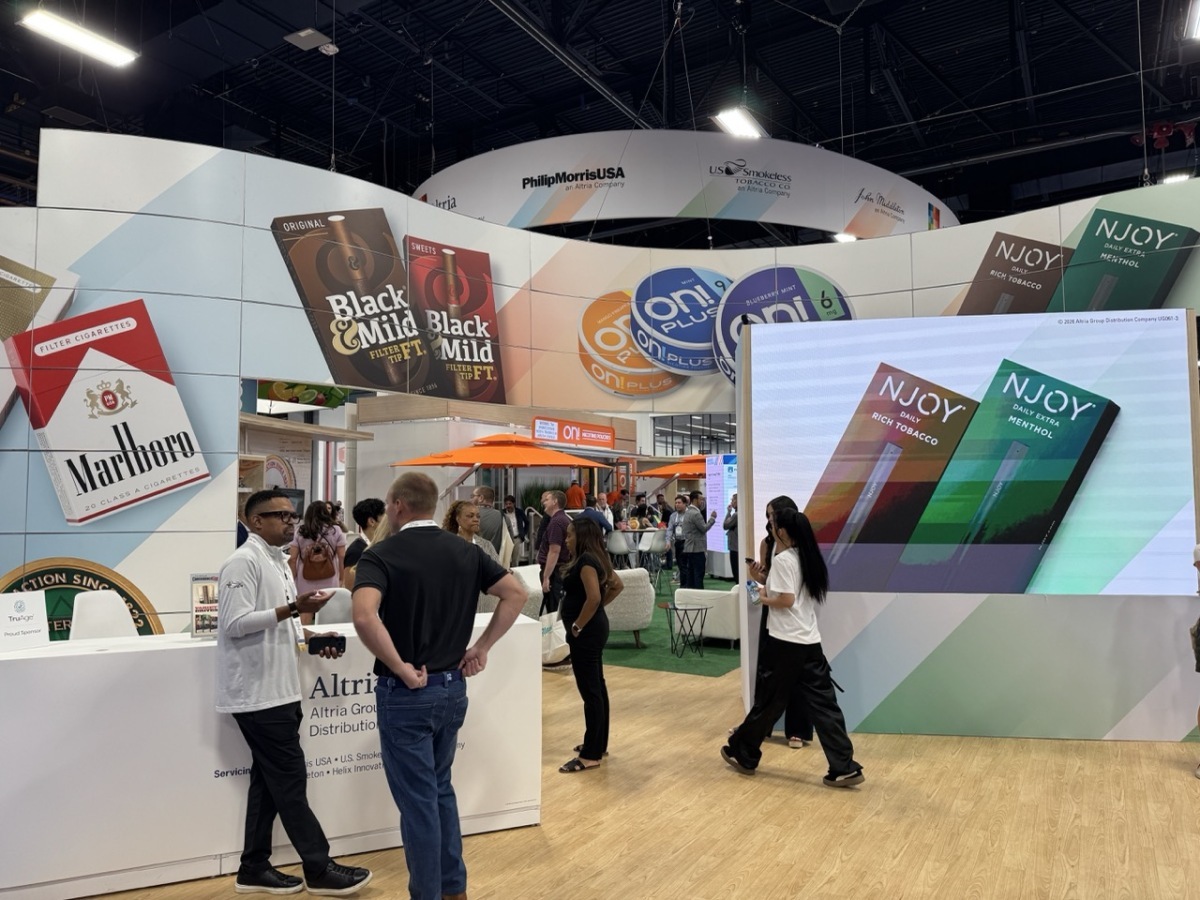
During its coverage of Altria's booth at NACS Show 2026, 2Firsts documented product displays that prompted questions about U.S. tobacco advertising warning requirements. Following public comments from a former FDA official, 2Firsts sought responses from Altria and independently consulted U.S. regulatory lawyer Azim Chowdhury. Altria maintained that its B2B communications complied with applicable laws, while Chowdhury explained that federal warning rules provide no general trade-show exemption for e-cigarettes and nicotine pouches. The special report examines the broader regulatory implications.
Nov.04