Key Points
- South Korea plans to designate unmanned e-cigarette stores as businesses where minors may not enter or work, with the administrative notice open for comment from September 14 through October 6.
- The measure covers stores without staff on site that sell e-cigarette devices and liquids through vending machines or other automated equipment.
- An amended Tobacco Business Act that took effect on April 24, 2026 expanded the definition of tobacco to products made wholly or partly from tobacco or nicotine, bringing synthetic-nicotine vaping products into the tobacco framework.
- Nicotine-free products and nicotine analogues remain a separate regulatory issue. South Korean authorities plan to complete a hazard assessment of 6-methylnicotine in 2026.
2Firsts
September 20, 2026
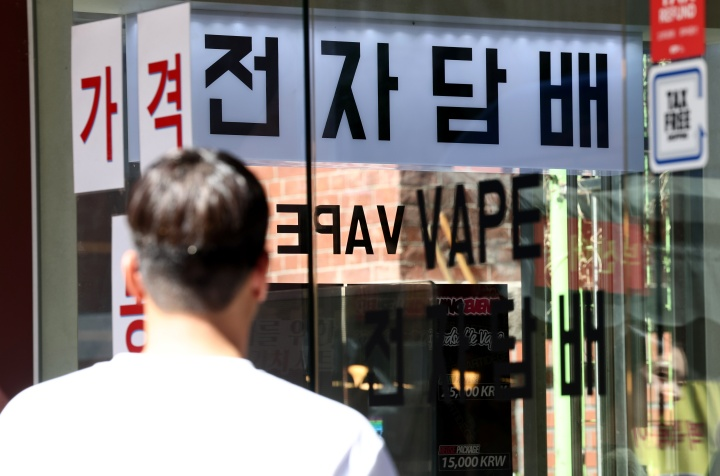
South Korea's Ministry of Gender Equality and Family said on September 14 that it plans to designate unmanned e-cigarette stores as businesses where minors are prohibited from entering or working, extending youth-access controls to a growing automated retail channel.
The proposed administrative notice is open for public comment from September 14 through October 6.
The measure targets stores where no owner or employee is permanently present and e-cigarette devices and liquids are sold through vending machines or other automated equipment. Operators would be required to verify the ages of people entering the premises and display notices stating that minors are prohibited from entering or working there.
South Korea's Youth Protection Act already prohibits the sale, rental or provision of tobacco and other designated harmful products to minors and requires sellers to verify a customer's age and identity. The latest proposal would add an access restriction at the store level for unmanned vape retailers.
Unmanned Retail Becomes the Next Compliance Point
The government said the absence of sales staff at unmanned vape stores makes it difficult to prevent minors from entering and purchasing products in real time.
Yoon Se-jin, the ministry's youth policy official, said the government would strengthen the system to make e-cigarettes less easily accessible to minors.
For unmanned retailers, the proposal would move compliance beyond the transaction itself. Operators would not only be prohibited from selling to minors but would also need mechanisms to prevent underage customers from entering the store.
That could directly affect vape retailers relying on vending machines, staffless stores and digital age-verification systems.
Synthetic Nicotine Came Under Tobacco Law in April
The proposed retail restrictions follow a broader overhaul of South Korea's e-cigarette regulatory framework earlier this year.
An amended Tobacco Business Act took effect on April 24, 2026, expanding the statutory definition of tobacco from products made from tobacco leaf to products made wholly or partly from tobacco or nicotine and intended to be smoked, sucked, inhaled as vapor, chewed or sniffed.
The change brought synthetic-nicotine vaping products, which had previously fallen outside the Tobacco Business Act because they were not derived from tobacco leaf, into the country's tobacco regulatory framework.
In explaining the amendment, the government said synthetic-nicotine e-cigarettes had previously been excluded from restrictions applying to tobacco products, including certain rules on advertising, online sales, vending machines and taxes or other statutory charges.
Under the new definition, the source of the nicotine is no longer the main dividing line. Products made wholly or partly from nicotine can fall under the Tobacco Business Act regardless of whether that nicotine is derived from tobacco or produced synthetically.
The reform therefore extended tobacco retail licensing, online-sales restrictions and youth-sales rules to a broader range of nicotine vaping products.
Nicotine-Free Liquids and Nicotine Analogues Form a New Regulatory Boundary
The expanded tobacco definition does not cover every type of vaping liquid.
Because the Tobacco Business Act continues to rely on tobacco or nicotine as a core element of its statutory definition, nicotine-free liquids and substances that are chemically distinct from nicotine do not automatically fall within the same tobacco framework.
South Korean media have reported that some unmanned and online retailers have shifted toward products marketed as nicotine-free or containing nicotine-like substances.
The government issued precautionary measures in June for some inhalable liquid products marketed as nicotine-free and has begun further assessment of substances used in those products.
One focus is 6-methylnicotine, a compound with a molecular structure similar to nicotine that has appeared in some products marketed as nicotine alternatives.
South Korea's food and drug safety authorities plan to complete a hazard assessment of 6-methylnicotine in 2026 and examine how to respond to other emerging nicotine analogues.
The National Assembly Research Service also said in its 2026 audit-issue analysis that the government should examine whether a central coordinating body is needed across relevant ministries and accelerate rules covering advertising, vending machines and product disclosure for nicotine-analogue products.
Vape Regulation Expands From Product Definition to Retail Channels
South Korea's 2026 regulatory changes are now moving along two tracks: product classification and retail access.
The April Tobacco Business Act amendment brought synthetic nicotine into the tobacco definition, addressing the previous regulatory distinction between tobacco-derived and synthetic nicotine.
The September proposal targets the point of sale, requiring unmanned vape shops to prevent minors from entering rather than relying only on age checks during a transaction.
At the same time, substances such as 6-methylnicotine are creating another regulatory boundary. Authorities are still conducting risk assessments and considering how those products should be treated under future rules.
For manufacturers, importers and retailers, compliance in South Korea is therefore expanding beyond whether a product legally qualifies as tobacco to include retail licensing, sales channels, age verification and the classification of emerging nicotine-like substances.
Follow 2Firsts for timely updates on global tobacco and nicotine regulations, market developments and industry trends.
Cover Image: South Korean Government
Disclaimer
This article is provided solely for professional research, industry discussion, and informational purposes. Any references to brands, companies, products, technologies, or policies are made for factual reporting and analytical purposes only, and do not constitute endorsement, recommendation, promotion, or advertising by 2Firsts.
Nicotine-containing products, including but not limited to cigarettes, e-cigarettes, heated tobacco products, and nicotine pouches, carry significant health risks. Readers are responsible for complying with all applicable laws and regulations in their respective jurisdictions, including age restrictions and access limitations.
The information contained in this article should not be regarded as investment, legal, medical, regulatory, or commercial advice. While 2Firsts strives to ensure the accuracy and reliability of its content, it does not assume liability for any direct or indirect loss arising from errors, omissions, inaccuracies, or reliance on the information contained herein.
This article is not intended for individuals below the legal age for accessing tobacco or nicotine-related information in their jurisdiction.
Copyright Notice
This article is either original content produced by 2Firsts or content reproduced, translated, summarized, or adapted from third-party sources with attribution where applicable. The intellectual property rights of the original content remain with 2Firsts or the respective original rights holders.
No individual or organization may copy, reproduce, distribute, republish, modify, translate, or otherwise use this content without prior authorization. Any unauthorized use may result in legal action.
For copyright-related inquiries, corrections, or removal requests, please contact: info@2firsts.com.
AI-Assisted Translation and Editing Notice
Portions of this article may have been translated, edited, or reviewed with the assistance of artificial intelligence tools to improve efficiency and readability. Due to the limitations of AI-assisted translation and editing, discrepancies, omissions, or inaccuracies may exist when compared with the original source.
Where applicable, readers are advised to refer to the original source for the most complete and accurate information. If you identify any errors or believe that any content infringes upon your rights, please contact us at info@2firsts.com, and we will review and address the matter promptly.