Key Points
- French bill No. 2726 would introduce plain packaging for all tobacco and vaping products.
- The bill covers vaping products with nicotine, without nicotine or containing nicotine analogues.
- Lawmakers argue that vape packaging can act as a promotional medium despite advertising restrictions.
- Seita’s Julia Neumaier said the industry is “wrong to reject the debate and right to reject the law.”
- Neumaier said France should prioritize access controls, age verification, online sales oversight and distribution-channel enforcement.
2Firsts
July 14, 2026
France’s debate over plain packaging for vaping products is moving from general policy discussion to specific legislative language. The French National Assembly website shows that bill No. 2726 was filed on April 28, 2026, under the title “a bill for plain packaging for all tobacco and vaping products.” It has been referred to the Social Affairs Committee.
According to Le Monde du Tabac, Julia Neumaier, general manager of Seita, Imperial Brands’ French subsidiary, said in response to the proposal that France should prioritize access control, age verification, online sales oversight and distribution-channel control rather than plain-packaging legislation for vaping products. Neumaier said the industry is “wrong to reject the debate and right to reject the law.”
Bill No. 2726 Would Cover All Tobacco and Vaping Products
National Assembly documents show that bill No. 2726 was presented by lawmakers including Nicolas Thierry and Pierre Cazeneuve and filed on April 28, 2026. Its purpose is to extend plain packaging to all tobacco and vaping products.
According to the bill’s explanatory statement, the proposal would cover all tobacco and vaping products, whether they contain nicotine, contain no nicotine or contain a nicotine analogue. The lawmakers say the measure is intended to reduce commercial appeal without undermining the accessibility of vaping products for adults or their relevance in some smoking-cessation pathways.
Article 1 would add a new provision to France’s Public Health Code requiring vaping product units, outer packaging and overwraps to be plain and standardized. The exact conditions for neutrality and standardization, including shape, size, texture, color and the display of brands and trade names, would be set by decree of the Council of State.
The bill provides for the law to enter into force on January 1, 2027, with some labeling and penalty-related provisions entering into force on June 1, 2027.
Lawmakers Say Vape Packaging Has Become an Advertising Medium
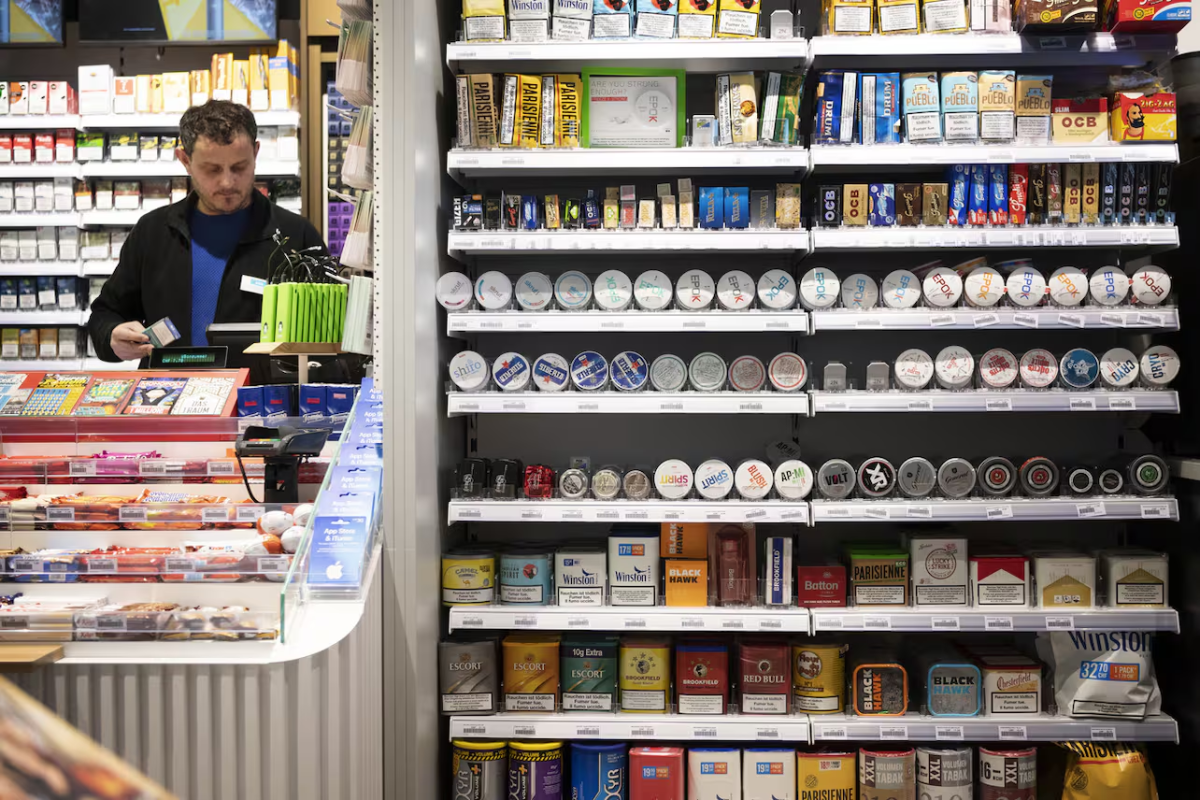
The explanatory statement says that although advertising for vaping products is restricted in France, some product packaging has become a de facto advertising medium. Lawmakers cite bright colors, elaborate graphics, flavor or sensory references and marketing codes inspired by confectionery or youth-oriented cultural products as factors that may increase appeal to young people.
The bill also refers to newer generations of e-cigarettes described as “smart vapes,” with functions similar to smartphones, including screens, recognition features, phone functions, artificial intelligence, pedometers and games. Lawmakers argue that such products add to youth-protection concerns.
The proposal is therefore not only about extending tobacco plain-packaging rules. It frames vaping packaging as a marketing entry point that may shape youth perception and consumption behavior.
Julia Neumaier Says the Problem Should Be Debated, but the Legal Path Is Wrong
Neumaier did not deny concerns over youth vaping or product marketing. Instead, she said the industry should acknowledge the issue and stop defending inappropriate practices.
According to the statement published by Le Monde du Tabac, Neumaier said the sector must face product names, visual design and packaging features that may appeal to minors, and support stricter, more targeted rules. She called for an end to product names and visual codes linked to confectionery, child-oriented imagery, gaming references or toy-like presentation.
However, she opposes plain-packaging legislation for vaping products. Her central argument is that France’s missing regulatory lever is not standardized packaging, but control over how minors actually access and purchase products.
In other words, Neumaier is not rejecting debate or regulation. She is rejecting the direct use of combustible-tobacco packaging tools to regulate vaping products.
Seita Calls for Access Controls, Not Just Packaging Rules
Seita’s alternative approach focuses mainly on sales access and channel control.
Neumaier said regulation should address whether systematic age verification occurs at purchase, whether violations lead to effective sanctions, whether online sales are adequately supervised, and whether uncontrolled distribution channels are being managed.
This creates a clear contrast with bill No. 2726. The bill focuses on reducing commercial appeal through plain packaging, while Seita argues that enforcement should focus on who can buy products, through which channels and how violators are punished.
The statement published by Le Monde du Tabac also said that strict but targeted regulation, combined with enforcement tools proportionate to the issue, would be a more effective response to youth protection and more respectful of a harm-reduction pathway.
Independent Vape Media Supports Responsible Packaging but Questions Tobacco-Style Regulation
Oneshot Media said vaping product names, visuals and packaging should be more responsible, especially where presentation may appeal to minors. It said the industry should not deny that some packaging and marketing practices are problematic.
However, the outlet questioned the direct application of tobacco-control tools to vaping. It argued that e-cigarettes contain no tobacco, involve no combustion and come from a harm-reduction pathway distinct from traditional tobacco. Therefore, it said, vaping should not be regulated simply with the same tools used to fight smoking.
Oneshot Media also said youth vaping data should be interpreted with more context, including whether experimentation involved vaping alone, dual use with tobacco, and whether products contained nicotine. The outlet argued that vaping policy requires broader cross-sector debate and field experience, rather than being reduced to a single data point or policy tool.
This position partly overlaps with Seita’s view: both acknowledge the need for more responsible packaging and marketing, while opposing the simple inclusion of vaping in a combustible-tobacco regulatory framework.
Legislative Context Strengthens the Industry Significance of Neumaier’s Position
With the text of bill No. 2726 as background, Neumaier’s statement is not merely a general industry objection to plain packaging. It is a response to a specific legislative approach.
For France and the wider European market, the central question is how vaping should be classified and regulated: as a nicotine product close enough to cigarettes to be governed by traditional tobacco-control tools, or as a product used by adult smokers as an alternative to combustible tobacco requiring a differentiated framework.
If France advances bill No. 2726, vaping product packaging design, brand identity, flavor communication, compliance labeling and channel management could all be affected. For industry participants, balancing youth protection, adult consumer information and market access will remain a key issue in France and across Europe.
Follow 2Firsts for the latest updates on global tobacco harm reduction, nicotine products and regulatory developments.
Cover Image source: Le Monde du Tabac
Disclaimer
This article is provided solely for professional research, industry discussion, and informational purposes. Any references to brands, companies, products, technologies, or policies are made for factual reporting and analytical purposes only, and do not constitute endorsement, recommendation, promotion, or advertising by 2Firsts.
Nicotine-containing products, including but not limited to cigarettes, e-cigarettes, heated tobacco products, and nicotine pouches, carry significant health risks. Readers are responsible for complying with all applicable laws and regulations in their respective jurisdictions, including age restrictions and access limitations.
The information contained in this article should not be regarded as investment, legal, medical, regulatory, or commercial advice. While 2Firsts strives to ensure the accuracy and reliability of its content, it does not assume liability for any direct or indirect loss arising from errors, omissions, inaccuracies, or reliance on the information contained herein.
This article is not intended for individuals below the legal age for accessing tobacco or nicotine-related information in their jurisdiction.
Copyright Notice
This article is either original content produced by 2Firsts or content reproduced, translated, summarized, or adapted from third-party sources with attribution where applicable. The intellectual property rights of the original content remain with 2Firsts or the respective original rights holders.
No individual or organization may copy, reproduce, distribute, republish, modify, translate, or otherwise use this content without prior authorization. Any unauthorized use may result in legal action.
For copyright-related inquiries, corrections, or removal requests, please contact: info@2firsts.com.
AI-Assisted Translation and Editing Notice
Portions of this article may have been translated, edited, or reviewed with the assistance of artificial intelligence tools to improve efficiency and readability. Due to the limitations of AI-assisted translation and editing, discrepancies, omissions, or inaccuracies may exist when compared with the original source.
Where applicable, readers are advised to refer to the original source for the most complete and accurate information. If you identify any errors or believe that any content infringes upon your rights, please contact us at info@2firsts.com, and we will review and address the matter promptly.