Key Points
- South Korea rejected the 16 trillion won estimate.
- China has not banned synthetic nicotine exports.
- Some false declarations may still exist.
- Pre-law inventory creates a tax gap.
2Firsts
June 25, 2026
According to Seoul Economic Daily’s English edition, the South Korean government has rejected allegations of about 16 trillion won in tobacco tax evasion involving Chinese synthetic-nicotine e-liquids, saying exports of Chinese synthetic nicotine are not banned. However, the government acknowledged that tobacco taxes are effectively difficult to levy on synthetic-nicotine inventory manufactured or imported before the Tobacco Business Act took effect.
Tax-Evasion Estimate Rejected
South Korea’s Ministry of Economy and Finance and Korea Customs Service explained the government’s position at a background briefing. The core issue is whether Chinese e-liquids imported as synthetic nicotine, and therefore untaxed, were in fact taxable natural-nicotine products.
Rep. Jung Jin-wook of the Democratic Party of Korea had earlier argued that 16 trillion to 20 trillion won in tobacco taxes may have been evaded from 2016 through last year. His claim rested on the premise that synthetic-nicotine e-liquids could not be manufactured or exported under China’s legal system, meaning related imports from China must have been natural nicotine.
The South Korean government rejected that premise. Yang Seung-hyuk, head of customs clearance planning at Korea Customs Service, said strict manufacturing control in China means only licensed companies can produce such products. He said South Korea had received a response indicating that no rule bans or restricts exports of synthetic nicotine to South Korea.
Yang said some false declarations may be possible, but it is not the case that the entire import volume involved natural nicotine disguised as synthetic nicotine. The government therefore viewed the 16 trillion won tax-evasion estimate as based on an overly broad premise.
The government also said the estimate is difficult to confirm. The figure was calculated on the assumption that about 300 million 30 ml bottles were sold over 10 years and that about 54,000 won in tax should have been levied per bottle. Heo Seung-cheol, the Ministry of Economy and Finance’s treasury policy director, said the government finds it difficult to confirm the 300 million bottle figure, which was calculated on the premise that all imported volume was natural nicotine disguised as synthetic nicotine.
Customs Screening Tightened
Since November 2019, Korea Customs Service has required importers of synthetic nicotine to submit trade contracts, manufacturing process charts, manufacturing licenses, export declaration certificates and material safety data sheets. It also made the natural-or-synthetic classification and nicotine content mandatory items in import declarations.
In November 2022, Korea Customs Service independently developed a component-analysis method to distinguish between natural nicotine and synthetic nicotine. Since then, the volume of false declarations has declined sharply.
The data show that South Korea caught 10 cases involving 290 liters of natural nicotine falsely declared as synthetic nicotine in 2022; 27 cases involving 163 liters in 2023; five cases involving 1.62 liters in 2024; and two cases involving 0.02 liters last year.
These figures support the government’s position that false declarations have occurred, but the detected volume does not support the claim that all imports were disguised products.
For South Korea’s e-cigarette market, synthetic-nicotine regulation has shifted from import declaration alone toward tax alignment, inventory management and post-import distribution control. The government’s rejection of the large-scale tax-evasion estimate does not end the broader synthetic-nicotine tax dispute.
Pre-Law Inventory Tax Gap
South Korea incorporated synthetic-nicotine e-liquids into the tobacco category under the Tobacco Business Act from April 24. However, the law applies only to products manufactured or imported on or after the enforcement date, leaving earlier inventory outside the new tax scope.
The government said this approach reflected concerns over retroactive legislation raised during National Assembly deliberations. Heo Seung-cheol said inventory products manufactured or imported before the enforcement date effectively cannot be taxed.
As a result, although the 16 trillion won estimate was rejected, synthetic-nicotine e-cigarette inventory accumulated before the new law remains a tax gap. For companies, inventory products, raw nicotine liquids, online sales and product labeling are likely to become key regulatory focus areas.
To prevent long-term distribution of inventory products, the government is implementing safety management standards, including requesting toxicity reviews, labeling nicotine content and recommending suspension of online sales. It also plans to examine possible regulatory evasion, including sales of raw nicotine liquid, products marketed as nicotine-free while containing nicotine, and nicotine analogues.
South Korea’s synthetic-nicotine e-cigarette regulation is moving from product definition and tax inclusion toward parallel oversight of customs clearance, inventory, online channels and alternative nicotine-like substances. Future disputes may focus less on the 16 trillion won estimate itself and more on how pre-law inventory is handled, whether evasion sales occur and whether synthetic- and natural-nicotine products face consistent tax and safety regulation.
Follow 2Firsts for the latest updates on global tobacco harm reduction, nicotine products and regulatory developments.
封面图源:Seoul Economic Daily
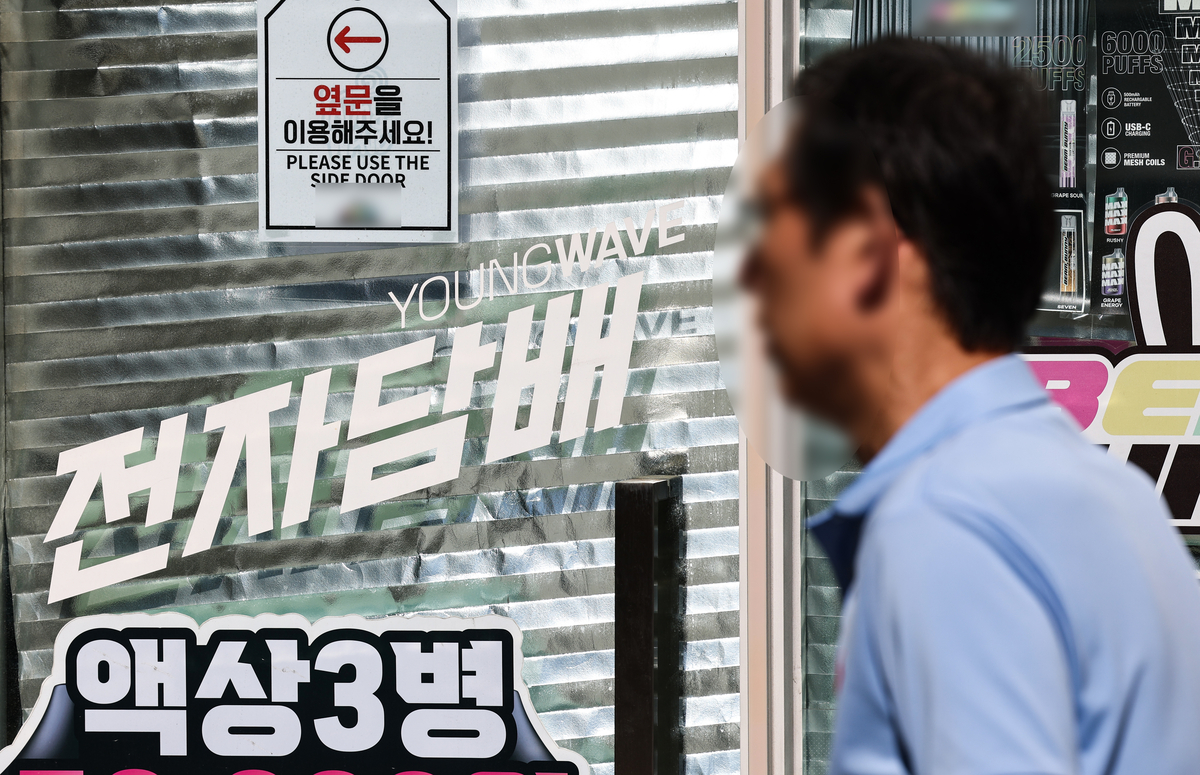
Cover image:Seoul Economic Daily