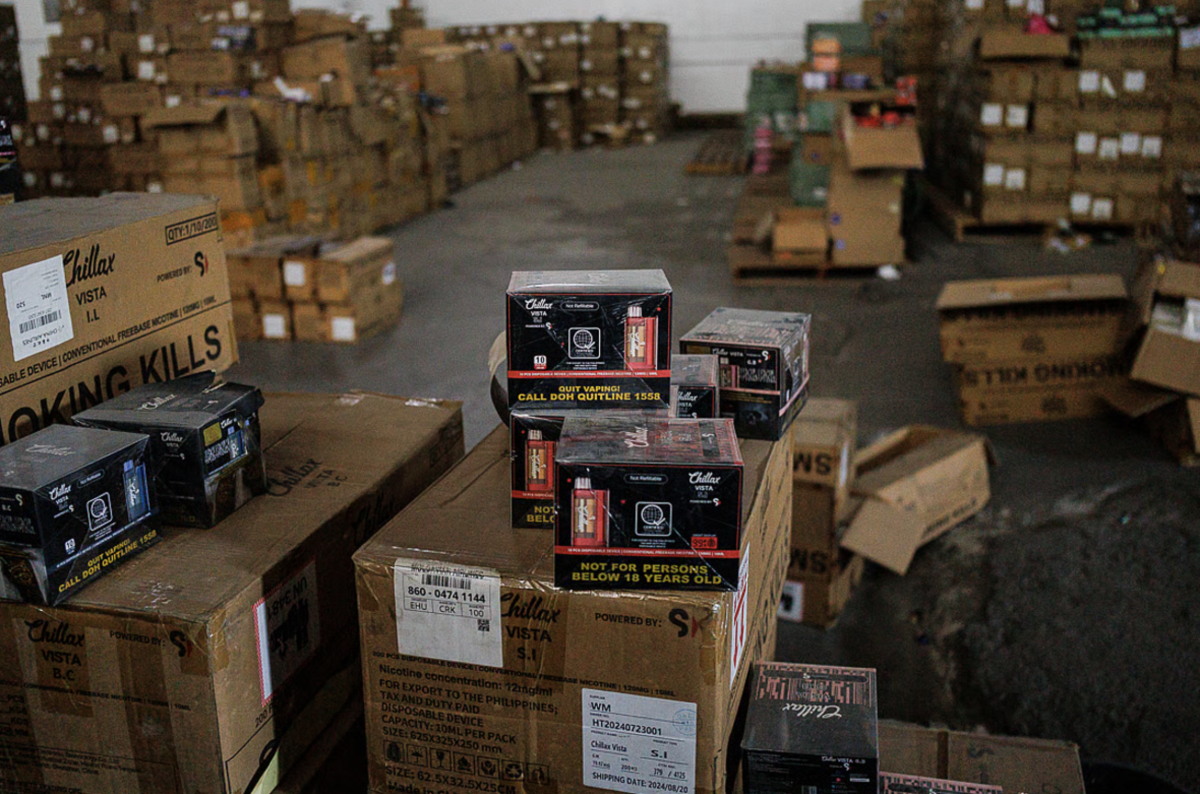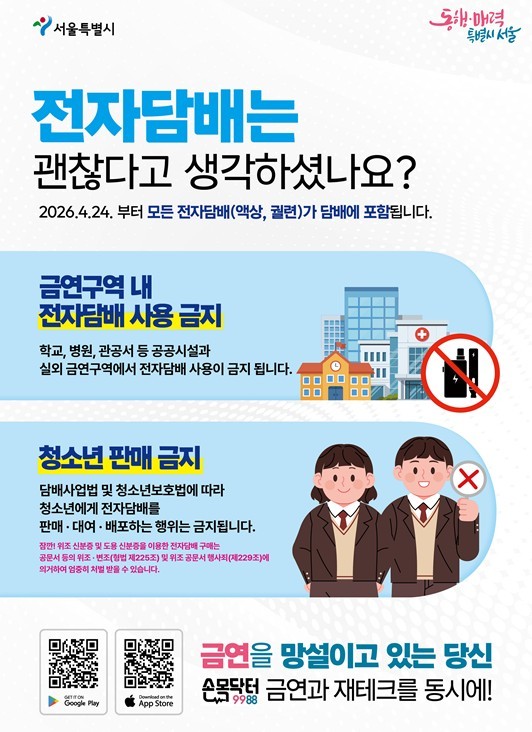
According to a report from Daum News on October 8th, due to a legislative loophole, South Korea has failed to estimate the amount of tax revenue from synthetic nicotine e-cigarettes for the past four years, which could amount to as high as 3.3895 trillion Korean won (25 billion US dollars). This is mainly because natural nicotine e-cigarettes, similar in composition, have been subject to taxation since 2021, while synthetic nicotine has been excluded.
On the 8th, Song Eon-seok, Chairman of the Planning and Finance Committee of the South Korean National Assembly, discovered through analyzing data from the Ministry of Planning and Finance, the Customs Service, the Food and Drug Safety Agency, and the e-cigarette Association, that the taxes imposed on synthetic nicotine e-cigarettes have not increased annually since 2021. The amounts are 535.8 billion Korean won (approximately $400 million), 989.1 billion Korean won (approximately $700 million), 1,124.9 billion Korean won (approximately $800 million), and 739.7 billion Korean won (approximately $550 million) as of August 2024.
Currently, e-cigarettes using synthetic nicotine are not classified as tobacco under existing laws, so there are no related tax policies. Due to this legal loophole, South Korea may become a "paradise" for international tobacco companies. British American Tobacco (BAT) is expected to launch a synthetic nicotine e-cigarette in November, with South Korea as its initial market.
In the 22nd National Congress, five tobacco industry law amendments, including the one that would regulate and tax synthetic nicotine e-cigarettes, are currently under review, although progress has been slow. Chairman Song, who is responsible for preparing the amendments, stated that the issue of regulatory and taxation gaps caused by synthetic nicotine e-cigarettes will be promptly addressed.
We welcome news tips, article submissions, interview requests, or comments on this piece.
Please contact us at info@2firsts.com, or reach out to Alan Zhao, CEO of 2Firsts, on LinkedIn
Notice
1. This article is intended solely for professional research purposes related to industry, technology, and policy. Any references to brands or products are made purely for objective description and do not constitute any form of endorsement, recommendation, or promotion by 2Firsts.
2. The use of nicotine-containing products — including, but not limited to, cigarettes, e-cigarettes, nicotine pouchand heated tobacco products — carries significant health risks. Users are responsible for complying with all applicable laws and regulations in their respective jurisdictions.
3. This article is not intended to serve as the basis for any investment decisions or financial advice. 2Firsts assumes no direct or indirect liability for any inaccuracies or errors in the content.
4. Access to this article is strictly prohibited for individuals below the legal age in their jurisdiction.
Copyright
This article is either an original work created by 2Firsts or a reproduction from third-party sources with proper attribution. All copyrights and usage rights belong to 2Firsts or the original content provider. Unauthorized reproduction, distribution, or any other form of unauthorized use by any individual or organization is strictly prohibited. Violators will be held legally accountable.
For copyright-related inquiries, please contact: info@2firsts.com
AI Assistance Disclaimer
This article may have been enhanced using AI tools to improve translation and editorial efficiency. However, due to technical limitations, inaccuracies may occur. Readers are encouraged to refer to the cited sources for the most accurate information.
We welcome any corrections or feedback. Please contact us at: info@2firsts.com