Key Points
- Belarus has rejected a blanket ban on vapes, opting for stricter regulation instead.
- Authorities plan to restrict wholesale activity and tighten licensing for imports and production.
- Officials estimate that about 77% of disposable vapes enter Belarus illegally, resulting in roughly Br130 million in lost excise revenue; based on 2Firsts’ calculation, this represents approximately 3% of Belarus’s projected 2026 fiscal deficit.
- Retail outlets will remain in place, though inspections found widespread product non-compliance.
- Lawmakers are preparing legislation in the first half of 2026, including proposals to introduce criminal liability for sales to minors.
2Firsts, March 4, 2026
By Vladislav Vorotnikov
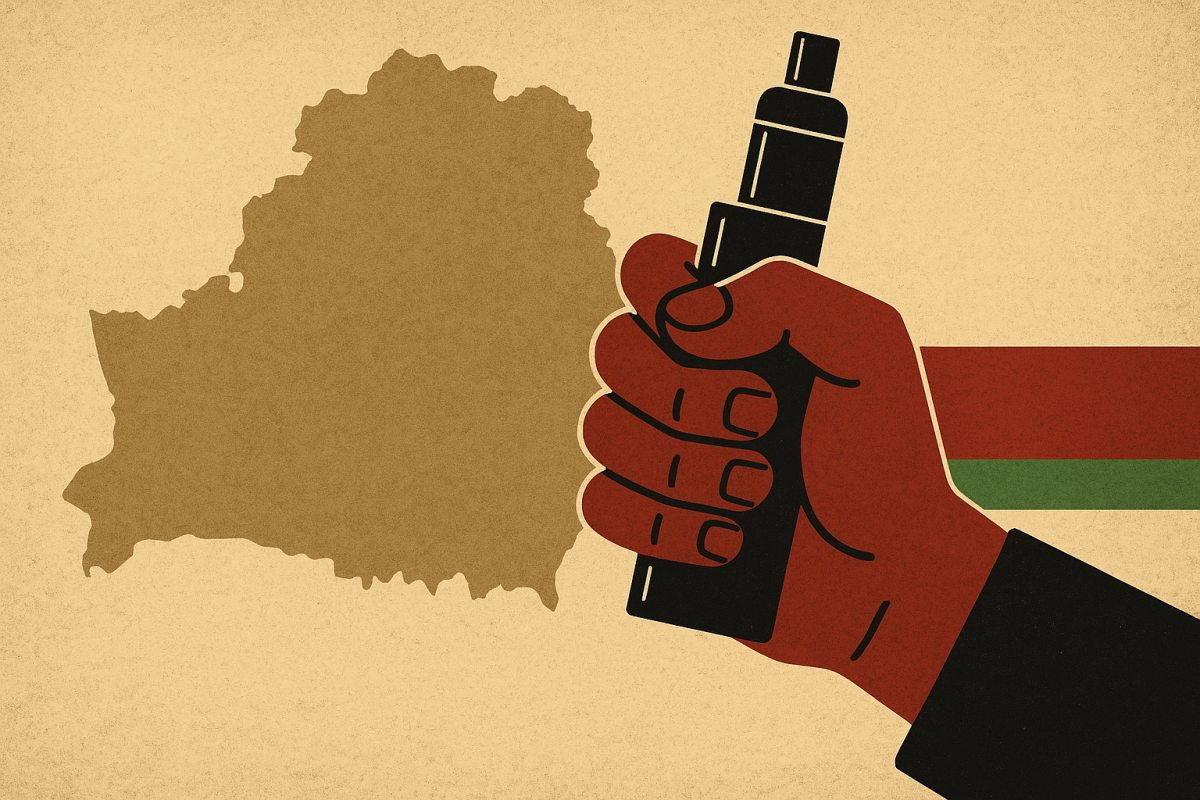
Belarus will not ban vapes after all, choosing strict regulation over prohibition. President Alexander Lukashenko warned that a blanket ban could fuel illegal imports and underground sales, leaving public health at risk and the state's coffers empty.
A February 6 government meeting in Minsk was a turning point for the future of the Belarusian vaping market. During the meeting, Belarusian President Alexander Lukashenko called on government agencies to restore order to this market and questioned the rationale behind a complete ban on electronic cigarettes.
"Calls to restrict and even completely ban their production and circulation are increasingly being heard," Lukashenko stated.
However, Lukashenko said, a ban on vapes will certainly be associated with some disadvantages. "Won't we create some kind of underground trade? We might not introduce it. Who would we be benefiting in the end?" Lukashenko said.
Answering his own question, the Belarusian President also assumed that in the case of a complete ban, vapes would still be imported from neighboring countries.
Belarus shares a common customs space with Russia and four other post-Soviet countries under the Eurasia Economic Union. Analysts note that this makes it challenging to ban certain goods allowed in one country in other member states.
Policy shift confirmed
Following the meeting, the Belarusian Antimonopoly Service (MART) said two options — a full ban or legislative tightening — had been considered, with authorities opting for the latter.
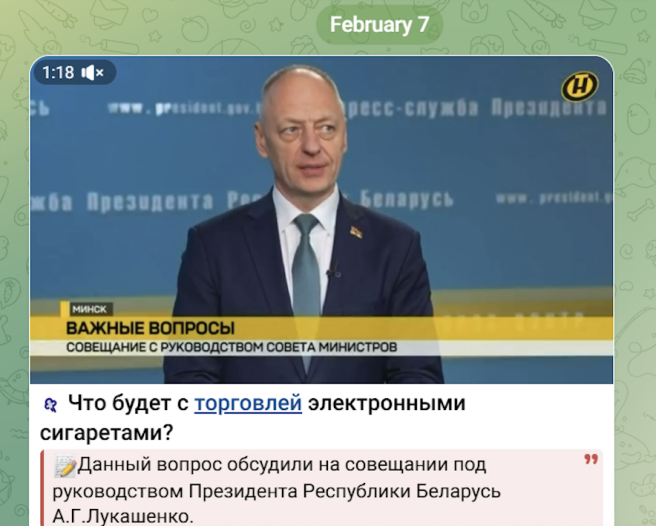
"We prohibit the general public from engaging in wholesale trade in these products," Karpovich said.
According to Karpovich, the government plans to impose a "strict filter" on imports by ensuring that only a small group of importers authorized by the state has the right to bring vapes into Belarus.
The new reform has a clear fiscal rationale. According to Belgospisheprom, about 77% of the disposable vape market enters Belarus illegally, costing the state roughly Br130 million (about $40 million) in lost excise revenue annually. Based on 2Firsts’ estimate using official 2026 budget data, Belarus’s projected fiscal deficit amounts to Br4.35 billion. On that basis, the estimated Br130 million in lost excise revenue from illicit disposable vapes represents approximately 3% of the projected shortfall.
Although the recently announced changes lack detail, the initiative closely resembles amendments proposed by Belgospisheprom in February 2025, including a ban on online sales and stricter licensing requirements for imports and production equipment.
Some lawmakers voiced support for the new rules. “Tightening licensing and oversight of the sale of vapes and smoking mixtures is a necessary and long-overdue step, as it concerns the health and safety of citizens, especially young people,” Lyudmila Sapego, member of the Council of the Republic, said. Sapego also urged caution when considering blanket bans.
"As experience shows, such measures are fraught with extremely undesirable consequences. A strict ban quickly spawns underground trade, where people will buy products without labeling, without control over their ingredients or quality, which could lead to an even greater threat to public health," Sapego noted.
Vape retail remains untouched
Belarusian officials believe this strategy should provide clear benefits: making the market fully transparent for regulators and preventing unlicensed, potentially harmful products from entering the supply chain.
At the same time, Karpovich noted that no mass reduction in retail outlets is expected:
"The President supported the government's proposals to maintain a broad list of business entities that have the right to sell goods at retail," Karpovich added.
The Belarusian government plans not to put additional pressure on retail, despite unsatisfactory results from recent inspections. In 2025, Belarusian law enforcement agencies inspected around 500 retail outlets selling vapes. Inspections found that about 70% of products tested failed to meet quality standards, raising concerns about consumer safety.
Despite the relatively soft stance on vape retail, this segment of the market should also brace for changes. Karpovich noted that penalties for retailers for selling substandard goods are insufficiently stringent and can be tightened in the future.
Currently, Belarusian businesses found in violation of existing regulations are primarily subject to relatively small fines.
Belarusian lawmakers have repeatedly stressed the need to tighten the legislation. Chairman of the Council of the Republic’s Standing Commission on Legislation, Mikhail Rusy, said a proposal had been put forward to introduce criminal liability for selling vapes to minors.
Similar legislative initiatives in the past have faced delays before formal adoption. Lawmakers said the bill reflecting Lukashenko’s recent instructions would be submitted to Parliament in the first half of 2026. In addition to the already announced measures, stricter penalties are expected for attempts to distribute unlicensed or counterfeit products.
The government's new approach aims to crack down on unlicensed imports while keeping retail outlets largely intact. Stricter licensing, tougher penalties for substandard products, and limits on wholesale trade are expected to bring order to a market long plagued by illegal sales. However, it remains to be seen whether the government will succeed in taking down the illicit trade.
For continued coverage of tobacco and nicotine policy and market developments across Russia and Eastern Europe, stay with 2Firsts.
Cover image generated by AI.
Related reports: