Key Points
- Ukraine Enforcement: Ukraine’s economic security chief called for clearer rules and stronger criminal liability after a major operation targeting illicit vape circulation across 12 regions.
- Belarus Advertising Curbs: Belarus is preparing draft legislation to ban advertising of electronic smoking systems and related devices, expanding restrictions beyond liquids and tobacco products.
- Russia’s GOST Standard: Russia has introduced a new GOST state standard for vaping products, setting limits on liquid capacity, shelf life, device design and packaging imagery.
- Black-Market Risk: Across Russia, Ukraine and Belarus, regulators face a similar challenge: tightening control while avoiding measures that could push more trade into the shadow market.
- China Model Debate: Some Russian experts argue that China’s tightly controlled but legalised vape market offers a reference point for licensing, traceability and taxation as an alternative to outright bans.
2Firsts
Eastern Europe, July 15, 2026
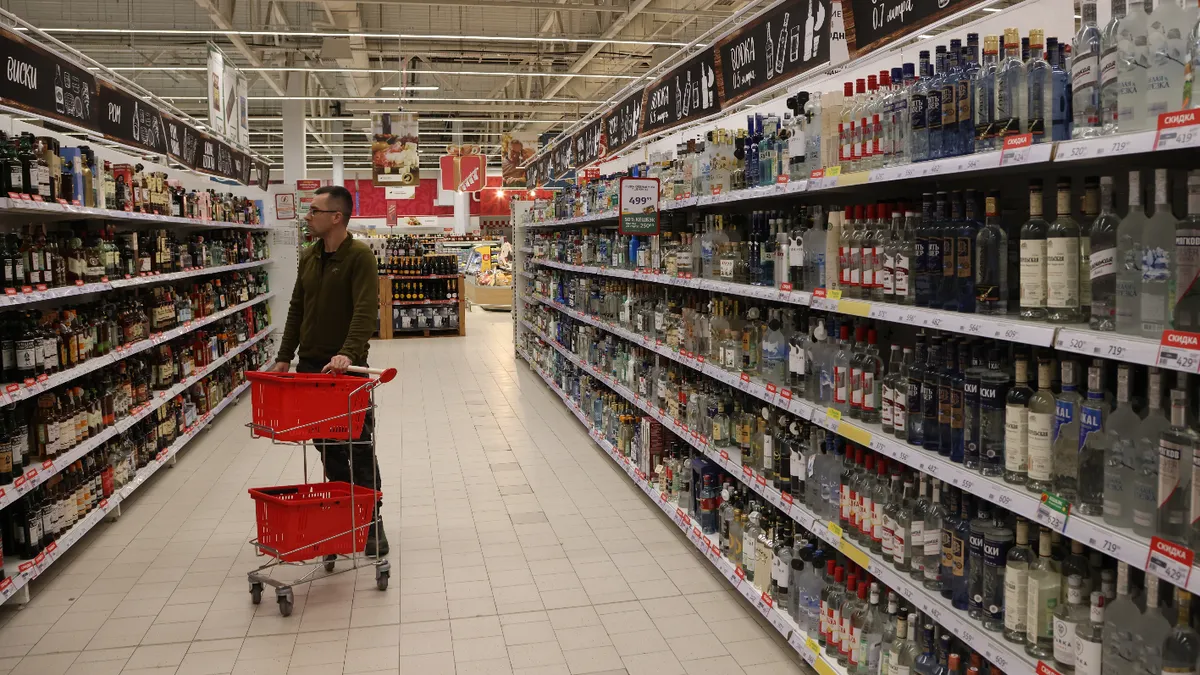
A fresh wave of regulatory initiatives targeting the vaping industry has emerged across Russia, Ukraine and Belarus in recent weeks, highlighting a regional push for tighter regulation. Russia has introduced a new state standard (GOST) for vaping products, Ukraine’s economic security chief has called for clearer rules and stronger criminal liability following major seizures of illicit vape products, while Belarusian authorities are preparing draft legislation to prohibit vape advertising.
Although the measures differ in scope and approach, they reflect a common challenge facing regulators: strengthening regulation to protect consumers and curb illegal trade without fuelling the already sizeable black market.
The Ukrainian vape market requires clear and strict legislative regulation, transparent rules, and real conditions for conducting business “in the white,” or a substantial strengthening of criminal liability for illegal production and sales, Oleksandr Tsyvynskyi, head of the Ukrainian Bureau of Economic Security, wrote in a statement on his social media channels.
His comments followed a large-scale operation by the Bureau of Economic Security together with the National Police to curb illegal vape circulation across 12 regions of Ukraine.
“Illegal workshops, counterfeit products, unlicensed sales points — we systematically identify and shut down their operations. But let’s be honest: new ones can appear as early as tomorrow, because the state is still mostly fighting the consequences rather than the causes,” Tsyvynskyi said.
He added that it is impossible to endlessly “put out fires” while the system continues to create conditions that enable the shadow market to persist.
“If you can't beat them, lead them”
Tsyvynskyi’s comments have been made amid a wider push in the post-Soviet space to take the vaping market under stricter state control, a trend that has been gaining momentum over the past year.
Across Russia, Ukraine and Belarus, officials and market participants have repeatedly pointed to a large shadow economy in the vaping market.
In all three countries, the picture is broadly similar — wide price gaps between legal and illegal products, entrenched informal cross-border trade, and enforcement systems facing similar institutional challenges. Consumer behaviour also plays a role, with price sensitivity across the region often outweighing concerns over product origin or compliance, particularly in lower-income segments of the market.
As a result, regulators in all three countries appear to be weighing a series of targeted adjustments — tightening specific rules on taxation, sales channels and advertising — against the risk that outright restrictions could push more trade into the shadow market.
As part of these efforts, Russia has introduced a new GOST state standard that sets a series of technical restrictions on vaping products, including limits on liquid capacity, shelf life and device design.
As vaping products remain legal in Russia, the regulator is relying on the soft power of GOST standards to reduce the attractiveness of such devices, Anton Shalaev, head of Rosstandart, a government agency, said on the sidelines of the St. Petersburg International Economic Forum, as quoted by the media.
Under the new rules, maximum fill volumes have been set for different types of electronic nicotine delivery systems. Cartridges are now limited to a capacity of 2 ml, while disposable devices may contain no more than 10 ml of liquid. The standard also introduces restrictions on shelf life, capping the maximum expiry period for vaping liquids at two years from the date of production.
The new GOST also introduces design restrictions, including bans on devices shaped like food products, toys or animals. Images of food, drinks, medicines, plants, people, animals and animated characters are also restricted on packaging and device bodies.
According to Shalaev, for the industry, the new rules will require tighter control over logistics, warehousing and labelling practices to ensure that expired products are not sold.
Russia had already moved earlier to restrict sales channels for nicotine delivery devices. A 2023 federal law expanded existing tobacco and nicotine rules to cover devices used for consuming nicotine-containing products, including restrictions affecting retail channels, advertising and youth protection.

Belarus is also preparing to tighten regulation of the vaping sector further by introducing a ban on advertising electronic smoking systems and related devices, according to local state news outlet Belta.
“Previously, only advertising of liquids and tobacco products was prohibited, and now, at the initiative of the Ministry of Health, the draft law provides for a ban on advertising electronic smoking systems and tobacco consumption systems,” Olga Bartman, head of the public health department at the Republican Centre for Hygiene, Epidemiology and Public Health, said.
A Chinese, not Kazakh model
Kazakhstan’s experience has become a reference point in Russian policy debate, where some experts and market participants argue that blanket bans risk expanding the illicit market.
Against this backdrop, some of the policy debate over the past year has moved toward regulatory frameworks that keep vaping products legal but place them under significantly tighter state control.
A number of Russian experts argue that regulators should look to China as a model for structuring the vaping market, pointing to its tightly controlled but legalised system as a more effective alternative to outright bans.
“In mainland China, vapes are not banned — they are legally produced, sold, imported and consumed. China took the opposite approach: not prohibition, but integrating the industry into a state monopoly,” Nikolay Vavilov, a Russia-based political analyst and China specialist, told Russian business newspaper Vedomosti.
According to Vavilov, electronic cigarettes were brought under the tobacco monopoly framework in 2021, after which the sector was placed under a centralised regulatory system. From October 2022, national standards and administrative measures have applied, including mandatory licensing for production and retail, a unified wholesale platform, product registration, flavour restrictions, and bans on online sales and sales to minors. “This is not the abolition of the market, but its strict centralised legalisation,” he explained.
Vavilov added that the Chinese approach demonstrates the effectiveness of licensing and comprehensive control rather than prohibition. “A ban pushes turnover into the shadows and wipes out the tax base. The Chinese model keeps the market legal, but fully traceable and taxable,” he said.
Despite this shift toward more incremental regulation, blanket bans on vaping products are still not entirely off the table in the region.
Sergei Leonov, head of the State Duma Committee on Health Protection, said a law signed by President Vladimir Putin on June 26 allowing Russian regions to prohibit retail sales of vapes and vaping liquids between 1 March 2027 and 1 March 2032 could eventually lead to a nationwide ban.
“Five years are given for this experiment. I am confident it will be successful. Most regions will follow this path, and we will eventually reach what the State Duma has been talking about for almost seven years — a complete ban on vapes in our country,” Leonov said.
For more coverage of Russia and Eastern Europe’s emerging tobacco and nicotine markets, follow 2Firsts.
Cover image generated by AI.

Disclaimer
This article is provided solely for professional research, industry discussion, and informational purposes. Any references to brands, companies, products, technologies, or policies are made for factual reporting and analytical purposes only, and do not constitute endorsement, recommendation, promotion, or advertising by 2Firsts.
Nicotine-containing products, including but not limited to cigarettes, e-cigarettes, heated tobacco products, and nicotine pouches, carry significant health risks. Readers are responsible for complying with all applicable laws and regulations in their respective jurisdictions, including age restrictions and access limitations.
The information contained in this article should not be regarded as investment, legal, medical, regulatory, or commercial advice. While 2Firsts strives to ensure the accuracy and reliability of its content, it does not assume liability for any direct or indirect loss arising from errors, omissions, inaccuracies, or reliance on the information contained herein.
This article is not intended for individuals below the legal age for accessing tobacco or nicotine-related information in their jurisdiction.
Copyright Notice
This article is either original content produced by 2Firsts or content reproduced, translated, summarized, or adapted from third-party sources with attribution where applicable. The intellectual property rights of the original content remain with 2Firsts or the respective original rights holders.
No individual or organization may copy, reproduce, distribute, republish, modify, translate, or otherwise use this content without prior authorization. Any unauthorized use may result in legal action.
For copyright-related inquiries, corrections, or removal requests, please contact: info@2firsts.com.
AI-Assisted Translation and Editing Notice
Portions of this article may have been translated, edited, or reviewed with the assistance of artificial intelligence tools to improve efficiency and readability. Due to the limitations of AI-assisted translation and editing, discrepancies, omissions, or inaccuracies may exist when compared with the original source.
Where applicable, readers are advised to refer to the original source for the most complete and accurate information. If you identify any errors or believe that any content infringes upon your rights, please contact us at info@2firsts.com, and we will review and address the matter promptly.