Key Points
● Draft content: Spain plans to ban all non-tobacco vape flavors and cap nicotine pouches at 0.99 mg per pouch, alongside stricter plain packaging rules.
● EU review: Submitted to the European Commission’s TRIS system in January 2025. By April, the Commission and seven member states (Italy, Sweden, Greece, Romania, Hungary, Czechia, and Croatia) filed objections, arguing the draft violates the EU principle of free movement of goods.
● Industry response: PMI, BAT and other multinationals froze investments or delayed launches in Spain, warning that the pouch cap amounts to a “de facto ban.” Companies caution the measures will drive consumers back to cigarettes and fuel illicit trade.
● Regulatory criticism: Spain’s competition authority (CNMC) said the draft lacks scientific justification, is disproportionate, and risks clashing with the forthcoming revision of the EU Tobacco Products Directive.
● Public health view: The Health Ministry argues the measures protect youth and align with Europe’s Beating Cancer Plan. Critics counter that this contrasts with Sweden’s success in cutting smoking rates through alternative products.
● Beyond flavors: The dispute now extends beyond tobacco control, posing a test of the EU single market’s fundamental freedoms. If Madrid refuses amendments, legal action at the EU level may follow.
2Firsts, August 27, 2025-Over the past eight months, a tobacco control proposal from Spain’s Ministry of Health has ignited political and industry turbulence across Europe. Initially framed as a measure to protect youth by restricting e-cigarettes and nicotine pouches, the draft has escalated into a broader debate. Observers say the controversy has now become a test of the EU’s principle of free movement of goods within the single market.
The dispute rests on three levels:
● Tobacco control policy: Spain insists the draft is necessary to protect public health and align with the EU’s Beating Cancer Plan.
● Legal conflict within the EU: Several member states and the Commission argue the draft breaches Article 34 of the Treaty on the Functioning of the EU, lacks proportionality, and creates trade barriers.
● Challenge to market freedom: The controversy has moved beyond tobacco control, becoming a clash between national public health sovereignty and the EU’s single market rules.
A Tradition of Tobacco Control Meets a New Battlefield
Spain is no stranger to tobacco regulation. In 2005, it introduced the Anti-Smoking Law (Ley 28/2005), banning smoking in most public places, a milestone in Europe’s tobacco control history. In 2010, the law tightened further, covering bars and restaurants—seen as a turning point for public health.
Yet smoking rates have barely budged in the past decade. Reports say about 25% of Spanish adults still smoked in 2024. By contrast, Sweden is reported to be the EU’s first “smoke-free country,” with smoking prevalence below 5%, largely attributed to the use of snus and nicotine pouches.
In 2024, Spain unveiled a new National Tobacco Control Plan, pledging to “adapt to market realities.” Officials argued that new products—such as e-cigarettes, heated tobacco, and nicotine pouches—were drawing in young users in increasingly subtle ways and needed strict regulation.
The Draft: Striking at Flavors and Nicotine Pouches
In December 2024, the Health Ministry released its draft decree. Key measures included:
● Flavor ban on e-cigarettes: Only tobacco flavors allowed, all others prohibited.
● Nicotine pouch cap: Maximum of 0.99 mg nicotine per pouch.
● Plain packaging: Cigarettes and roll-your-own tobacco required to use standardized, logo-free packaging.
● Expanded scope: Nicotine pouches and herbal heated products regulated for the first time.
Health Minister Mónica García said the rules would “protect young people from addictive products and align with Europe’s Beating Cancer Plan.”
But the details quickly drew alarm. The 0.99 mg limit on nicotine pouches would effectively outlaw the category. On the European market, even the lowest-dose pouches contain 4 mg, while mainstream products in Sweden, Czechia, and Italy range between 12–20 mg.
Domestic Pushback: Investment Freeze and Regulatory Scrutiny
The draft triggered swift reactions from multinationals.
Philip Morris International (PMI): In a February interview, Marco Hannappel, vice president for Southern Europe, said the company had shelved plans to launch ZYN pouches in Spain due to regulatory uncertainty. “We cannot push products into a market where the law might shut them down immediately.” PMI stressed it had already secured FDA authorization for ZYN in the U.S. and launched in Italy, Greece and Czechia, but in Spain, “that path is blocked.”
British American Tobacco (BAT): Linked its investment plans directly to policy. In an interview, BAT’s general manager for Spain and Portugal said the firm was weighing a €500 million investment to build a plant in Barcelona. But if the decree passes unchanged, investment will likely go to Croatia or Czechia. “You cannot expect us to build in a country that bans our core categories,” he said.
CNMC (Spain’s National Commission on Markets and Competition): In an April report, the regulator said the draft “lacks scientific justification,” particularly for flavor bans and nicotine limits, and had not evaluated less restrictive alternatives. CNMC warned the measures may breach proportionality and harm competition, recommending education and youth protections as more effective tools.
Brussels Pushback: TRIS Review and Member State Objections
Under EU rules, member states must notify draft laws affecting the single market through the TRIS system for review by the European Commission and peers.
Spain filed its draft on January 24, 2025. Three months later, criticism poured in.
● May 12: Italy, Sweden, Greece, Romania, and Czechia filed “reasoned opinions.”
● Core arguments:
· Sweden: The 0.99 mg cap amounts to a “de facto ban.” Pouches are a harm reduction tool.
· Italy: The measure conflicts with single market freedoms and would create trade barriers.
· Greece: The decree is disproportionate and lacks a clear public health justification.
· Romania: No evidence of significant health risk; alternatives not considered.
· Czechia: Spain’s limits far stricter than EU norms, undermining harm reduction.
The Commission also raised concerns, calling definitions “unclear.” Critics flagged loopholes in Spain’s plan to restrict unsafe e-liquid ingredients only if they appear on an existing EU chemicals list, potentially letting other harmful substances slip through. In a letter to Spain’s foreign minister, the Commission’s health chief warned member states must not limit restrictions to narrow categories, but ensure all harmful ingredients are prohibited—except nicotine itself.
By August, opposition expanded to seven countries, with Hungary and Croatia joining. DG SANTE Director-General Sandra Gallina cautioned that the decree’s design could backfire, creating regulatory gaps and harming public health.
War of Words: Ideology or Public Health?
The proposal also set off a heated debate.
Industry representatives criticized the draft. Patrik Strömer, secretary general of the Swedish Snus Manufacturers Association, called it “ideological posturing, not science-based public health policy.” He argued Spain wrongly likened tobacco use to an “epidemic.” “Tobacco is not an infectious disease. Across the OECD, nicotine use is actually falling,” he said.
Industry groups also pointed to data:
● Sigma Dos report: 62.6% of Spanish vapers prefer fruit flavors, 23.3% prefer sweet flavors.
● Tholos Foundation study: After flavor bans in Estonia, Denmark and California, 58%, 80%, and 89% of consumers respectively still obtained flavored products on the black market.
Member states noted Spain provided no evidence of effectiveness for the flavor ban and failed to conduct a proportionality assessment. The Commission had even asked Madrid to prepare a competitive analysis of the law’s potential impact, but no such study was produced. This omission, critics say, raises further doubts about the decree’s scientific and regulatory grounding.
Still, public health advocates backed the draft. They argued flavor bans are a “first line of defense” against youth uptake, even if they cause short-term market disruption.
Potential Fallout: Industry Outlook and Investment Confidence
Economy: Analysts at AFI estimated the ban could slash the vaping industry’s added value by 83%, from €263 million to €54 million. Employment could shrink from 4,630 full-time jobs to 810, with long-term losses topping 8,000 positions.
Investment: Spain had been seen as a potential hub for next-generation products. BAT’s Barcelona project was a case in point. But if the decree takes effect, investment will likely shift to “friendlier” markets such as Croatia or Czechia.
Society: Critics warn flavor bans could fuel black market growth and drive some users back to cigarettes. Supporters argue the measures will deter youth from taking their first puff.
Stakeholder submissions also flagged risks of regulatory inconsistency. Under current EU rules, e-cigarette devices remain capped at 20 mg/ml nicotine and subject to labeling under the Tobacco Products Directive (TPD). But Spain’s draft would exempt refill bottles, leaving them without caps or labeling requirements. Observers warn this could flood the Spanish market with products illegal elsewhere in the EU, undermining regulatory coherence.
Beyond Flavors: A Test for EU Market Freedoms
Reports say Spain has so far declined to amend the draft, insisting it is “necessary to protect future generations.” But if Madrid holds firm, the Commission could launch infringement proceedings, or member states could challenge it directly before the European Court of Justice.
This is no longer just a fight over tobacco control. Spain’s case could set a precedent, testing how the EU balances national public health sovereignty against single market freedoms.
Observers note it is also the first major test of the EU’s newly launched Single Market Strategy. Normally, member states adjust drafts after receiving Commission or peer feedback to safeguard market integrity. Spain’s refusal has been read by some as a challenge to the Commission’s authority as guardian of the single market.
As discussions continue on revising the EU Tobacco Products Directive, the stakes extend far beyond nicotine pouches and e-cigarettes. The outcome will determine whether the EU can maintain consistent rules and protect the integrity of its internal market. In other words, the Spanish dispute has already moved beyond tobacco—it has become a defining test of the EU’s commitment to free movement of goods.
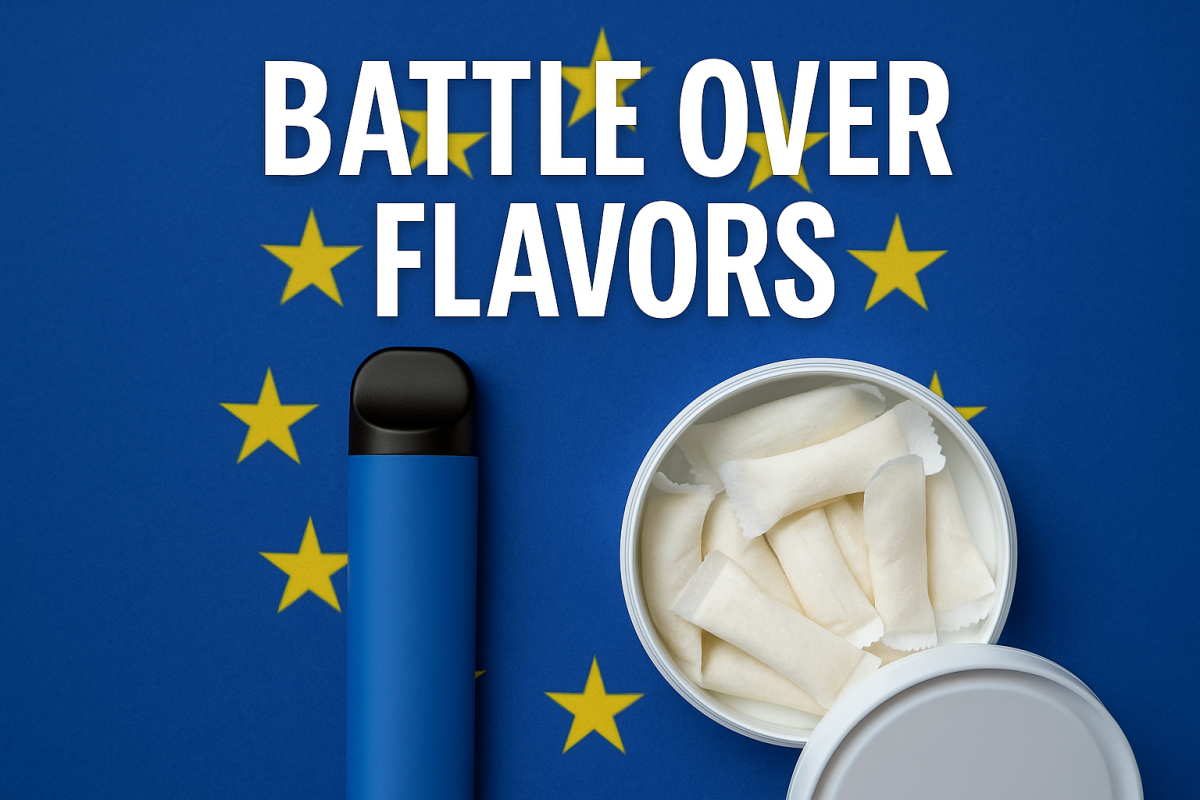
Cover image generated by ChatGPT