Thai Parliament Considers Strict Regulations on E-Cigarettes Legislation

Dec.27.2024
Thai Parliament Considers Strict Regulations on E-Cigarettes Legislation
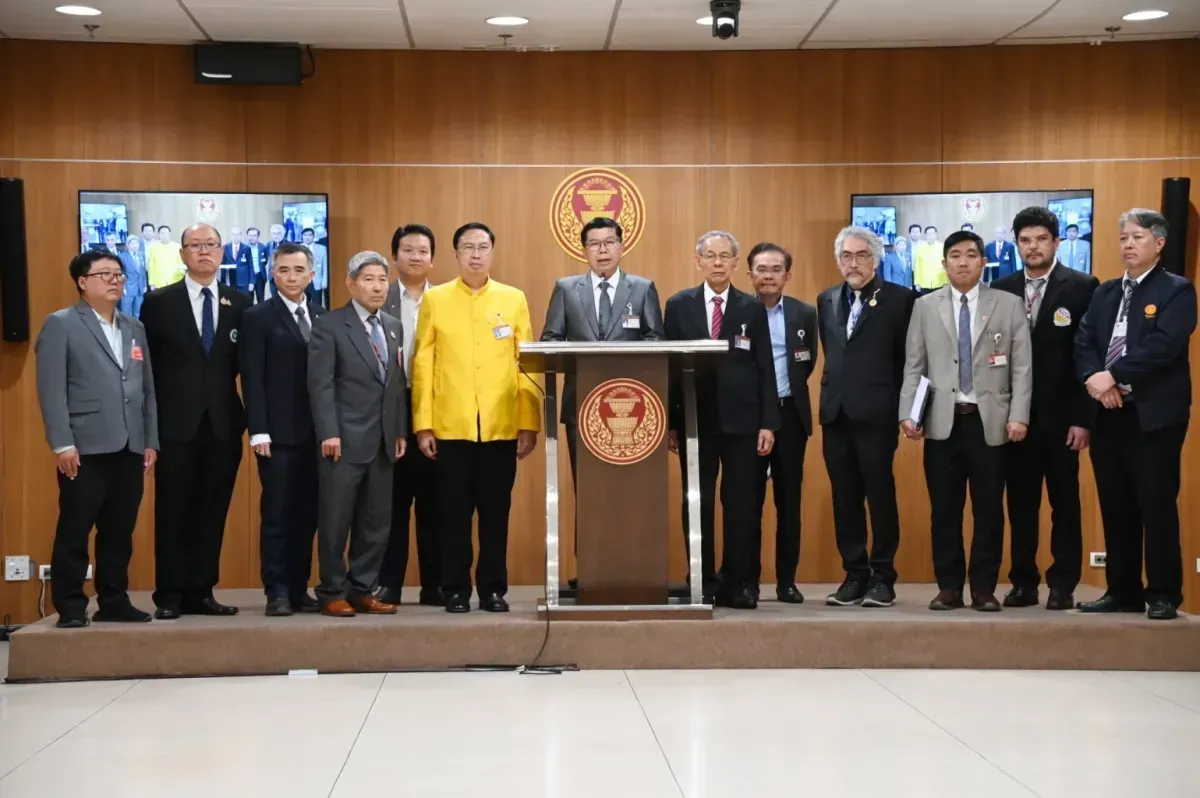
Thai party MP and e-cigarette committee chair Niyom Wiwattanaditkul presented a report proposing strict e-cigarette regulations and ban.

According to Bangkokbiz News on December 26th, Thailand's Palang Pracharath Party MP and Chairman of the special committee on e-cigarette legislation and regulation, Niyom Wiwattanaditkul, along with committee members, presented the research and deliberation results on e-cigarette laws and regulations.


The lawmaker pointed out that the committee began its work on September 27, 2023, and after thorough deliberation, finally completed its report on December 26. Due to the large amount of data and information involved, the deliberation process took a long time. In order to ensure a comprehensive review, the committee specifically established several subcommittees to study ways to improve and enhance e-cigarette regulation laws, and put forward three major recommendations.


E-cigarettes and all heated tobacco products should be considered illegal goods. It is recommended to amend the 2017 Customs Act to explicitly prohibit the import of e-cigarettes into Thailand and stipulate that possessing e-cigarettes is illegal. Furthermore, it is suggested to amend the 2014 Ministry of Commerce announcement to ban the import of e-cigarettes, hookahs, and electronic hookahs, and ensure clarity in the law by defining tariffs. E-cigarette products should be brought under current legal regulations. Amending the 2017 Customs Act and the 2014 Ministry of Commerce announcement will ensure strict control over e-cigarettes and related products. It is also recommended to prohibit the production, sale, and use of e-cigarettes and their liquid supplements in accordance with the Product Safety Commission Order 24/2567 of 2017. A comprehensive law banning e-cigarettes completely should be proposed. A new law should be enacted to illegalize e-cigarettes, covering all aspects of production, import, sale, advertising, marketing, possession, and use.


The committee also recommended utilizing the 2017 Tobacco Control Act to regulate the importation, advertising, and use of e-cigarettes, while also incorporating the Industrial Product Standards Act to control the quality of e-cigarette devices and non-nicotine components.


Neymar concluded that the committee's report is ready to be submitted to Congress, but Congress will only vote on the committee's recommendations, not directly on the content of the report. These recommendations will be presented to the Cabinet for further implementation.


We welcome news tips, article submissions, interview requests, or comments on this piece.

Please contact us at info@2firsts.com, or reach out to Alan Zhao, CEO of 2Firsts, on LinkedIn


Notice

1.  This article is intended solely for professional research purposes related to industry, technology, and policy. Any references to brands or products are made purely for objective description and do not constitute any form of endorsement, recommendation, or promotion by 2Firsts.

2.  The use of nicotine-containing products — including, but not limited to, cigarettes, e-cigarettes, nicotine pouchand heated tobacco products — carries significant health risks. Users are responsible for complying with all applicable laws and regulations in their respective jurisdictions.

3.  This article is not intended to serve as the basis for any investment decisions or financial advice. 2Firsts assumes no direct or indirect liability for any inaccuracies or errors in the content.

4.  Access to this article is strictly prohibited for individuals below the legal age in their jurisdiction.


Copyright


This article is either an original work created by 2Firsts or a reproduction from third-party sources with proper attribution. All copyrights and usage rights belong to 2Firsts or the original content provider. Unauthorized reproduction, distribution, or any other form of unauthorized use by any individual or organization is strictly prohibited. Violators will be held legally accountable.

For copyright-related inquiries, please contact: info@2firsts.com


AI Assistance Disclaimer


This article may have been enhanced using AI tools to improve translation and editorial efficiency. However, due to technical limitations, inaccuracies may occur. Readers are encouraged to refer to the cited sources for the most accurate information.

We welcome any corrections or feedback. Please contact us at: info@2firsts.com

Pennsylvania Lists 163 Vape Products Eligible for Sale, Including Vuse and JUUL; Previously Pending Chinese Brands Such as OXBAR Remain Absent, While Unlisted Products Including Geek Bar Face Enforcement From October 19
Pennsylvania begins enforcing its electronic nicotine delivery system (ENDS) directory restrictions on October 19, 2026. The October 18 directory contained 163 product records from seven manufacturers, including Vuse, JUUL, NJOY, Logic and Naked 100. Geek Bar, RAZ and Lost Mary were absent. BAT, Altria, Japan Tobacco and JUUL collectively accounted for 112 records, or 68.7%, while Imperial Brands' blu had no listings. The directory included 15 disposable vape records, 40 bottled e-liquids and 10 products labeled 0mg, but no open-system refillable devices. Twenty-two manufacturer certifications remained under review. Four Logic models corresponding to Smoore's pending records were listed under the brand owner, while LYCO, OXBAR and Boulder/Rock had no approved directory entries.
Regulations
Oct.19
Kumulus Vape2026 H1 Revenue Falls 8.3% but Profit Rises 24% as B2B Weakens and Consumer Channels Grow
French vaping company Kumulus Vape reported first-half 2026 revenue of €25.5 million, down 8.3% year over year, as its core B2B distribution business fell 11% to €21.6 million. B2C and store-network revenue rose 5.6% and 17.8%, respectively. Commercial margin increased to 26.3% from 21.7%, while net profit rose 24.1% to €0.8 million. The company attributed the profitability improvement to catalog optimization, logistics restructuring and the ramp-up of Labster, its in-house production unit for proprietary brands.
Market
Sep.17 by 2Firsts Perspectives
EU Tobacco Tax Reform Stalls as Malta Withholds Support Despite Backing From 26 States
EU finance ministers failed to reach agreement on tobacco excise reform at the November 9, 2026 Economic and Financial Affairs Council (ECOFIN) meeting in Brussels. The Irish Council presidency's compromise secured support from 26 of the EU's 27 member states, but Malta withheld consent, preventing the Council from reaching a general approach requiring unanimity. The reform would raise minimum taxes on conventional tobacco and bring e-cigarette liquids, heated tobacco and nicotine pouches into a common EU minimum excise framework. Finland and Estonia accepted further concessions during the meeting, while the presidency proposed separating the inclusion of nicotine pouches in the framework from setting their precise minimum tax rates. Another compromise would allow ten qualifying member states until 2036 to meet certain tobacco excise requirements. Ireland intends to continue negotiations in December.
Regulations
Nov.11
How Investors Are Repricing the Global Tobacco Industry as Nicotine Markets Shift
How are investors reassessing the global tobacco industry as nicotine markets evolve? In an interview with 2Firsts, Charlie Chen, Head of Research at CCB International Securities, forecasts annual growth of 30–50% for nicotine pouches, outpacing vaping and heated tobacco. He examines how regulatory enforcement, shifting market shares and new business models are influencing company valuations. The report also explores differences between multinational tobacco groups and Chinese companies, drawing on insights from the New Approaches Summit on profitability, investment strategies and industry consolidation.
Nov.11
Hawaii's Largest Independent Vape Retailer and Wholesaler Volcano to Close All 13 Stores Ahead of 2027 Sales Rules
Hawaii-based vaping company Volcano eCigs plans to close all 13 physical retail stores on December 31, 2026, affecting approximately 56 employees. Volcano operates retail, wholesale, proprietary product and online sales businesses and has previously described itself in legislative testimony as Hawaii's largest independent vape retailer and wholesaler. Its operating company, Jocor Enterprises LLC, filed a formal closure notice on November 4, citing changes in the state's regulatory environment. From January 1, 2027, Hawaii will restrict the sale, acquisition and possession of vaping devices and e-liquids not listed in a state product directory, alongside separate restrictions on certain disposable devices. The closure concerns Volcano's physical retail network; the company has not announced the termination of wholesale or online operations.
Market
Nov.09
North Carolina Tightens Vape Product Directory Enforcement, Expands State and Local Powers as Violators Face Fines, Product Seizures and License Suspension or Revocation
North Carolina has expanded enforcement of its vapor product directory rules, authorizing more state and local law enforcement participation and establishing a task force led by the State Bureau of Investigation. The legislation requires at least one unannounced compliance inspection annually for retailers, distributors and wholesalers handling covered products. Penalties effective October 1, 2026, include civil fines of $500–$750 for a first violation and $1,000–$1,500 for repeated violations within 12 months, along with potential license suspension or revocation. Manufacturers may face penalties of $10,000 per unlisted product. The measures strengthen the product directory system established in 2024.
Regulations
Oct.28