Key Points
- The UK Vaping Products Duty and Vaping Duty Stamps Scheme will start on October 1, 2026.
- The flat duty rate is £2.20 per 10ml, approximately $2.97, and applies to both nicotine and nicotine-free vaping liquids.
- Eligible unstamped stock manufactured or imported before October 1 can continue to be sold through March 31, 2027.
- From April 1, 2027, all vaping products outside duty suspension must carry a valid stamp; the Treasury expects the duty to raise more than £550 million annually by 2030-31.
2Firsts
September 2, 2026
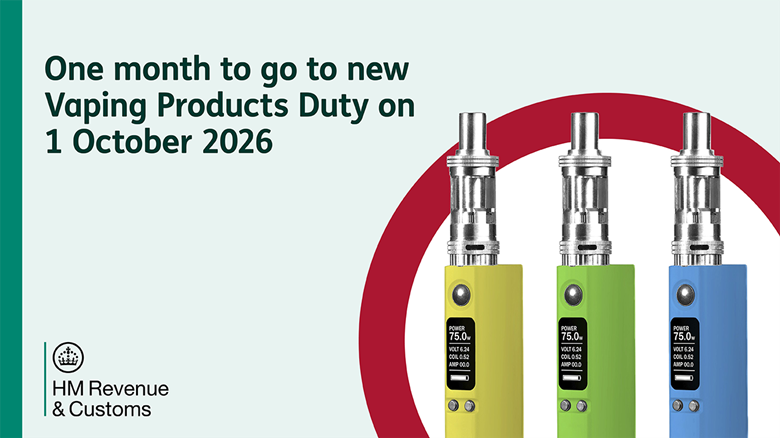
According to HM Revenue & Customs (HMRC) on September 1, 2026, the UK’s Vaping Products Duty and Vaping Duty Stamps Scheme are now one month away from implementation. HMRC is urging manufacturers, importers, warehousekeepers and other affected businesses to complete the required registrations, approvals and duty-stamp preparations before the rules take effect on October 1.
Flat Duty Applies to All Vaping Liquids
Vaping Products Duty will be charged according to liquid volume rather than nicotine concentration.
The rate is £0.22 per millilitre, equivalent to £2.20 per 10ml.
That means a 2ml prefilled pod carries £0.44 in Vaping Products Duty, while a 10ml refill bottle carries £2.20.
The duty applies whether or not the liquid contains nicotine and covers vaping liquid contained in bottles, cartridges, pods and other relevant vaping products.
HMRC said whether the cost of the duty is passed on to other businesses in the supply chain or ultimately to consumers is a commercial decision.
The £2.20 duty should therefore not be interpreted as an automatic £2.20 increase in the retail price of a 10ml product.
Manufacturers and Importers Face New Approval Requirements
From October 1, businesses manufacturing vaping products in the UK must hold the relevant HMRC approval.
UK representatives of overseas manufacturers and operators storing vaping products under duty suspension may also require approval.
For vaping products manufactured domestically, the duty generally becomes payable at manufacture unless the goods immediately enter duty suspension.
For imports, Vaping Products Duty will normally be paid when the goods are released through customs, unless they enter an approved duty-suspension arrangement such as a customs or excise warehouse.
HMRC warned that businesses lacking the required approval from October 1 will not be able to lawfully manufacture vaping products in the UK and could face operational disruption as well as civil or criminal sanctions.
Digital Duty Stamps Add Supply-Chain Traceability
The introduction of a dedicated vaping duty stamp is the second major element of the new regime.
Stamps must be attached to the outermost retail packaging in a way that means opening the packaging damages either the packaging or the stamp.
Digital stamps contain a scannable code that can be used for authentication and supply-chain tracing.
Approved operators affixing digital stamps must activate them and record prescribed data, including operator identity and product information such as brand, type, volume, flavour and nicotine concentration.
Scanning requirements also apply at defined points in the supply chain, including stamp application, certain movements under duty suspension and final release for consumption.
The system therefore goes beyond tax collection by establishing a new digital identification and traceability infrastructure for vaping products sold in the UK.
Transitional Stamps Available Through End of 2026
The government has introduced a transitional stamp arrangement following industry feedback.
Approved manufacturers, UK representatives of overseas manufacturers and warehousekeepers can buy transitional stamps until November 30, 2026, and affix them through December 31.
Digital stamps became available on September 1 and can already be applied by businesses approved under the scheme.
However, products carrying either transitional or digital stamps cannot be released onto the UK market before October 1.
From January 1, 2027, only digital duty stamps may be newly affixed.
Six-Month Sell-Through Period for Existing Unstamped Stock
Retailers and wholesalers will receive a six-month transition period for qualifying existing inventory.
Vaping products manufactured or imported before October 1, 2026 can continue to be stored and sold without a stamp through March 31, 2027.
Products manufactured or imported on or after October 1 and released onto the UK market, however, will be subject to the new stamping requirements.
During the transition, retailers and wholesalers selling unstamped inventory are expected to keep evidence showing that the products qualify for the grace period, including invoices, delivery records and supplier information.
Businesses that only wholesale or retail duty-paid vaping products do not need to obtain approval under the Vaping Products Duty or Vaping Duty Stamps Scheme, but they are expected to check that the products they buy and sell are compliant.
All Products Must Carry Stamps From April 1, 2027
April 1, 2027 marks the final transition point.
From that date, all vaping products outside duty suspension in the UK must carry a valid vaping duty stamp.
HMRC says businesses must no longer sell unstamped vaping products after that deadline.
Remaining unstamped stock will need to be sold before the deadline, returned to suppliers, exported, destroyed or otherwise lawfully disposed of.
Non-compliant goods may be seized, and businesses could face penalties. Serious cases may lead to criminal investigation, with convictions potentially resulting in an unlimited fine, imprisonment or both.
Treasury Expects More Than £550 Million in Annual Revenue
Vaping Products Duty was first announced in the UK’s Autumn Budget 2024.
The government positions the measure as part of its broader tobacco and nicotine policy, aimed at tackling youth vaping, improving public health and maintaining a tax differential between vaping products and combustible tobacco.
The government also continues to state that vaping is less harmful than smoking and can help adult smokers quit, while saying children and non-smokers should never vape.
Treasury analysis estimates that Vaping Products Duty will raise more than £550 million, approximately $743 million, a year by the 2030-31 financial year.
With implementation now one month away, the impact on the UK vaping industry will extend beyond the new excise burden to manufacturing approvals, imports, warehousing, packaging, digital tracking and retail inventory management across the supply chain.
Follow 2Firsts for timely updates on global vaping taxation, product regulation and supply-chain compliance.
Cover Image: HM Revenue & CustomsSources
Disclaimer
This article is provided solely for professional research, industry discussion, and informational purposes. Any references to brands, companies, products, technologies, or policies are made for factual reporting and analytical purposes only, and do not constitute endorsement, recommendation, promotion, or advertising by 2Firsts.
Nicotine-containing products, including but not limited to cigarettes, e-cigarettes, heated tobacco products, and nicotine pouches, carry significant health risks. Readers are responsible for complying with all applicable laws and regulations in their respective jurisdictions, including age restrictions and access limitations.
The information contained in this article should not be regarded as investment, legal, medical, regulatory, or commercial advice. While 2Firsts strives to ensure the accuracy and reliability of its content, it does not assume liability for any direct or indirect loss arising from errors, omissions, inaccuracies, or reliance on the information contained herein.
This article is not intended for individuals below the legal age for accessing tobacco or nicotine-related information in their jurisdiction.
Copyright Notice
This article is either original content produced by 2Firsts or content reproduced, translated, summarized, or adapted from third-party sources with attribution where applicable. The intellectual property rights of the original content remain with 2Firsts or the respective original rights holders.
No individual or organization may copy, reproduce, distribute, republish, modify, translate, or otherwise use this content without prior authorization. Any unauthorized use may result in legal action.
For copyright-related inquiries, corrections, or removal requests, please contact: info@2firsts.com.
AI-Assisted Translation and Editing Notice
Portions of this article may have been translated, edited, or reviewed with the assistance of artificial intelligence tools to improve efficiency and readability. Due to the limitations of AI-assisted translation and editing, discrepancies, omissions, or inaccuracies may exist when compared with the original source.
Where applicable, readers are advised to refer to the original source for the most complete and accurate information. If you identify any errors or believe that any content infringes upon your rights, please contact us at info@2firsts.com, and we will review and address the matter promptly.