U.S. Adult Smoking Rate Falls to Historic Single-Digit Low of 9.9%, Study Shows Shift in Nicotine Use Patterns

Market
Mar.20
U.S. Adult Smoking Rate Falls to Historic Single-Digit Low of 9.9%, Study Shows Shift in Nicotine Use Patterns
A new study analyzing National Health Interview Survey data found that adult cigarette smoking in the United States declined to 9.9% in 2024, down from 10.8% in 2023. The findings, published in NEJM Evidence, represent a historic milestone in U.S. tobacco control efforts. Researchers noted that while cigarette smoking is decreasing, the prevalence of e-cigarette and cigar use remained largely unchanged, suggesting a shift in nicotine consumption rather than the elimination of tobacco use.

Key Points


  • Adult cigarette smoking fell to 9.9% in 2024, the first time it has dropped below 10% in U.S. history.


  • Approximately 25.2 million adults still smoke cigarettes.


  • Nearly 18.8% of adults use at least one tobacco product.


  • Combustible tobacco use declined to 12.6% in 2024, down from 13.5% in 2023.


  • E-cigarette and cigar use remained largely unchanged year over year.


  • Young adults were more likely to use e-cigarettes than traditional cigarettes.


2Firsts

March 20, 2026


According to Fox News——Cigarette smoking among U.S. adults has reached its lowest recorded level, according to a new study analyzing nationally representative data.


The analysis, published in NEJM Evidence, examined responses from more than 29,500 adults in 2023 and 32,600 adults in 2024 who participated in the National Health Interview Survey. Researchers found that 9.9% of adults reported smoking cigarettes in 2024, down from 10.8% the previous year.


This marks the first time adult smoking prevalence in the United States has fallen into the single digits, bringing the country closer to the Healthy People 2030 public health target of reducing adult smoking to 6.1%.


However, tobacco use remains widespread. An estimated 25.2 million adults continue to smoke cigarettes, while approximately 47.7 million adults — 18.8% of the population — reported using at least one tobacco product.


The decline in cigarette smoking contributed to a reduction in overall combustible tobacco use, which includes cigarettes and cigars. Combustible use fell to 12.6% in 2024, compared with 13.5% in 2023.


In contrast, the use of non-combustible products such as e-cigarettes did not significantly change between the two years. Researchers emphasized that stable rates of cigar and e-cigarette use indicate a need for comprehensive tobacco control policies covering all nicotine products.


Nicotine use patterns also varied across demographic groups. Men reported significantly higher tobacco use than women, with over 24% of men using at least one tobacco product compared with nearly 14% of women.


Certain occupational groups, including workers in agriculture, construction and manufacturing, showed higher rates of tobacco use. Higher prevalence was also observed among rural residents, individuals with lower income, people with disabilities, and those with a general educational development (GED) certificate.


Among young adults aged 18 to 24, e-cigarette use was substantially higher than cigarette smoking. Nearly 15% reported using e-cigarettes, compared with 3.4% who smoked cigarettes.


Public health experts note that the findings reflect a transformation in nicotine consumption rather than a disappearance of addiction. Health authorities continue to emphasize that no tobacco product — including e-cigarettes — is considered safe.


Cigarette smoking remains the leading cause of preventable disease and death in the United States and accounts for approximately one in three cancer deaths, according to the Centers for Disease Control and Prevention (CDC).


Researchers highlighted the continued importance of smoke-free laws, tobacco taxation, and access to cessation support in sustaining declines in smoking rates.


The study acknowledged several limitations, including reliance on self-reported data and definitional changes in smokeless tobacco categories over time.


Image source: Screenshot from a Fox News video


2FIRSTS | Number of Vapers in Britain Surpasses Smokers for the First Time, Government Tightens Nicotine Regulations
For the first time, more people in Britain now vape than smoke. According to the Office for National Statistics (ONS), 10% of adults (5.4 million) regularly use e-cigarettes compared with 9.1% (4.9 million) who smoke cigarettes. The government credits vaping for the decline in smoking but plans tougher rules through the Tobacco and Vapes Bill, including a generational smoking ban and restrictions on nicotine pouch flavours, packaging, and sales.
www.2firsts.com

Exclusive | TPE 2026 Cools as Caution Deepens in the U.S. Vape Market
The show had become an important check-in point for Chinese manufacturers and brand owners looking for signs of change in the U.S. market after months of softer demand. Instead, participants said the event highlighted a more restrained mood: traffic in the vape section was uneven, standout launches were limited, and conversations often failed to turn into orders.
Special Report
Apr.12
 FDA Begins Review of 22nd Century’s VLN MRTP Renewal Applications
FDA Begins Review of 22nd Century’s VLN MRTP Renewal Applications
The U.S. Food and Drug Administration (FDA) has initiated scientific review of renewal applications for 22nd Century Group’s VLN reduced-nicotine cigarettes under the Modified Risk Tobacco Product (MRTP) pathway, with current authorizations set to expire in December 2026.
News
May.13
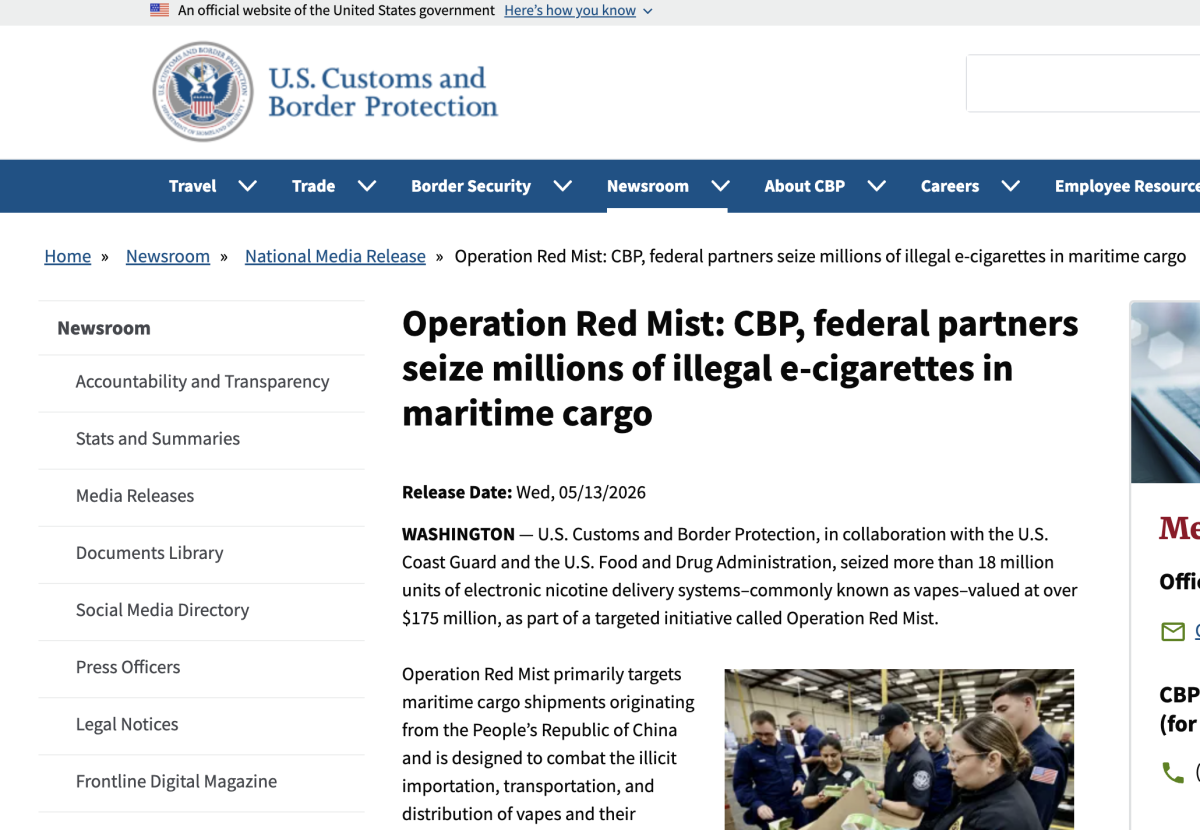
CBP and FDA Seize 18 Million Illegal Vapes Worth $175 Million in Maritime Cargo Operation
U.S. Customs and Border Protection (CBP) announced that more than 18 million illegal e-cigarettes valued at over $175 million were seized during “Operation Red Mist,” a joint enforcement initiative involving the U.S. Coast Guard and the FDA. The operation primarily targeted maritime vape shipments originating from China and focused on combating illicit importation, transportation, and distribution activities.
Regulations
May.14
 RFK Jr. Spokesman Resigns Over FDA Authorization of Fruit-Flavored Vapes
RFK Jr. Spokesman Resigns Over FDA Authorization of Fruit-Flavored Vapes
Richard Danker, a senior public affairs official in Health Secretary Robert F. Kennedy Jr.’s team, resigned from his role at HHS over the FDA’s recent authorization of fruit-flavored vaping products. In a resignation letter addressed to President Donald Trump, Danker argued that the products could expose minors to nicotine addiction, lung damage, and increased cancer risks, while also conflicting with recent HHS guidance on youth risks associated with flavored nicotine products.
News
May.15
Exclusive|Logistics Operators Warn of Possible New U.S. Border Crackdown on Illicit Vapes
Recent inspections and cargo disruption have led some logistics operators in the China-U.S. vape trade to see early signs of another U.S. border crackdown on illicit e-cigarettes. With late April to early May viewed as a key risk window, the market is watching closely. The bigger question is not only whether enforcement will tighten, but whether it can be sustained.
Special Report
Apr.09
U.S. Military Smoking Debate Spotlights E-Cigarettes and Nicotine Pouches as a “Bridge”
At a policy forum hosted by The Hill and sponsored by PMI US, U.S. defense health officials, lawmakers and industry representatives discussed tobacco use in the military and explored the potential role of smoke-free nicotine products — including e-cigarettes and nicotine pouches — as transitional tools to help service members reduce reliance on combustible cigarettes.
PMI
Mar.23